


AI moves from theory to tooling on the plant floor
Across August 2026 technical publications, one theme keeps surfacing from very different corners of the rubber and plastics world: artificial intelligence is no longer a side project, but a practical process tool being wired directly into mixing rooms, molding cells and development labs.
Rubber World’s August 2026 issue, with its emphasis on chemicals and materials, reads like a snapshot of this shift inside elastomer formulation. Articles on machine learning for rubber development and workflows for turning AI-based rubber compound predictions into practical formulations show compounders moving beyond curiosity and into disciplined use of prediction platforms such as RubberAI and GrafCompounder. In parallel, European Rubber Journal’s Technology Focus on smart rubber compounds reports on HF Group’s three‑year InSuKa project, which set out to use production and machine data to predict how mixing parameters and ingredients shape compound and product performance, culminating in an app for structured material and process data and compound optimisation.
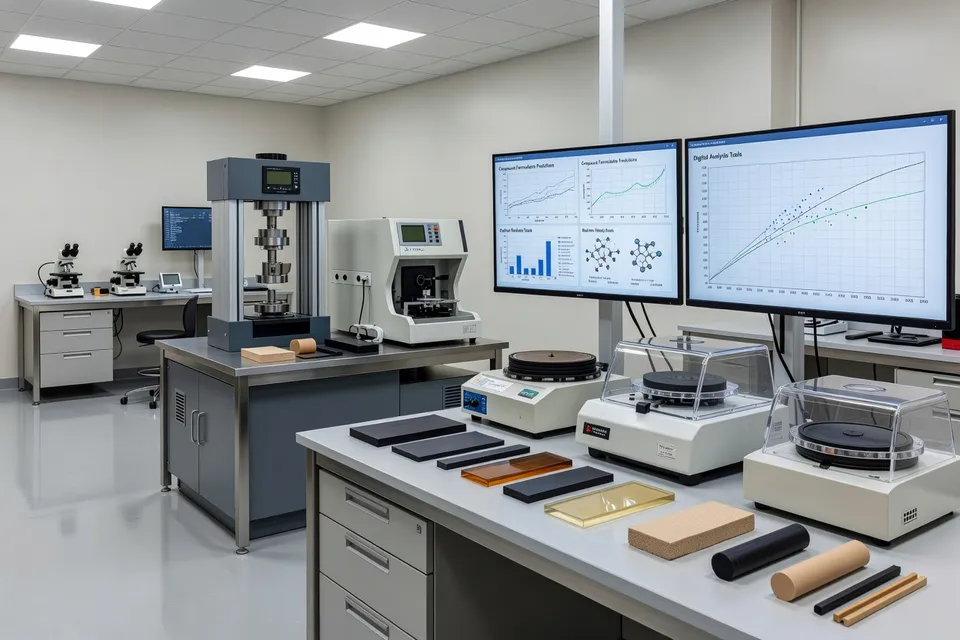
For processors and custom mixers, these are not academic exercises. They point to a future in which new cure systems, alternative raw materials and sustainability‑driven ingredients can be trialed with far fewer physical iterations because predictive models now sit alongside traditional rheometers and lab mills.
Injection molding embraces structured AI capabilities
On the plastics side, AI in injection molding is being documented with increasing granularity. A Plastics Technology feature on AI‑driven capabilities in your molding environment details how Haitian International’s Generation 5 molding machines, launched in 2024, embed the HT‑XTEND portfolio of AI systems to support predictive maintenance, processing parameter optimisation, energy use improvement and enhanced quality control. The article positions HT‑XTEND as a comprehensive collection of smart features designed specifically for process optimisation, service efficiency and production stability, rather than a generic add‑on.
Other technical sources referenced this summer echo the same architecture: cavity pressure sensing, temperature and speed data streamed shot‑by‑shot, and machine‑learning models defining a "reliable zone" where parts consistently meet specification. When a cycle drifts outside that zone, the AI layer suggests targeted changes to parameters such as injection pressure, holding time or cooling duration. In a documented dishwasher component case study, keeping production inside that efficient range over six months delivered an 18% cycle time reduction and a significant scrap decrease.
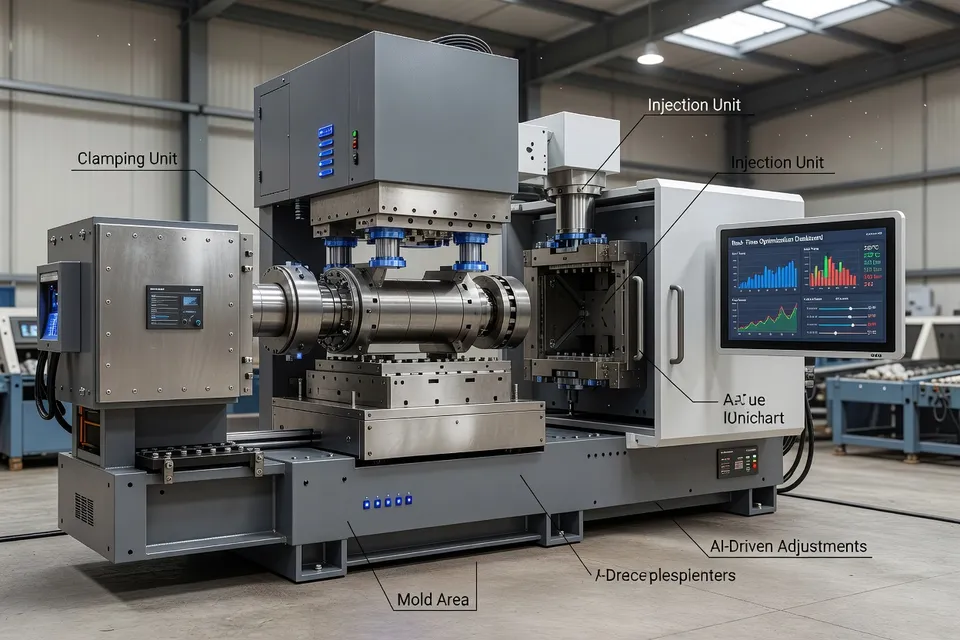
For plant managers facing labour shortages and high job‑shop variability, the operational implications are direct. AI‑enabled presses promise fewer setter‑dependent changes, faster start‑ups on new tools and lower quality drift when materials or ambient conditions fluctuate — all of which map cleanly onto the pressures highlighted in industry surveys where a majority of processors link automation investments to both efficiency gains and the need to cope with limited skilled labour.
Smart compounding: from lab measurement to line control
Compounding World’s August 2026 issue, as outlined in the publication’s own preview, underscores a quieter but equally consequential thread: measurement moving from lab to line. Features on this topic sit alongside coverage of alternative plasticisers and high‑temperature performance, suggesting that compounders are investing not just in new formulations but in instrumentation and data practices that keep process variation visible during production, instead of after a batch has been bagged.

ERJ’s profile of the InSuKa project connects directly to that ambition in rubber. Partners set themselves the remit of making manufacturing processes "more transparent and digitally interpretable" through algorithms that link mixing parameters and compound ingredients to resulting properties. The project’s predictive app aims to automate characterisation methods, so compound developers can query structured datasets rather than manually reconciling lab sheets, mixer logs and test reports.
For compounders serving demanding OEMs, the practical payoff is the ability to explain, with data, how a given change — whether a new bio‑based plasticiser, a different silica grade or a modified cure package — is expected to affect processing windows and end‑use performance, before a full‑scale production run. Rubber World’s August content reinforces this, with articles on sulfur‑modified polychloroprene for nitrosamine‑free applications and AI‑supported workflows aimed at preserving target performance while pushing into new material spaces.
"Used responsibly by the rubber industry, artificial intelligence can accelerate routine work, improve access to information, focus testing efforts and unlock value from existing data." - Bina Botts, consultant at Botts Consulting said
Resin pricing shifts create room for process bets
While technology teams refine algorithms and sensor strategies, August resin pricing reports are quietly reshaping the economics behind these investments. Plastics Technology’s analysis of August 2026 commodity resin prices documents a sharp decline for polyolefins and a broader downward trajectory for polystyrene, PVC and PET as markets begin to revert toward pre‑conflict supply–demand fundamentals. The article notes double‑digit cent‑per‑pound drops for polyethylene in June, continued downward expectations into July, and similar declines for polypropylene tracking monomer prices, with only modest movement expected for PVC and PET during the July–August window.
For processors, cheaper raw material does not automatically mean lower total cost. It does, however, create a window to redirect capital and operational focus. Some plants are using this breathing room to modernise equipment, integrate AI‑based controls or experiment with more difficult recyclate streams, knowing that the penalty for tuning errors is smaller when resin is less expensive. At the same time, the volatility described in these pricing notes — including potential future swings tied to crude and benzene — reinforces the argument that tighter process control and predictive quality are no longer optional; they are a hedge against markets that can move by multiple cents per pound in a matter of weeks.
What this means for processors in late 2026
Taken together, the August 2026 technical publications point to a converging playbook across rubber mixing rooms, compounding lines and injection molding shops:
- Formal AI workflows are moving from pilot to practice, whether via rubber‑specific prediction platforms, HF Group’s compound optimisation app or HT‑XTEND on molding machines.
- Data discipline — from measurement moving onto the line to structured archives of material and process data — is becoming a competitive differentiator for compounders and molders alike.
- Economic conditions, including flat‑to‑down commodity resin prices, are giving processors a temporary cushion to fund smart‑process upgrades and to trial more complex feedstocks.
For converters and brand owners, the downstream consequence is simple: suppliers who can show how they manage quality, navigate change and control operational risk — backed by AI‑supported data rather than anecdote — are increasingly the ones winning business, a point underscored in Rubber World’s August commentary on OEM expectations around compliance systems and manufacturing standards.
By late 2026, the technical literature is clear. The plants that thrive will be those treating AI, sensing and structured data not as buzzwords but as everyday tools to stabilise processes, cut scrap and make faster, defensible formulation and sourcing decisions.
Editorial Insights
- How is the integration of AI into everyday processing tools changing the role of technical teams in plastics and rubber plants?
- AI’s move from side projects into mixers, molding machines and development workflows is shifting technical teams from reactive troubleshooting to proactive process design. Instead of spending most of their time chasing variability, they are increasingly curating data, validating models and defining operating windows that can be enforced automatically on the line. This raises the bar on data literacy and cross‑functional collaboration, but it also turns technical expertise into a clearer performance lever rather than a fire‑fighting function.
- What are the main sustainability implications of using AI to optimise formulations and processing windows?
- AI‑supported formulation and process optimisation can cut scrap, reduce trial‑and‑error runs and shorten scale‑up cycles, which directly lowers energy use and material waste. It also gives developers a way to explore more complex or sensitive ingredient options, such as bio‑based additives or recyclate blends, with clearer predictions of processing and performance risk. Over time, this combination of tighter control and broader material experimentation can make lower‑impact solutions commercially viable rather than purely aspirational.
- Why do current resin price trends create a strategic opening for investment in smart processing technologies?
- When resin prices soften, the immediate pressure on material cost eases, allowing plants to redirect budget and management attention toward longer‑horizon improvements such as AI‑enabled controls and advanced sensing. The downside risk of tuning errors is lower when feedstocks are cheaper, making this a practical time to trial more challenging materials and new automation layers. At the same time, ongoing price volatility strengthens the case for predictive quality and tight process control as a hedge against future swings in input costs.
- What regulatory and compliance benefits can processors gain from more transparent, data‑rich production systems?
- When mixing parameters, machine settings and resulting properties are captured in structured datasets rather than scattered logs, demonstrating compliance becomes faster and more defensible. Regulators and customers increasingly expect traceable evidence of how processes are controlled, and AI‑supported archives can provide auditable histories of parameter changes, material substitutions and quality outcomes. This transparency not only reduces the burden of documentation but also positions plants to adapt more smoothly as standards tighten around safety, emissions and product consistency.
- What ethical questions arise as AI systems begin to influence formulation choices and on‑line process decisions?
- As AI starts to guide which formulations are pursued and how processes are adjusted in real time, questions emerge around accountability, bias and transparency. Plants need clear rules on who is responsible when an automated recommendation leads to off‑spec product or safety concerns, and how data sets are curated to avoid locking in historical practices that may be sub‑optimal or environmentally harmful. Ethically robust deployments will require documented decision frameworks, explainable models and ongoing scrutiny of how these tools shape material choices and risk profiles.
- How is the growing use of AI and structured data likely to reshape competitive dynamics in the processing supply chain?
- As AI, sensing and disciplined data practices become embedded, the ability to demonstrate controlled variability, fast changeovers and predictable performance will increasingly determine who wins contracts. Suppliers that can provide data‑backed scenarios for material substitutions and process changes will be better positioned than those relying on anecdotal experience. Over time, this may widen the gap between plants that treat digital tools as core infrastructure and those that stay with manual, experience‑driven approaches, with the former viewed as lower‑risk partners by downstream buyers.
References
- 1.Rubber World. (2026, August 20). August 2026. Rubber World.
- 2.Plastics Technology. (2026, July 31). August 2026: Commodity resin prices drop. Plastics Technology.
- 3.European Rubber Journal. (2026, August 14). Technology focus: Smart rubber compounds. European Rubber Journal.
- 4.Plastics Machinery & Manufacturing. Plastics Machinery & Manufacturing. Plastics Machinery & Manufacturing.
- 5.Compounding World. Compounding World. Compounding World.
- 6.Plastics Technology. (2025, May 21). AI-driven capabilities advance efficiency and quality in your molding environment. Plastics Technology.