


North American Plastics Rethink Global Playbook Under 2026 Tariff Shock
A dense web of U.S. tariff actions in 2025–2026 is pushing plastics producers, converters and brand owners to redraw their sourcing maps, and in many cases to pull supply chains closer to home.
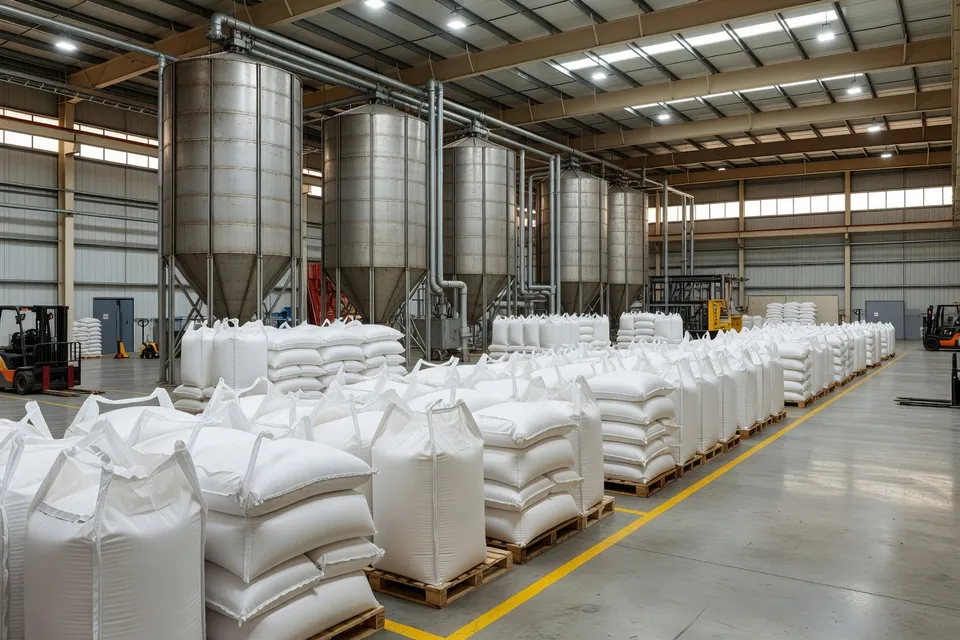
M. Holland’s 2026 trend breakdown on plastics supply chain regionalization captures the pivot succinctly: the lowest‑cost supplier is no longer automatically the most competitive option, as manufacturers increasingly privilege predictability, proximity and trade stability over pure price arbitrage. Material origin has moved alongside material properties in procurement decision‑making, with more processors prioritizing local or regional supply networks instead of resins that traverse thousands of miles and multiple customs regimes before reaching the production line.
That strategic shift is colliding with a rapidly tightening tariff regime. In parallel, fast‑growing downstream markets for plastic films and recycled plastics are being forced to navigate new cost layers and exposure patterns.
Tariffs Move From Background Risk to Front‑Line Variable
In 2026, U.S. tariff policy moved from a static backdrop to an active driver of plastics supply strategies.
On July 20, 2026, President Trump invoked Section 338 of the Tariff Act of 1930 to impose an additional 50% ad valorem duty on a wide range of Canadian products, including roughly 20 HTS codes covering plastic materials and plastic products. The tariffs, effective August 19, 2026, are explicitly framed as a response to Canada’s duties on U.S. motor vehicles and apply whether or not the products would otherwise qualify for duty‑free treatment under USMCA.
According to the Plastics Industry Association (PLASTICS), U.S. imports of plastics subject to the new 50% tariffs from Canada totaled about $2.99 billion in 2023, $3.09 billion in 2024 and $3.10 billion in 2025 on a customs‑value basis. The association’s analysis stresses that, because the United States holds strong domestic production and a trade surplus in the affected plastics categories, the risk of broad supply disruptions is limited — but cost structures and supplier choices will be affected.
Separately, a new wave of Section 301 forced‑labor tariffs took effect on July 25, 2026, adding 10% to 12.5% duties on imports from 60 countries, including some U.S. free‑trade agreement partners. PLASTICS notes that these duties, layered on existing Section 301 tariffs on China and ongoing Section 232 measures on steel and aluminum, leave plastics companies facing a more complicated and persistent tariff environment.
"The cumulative effect of overlapping tariffs, customs delays, and origin verification requirements has extended lead times for critical resins by an average of 14 business days— a structural shift, not a temporary blip." - Perc Pineda, chief economist at Plastics Industry Association said
For processors, those additional two to three weeks of lead time are as consequential as the headline tariff rates. Longer transit times force higher safety stocks, tie up working capital and make just‑in‑time scheduling more difficult.
Regionalization: From Theory to Operating Model
M. Holland’s regionalization analysis makes clear that plastics companies are not waiting for tariff clarity; they are redesigning their networks around regional hubs.
The company defines plastics supply chain regionalization as a deliberate move to source, produce and distribute materials within a defined geographic region instead of relying on long global supply routes, with the goal of improving predictability and de‑risking operations. In practice, that means:
- Shifting resin purchases to North American producers and distributors to avoid tariff‑exposed imports and reduce port‑related uncertainty.
- Building inventory programs around domestic stocking hubs that can replenish on shorter cycles, rather than offshore suppliers shipping full‑container loads on multi‑week transit.
- Evaluating suppliers not only on price and performance, but on their exposure to trade actions, political tensions and extreme‑weather transport risks.
M. Holland’s guidance to resin buyers in 2026 is explicit: “Where materials come from is now just as important as what they can do.” That reframing is leading procurement teams to treat tariffs as an embedded cost of global sourcing, rather than a temporary surcharge that can be managed away.
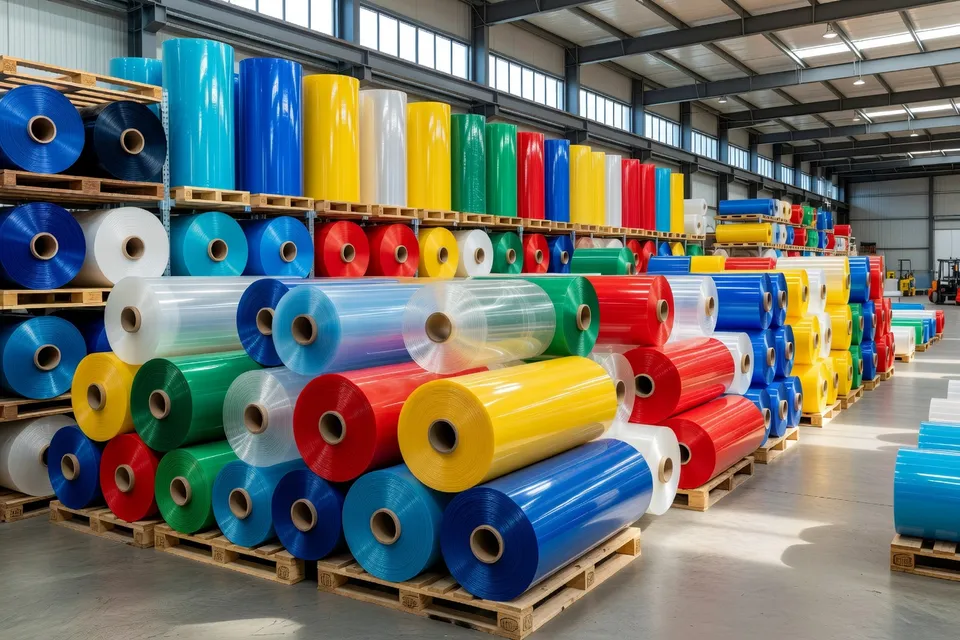
For film converters and flexible packaging producers — a group at the center of the US$ 120.6 billion global plastic films market in 2026 — this regionalization trend directly influences capital planning and material specification. Packaging accounts for about 55% of total plastic films volume in 2026, making tariff‑driven cost changes on key resins such as polyethylene and polypropylene highly consequential for consumer‑goods margins.
Recycled Plastics: Growth Meets Trade Exposure
Recycled plastics sit at a critical intersection of sustainability policy and trade friction.
Persistence Market Research estimates the global recycled plastics market at US$ 70.3 billion in 2026, with expectations of US$ 131.0 billion by 2033, reflecting a sustained 9.3% CAGR driven by regulatory mandates, corporate circular‑economy commitments and demand for post‑consumer recycled (PCR) resins. Within that, recycled PET (r‑PET) has become both a growth engine and a tariff‑sensitive product.
ICIS points out that recycled resins in flake or pellet form are generally imported under the same HS codes as virgin polymers, meaning that tariffs aimed at polyethylene, polypropylene or PET can hit recycled streams as well. Among recycled polymers, r‑PET carries the greatest exposure because the U.S. still relies on imported feedstock and resin to supplement domestic capacity.
At the same time, the new Section 301 forced‑labor tariffs largely replaced the temporary 10% universal Section 122 duties when they took effect on July 24, 2026, leaving landed‑cost changes relatively constrained for many polymer and recycled resin imports. ICIS concludes that, as of late July 2026, tariff actions have had limited direct impact on recycled plastics trade, even though the policy framework is becoming more central to market strategy.
For buyers, the signal is nuanced: the near‑term price shock may be modest, but the classification of recycled materials under virgin HS codes means future tariff rounds could tighten imported r‑PET economics quickly. That encourages brand owners to accelerate investment in regional recycling, verified r‑PET supply and long‑term contracts with North American reclaimers to insulate against policy swings.
Film and Polymer Markets Face Layered Cost and Sourcing Decisions
Downstream polymers and films are expanding into a tariff‑dense environment.
According to Polaris Market Research, the global polymer market was valued at USD 825.65 billion in 2025 and is forecast to reach USD 1,316.70 billion by 2034, supported by a 5.32% compound annual growth rate over 2026–2034. Asia‑Pacific holds about 40% of global polymer demand, with China accounting for roughly 45% of the regional market in 2025, underscoring continued reliance on cross‑border flows of resins and finished plastic products.
In films, Persistence Market Research reports:
- The plastic films market at US$ 120.6 billion in 2026, projected to US$ 174.3 billion by 2033.
- The polyethylene film market at US$ 45.4 billion in 2026, expected to reach US$ 66.0 billion by 2033, with Asia‑Pacific holding a 41% share and packaging comprising 65% of demand.
These numbers highlight why tariffs on packaging materials and intermediate films matter commercially. When Section 301 and Section 338 duties raise the cost of imported polyethylene films or BOPP packaging films, converters must decide whether to absorb margin compression, re‑engineer structures using more domestically sourced resins, or pass costs through to brand owners.
PLASTICS’ separate economic analysis of plastics machinery shipments shows how such decisions ripple upstream. In Q1 2026, shipments of primary plastics machinery in North America fell 16.4% quarter‑on‑quarter, even as they rose 8.5% year‑on‑year, with the association linking part of the quarterly decline to businesses adjusting contracts to reflect higher tariff costs at the turn of the year. Duties paid on machinery imports more than tripled, climbing from $39 million in Q1 2025 to $118.9 million in Q1 2026, compressing capital budgets for equipment upgrades.
For mid‑sized processors, that combination — higher import costs on resins and machinery, plus regionalization pressures from customers — makes the economics of reshoring and inventory strategy more complex. Some will lean harder on domestic distributors with regional hubs; others may delay equipment investments until tariff trajectories are clearer.
Strategic Takeaways for Executives
The emerging 2026 picture is not one of outright supply disruption, but of structural repricing and re‑routing in plastics chains:
- Regionalization is moving from a resilience option to a default model. M. Holland’s analyses show more North American manufacturers prioritizing regional sourcing and local stocking programs to cut exposure to long global routes and tariff volatility.
- Tariffs are becoming embedded in cost structures. PLASTICS’ work on Canada‑focused Section 338 tariffs and broader Section 301 actions indicates that duties now form a sustained layer on top of MFN rates, rather than episodic surcharges.
- Recycled plastics growth is robust but policy‑sensitive. The high growth trajectory for recycled plastics and r‑PET markets is intersecting with HS‑code‑based tariff regimes, prompting buyers to favor domestic, verified recycled feedstock where possible.
- Investment planning is more complicated. Machinery and equipment buyers face higher duty burdens and only temporary relief in some categories, encouraging a cautious approach to capacity expansions and automation projects.
For senior executives across resin production, compounding, film conversion and branded packaging, the operational conclusion is clear: tariff management can no longer be treated as a compliance detail. For 2026 and beyond, it is a front‑line variable in competitive positioning — one that will increasingly favor regionally anchored, tariff‑resilient plastics supply chains over globally dispersed, lowest‑cost networks.
Editorial Insights
- How is the shift from global to regional plastics supply chains reshaping competitive advantage for North American processors?
- Competitive advantage is increasingly defined by **supply predictability, lead time, and tariff resilience** rather than purely by lowest resin price. Processors that build regional sourcing and stocking models can reduce exposure to customs delays, policy swings, and long‑haul logistics, improving schedule reliability and working‑capital efficiency. This favors suppliers that can offer diversified local inventories, multi‑plant regional footprints, and robust origin documentation over those competing mainly on global price arbitrage.
- What are the key implications of tariff‑driven regionalization for long‑term sustainability and recycled plastics adoption?
- Tariff exposure on both virgin and recycled streams is pushing buyers to favor **regionally sourced, verifiable recycled feedstock**, tightening the link between circularity goals and local infrastructure. Over time, this can accelerate investment in domestic collection, sorting, and reprocessing capacity, but it also raises the bar on traceability and compliance costs. If policy remains unstable, the risk is that some players prioritize tariff avoidance over genuine environmental performance, making robust standards and transparent certification systems critical.
- How do persistent tariffs alter investment decisions for plastics machinery and automation over the next decade?
- When duties on imported equipment become a **structural cost rather than a temporary surcharge**, capital budgeting shifts toward slower, more selective upgrades. Processors may delay automation projects, stretch asset lifecycles, or pivot to regional machinery suppliers that can mitigate tariff burdens. Strategically, this risks widening the productivity gap between firms that can absorb higher upfront costs to modernize and those that cannot, making smart use of financing, tax incentives, and total‑cost‑of‑ownership analysis more important than headline price.
- What strategic procurement adjustments are most effective for plastics buyers operating in a tariff‑dense environment?
- Effective procurement strategies now treat tariffs as **embedded cost drivers**, integrating scenario planning for duty changes into supplier selection and contract design. Buyers are increasingly diversifying origin across a smaller set of regional partners, negotiating flexible pricing tied to tariff movements, and emphasizing shorter lead times and inventory programs over marginal resin discounts. Strengthening data on HS classifications, origin verification, and trade‑action exposure is becoming as critical as traditional evaluations of material performance and price.
- How might evolving tariff frameworks influence pricing and innovation in plastic films and packaging applications?
- As duties lift the cost of imported resins and intermediate films, converters face sharper trade‑offs between **margin preservation, redesign, and pass‑through pricing**. This pressure often catalyzes formulation changes toward regionally available materials, downgauging, and structures optimized for local recycling streams. Over time, tariff‑driven cost signals can accelerate innovation in film architectures and business models that rely less on globally sourced inputs and more on adaptable, regionally anchored solutions.
- What ethical and societal questions arise as plastics supply chains prioritize regional resilience over global integration?
- Greater regionalization can strengthen local resilience and transparency, but it also raises questions about the **distribution of costs and benefits across global value chains**. Communities that previously supplied low‑cost resins or recycled feedstock may see reduced demand, while consumers in importing regions face higher prices or narrower material choices. Ethically, the sector must balance legitimate risk management with attention to labor standards, environmental performance, and fair economic participation across both regional and displaced global partners.
References
- 1.M. Holland Company. (2026, June 16). 2026 trend breakdown: Plastics supply chain regionalization. M. Holland Company.
- 2.Persistence Market Research. (2026, February 13). Recycled plastic market share & analysis, 2033. Persistence Market Research.
- 3.Persistence Market Research. (2026, August 28). Plastic films market size & competitive analysis, 2033. Persistence Market Research.
- 4.Polaris Market Research. (2026, August 25). Polymer market share, size, trends & global outlook 2034. Polaris Market Research.
- 5.ICIS. (2026, July 30). US tariff exposure for recycled plastics. ICIS.
- 6.Plastics Industry Association. Newsroom. Plastics Industry Association.