


Tariffs Push Plastics From Global Arbitrage to Regional Strategies
For much of the last decade, global plastics trade revolved around cost arbitrage, with processors sourcing resins and finished products wherever prices were lowest. By mid‑2026, that calculus has changed. A dense web of U.S., Canadian and Mexican tariff actions, coupled with targeted measures in emerging markets, is driving a structural shift toward regionalized plastics supply chains.
Trade policy is no longer a background variable for procurement teams. It has become a primary design constraint, forcing manufacturers to reassess where they buy resin, how they qualify suppliers and which trade lanes they can rely on when disruptions hit.
North America: From Free-Trade Platform to Managed Tariff Zone
Section 338 and the U.S.–Canada Plastics Rift
The sharpest signal of this shift arrived in July 2026, when the U.S. administration invoked Section 338 of the Tariff Act of 1930 to impose 50% additional duties on a wide range of Canadian products, including plastics materials and plastic articles.
Industry analysis from the plastics trade association indicates that roughly 20 plastics-related HTS codes fell under the new 50% rate, covering resins, semi-finished goods and certain molded products. The association’s blog notes that U.S. imports of the affected Canadian plastics categories totaled about $3.10 billion in 2025, following $3.09 billion in 2024 and $2.99 billion in 2023, based on customs values. U.S. exports of similar plastics to Canada reached $4.65 billion in 2025, generating a trade surplus and underscoring how tightly integrated the two markets have become.
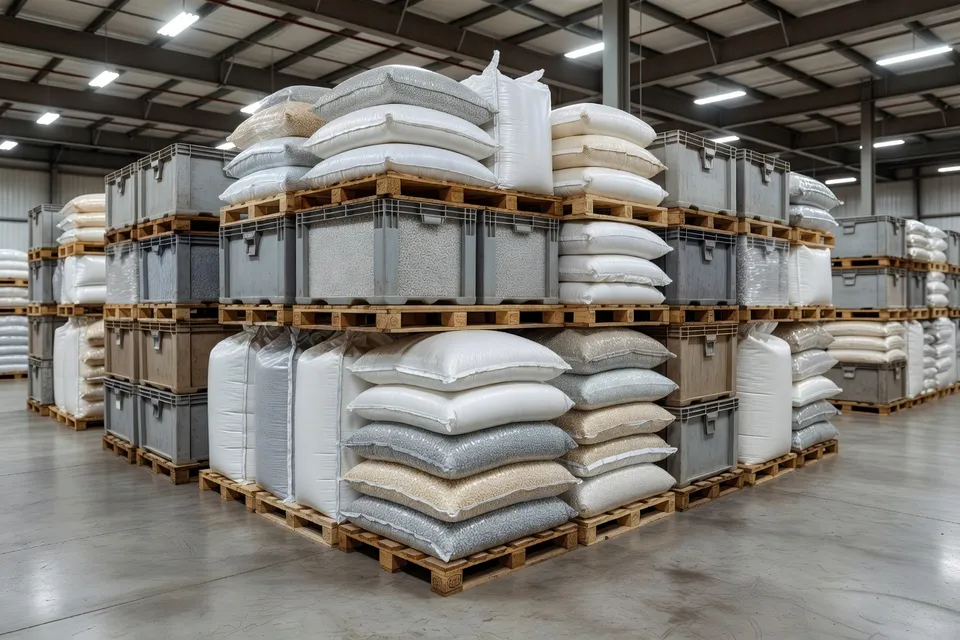
Although the new U.S. tariffs are framed as a response to Canadian automotive measures, they land squarely in the plastics sector. Analysts warn that the combined effect of the 50% Section 338 duties, ongoing Section 301 tariffs addressing forced‑labor concerns, and national‑security duties under Section 232 will raise manufacturing costs for U.S. plastics converters and brand owners that depend on Canadian inputs.
Canadian policymakers have signaled "dollar‑for‑dollar" retaliation, and earlier lists of potential counter‑tariffs explicitly included commodity plastics such as polyethylene (PE), polypropylene (PP) and PVC. If Ottawa draws on that playbook, processors on both sides of the border could find themselves navigating a highly politicized tariff environment just as they contend with feedstock and logistics volatility.
Regionalization Inside USMCA
Against this backdrop, material origin is moving to the top of the sourcing agenda. M. Holland’s 2026 trend breakdown on plastics supply chain regionalization highlights how manufacturers are shifting away from long global routes in favor of local or regional supply networks. In their assessment, the lowest-cost supplier is "no longer automatically the most competitive choice" in 2026; instead, procurement teams are prioritizing supply chain stability and predictability over pure price optimization.
Resin distributors report growing demand from processors seeking North American grades that can be shipped from regional hubs rather than imported over multi‑step ocean and intermodal routes. Domestic stocking programs and hub‑and‑spoke warehouse networks are being used to shorten lead times, reduce port‑related risk and insulate plants from tariff‑driven cost spikes.
For U.S. and Canadian producers, this presents a strategic market opportunity. Companies able to certify compliant origin under USMCA, while also managing exposure to Section 338 and Section 301 lists, are in a stronger competitive position to supply automotive, packaging and construction converters looking to de‑risk their inputs.
Beyond North America: Tariffs as a Tool to Rewire Trade Flows
Mexico’s 2026 Tariff Regime and Trade Diversion
Regionalization is not only a North American phenomenon; it is also being engineered through tariff schedules in emerging markets. Mexico’s 2026 tariff reform raised duties up to 35% on more than 1,400 product categories imported from countries without free trade agreements. Within that list, 79 plastics product lines at the eight‑digit HTS level are now subject to higher rates, with 31 products facing tariffs of 25% and five facing 35%.
Mexico’s Ministry of Economy data, cited by the plastics industry, show that 75.5% of imports of these 79 plastic products previously came from free‑trade partners, including the U.S., Canada, the EU and CPTPP members. Non‑FTA suppliers—led by China—accounted for 24.5%, with China alone supplying 18.3% of the plastics now exposed to higher tariffs.
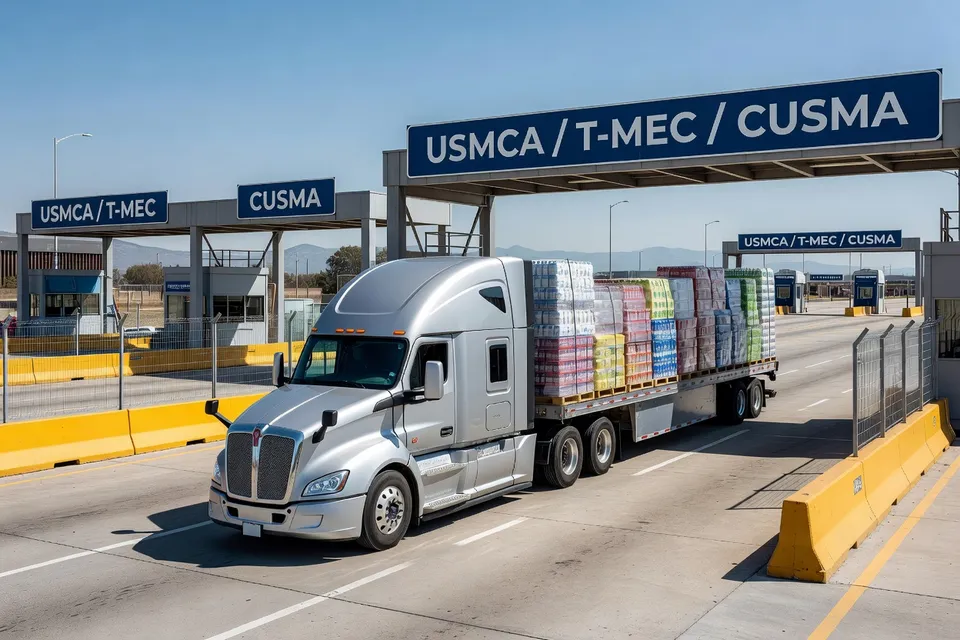
The clear intent is to divert trade toward FTA partners. For plastics converters in Mexico, that means higher landed costs when sourcing from non‑FTA countries, and a stronger incentive to buy from the U.S., Canada, Europe or Japan. For U.S. resin producers and compounders, the measure reinforces their trade advantage into Mexico, particularly on products where non‑FTA tariffs reach 15% or above.
In practical terms, this is accelerating nearshoring strategies. U.S. and Mexican processors are expanding cross‑border supply chains that keep production and sourcing inside the USMCA and Mexico’s broader FTA network, even as they continue to sell into third markets.
Reciprocal Tariffs and Selective Zero Rates in Central America
A similar pattern is visible in Central America. In 2025, the U.S. applied a 10% reciprocal tariff on imports from El Salvador and Guatemala, despite both countries being covered by the CAFTA‑DR free trade agreement. A 2026 economic analysis from the plastics association notes that subsequent bilateral deals restored zero tariffs for 38 plastics materials, resins and products, but only when imported for pharmaceutical or aircraft‑related uses.
All other plastics from those two countries remain subject to the 10% tariff, with product‑specific scope limitations written into the agreements. As the association’s chief economist put it, these measures reflect a "targeted use of reciprocal tariffs" designed to balance openness with supply‑chain reliability and operational resilience.
For processors, the policy has concrete consequences. CAFTA‑DR partners retain preferential access on critical inputs tied to high‑value, regulated end uses, while more generic plastics streams are nudged toward regional suppliers or alternative countries. Sourcing teams must now track tariff eligibility at the level of end‑use application, not just HS code.
New Section 301 Tariffs: Compliance as Competitive Positioning
In August 2026, ICIS reported that new Section 301 tariffs on plastics and chemicals cover more products than earlier rounds because they include fewer broad exemptions. Unless imports qualify for specific carve‑outs—often tied to pharmaceuticals—most plastics and chemicals are now subject to 10% or 12.5% duties.
These duties are explicitly aimed at imports tied to forced‑labor concerns. For plastics manufacturers, the implications run in two directions:
- U.S. producers gain some shielding from import surges driven by global overcapacity, particularly in commodity polymers.
- Downstream converters face higher input costs if they rely on feedstocks or intermediates not produced domestically in sufficient quantities.
Strategically, this is pushing global suppliers to treat labor and compliance standards as part of competitive positioning. Regions that can demonstrate strong governance, transparent supply chains and adherence to labor rules are more likely to retain tariff‑favored status. Those that cannot are at risk of seeing their plastics exports priced out by double‑digit duties.
Operational Implications for Processors and Brand Owners
Procurement: Origin, Tariff Mapping and Scenario Planning
For processors, converters and brand owners, the combined tariff landscape in 2025–2026 means procurement strategies must evolve quickly:
- Origin mapping: Sourcing teams are explicitly evaluating where resins are polymerized, compounded and packaged, not just where traders are located. Origin now drives tariff exposure, lead times and regulatory risk.
- Tariff scenario planning: With Section 338, Section 301, reciprocal tariffs and partner‑country countermeasures all in play, companies are building multiple sourcing scenarios to cover further escalation—especially in U.S.–Canada trade.
- FTA‑centric sourcing: Mexico’s differentiated tariff regime and CAFTA‑DR carve‑outs are reinforcing a bias toward FTA partners, favoring suppliers inside USMCA and other free‑trade blocs.
Supply Chain Design: Regional Hubs and Shorter Routes
M. Holland’s 2026 guidance on resin purchasing underscores how supply chain design is responding. Local and regional sourcing reduces the number of handoffs between plant and supplier, making delivery timing more predictable and lowering the probability that a shipment is caught by a sudden tariff or customs change.
Distributors are investing in regional inventory hubs that allow converters to adjust orders in near‑real time and draw on buffer stock when trade lanes tighten. This is particularly important for sectors such as automotive and packaging, where line stoppages carry outsized cost and customer‑service risk.
Commercial Outlook: Costs Rise, But Resilience Becomes a Differentiator
Taken together, tariffs on Canada, Mexico, China and selected emerging markets are raising the effective cost of cross‑border plastics trade. They are also redrawing trade corridors in ways that favor free‑trade partners and compliant regions.
In the short term, processors should expect higher resin and component prices, more complex customs planning and occasional friction in long‑haul supply chains. Over a longer horizon, however, companies that embrace regionalization, sophisticated tariff management and compliance‑focused sourcing will likely secure more predictable access to materials and a stronger competitive position.
The era when plastics procurement could chase the lowest global quote with minimal regard for policy is ending. In its place, a more regional, policy‑aware trade architecture is emerging—one where tariffs and regionalization are deeply intertwined in shaping the future of plastics supply chains.
Editorial Insights
- How is the shift from global arbitrage to regional plastics sourcing changing the way processors think about competitiveness?
- Competitiveness is moving away from chasing the absolute lowest global resin price toward securing stable, tariff-resilient and predictable supply. Processors increasingly value shorter routes, regional hubs and FTA-linked suppliers that can deliver consistent lead times and fewer policy shocks, even if unit costs are slightly higher. In this environment, resilience, compliance and origin transparency are becoming as important as classic cost benchmarks.
- What practical steps can procurement teams take to manage growing tariff complexity without losing material security?
- Procurement teams are building detailed origin maps that track where resins are polymerized, compounded and packaged, then overlaying tariff schedules and FTA rules to create robust scenario plans. This is often paired with multi-sourcing strategies, regional inventory programs and contract clauses that anticipate tariff shifts, allowing rapid re-routing between FTA-favored and regional suppliers. The goal is to turn tariff analysis into a routine planning discipline rather than a crisis response.
- How do differentiated tariffs by end use reshape product development and market strategy for plastics manufacturers?
- When tariff treatment depends on end-use, manufacturers begin designing grades and applications with customs classifications and regulatory eligibility in mind. High-value, regulated segments can justify tailored formulations and documentation to secure favorable duty rates, while more generic applications may be steered toward regional feedstocks to avoid tariff penalties. This blurs the line between technical product management and trade strategy, requiring closer coordination across R&D, sales and compliance.
- In what ways are labor and governance standards becoming a competitive factor in plastics trade?
- Tariffs linked to labor and governance concerns effectively reward regions that can demonstrate transparent supply chains and robust compliance frameworks. Producers with credible audits, traceability and documented adherence to labor rules are better positioned to avoid punitive duties and maintain market access. Over time, this pushes plastics supply chains to treat social compliance as a core element of commercial strategy rather than a peripheral ESG exercise.
- How do rising trade barriers intersect with long-term sustainability goals in plastics supply chains?
- Regionalization can support sustainability by shortening transport distances and encouraging investment in local recycling, compounding and feedstock infrastructures. At the same time, higher tariffs on certain streams may slow adoption of advanced materials if key inputs face cost spikes or supply disruption. Companies that integrate carbon, circularity and tariff metrics into a single sourcing framework are better placed to balance environmental ambitions with economic and policy realities.
- What structural changes in supply chain design are emerging as tariffs make long-haul trade less attractive?
- Plastics supply chains are pivoting toward regional hubs, buffer stocks and shorter transport corridors that reduce exposure to customs disruptions and policy swings. Distributors and converters are investing in agile warehousing and closer supplier–plant linkages, enabling near-real-time adjustments to order patterns when tariffs or trade rules change. This gradual move away from complex, multi-leg global routes is turning network design itself into a strategic differentiator.
References
- 1.M. Holland Company. (2026, June 16). 2026 trend breakdown: Plastics supply chain regionalization. M. Holland Company.
- 2.Plastics Industry Association. (2026, August 20). U.S. plastics trade: Tariffs, FTAs, and emerging markets. Plastics Industry Association.
- 3.ICIS. (2026, August 27). INSIGHT: US, Canada trade tensions could threaten plastics trade. ICIS.
- 4.Bloomberg. (2026, June 12). US consumer prices for cars, groceries set to rise on plastics inflation. Bloomberg.
- 5.Economic Times. (2026, February 19). Natural rubber demand to exceed output, keeping prices high in 2026, says ANRPC. Economic Times.