

Why Automation-First Efficiency Gains Are Now Within Reach
Across plastics and rubber molding, recent case studies point to a common theme: plants are getting big efficiency gains by combining targeted automation with disciplined process control, not by filling the floor with new presses.
For small and midsized injection molders, this shift is especially visible in 2026. One Plastics Technology analysis argues that profitability now depends less on machine vintage and more on how consistently teams run standardized startups, visible downtime tracking, and root‑cause process control. At the same time, rubber processors are documenting how new compression molding simulation tools are trimming trial‑and‑error and shortening development loops.
Taken together, these stories show a practical, copy‑and‑paste path: stabilize how you run the tools you already own, then use automation and simulation where they directly relieve labor, scrap, or development bottlenecks.
Case Study 1: Rotary Bi‑Material Injection for Automotive Components
A 2026 research article documents the design and manufacture of a rotary bi‑material injection mold for automotive components that sequentially injects plastic and rubber in one tool. The mold integrates a thermoplastic and elastomer into a single shot sequence using a rotary system.
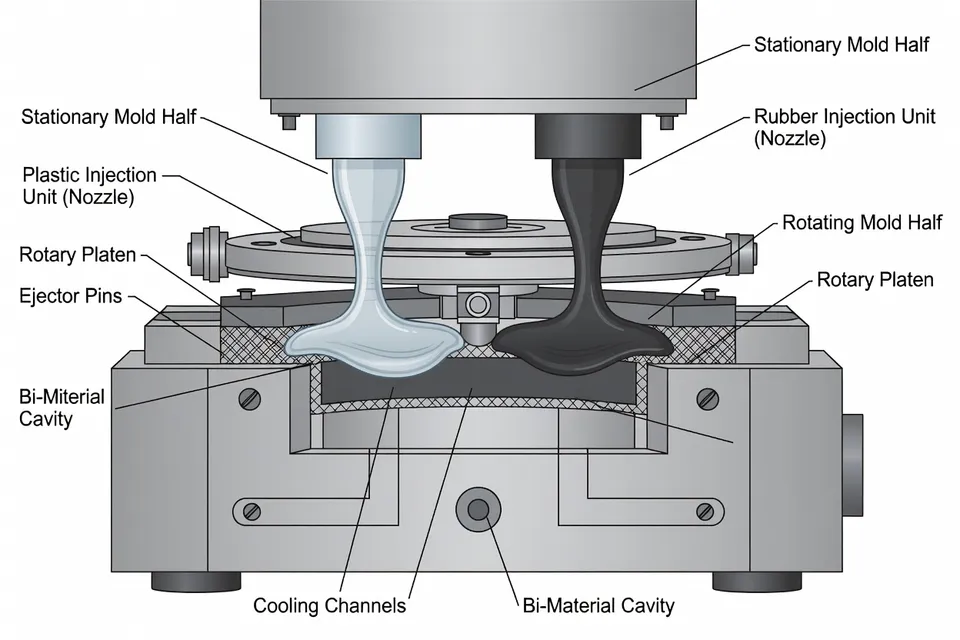
The case study highlights that successful design required coordinated attention to material compatibility, shrinkage behavior, cooling efficiency, demolding strategy, hydraulic actuation, machine constraints, and mold‑material selection. In practice, that meant treating automation not just as a robot on the press, but as a fully engineered molding system:
- The rotary table and sequential injection had to be designed around real machine limits.
- Cooling and shrinkage interactions between the plastic and rubber were modeled to keep dimensional stability.
- Demolding and actuation were engineered so that the automated sequence stayed repeatable over production.
For molders, the operational lesson is clear: when you combine automation with multi‑material molding, design discipline is the efficiency lever. Plants looking to integrate overmolding or in‑mold assembly need to budget engineering time for cooling, demold, and actuation interactions—not just part geometry.
Case Study 2: Automation Discipline in Small and Midsized Injection Molders
Plastics Technology’s 2026 guidance for small and midsized molders distills three process upgrades drawn from plant work:
-
Standardized mold startup to control the most expensive hour of production. The article calls out early‑run scrap and dimensional drift that come from informal checks and ad‑hoc ramp‑ups.
-
Treat downtime as recoverable capacity, not a sunk cost. By logging unplanned stops with simple tooling—tablets, SCADA tags, or MES—plants start to see recurring patterns, such as dryers undersized for peak load or presses that lose time on similar alarms.
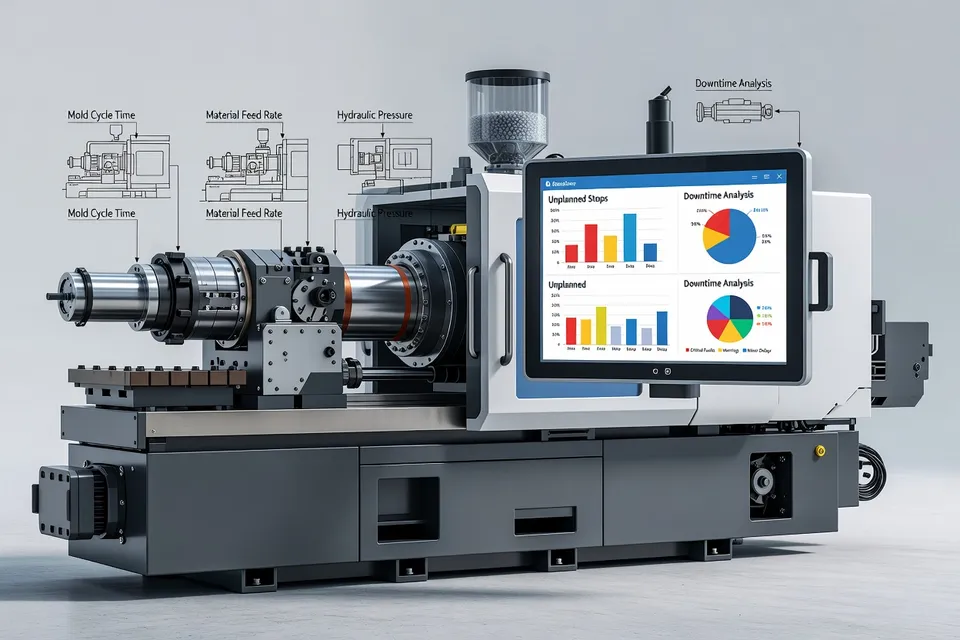
- Replace adjustment‑driven processing with root‑cause process control. Rather than chasing defects with constant knob‑turning, operators focus on why those defects occur and lock in stable parameter sets once the cause is eliminated.
These practices are deliberately low‑capex. The article argues that in 2026, the fastest path to margin protection is disciplined execution that converts existing capacity into profit. For a plant manager, that translates directly to project scoping: before writing a check for new automation, verify that startups are standardized, downtime is visible by cause, and major references run on locked, documented parameter sets.
Case Study 3: Compression Molding Simulation for Rubber Parts
On the rubber side, a Rubber World article from July 2026 describes how MoldEx3D’s compression molding module provides a fully coupled simulation environment for filling, packing, cooling and warpage in compression molding cycles. The industrial case studies in that feature show how simulation was used to:
- Predict flow into complex cavities during the closing stage.
- Visualize curing and temperature evolution through the part thickness.
- Anticipate warpage and dimensional changes before tool steel was cut.
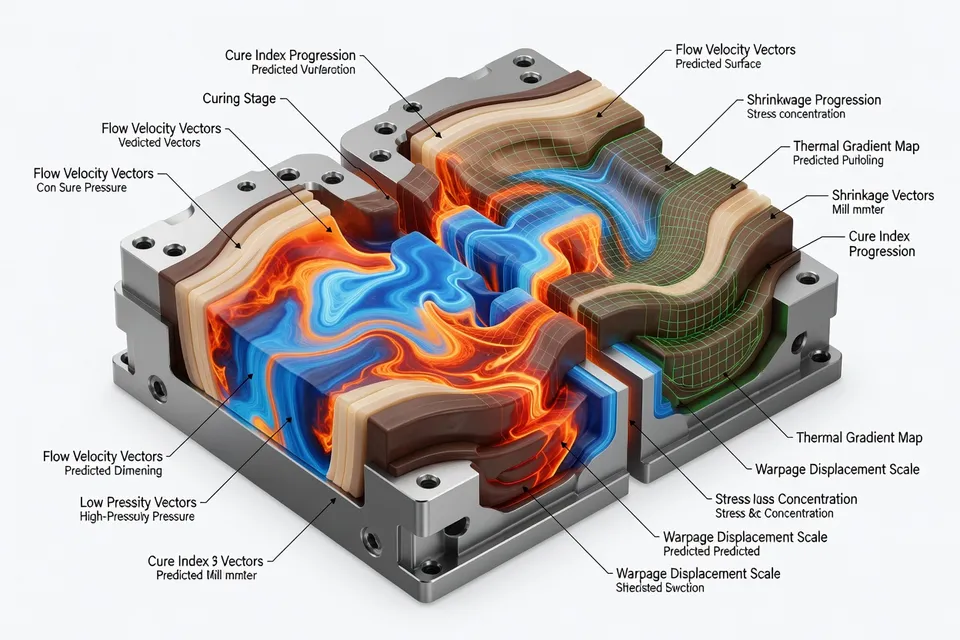
Earlier work summarized in a MoldEx3D technical PDF reinforces the same point: investing in accurate early‑stage simulations reduces the number of prototype loops and streamlines overall mold design validation. The study concludes that running simulations before tool construction lets processors pre‑empt many molding challenges.
For compression molders dealing with medium‑hardness compounds and expensive material, the operational implication is straightforward: simulation shifts risk upstream. Instead of discovering charge size, placement, or curing issues during first‑article trials, engineers use virtual molding to set charge patterns, press conditions and cure times that are already close to production‑ready.
What This Means for Plant Practice
Across these case studies, the practical pattern is consistent:
-
Automate where tasks are repetitive, time‑critical or inspection‑heavy. Robots are being deployed to demold, stack, and inspect parts when human speed or consistency limits throughput and quality.
-
Treat process data as a production material. Whether it is startup checklists in injection molding or simulated temperature and cure profiles in compression, the plants getting results are the ones that treat data as a routine part of running the press.
-
Tie automation to a defined bottleneck. In the reagent dipstick and diagnostic plate cases, medical device manufacturers only automated once downstream handling became a clear constraint on higher‑cavity tools. In compression molding, simulation was justified where tool changes were expensive and trial loops slow.
Copyable Next Steps for Molders
Molders who recognize their own plants in these stories can move in small, concrete steps:
-
Start by documenting and standardizing mold startups on one high‑volume job, including pre‑start checks and first‑shot acceptance criteria, then expand to other references.
-
Implement basic downtime logging at the press—paper, tablet, or MES—to categorize stops and identify two or three recurring causes that justify either automation or targeted maintenance.
-
For rubber or compression operations, pilot compression molding simulation on a new tool where scrap or material cost would be painful. Use the results to set initial charge patterns and cure conditions instead of guessing at trial.
-
When considering complex bi‑material or rotary molds, budget design time for cooling, shrinkage, and demolding strategy alongside part design. The automotive rotary mold case shows these are not side issues; they are central to mold reliability.
None of these steps require doubling machine count. They require time, cooperation between process, tooling and maintenance, and a willingness to treat automation and simulation as extensions of good molding practice, not as silver bullets.
Editorial Insights
- How can molding plants identify where automation will genuinely improve efficiency rather than just add complexity?
- The most reliable approach is to tie automation decisions to clearly measured bottlenecks: steps that consistently limit throughput, create scrap, or require intensive inspection. By standardizing startups and tracking downtime by cause, plants can see where repetitive handling, time‑critical transfers, or unstable manual adjustments are constraining output. Automation that is engineered specifically around those constraints tends to lift efficiency; automation installed without that diagnostic groundwork often adds new failure modes and training overhead without improving margin.
- Why is disciplined mold startup becoming a strategic lever for profitability in small and midsized operations?
- For many plants, the first hour of a run is the most expensive and least controlled, with scrap, rework, and dimensional drift eroding margins before stable production is reached. When startups are standardized—checklists, clear first‑shot criteria, and locked parameter sets—plants shorten this unstable window and reduce variation between shifts. That directly improves OEE and lowers unit cost without new equipment, turning existing capacity into a more predictable profit stream, which is especially critical for smaller operations with tight labor and capital budgets.
- In multi-material molding, why does design discipline matter as much as the automation hardware itself?
- When plastic and rubber or multiple polymers share a single tool and sequence, interactions between shrinkage, cooling, demolding and actuation become the real constraints on reliability. If the rotary, transfer, and ejection steps are not engineered around machine limits and material behavior, automation will simply repeat instability at higher speed. Treating the system as a whole—tool design, cooling circuits, demold strategy, and motion control—ensures that automated cycles remain dimensionally stable and repeatable, making the hardware an efficiency multiplier instead of a source of chronic stoppages.
- How does treating process data as a routine production material change day-to-day molding practice?
- When plants handle data—startup records, downtime logs, simulated temperature and cure profiles—with the same discipline as resin or compound, it becomes a tool for controlling variation rather than just historical reporting. Operators shift from reactive adjustments to evidence‑based changes, locking in stable windows once root causes are identified. Over time this creates a feedback loop: better data reveals the next constraint, supports the business case for targeted automation or maintenance, and reduces both scrap and energy use through more consistent processing.
- What sustainability benefits emerge when plants use simulation and automation to stabilize molding processes?
- Stable, well‑engineered processes tend to cut scrap, reduce trial‑and‑error loops, and lower unnecessary energy consumption, all of which have direct environmental benefits. Early‑stage simulation shifts mistakes out of the press and into the virtual domain, saving material and tool modifications, while targeted automation minimizes handling damage and improves first‑pass yield. Over time, these improvements allow plants to meet tighter regulatory and customer expectations on waste and carbon intensity without sacrificing throughput or quality.
- What long-term competitive risks do molding plants face if they continue to rely mainly on manual adjustments and ad-hoc troubleshooting?
- Plants that stay dependent on constant “knob‑turning” and tribal knowledge are effectively locking their performance to individual operators and shift habits. As customers demand tighter tolerances, shorter lead times, and clearer process documentation, those operations will struggle to scale, replicate success, or satisfy audits. In contrast, competitors who institutionalize root‑cause process control and data‑driven automation can transfer best practices across tools and sites, making their cost structures and quality levels harder to match over the next decade.
References
- 1.Taylor & Francis Online. Multi-injection mould design for automotive components. Taylor & Francis Online.
- 2.Plastics Technology. (2026, February 27). How small and midsized injection molders can increase efficiency and protect margins. Plastics Technology.
- 3.Rubber World. (2026, July 20). Compression molding simulation: Capabilities, features and industrial case studies. Rubber World.
- 4.Rahco Rubber. (2026, July 21). Case studies. Rahco Rubber.
- 5.MoldMaking Technology. (2026, August 24). Case study. MoldMaking Technology.
- 6.Meta Smart Factory. (2026, August 1). MES for injection molding: What plastics manufacturers actually need. Meta Smart Factory.