

From AI Dryer to Concept Tires: How 2026 Projects Are Rewiring the Factory Floor
Across rubber, tire and plastics plants, AI is no longer a side project: 2026 announcements show it embedded in dryers, mould design, retreading cells and even concept tires for circular EV value chains. For operators, the thread running through these moves is practical—cut scrap, stabilise quality, and make complex decisions repeatable without adding more people.
Sri Trang Agro-Industry’s transformation programme in Thailand anchors that shift on the raw materials side. The group has rolled out an AI Dryer at two natural rubber plants and plans to extend it to six facilities in 2026 and another eight in 2027 as part of its Sri Trang AI Machine (SAM) initiative. The same infrastructure sits under a broader "factory of the future" project intended to knit together machinery, automation, data and AI from raw-material receiving through energy management and quality inspection.
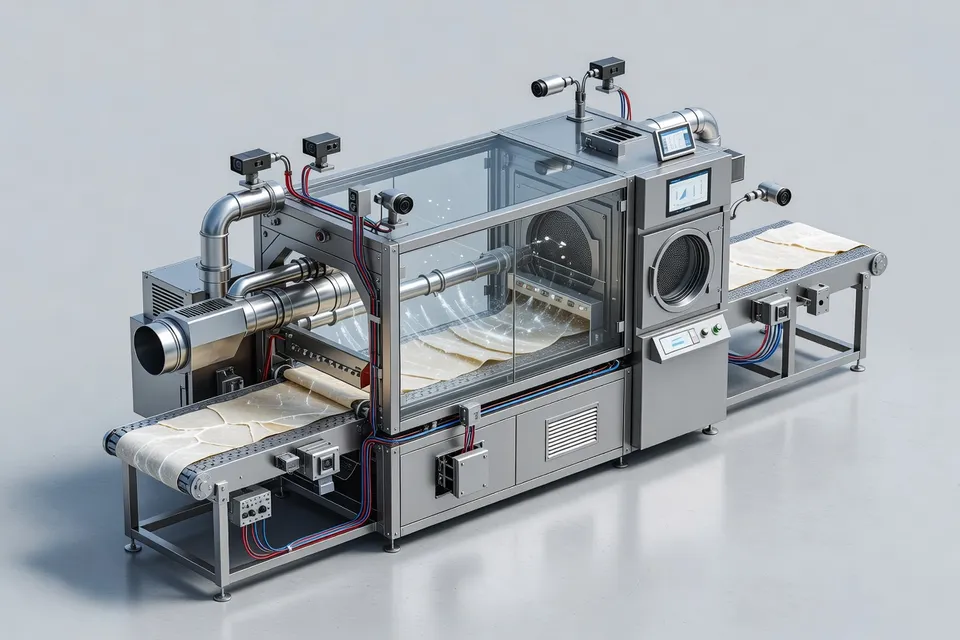
The company’s own description of the programme is deliberately practical: applications are being developed across plantations, natural rubber processing and gloves, with the goal of lifting efficiency, accuracy and decision-making instead of creating stand‑alone pilots. A separate corporate vision laid out at a 2025 town hall pushes the same idea down into workforce planning, with systematic AI adoption paired to upskilling and reskilling to create “AI‑driven manufacturing” capability inside the organisation rather than outside consultants.
For plant managers at other processors, the lesson is tactical: Sri Trang is not starting with a greenfield plant or a headline “smart factory,” but with one stubborn bottleneck—the dryer—and then extending the same architecture across more units and business lines.
Yokohama Rubber Turns R&D Knowledge into a Searchable Asset
On the tire side, Yokohama Rubber is using AI less as a line controller and more as a way to clean up the front end of product development. In August 2026, the company moved a proprietary generative AI system into full-scale operation, built on a retrieval‑augmented generation (RAG) approach that searches internal technical documents and responds based on their contents.
The system expands Yokohama’s HAICoLab framework, introduced in 2020 to structure human–AI collaboration in tire development. Earlier HAICoLab tools already predicted rubber compound properties, generated new compounds and supported mould design. The new RAG deployment widens the scope from numbers to narratives—regulatory texts, manuals, technical reports and case studies that normally sit in archives or personal folders.
Developers type questions framed around their project, the AI hunts through that internal corpus and answers with references back to the source documents. Yokohama has also built an AI agent that plans searches, retrieves information and evaluates results repeatedly to sharpen answers, rather than returning a single static result.
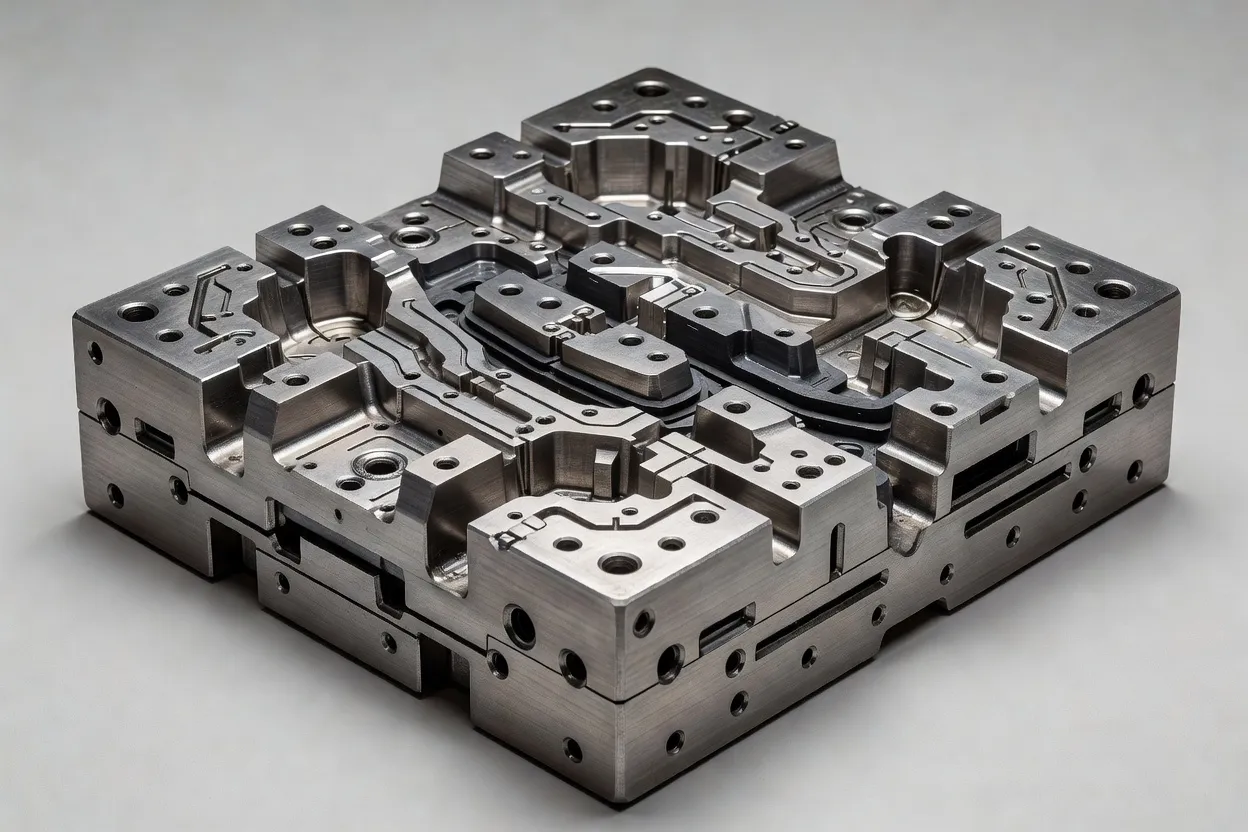
In parallel, the company has developed an AI‑assisted tire mould design system that automatically generates large sets of finite‑element models with different mould shapes, trains a surrogate model and then predicts how design factors will move tire characteristics almost instantly. Explainable AI tools such as SHAP and partial dependence plots make the relationships visible, helping less‑experienced staff adjust factors to hit target performance without long trial‑and‑error loops.
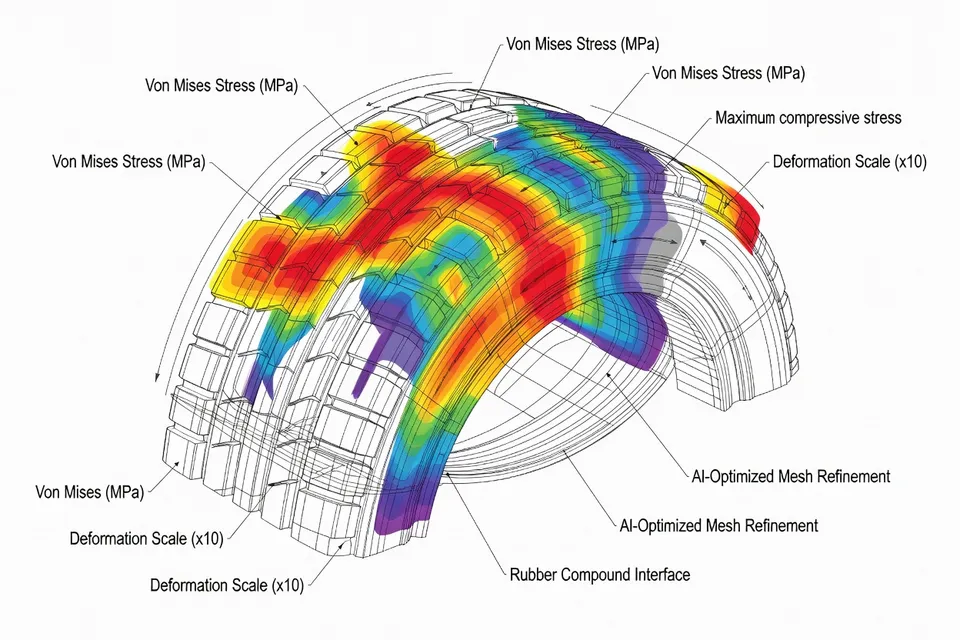
For other technical teams, the operational impact is clear: AI is not just tuning parameters on the machine; it is compressing the decision time between a design idea and a simulated answer, while keeping the rationale visible so engineering sign‑off is still grounded.
Continental’s ZEvRA Concept Tire Links AI and Circularity Pressure
AI is also creeping into how material and circularity constraints are translated into tire designs. Under the EU‑funded ZEvRA project ("Zero Emission Electric Vehicles Enabled by Harmonized Circularity"), Continental has built a passenger‑car concept tire using around 43% recycled materials, including recycled tall oil, steel, rubber from end‑of‑life tires and polyester fibres from recycled PET bottles. Taken together with renewable and mass‑balance‑certified inputs, more than 80% of the tire’s materials come from recycled, renewable or certified sources.
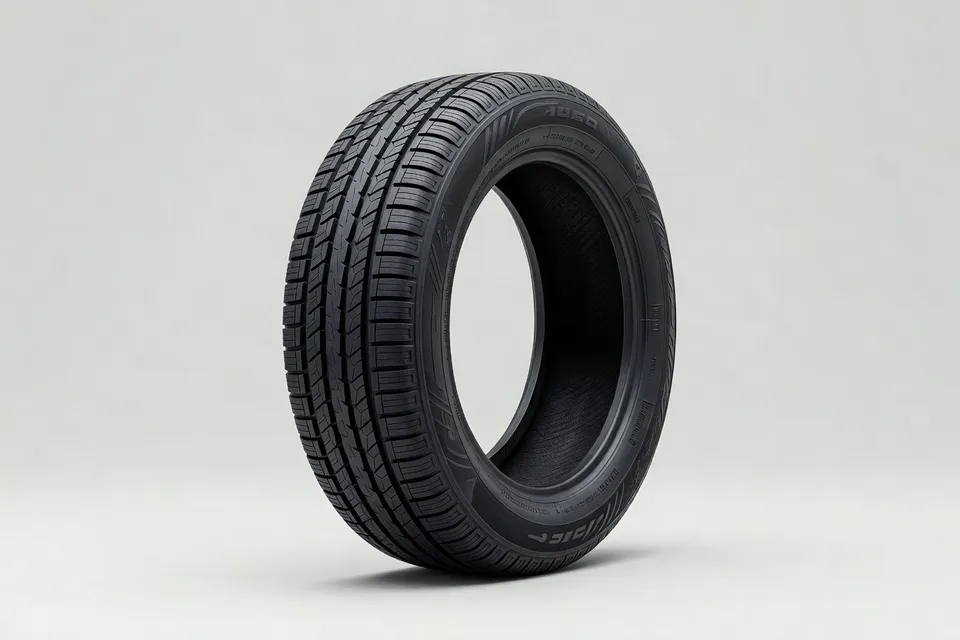
ZEvRA runs from 2024 to 2026 and is aimed at improving the circular economy of light‑duty electric vehicles along the full value chain. Continental is the only tire maker in a 28‑partner consortium spread across 13 countries. Project materials stress that innovative compounds alone are not enough; industrial scale‑up requires stable policy and standards for recycling technologies.
While the press material does not spell out specific AI models inside Continental’s concept work, the project sits in the same ecosystem that is pushing digital design and process tools across the sector, from simulation‑based mould design to AI‑supported tyre testing and fleet management at trade events in 2026. For factory teams, ZEvRA is a preview of the design space they will have to operate in: higher shares of non‑virgin inputs with line‑rate performance expectations, and increasing use of digital tools to prove that combination will work before committing capital.
VMI and Automated Retreading: First Steps, Not Full Lights‑Out
Downstream, retreaders are starting to see practical automation appear in equipment rather than in slide decks. At The Tire Cologne 2026, VMI is showing new automation features on its RETRAXX line, including an automatic splice unit and automatic recipe loading that it describes as first steps towards more automation in retreading.
The RETRAXX platform is designed for applying extruded hot cushion gum onto buffed casings, a job that normally relies heavily on skilled manual work. By automating splicing and tying machine set‑up more tightly to digital recipes, VMI is aiming at reduced operator dependency and more consistent application, especially as batch sizes shrink and size changes become more frequent.
An account manager from VMI is scheduled to present on automation in retreading during the show, underlining that these are iterative steps rather than a switch to unattended plants. That matters for medium‑size retreaders trying to decide what to buy next: the immediate gains are in reproducible splices and faster, error‑free changeovers, not in eliminating people.
AI in Injection Molding: Closed‑Loop Quality Without More Inspectors
Outside tires, plastics processors are quietly putting similar ideas to work. A 2026 analysis from U.S. molder Evok Polymers describes how AI‑enabled injection molding cells combine cavity‑pressure and temperature sensors with machine‑learning models that compare every cycle against a known "reliable zone"—the window where parts stay within spec.
Instead of waiting for an inspector to find defects at the end of a shift, the system watches live sensor data for drift and flags which parameters—injection pressure, holding time, shot volume or cooling time—are pushing the process out of that window. Operators then apply the suggested corrections or, in more advanced setups, allow the system to adjust automatically. The claim from Evok’s own deployments is faster convergence to stable parameters and scrap reductions from the first day of production, with AI plugging into existing Six Sigma and scientific molding practices rather than replacing them.
The same write‑up points to predictive maintenance based on IIoT sensors that monitor vibration, temperatures, pressures and cycle timing to detect wear before it causes unplanned stoppages. Digital twin simulations of mold filling and cooling are also used before cutting steel to trim rework on tooling.
For moulding shops under pressure on lead times and labour availability, these systems have a concrete payoff: fewer start‑up rounds lost to manual tuning, lower scrap in the same shift, and a more predictable maintenance schedule without adding supervisors.
What Plant Teams Can Copy Now
Taken together, these 2026 moves point to a pattern processors can act on today:
- Start with one bottleneck process. Sri Trang’s AI Dryer roll‑out and VMI’s focus on splicing and recipe loading both show value in upgrading a single, high‑impact step.
- Tie AI tightly to existing engineering methods. Yokohama’s HAICoLab tools sit on top of FEM and established materials know‑how, while Evok’s AI systems feed into scientific molding and Six Sigma workflows.
- Keep human review in the loop. Yokohama’s RAG system exposes document links for validation, and explainable AI in mould design helps designers see why a recommendation makes sense. Evok stresses that experienced engineers still interpret the root cause behind AI‑detected anomalies.
- Plan for data housekeeping early. Whether it is technical reports feeding a RAG model, sensor data for cavity pressure or traceability needs in EV tire circularity projects, data structure—not just algorithms—decides how quickly AI deployments scale.
For most plants, the near‑term opportunity is not a brand‑new “smart factory,” but retrofitting AI and automation into one or two critical processes where scrap, rework or changeover time still depend on the best shift supervisor being on duty.
Editorial Insights
- How should plastics and rubber processors decide which plant processes are the best starting point for AI deployment?
- The most effective entry points are processes that combine high scrap or rework risk, strong impact on downstream quality, and a clear history of dependence on individual operator skill. Dryers, retreading steps, molding start-up windows, and complex changeovers are typical candidates because they generate measurable costs and have defined parameters that sensors and models can track. Starting with one such bottleneck makes it easier to prove ROI, refine data practices, and build internal confidence before expanding AI to adjacent processes.
- What does AI-driven closed-loop quality control change about traditional inspection and process tuning in molding and rubber processing?
- Closed-loop quality systems shift inspection from end-of-line defect catching to real-time deviation detection at the machine. By comparing each cycle to a validated process window and flagging which parameters are drifting, AI turns tuning into a continuous, data-led activity rather than periodic trial-and-error by the most experienced operator. This reduces start-up losses, stabilizes quality faster, and allows plants to maintain performance even as workforce experience levels fluctuate.
- How is AI changing the economics of R&D and tooling for tire and plastics manufacturers?
- By automating search across technical knowledge, generating large sets of virtual designs, and using surrogate models to predict performance, AI compresses the time between concept and credible simulation. That reduces the number of physical prototypes, shortens tooling iteration cycles, and lowers rework on molds and compounds. Economically, it shifts a portion of development spend from physical experimentation to digital validation, freeing capacity for more variants and faster responses to regulatory or customer requirements without proportional increases in engineering headcount.
- What role does AI play in meeting rising circularity and non-virgin material targets for tires and polymers?
- As recycled and renewable inputs grow, process windows narrow and material variability increases, making conventional trial-and-error less viable at line speeds. AI-assisted design, simulation, and testing tools help map how new material combinations influence properties and performance before large capital is committed. At scale, this allows factories to integrate higher shares of non-virgin inputs while maintaining consistent output, and it provides the digital evidence needed to satisfy customers and regulators that circular products still meet safety and durability expectations.
- Why is “human-in-the-loop” design becoming a critical principle for AI deployments on the factory floor?
- Keeping human review in the loop anchors AI recommendations in established engineering judgment and prevents black-box decisions from undermining safety or quality culture. Tools that expose underlying data, show factor sensitivities, or link answers back to source documents make it easier for engineers and supervisors to validate and challenge outputs. This approach not only improves trust and adoption but also provides a practical path for upskilling staff, turning AI into a force multiplier for existing expertise rather than a replacement for it.
- What ethical and workforce considerations arise as AI systems take over more judgment-heavy tasks in processing plants?
- As AI begins to flag root causes, suggest parameter changes, and plan searches across technical knowledge, it inevitably shifts where expertise resides in an organization. Ethically, plants need transparent criteria for when to trust automated decisions, clear accountability for outcomes, and structured pathways for reskilling so employees move into higher-value roles rather than being sidelined. Over time, the most resilient factories will be those that treat AI as part of a broader capability-building agenda, ensuring that human judgment stays central even as routine decisions are automated.
References
- 1.European Rubber Journal. (2026, August 25). Sri Trang eyes 'factory of future' in transformation drive. European Rubber Journal.
- 2.European Rubber Journal. (2026, August 28). Yokohama Rubber advances generative AI system for tire R&D. European Rubber Journal.
- 3.Continental. (2026, August 25). Continental develops concept tire containing over 40 percent recycled materials for EU project. Continental.
- 4.VMI Group. The Tire Cologne 2026. VMI Group.
- 5.EvoK Poly. AI injection molding. EvoK Poly.