


A Global System in Flux
Between mid-2025 and late 2026, plastics and rubber recyclers have had to adjust to a moving target: Europe’s circularity slowdown, China’s partial reopening to recycled feedstock, and a patchwork of rules for advanced recycling and problematic packaging. At the same time, lab-scale breakthroughs in tire and plastics recycling are edging closer to industrial relevance.
For plant managers, this is not an abstract policy story. It changes who can sell which bales where, what counts as recycling, and how quickly new chem-recycling and depolymerisation lines can find offtake.
China Reopens the Door to Recycled Plastics
In August 2026, The Diplomat reported that China is reversing part of the course it set with its “National Sword” policy, which since 2017 had effectively shut out most plastic waste imports. The Circular Economy Development 15th Five-Year Plan, published in July 2026, explicitly commits China to taking in good-quality recycled plastic feedstock from abroad to supplement domestic supply.
The plan sets a target for an “internationally advanced” recycling sector by 2035, backed by an inter‑agency action plan that benchmarks more than 19.5 million tonnes of recycled plastics annually by 2030. This marks a clear shift from a pure ban approach to a controlled import model: the focus is on high‑quality, well‑sorted recyclate rather than mixed scrap.
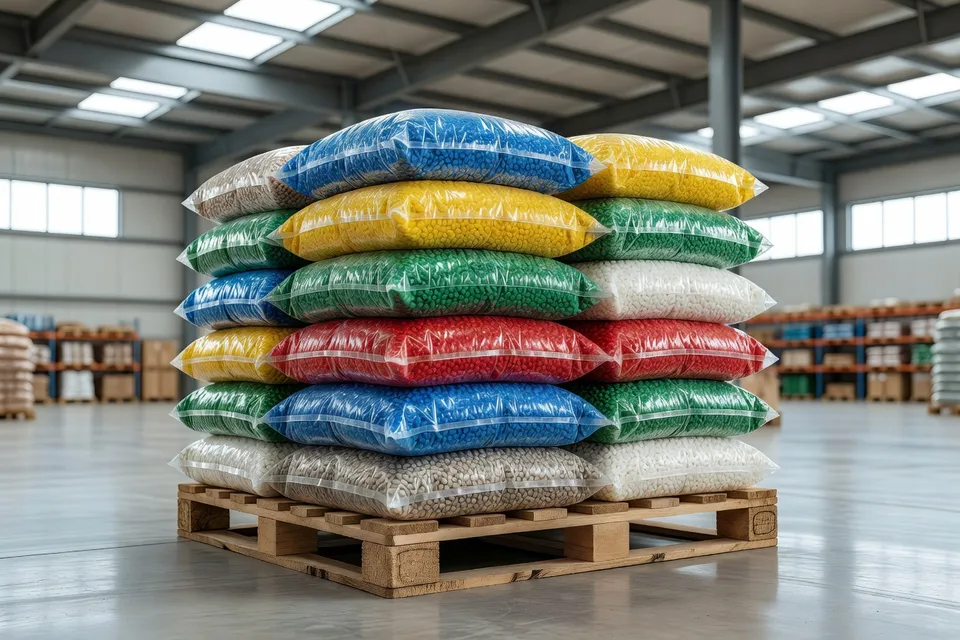
A new Ecological Environment Code, which took effect the same month, introduces the legal basis for mandatory recycled-content requirements in key product categories. That changes the risk calculation for both domestic and foreign suppliers. If China follows through with binding recycled‑content mandates, processors shipping washed flakes or pellets into China will be competing against local recyclers, but they will also see more predictable demand.
For export-oriented material recovery facilities (MRFs) and plastics reclaimers, the operational takeaway is straightforward:
- Bale quality becomes a ticket to market. The earlier contamination thresholds that shut exporters out will remain a reference point.
- Contracts will likely favour food‑grade and traceable feedstock, not generic mixed polyolefins.
- Any plant counting on China as an outlet must align its QA systems with Chinese certification and traceability standards, which Beijing is expected to tighten.
Europe’s Circular Plastics Transition Slows
While China is reopening, Europe’s circular plastics transition is losing speed. PlasticsEurope’s 2026 report, The Circular Economy for Plastics – A European Analysis, covering the period 2022–2024, shows that circular plastics output in Europe reached 8.7 million tonnes in 2024, equal to 15.8% of total plastics production.
The headline problem is growth. Annual circular production growth dropped from 13.6% in 2022 to only 1.2% in 2024. In other words, circular output is still inching up, but the system’s momentum has almost stalled.
The report also underlines how dependent Europe has become on cross‑border flows:
- 19% of converters’ demand for circular plastics is covered by imports.
- 12.4% of collected plastic waste in Europe is recycled outside the region.
- The recycling rate of collected plastic waste rose to 29.6%, but more than 70% of collected plastic waste still ends up in incineration or landfill.
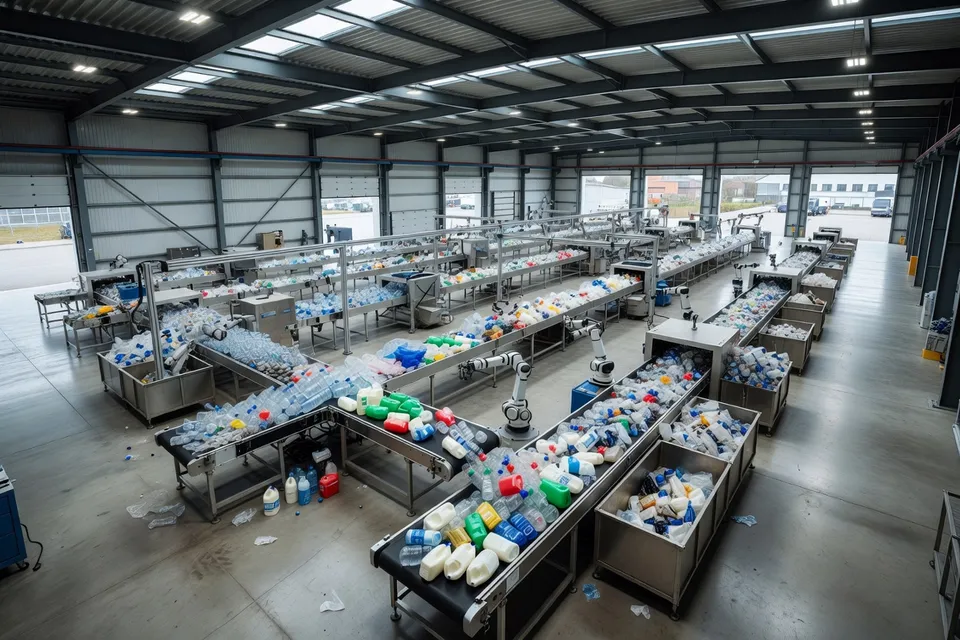
For converters, the numbers describe a “leaky loop”: high‑quality recyclate is imported to keep production lines running, while a significant share of locally collected scrap is processed elsewhere. That gap now sits under a tightening policy umbrella.
The European Commission signalled in January 2026 that it will move ahead with a Circular Economy Act. An accompanying pilot package focuses on plastics, including EU‑wide end‑of‑waste criteria for mechanically recycled plastics, separate customs codes for virgin vs. recycled plastics, and enhanced monitoring of global plastics markets. From November 2026, exports of plastic waste to non‑OECD countries are to be banned.
Taken together, this means European recyclers will face less competition from cheap exports, but will also need to meet harmonised standards to sell recycled polymers across the EU. For processors, that shifts the priority from volume to specification‑grade output.
Advanced and Chemical Recycling: Technology vs. Economics
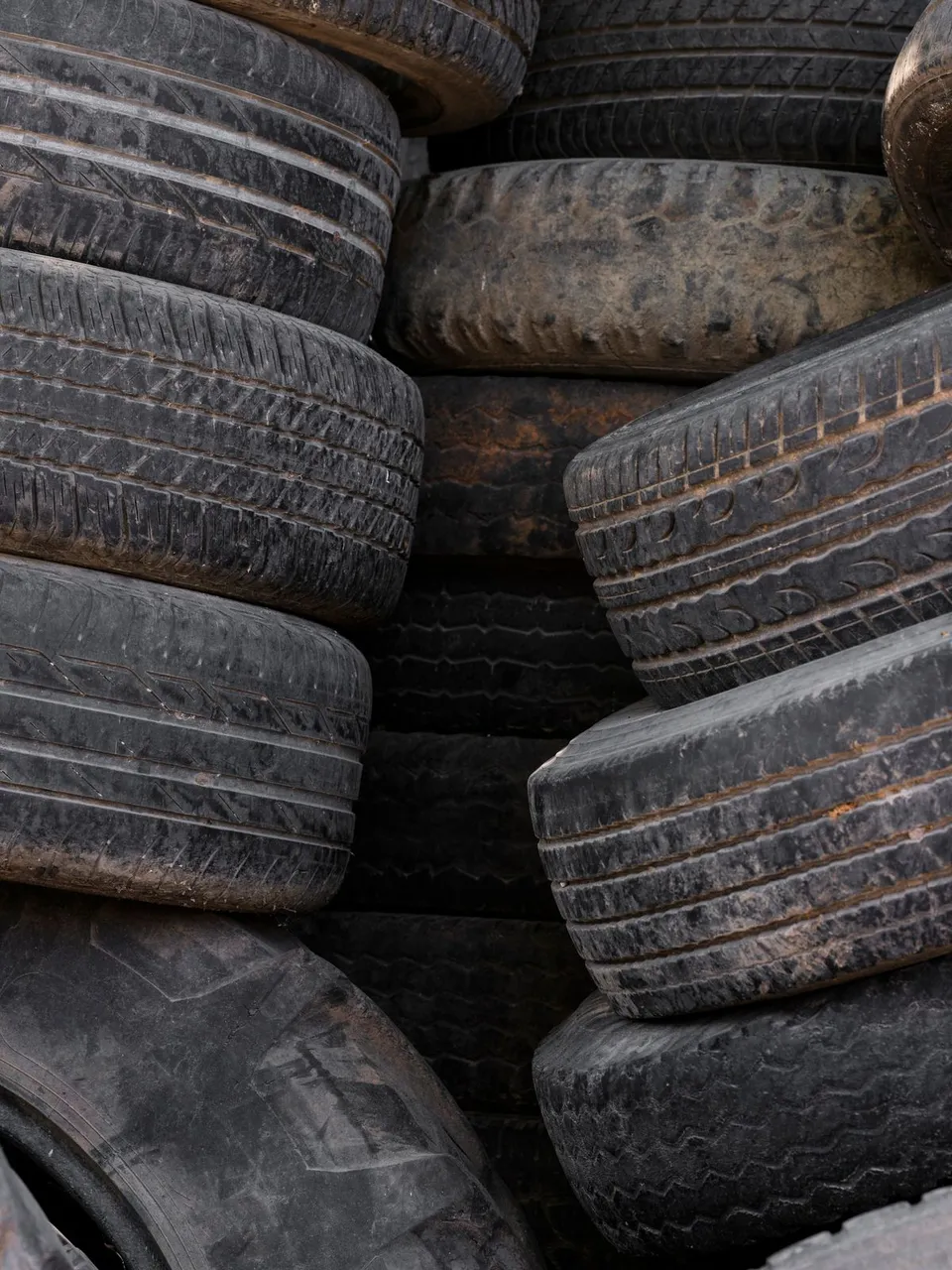
On the technology front, a 2025 study from KAIST highlighted a selective chemical recycling route for waste tires. The team reported a two‑catalyst process that converts post‑consumer rubbers into high‑purity cyclic alkenes, notably cyclopentene and cyclohexene, with selectivity up to 92% and yields around 82%. Cyclopentene can be looped back into rubber production, while cyclohexene serves as a raw material for nylon fibres.
From a plant‑operations standpoint, this matters because it suggests a feedstock‑like outlet for end‑of‑life tires that goes beyond the usual crumb rubber and low‑grade pyrolysis oil. However, the work is still at research scale; the challenge is translating lab selectivity and yield into a continuous process that can tolerate real‑world contamination and variable feed.
The economic and regulatory reality of advanced recycling is described bluntly in an August 2026 Enespa analysis: even when the technology reaches a high technology readiness level (TRL), scaling and making plants bankable remain the main bottlenecks.
According to Enespa, chemical recycling projects are constrained by:
- High capital expenditure for complex pyrolysis and upgrading units.
- Volatile energy and operating costs.
- Uncertain offtake structures for pyrolysis oil and byproducts.
- Regulatory expectations that move faster than offtake markets.
"The technology is often available, but scalability, economic viability and long-term purchase agreements constitute critical bottlenecks that determine the success or failure of the projects." - Enespa analysis on chemical recycling
To keep projects moving, Enespa has shifted to what it calls “Recycling as a Service” – providing turnkey plants, operational support, lab services and joint operating models, rather than just selling equipment. For processors considering chemical recycling partnerships, this signals that service‑wrapped plants may become the norm: capacity is bundled with feedstock sourcing, product acceptance agreements, and operator training.
At policy level, a January 2026 regulatory outlook by K&L Gates notes that US states are moving in sharply different directions on advanced recycling. Where states deem these processes to convert discarded plastics into feedstock without major disposal concerns, they classify them as manufacturing, not waste management. That reclassification can ease permitting and grant access to industrial incentives.
Elsewhere, states have chosen to keep pyrolysis under solid waste law or even consider outright restrictions on plastic‑to‑fuel technologies. The net result is a non‑uniform playing field: identical units can be treated as recycling plants in one jurisdiction and waste facilities in another.
For operators planning multi‑state roll‑outs, the operational advice is clear: build a permitting and compliance map as carefully as a process flow diagram. Siting decisions will increasingly hinge on whether a jurisdiction recognises advanced recycling as a manufacturing activity.
Red Lists and Re‑Entry: The US Plastics Pact’s Problematic Materials
Downstream, brands and converters are being steered by voluntary but influential “problematic and unnecessary materials” lists. The US Plastics Pact’s 2022 list flagged 11 plastic packaging items that were “not currently reusable, recyclable, or compostable at scale in the U.S.” and called for their phase‑out by 2025. Items include cutlery and straws (when provided as ancillary items), intentionally added PFAS, non‑detectable pigments such as carbon black, opaque PET bottles, oxo‑degradable additives, PETG in rigid packaging, polystyrene (including EPS), PVC (including PVDC), and problematic label constructions.
The list has since been expanded to cover multimaterial films and bags, non‑compostable produce stickers, foamed PET, and an extended set of degradable additives that are not certified compostable. The Pact now aims to eliminate all items on the expanded list by 2030, while holding to 2025 for the original 11.
While the list is voluntary, it is backed by major brands, retailers and recyclers. It has already started to reshape procurement specs and design briefs for packaging.
In 2026, the Pact took a notable step: it removed expanded polystyrene (EPS) transport packaging from the problematic list, following a request by the Polystyrene Recycling Alliance backed by new recycling data. According to Packaging Dive, this is the first time an item has been delisted since the framework was created in 2022.
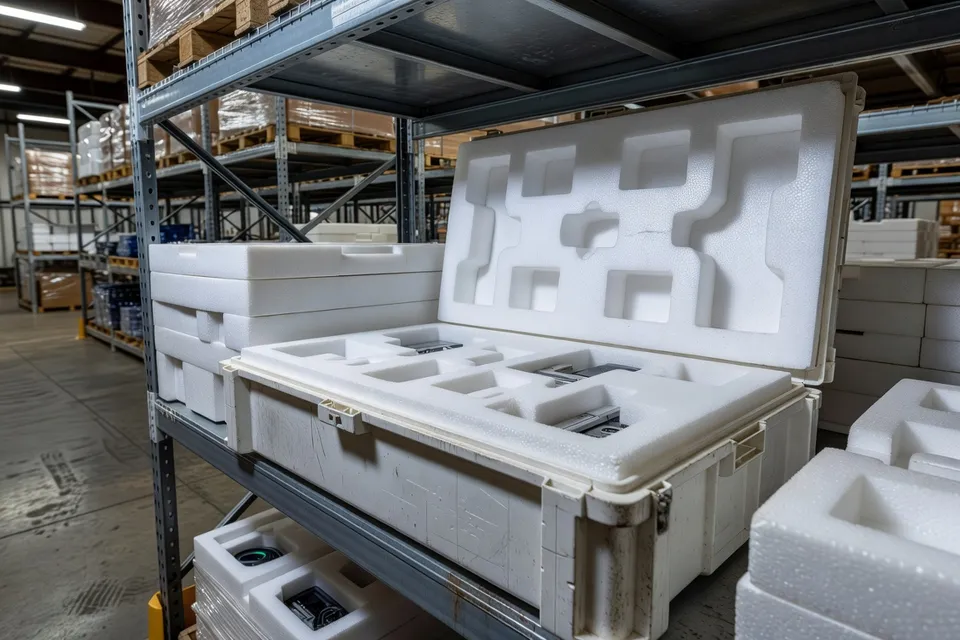
US Plastics Pact leadership stated that the new data met its thresholds for removal, though the change is limited to transport EPS and does not apply to other polystyrene formats. A broader review of the list is underway, with results expected by the end of 2026.
For shippers and converters using EPS for protective packaging, this move provides a narrow but real pathway: where regional collection and recycling capacity exists and can be documented, transport EPS may no longer be treated as a “must eliminate” resin in corporate roadmaps.
At the same time, the Pact reports that, as of its most recent progress update, 29% of participants reported selling no items on the problematic list, with a goal of 100% by 2030. That creates direct commercial pressure up the chain: resin suppliers and converters who can provide compliant designs have a clearer route into Pact members’ specifications.
What Plant Operators Can Do Next
None of these shifts – China’s controlled reopening, Europe’s slowed but tightening circular system, the uneven recognition of advanced recycling, or the evolving US red lists – change the basic shop‑floor priorities. They do, however, change which investments will stay bankable over a 10‑ to 15‑year horizon.
For plastics and rubber processors, three practical steps emerge from the current landscape:
-
Design for recognised recycling systems. Align packaging and product specs with the US Plastics Pact’s problematic materials guidance and with emerging EU design rules. Avoid formats that sit on phase‑out lists unless there is a clear, documented recovery pathway.
-
Treat advanced and chemical recycling as complement, not cure‑all. Where you pilot chem‑recycling tie‑ins – for example, sending mixed polyolefin streams or tires to pyrolysis partners – insist on long‑term offtake agreements and clarity on how the process is classified under local law.
-
Plan for trade‑constrained circularity. With Europe moving to keep more waste and recyclate within its borders and China selectively reopening, export‑driven models are riskier. Plants that can consistently produce high‑spec recyclate – whether PET flakes, HDPE granules, or tire‑derived chemical intermediates – will be better placed to navigate whichever market stays open.
The throughline is simple: circularity is no longer just about installing a baler or a wash line. It is about aligning plant operations with the specific policy, market and technology conditions in the regions where your output is actually bought and re‑melted.
Editorial Insights
- How should plastics and rubber processors rethink feedstock strategy as trade rules and circular economy policies tighten across major regions?
- Processors need to shift from opportunistic sourcing toward structured, policy-aware feedstock strategies. That means mapping how import and export restrictions, recycled-content mandates, and end-of-waste criteria affect both incoming streams and downstream customers, and baking those assumptions into contracts and plant design. Operations that treat policy shifts as predictable boundary conditions rather than surprises will be better positioned to secure stable, high-quality inputs and reliable offtake.
- What does the current shift in recycling policy mean for the value of bale quality?
- Bale quality is becoming a pricing and market-access issue, not just an operations issue. As trade routes tighten and buyers demand more traceable feedstock, contamination control, sorting accuracy, and documentation increasingly determine whether material qualifies for higher-value outlets or is downgraded into lower-margin channels.
- Why is circularity slowing even as more recycled material is entering the market?
- The main constraint is not intent but system capacity: collection, sorting, consistent specifications, and end-market demand are not expanding fast enough to keep pace with policy ambition. When recycled output grows only marginally while large shares of collected waste still leave the loop, the system becomes dependent on imports, exports, and policy support to function.
- Will advanced recycling solve the plastics waste problem at scale?
- Advanced recycling can fill important gaps, especially for streams that are difficult to mechanically recycle, but it is not a universal fix. Its success depends on stable feedstock, reliable product outlets, energy costs, and regulatory recognition, which means it will likely remain a complementary tool rather than a standalone solution.
- What does the tightening of packaging restrictions signal for product design?
- It signals that design decisions are moving closer to compliance decisions. Materials and formats that cannot demonstrate scalable recovery are increasingly being pushed out of procurement specs, which rewards simpler structures, cleaner material choices, and packaging that can fit established collection and recycling systems.
- What is the broader economic risk of relying on cross-border circular flows?
- Cross-border circularity can keep plants running, but it also exposes the sector to policy swings, transport costs, and sudden market closures. Over time, the companies best positioned to remain competitive will be those that can build regional recovery capacity and sell consistent, specification-grade output without depending on one external outlet.
- Why does the social case for recycling now depend so heavily on traceability and proof?
- Because claims about recycled content, recyclability, and circularity are increasingly judged against measurable system performance rather than broad sustainability language. Traceability helps separate real recovery from symbolic compliance, which is essential if public confidence is to match the promises being made across the supply chain.
References
- 1.Robertson, J., & Woodring, D. (2026, August 21). After 9 years, China is reopening its borders to recycled plastic. The Diplomat.
- 2.Plastics Europe. (2026, May 18). Circular economy for plastics 2026. Plastics Europe.
- 3.Phys.org. (2025, June 26). New and highly efficient recycling technology to turn used tires into raw materials for rubber and nylon. Phys.org.
- 4.Enespa. (2026, August 22). Chemical recycling: Between technological breakthrough and economic reality. Enespa.
- 5.Brill, M. O., & Rothenstein, C. L. (2026, January 14). 2026 regulatory outlook: Advanced recycling. K&L Gates.
- 6.Waste Dive. (2022, January 25). US Plastics Pact releases anticipated problematic and unnecessary materials list. Waste Dive.