


Forecasts point to expansion, not a boom
New market estimates from several research firms suggest the plastics and rubber sector is still on a growth path, but the next phase looks more measured than the post-pandemic rebound. The latest figures show broad-based gains for plastics, thermoplastics, synthetic rubber and silicone rubber, yet the underlying message is more cautious: demand is becoming more dependent on replacement cycles, packaging, regulatory compliance and the pace of vehicle production.
Plastics still carry the biggest weight
The largest of the reviewed forecasts comes from The Business Research Company, which says the plastics and rubber products market reached $1552.46 billion in 2025 and is expected to rise to $2112.74 billion in 2030, at a 6.5% CAGR. The same report says the market will grow from $1552.46 billion in 2025 to $1642.34 billion in 2026, implying 5.8% growth in that year.
Plastics and rubber products market size, 2025-2030
| Year | Market Size (billion USD) |
|---|---|
| 2025 | 1552.46 billion USD |
| 2026 | 1642.34 billion USD |
| 2030 | 2112.74 billion USD |
Fortune Business Insights is more focused on the plastics market alone, and its outlook is narrower in scope but still solid. It values the global plastics market at USD 533.59 billion in 2025, rising to USD 560.38 billion in 2026 and reaching USD 832.62 billion by 2034, at a 5.1% CAGR from 2026 to 2034. The firm says Asia Pacific held a 53% share in 2025, underlining where much of the volume and processing base remains concentrated.
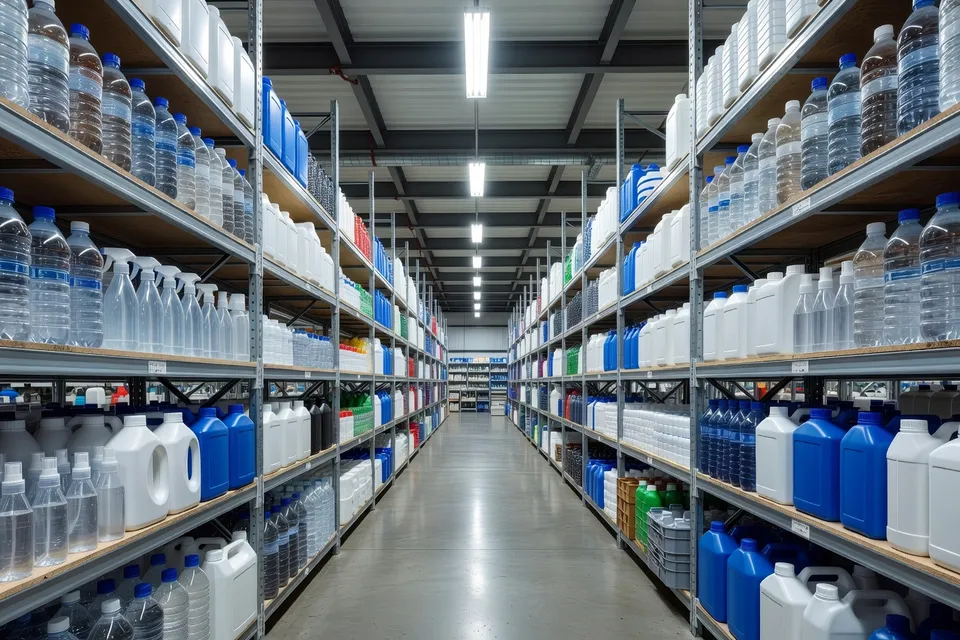
For processors and compounders, those numbers matter less as headline statistics than as a signal about where capacity, resin selection and customer demand are heading. Packaging, automotive and consumer goods continue to sit at the center of plastics growth, which means converters will still be judged on cost, lightweighting and recycled-content readiness rather than volume alone.
Market structure is shifting toward compliance and circularity
The Business Research Company says future growth in the plastics and rubber products market will be supported by a circular plastics economy, electric vehicle components, sustainable packaging solutions, advanced polymer processing and tighter plastic-waste regulation. That mix suggests the market’s growth story is becoming more policy-shaped than it was in earlier cycles.
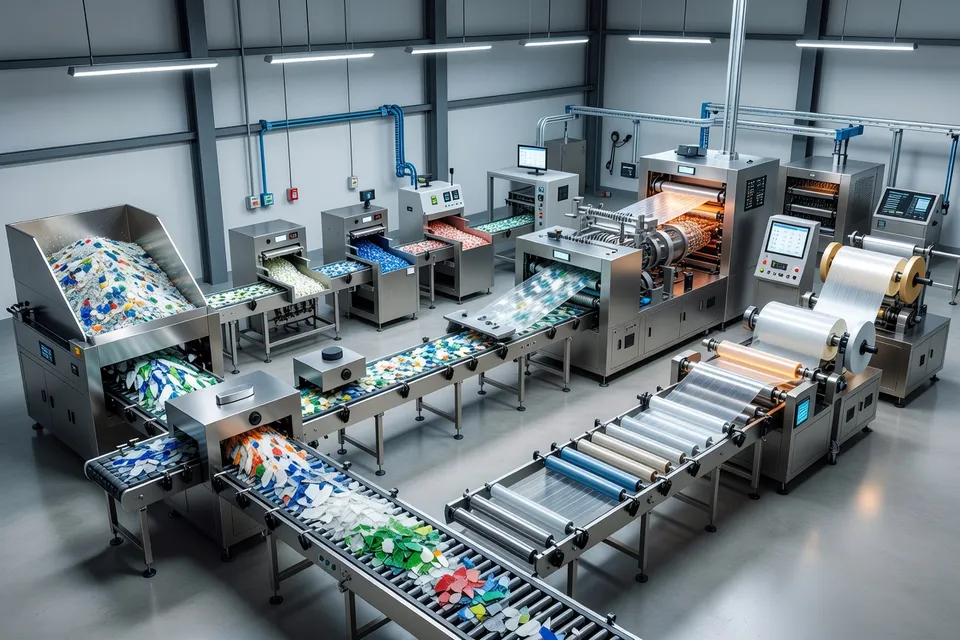
Fortune Business Insights points to similar end-use pressure in the plastics market, highlighting packaging, automotive and consumer goods as major demand areas in the United States, where the market is projected to reach USD 93.43 billion by 2032. The implication for suppliers is clear: the winning formulations will increasingly be the ones that fit recycled-content targets, processing efficiency requirements and brand-owner sustainability claims without compromising performance.
Rubber demand looks steadier, but less forgiving
The rubber side of the market appears more exposed to short-term swings. Rubber World, citing the International Rubber Study Group, reported that global rubber consumption in Q2 2025 totaled 7,907 thousand tonnes (kt), down 0.6% from Q2 2024. Even so, first-half 2025 consumption reached 15,819 kt, up 1.9% year on year, helped by stronger Q1 performance.

The same report said natural rubber consumption rose 1.5% in H1 2025 and synthetic rubber consumption increased 2.2%. On the supply side, global natural rubber production in Q2 2025 edged up 1.2% to 3.053 million tonnes, while synthetic rubber production fell 3.7% to 3,927 kt. Trade also moved unevenly: natural rubber exports in H1 2025 climbed 10.6% to 6,089 kt, while synthetic rubber exports fell 2.9% to 5,473 kt.
For tire makers and industrial rubber processors, that split matters. It points to a market where natural rubber can still tighten when supply fails to keep pace, while synthetic rubber remains vulnerable to softer downstream demand and trade friction.
What the forecasts mean for the shop floor
The long-term outlook from IRSG is even more conservative. Its World Rubber Industry Outlook says total rubber demand is expected to rise 2.1% in 2025 and expand at a 1.75% CAGR through 2032. It also forecasts natural rubber demand growth of 1.61% CAGR through 2032 and synthetic rubber demand growth of 1.36% CAGR over the same period.
That is not a weak market, but it is a disciplined one. Capacity decisions, especially in compounding, tire supply and elastomer processing, will need to be tied to efficiency gains, feedstock resilience and customer-specific performance rather than broad-based volume optimism. Suppliers that can prove stability, traceability and compliance may capture more value than those relying only on throughput.
Silicone rubber and thermoplastics add niche upside
Market.us reports that the silicone rubber market was valued at $14.4 billion in 2024 and is projected to reach $23.6 billion by 2034, at a 5.1% CAGR. It also breaks out a strong automotive case, saying the automotive segment held 27.6% of the market in 2024.

Mordor Intelligence’s thermoplastics outlook also supports a steady-growth narrative, describing thermoplastics as a market shaped by packaging, automotive, construction and electronics demand. While the snippet available does not expose the full forecast figures, it reinforces a common theme across the sector: demand is diversifying, but growth is increasingly tied to applications that reward performance, recyclability and processability.
For brand owners, that means sourcing decisions will continue moving from simple resin price comparisons toward broader total-value calculations. For processors, that means the next wave of opportunity is likely to come from material systems that do more than meet spec — they will need to support waste reduction, regulatory alignment and lower conversion losses at the same time.
Global plastics market size, 2025-2034
| Year | Market Size (billion USD) |
|---|---|
| 2025 | 533.59 billion USD |
| 2026 | 560.38 billion USD |
| 2034 | 832.62 billion USD |
Editorial Insights
- Why is future growth in plastics likely to be shaped more by compliance than by pure volume expansion?
- Growth is increasingly tied to whether materials can satisfy recycled-content targets, waste-reduction rules and customer sustainability claims while still performing reliably. That shifts competitive advantage toward formulations and processing systems that reduce regulatory risk and make compliance easier to prove, rather than simply maximizing output.
- What does a slower but steadier demand outlook mean for processors and compounders?
- It means capacity decisions will matter more than ever, because overbuilding for a broad rebound is less defensible than investing in flexibility, efficiency and application-specific performance. The winners are likely to be suppliers that can control conversion costs, qualify materials quickly and serve customers with tighter technical and sustainability requirements.
- Why do rubber markets appear more uneven than plastics in the current cycle?
- Rubber demand is more exposed to short-term swings in vehicle production, trade flows and feedstock availability, so the market can look balanced one quarter and tighter the next. That makes supply planning harder, especially when natural and synthetic rubber are moving on different production and export trajectories.
- Where are the most durable opportunities for materials suppliers as end markets evolve?
- The strongest opportunities are in applications that combine technical performance with circularity, such as packaging, automotive components, electronics and specialty elastomers. These segments reward suppliers that can deliver stable quality, traceability and process efficiency while helping customers lower material intensity and improve recyclability.
- How does the growing emphasis on circularity change the way customers evaluate materials?
- Customers are moving beyond resin price alone and looking at total value, including processing losses, regulatory fit, recycled-content readiness and product lifespan. That means a higher-cost material can win if it reduces risk, simplifies compliance or improves the economics of the full production chain.
- What should long-term investment in rubber and elastomer capacity focus on now?
- The priority should be resilience rather than simple expansion, with attention to feedstock stability, traceability, product consistency and customer-specific qualification. In a slower-growth market, capacity that cannot demonstrate reliability and compliance is less likely to capture value over time.
References
- 1.Fortune Business Insights. Plastics market size, share & industry analysis, by type, end-use industry, and regional forecast, 2026–2034. Fortune Business Insights.
- 2.The Business Research Company. (2026). Plastics and rubber products global market report 2026. The Business Research Company.
- 3.Rubber World. (2026, January 21). IRSG Rubber Industry Report signals weaker Q2 demand amid mixed production and trade trends. Rubber World.
- 4.Maximize Market Research. (2026, June 30). Synthetic rubber market analysis (2026–2032). Maximize Market Research.
- 5.Mordor Intelligence. (2026, July 27). Thermoplastics market size, share & industry analysis. Mordor Intelligence.
- 6.Market.us. (2026, July 10). Silicone rubber market size, share. Market.us.