


From lab to shopfloor: AI moves into plastics and rubber
AI in plastics and rubber is no longer a collection of pilot projects; in 2026 it is showing up as self-optimising production cells, autonomous materials workflows and smart trade fair ecosystems designed explicitly to make factories faster, leaner and greener.
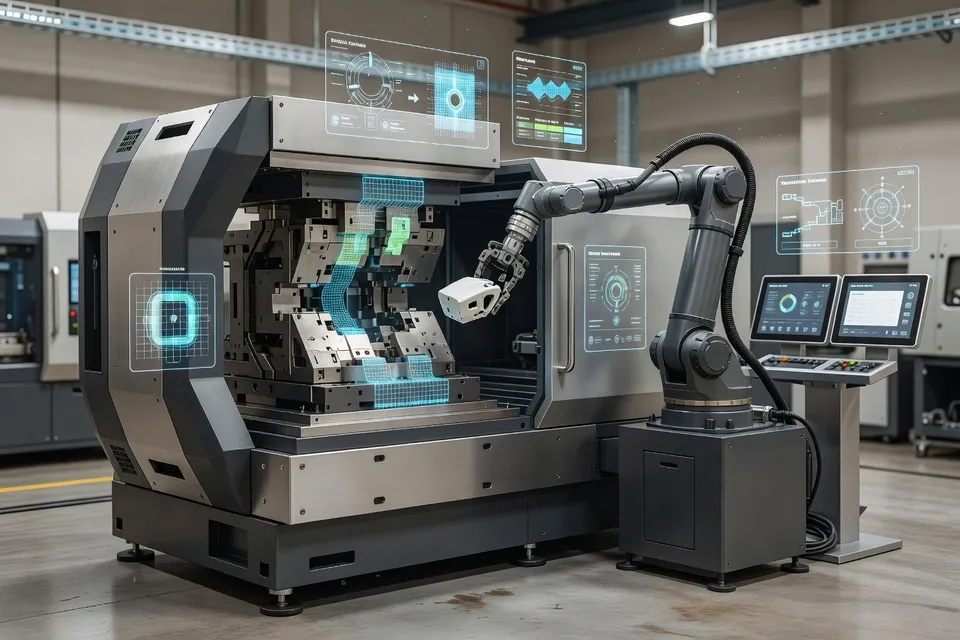
On the research side, NIST’s Artificial Intelligence for Materials Science (AIMS) 2026 workshop brought together industry, academia and government to tackle the hard problems in materials AI: how to build curated datasets, represent complex materials, design new formulations inversely, and connect all of this to autonomous experiments and self-driving laboratories.
In parallel, journals such as Polymer Science & Technology have launched an "AI for Polymer Science and Technology" special issue, calling for work on AI-enabled polymer discovery, AI in polymer synthesis and process engineering, and AI-powered characterization and structure–property prediction. The message is consistent: the sector is shifting from intuition-led iteration to data-driven, closed-loop discovery.
For processors and converters, these research moves matter because they underpin the next generation of materials and process windows that will arrive in commercial plants. But the clearest signal of how AI is changing everyday production comes from the machinery and automation vendors.
Smart injection moulding gets a "digital brain"
At FAKUMA 2026 in Friedrichshafen, FANUC plans to demonstrate what an AI-enabled injection moulding cell looks like when it is fully integrated, not bolted on. Two new all-electric ROBOSHOT applications sit at the centre of the stand, both built around high-performance CNC control and tight integration with robotics and digital tools.
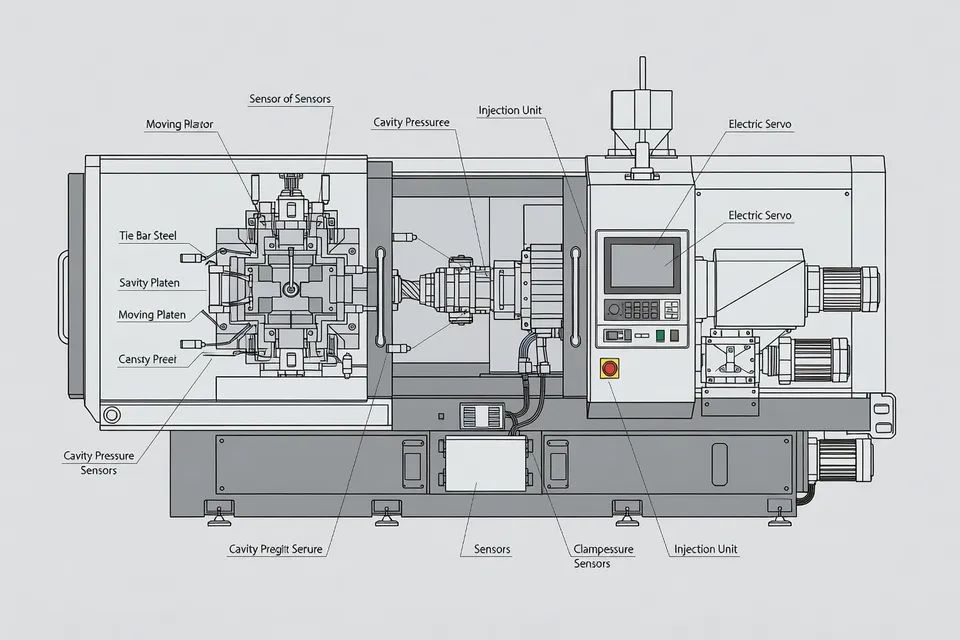
The ROBOSHOT S180C will run a technical moulding application, equipped with cavity pressure monitoring on every cavity and simulation-supported hot runner balancing. The combination allows the machine to stabilise the process round after round, trimming scrap and drift by reacting to in-mould signals instead of relying on static setpoints.
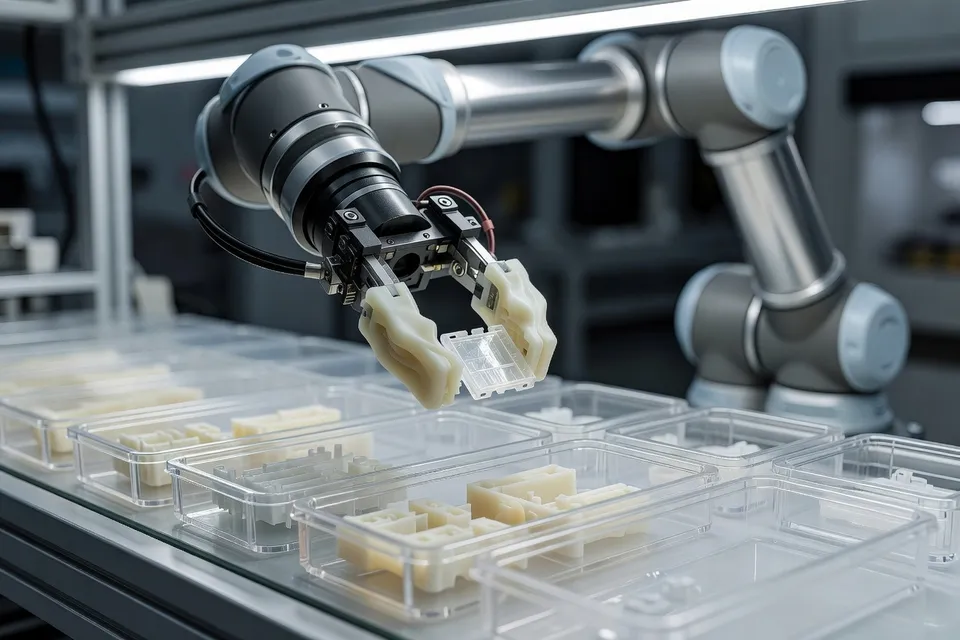
The ROBOSHOT S350C is configured as a medical packaging cell, coupling high-precision moulding with automated part handling and packaging in a compact footprint. For medical and healthcare moulders wrestling with cleanroom constraints and labour shortages, the message is clear: AI-ready electric presses plus tightly integrated robotics can deliver repeatability and throughput without expanding the plant.
FANUC is also bringing collaborative robots into this picture. Its CRX cobot series can be programmed using voice commands supported by generative AI, lowering the barrier for plants that lack in-house robot programmers and making changeovers faster. Combined with integrated machine vision, these cobots can adapt to varying part orientations and tasks without exhaustive re-teaching.
A dedicated IIoT and digitalisation area rounds out the story. FANUC plans to show an ecosystem built around LINKᵢ, MES connectivity, EUROMAP 82.1 and 82.2 interfaces, WebAPI applications, Moldex3D integration and AI-based digital tools. Instead of treating the press, robot and MES as separate domains, the company is positioning a single, connected data spine that lets engineers correlate digital twins, process data and quality outcomes.
"Manufacturers today face increasing pressure to improve productivity, quality and flexibility while managing skills shortages and economic uncertainty," Paul Ribus, Head of Sales Coordination at FANUC Europe said, adding that intelligent injection moulding, robotics, AI and digital connectivity can create more efficient and future-ready operations.
For processors, the operational implication is direct: competitive advantage is increasingly defined by how quickly a plant can turn process data into corrections. Electric machines and cobots are necessary hardware, but the differentiator is the layer of AI and connectivity that keeps them learning.
Trade fairs as testbeds for AI manufacturing
While equipment suppliers push smart cells, major exhibitions are evolving into live testbeds for AI-enabled manufacturing strategies.
CHINAPLAS 2026, scheduled for April 21–24, 2026 at the National Exhibition and Convention Center in Shanghai, is explicitly framed around transformation themes: circular economy, digitalization, innovative materials and China’s high-end technologies. Organisers highlight that thousands of machines will run live, with AI and digitalisation as core storylines.
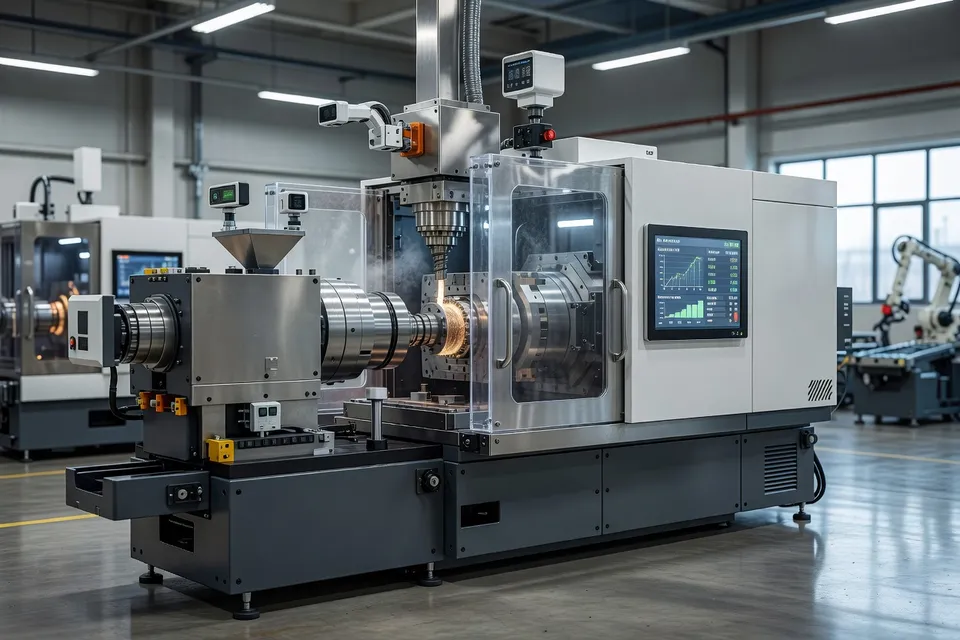
A concurrent-events preview under the banner "Accelerating Intelligent Upgrades in Plastics & Rubber Industries" outlines a dense programme of forums and factory-oriented sessions aimed at intelligent transformation. The "Smart Molding, Shaping the Future" forum, co-organised by the Hong Kong Mould and Die Council, is designed for decision-makers and production leaders, and walks through a path from "point optimisation" to "system intelligence" in moulding operations.
One highlight is the Hong Kong Productivity Council’s Digital Management System tailored for injection moulding, which uses data flow to break efficiency bottlenecks. Hongrita Mold shares practical case studies on retrofitting existing plants with robotics, MES and advanced planning and scheduling (APS) systems, demonstrating that intelligent upgrades do not require greenfield facilities.
The show is also launching an InnoAccelerate Industry–Academia–Research Collaboration Program involving the Shanghai Society of Plastic Industry and universities including Shanghai Jiao Tong University and East China University of Science and Technology. Through an Industry–Academia–Research Sharing Forum and a University Innovation Showcase, the programme is designed to pull lab-grade AI tools for moulding, recycling and new materials closer to industrial deployment.
Beyond these, CHINAPLAS 2026 is layering trend-focused content such as "Day4 Trend Insights" and the "Decode Trends Forum", where experts analyse policy directions, AI-driven digital solutions like digital twins and product passports, and the role of smart processing of recyclates. For brand owners, this translates into a clearer view of how digital product data and AI-based tracking could support compliance, design-for-recycling and carbon reporting.
AI for polymer science: closing the loop from design to plant
The movement is not only about machines and trade shows. On the scientific side, AIMS 2026 and related NIST initiatives emphasise that self-driving laboratories and autonomous materials workflows are no longer speculative. The vision is to couple AI-guided design, automated synthesis and data-driven characterisation so that materials for specific applications—whether high-flow packaging grades or elastomers with tuned damping—can be discovered and validated far faster than traditional trial-and-error allows.
The proposed National Center for Autonomous Materials Science, described in a NIST special publication, explicitly aims to deliver "off-the-shelf" autonomous solutions that lower the cost and risk of adopting autonomous R&D workflows, particularly for small and medium-sized firms. That includes tools to handle high-dimensional design spaces and to link AI directly with robotics and even emerging technologies like quantum computing.
Simultaneously, the Polymer Science & Technology special issue on "AI for Polymer Science and Technology" is calling for contributions across the full polymer value chain: AI for polymer discovery and molecular design; AI in polymer synthesis and process engineering; AI-powered characterisation; AI for sustainable and functional polymers; and AI-enhanced computational methods. Submissions are open through December 31, 2026, with article processing charges waived for accepted papers submitted by the end of 2027.
This matters for manufacturers because it signals a pipeline of AI-native materials—resins, additives and elastomer systems whose formulation and processing guidance are accompanied by trained models rather than static datasheets. For example, AI-optimised formulations for recyclate-rich compounds could arrive with recommended process windows encoded in machine-readable form, ready to plug into an injection press or extruder.
What processors should do next
For processors, converters and rubber goods manufacturers, the 2026 landscape points to several practical steps:
- Prioritise connected, electric equipment: All-electric machines with standardised digital interfaces (such as EUROMAP 82.x) make it easier to integrate AI tools, MES and simulation, as showcased by FANUC’s ROBOSHOT demonstrations.
- Build a data foundation: Events like AIMS 2026 underline that curated, high-quality datasets are the backbone of meaningful AI. Plants will need consistent sensor data, contextualised with tooling and materials information, to benefit from emerging tools.
- Use trade fairs as learning labs: CHINAPLAS 2026 and FAKUMA 2026 are increasingly about how to run digital and AI programmes, not just what to buy. Targeted visits to forums and live cells can compress years of trial-and-error into a few days of structured observation.
- Engage in the research pipeline: Collaborations via programmes like InnoAccelerate or contributions to AI-focused polymer special issues can give companies a say in how tools are designed—and early access to capabilities tuned to real production constraints.
The throughline is clear: AI automation and smart manufacturing in plastics and rubber are no longer future concepts. They are crystallising into specific machines, forums, calls for papers and national roadmaps that reward companies ready to treat data and autonomy as core process equipment, rather than optional extras.
Editorial Insights
- How will AI-driven, self-optimising moulding cells change day-to-day production management in plastics and rubber plants?
- As moulding cells gain the ability to stabilise processes autonomously based on in-mould and peripheral data, production management shifts from manual setpoint tuning to supervising a learning system. Engineers spend less time firefighting scrap and drift and more time defining guardrails, refining data models and standardising best practices across lines. This also raises the importance of cross-functional skills, where process, controls and IT expertise converge around a shared data backbone.
- What are the strategic data priorities for processors that want to benefit from emerging AI-native materials and smart equipment?
- The critical priority is building consistent, contextualised datasets that link process parameters, tooling, materials and quality outcomes. Without reliable sensor data and traceable material information, plants cannot fully exploit incoming models embedded in resins, additives or machines. Standardised interfaces and a unified data spine across presses, robots and planning systems become strategic assets, enabling rapid correlation of digital twins, process histories and defect patterns.
- In what ways can AI-enabled moulding and autonomous materials discovery accelerate progress on circularity and low-carbon production?
- AI can shorten the development cycle for recyclate-rich compounds and functional polymers by exploring high-dimensional formulation spaces more efficiently and linking them directly to optimised process windows. On the shopfloor, self-optimising cells reduce scrap, energy waste and variability, which are all material and carbon sinks. When combined with digital product data and traceability, this creates a tighter loop between design-for-recycling, processing realities and verifiable sustainability metrics.
- How do trade fairs increasingly function as practical accelerators for digital and AI transformation in plastics processing?
- Major exhibitions are evolving into live laboratories where entire digitalised cells, data platforms and AI workflows run under realistic conditions. Instead of simply viewing isolated machines, visitors can see complete, connected ecosystems and hear concrete upgrade paths for brownfield plants. Structured forums and case-focused sessions compress learning cycles, helping teams move from point optimisation to holistic system intelligence without years of internal trial-and-error.
- What ethical and workforce considerations arise as generative AI and voice-controlled robotics enter plastics production lines?
- As interfaces become more intuitive, barriers to using complex automation drop, but responsibility for decisions increasingly shifts from individual operators to algorithm designers and data stewards. Plants must guard against over-reliance on opaque models, ensure that skill development keeps pace with automation, and maintain clear accountability for safety and quality outcomes. Transparent logging of AI decisions and inclusive retraining programmes will be essential to maintain trust on the shopfloor.
- How might autonomous materials R&D reshape collaboration patterns between plants, laboratories and universities in the plastics and rubber sector?
- Autonomous workflows and self-driving labs favour closer, more data-centric partnerships in which industrial process constraints are encoded directly into discovery campaigns. Shared platforms and joint programmes allow formulations, process windows and structure–property models to move more seamlessly from lab to line, reducing translation gaps. Over time, this can create distributed innovation networks where even smaller processors access advanced tools and co-develop solutions rather than simply adopting finished materials.
References
- 1.National Institute of Standards and Technology. (2026, July 27). Artificial intelligence for materials science (AIMS) 2026. National Institute of Standards and Technology.
- 2.ACS Axial. (2026, August 3). Call for papers: AI for polymer science and technology. ACS Axial.
- 3.European Rubber Journal. European Rubber Journal: Home. European Rubber Journal.
- 4.Automation International. (2026, August 18). FANUC showcases smart injection moulding, robotics & digital manufacturing at FAKUMA 2026. Automation International.
- 5.Tecnoplast. (2026, April 16). Accelerating intelligent upgrades in plastics & rubber industries: CHINAPLAS 2026 concurrent event preview. Tecnoplast.