


From mega fairs to focused forums, 2026–2027 becomes a live lab for rubber and plastics
Walk any major plastics or rubber hall in late 2026 and early 2027 and one theme cuts through the din of running lines and crowded aisles: trade shows are no longer just showcases, they are proving grounds for a more efficient and more sustainable industry.
Across Asia, Europe and North America, a dense calendar of exhibitions, conferences and training academies is converging around three shared priorities: cutting waste in production, decarbonising materials and tightening the link between plant-floor practice and boardroom strategy.
Asia’s big stages: CHINAPLAS and a web of regional fairs
Asia remains the gravitational centre of plastics and rubber manufacturing, and the region’s event map for 2026–2027 reflects that pull.
CHINAPLAS, branded as the world’s leading plastics and rubber exhibition, is gearing up for a double run: the 38th edition in April 2026 at the National Exhibition and Convention Center in Shanghai, followed by CHINAPLAS 2027 at the Shenzhen World Exhibition & Convention Center in April 2027. These back‑to‑back shows give equipment builders and materials suppliers a rare two‑year window to track, in real time, how Chinese processors pivot on automation, digitalisation and recycled-content mandates.
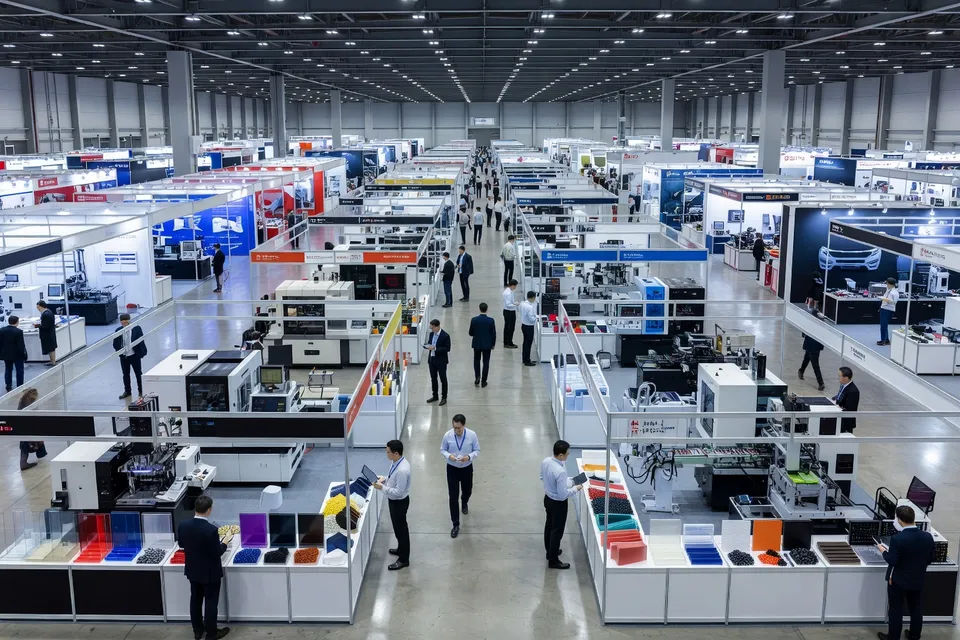
At the same time, a string of regional fairs is filling the pipeline of more specialised demand. The PlasticPortal.eu events calendar lists Taipei Plas 2026 as an international exhibition for the plastics and rubber industry in mid‑September in Taipei, alongside VietnamPlas in Ho Chi Minh City and a series of recycling‑focused events in India and Germany.
For machine makers and compounders, this means Asia is no longer just about one giant flagship show every few years. Instead, it is a circuit where a new extruder control package can debut in Shanghai, be refined with feedback in Taipei, then be stress‑tested with customers in emerging markets like Pakistan or Uzbekistan within weeks.
North America: NPE, GPS and the training gap
In North America, the 2027 edition of NPE: The Plastics Show is already being framed as a reset point for the region’s manufacturing base. NPE2027 will run from May 3–7, 2027 at Orlando’s Orange County Convention Center, with organisers calling it the largest plastics trade show in the Americas and signalling more than 51,000 attendees and 2,200 exhibitors from over 130 countries.
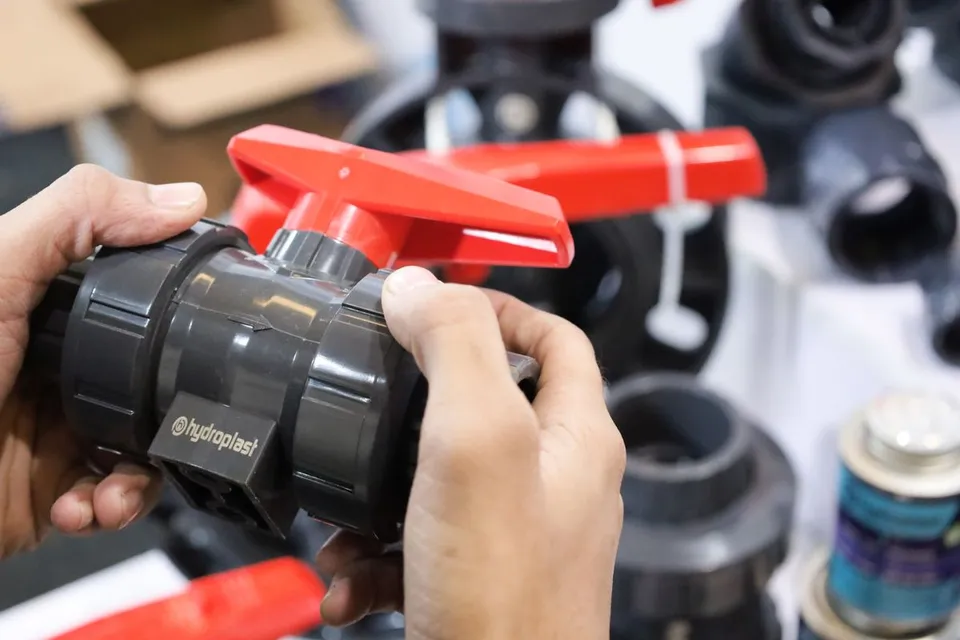
Registration for visitors is set to open in September 2026, underscoring how long the buying cycle has become for capital equipment—processors are budgeting, benchmarking and even booking hotel rooms more than six months in advance. For suppliers, the implication is clear: new machinery and material platforms launched at regional fairs in late 2026 must be robust enough to carry through to NPE, where they will be judged against a global competitive field.
On the rubber side, the Global Polymer Summit 2026 in Louisville, Kentucky, is becoming a focal point for process innovation. VMI has flagged the event as the launchpad for its latest millroom and extrusion upgrades, including a Closed Air Circulation feature on its Batch‑Off systems aimed at improving factory air quality and cooling efficiency.
"This new feature allows for an improved air quality in the factory, creating a better work environment, and improves cooling efficiency." - Jan ter Harmsel, Global Account Manager Millroom at VMI said
For rubber processors, that kind of incremental engineering change matters as much as headline sustainability rhetoric. The batch‑off section is often a bottleneck and a source of fumes; integrating closed air circulation shifts the conversation from theoretical ESG targets to concrete changes in operator exposure, energy use and maintenance.
Training is the other North American story that rarely makes glossy photo spreads but is increasingly shaping what visitors look for on the show floor. The Association for Rubber Products Manufacturers (ARPM) has locked in its 2026 Advanced Rubber Product Manufacturing Technologies Training for February 16–18 as an in‑person, multi‑day course that walks participants through the full lifecycle of rubber manufacturing—from technology development and raw material control to fabrication, automation and product liability.
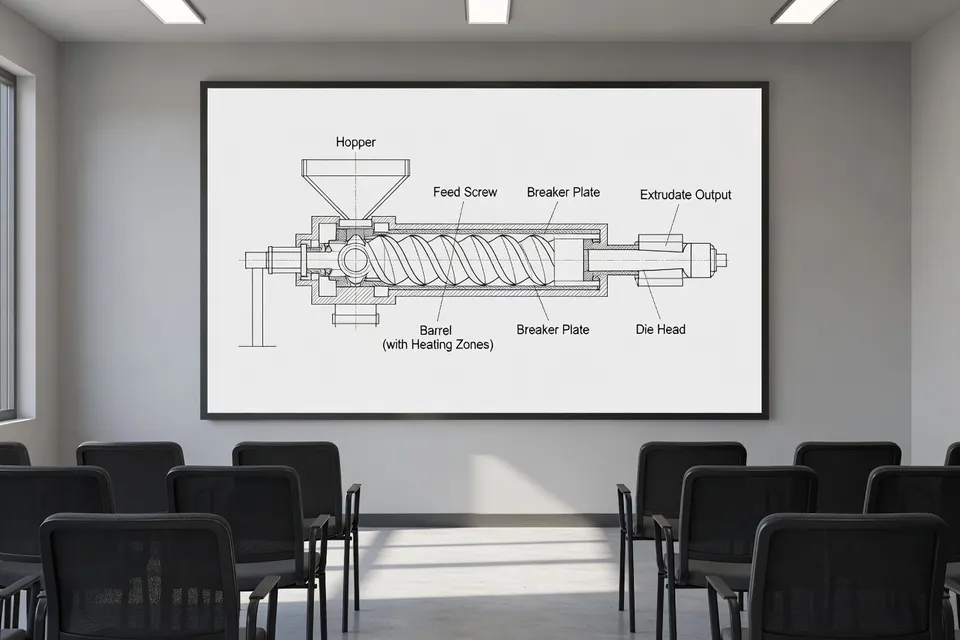
The agenda reads like a cross‑section of trade show trends: sessions on printing real rubber, virtual manufacturing for molding, automated additive dosing, advanced mixing and automation solutions for rubber molding, anchored by a detailed treatment of product liability and specification “word traps”. ARPM is explicit that the course is designed to show how advanced technologies reduce variation, improve consistency and cut cost, tying training content directly to the same KPIs that drive investment decisions at NPE and GPS.
Europe’s sustainability lens: Sustainable Plastics Europe 2026
While Asia and North America lean heavily on machinery and large‑scale plant investments, Europe’s 2026 calendar adds a different filter: lifecycle metrics and regulatory compliance.
Sustainable Plastics Europe 2026 positions itself as a leading trade fair focused on bio‑based and recyclable materials, packaging concepts and production technologies aligned with a circular economy. The event combines a business programme of case‑study‑driven sessions with an exhibition floor showcasing materials, additives and equipment tuned to Europe’s tightening plastics regulations.
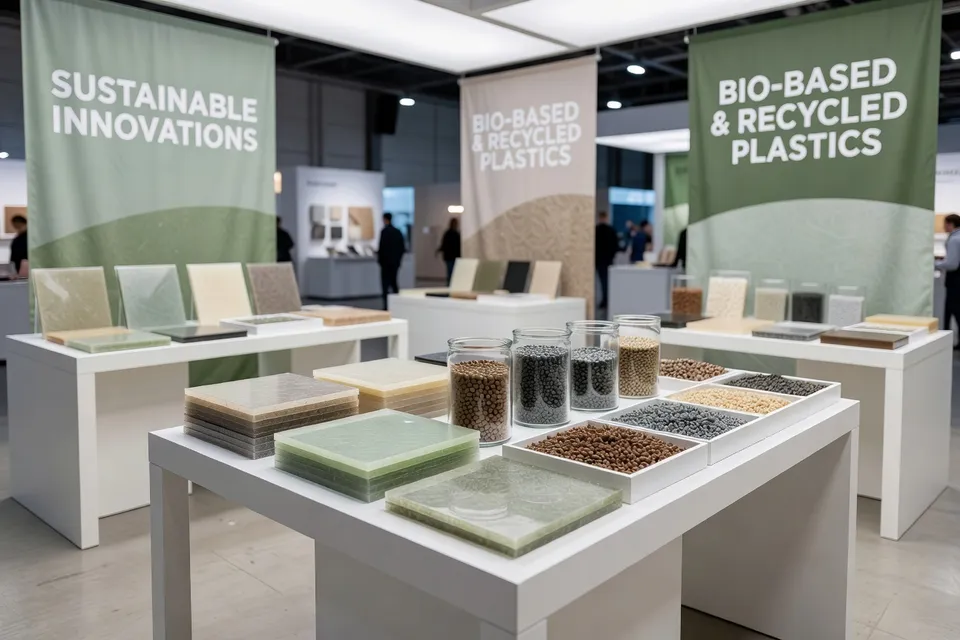
Consultancy Quantis is using the event to push a more data‑driven approach to innovation. In a session titled “Life Cycle Assessment as a Decision Framework for Sustainable Packaging Innovation”, Quantis Germany Managing Director Sophie Herrmann plans to demonstrate how alternatives to fossil‑based plastics—particularly bioplastics and wood‑based packaging—can be evaluated using full life cycle assessment (LCA).
"The session will focus on bioplastics and wood-based packaging, drawing on full life cycle assessment (LCA) to compare environmental impacts." - Sophie Herrmann, Managing Director at Quantis Germany said
The message to converters and brand owners is blunt: recycled content percentages and resin substitution are no longer enough. Over the next two years, procurement and R&D teams will be expected to justify packaging decisions with quantified trade‑offs, taking into account regional waste systems and future regulation.
IRC 2026 and the deep technical end of rubber
If Sustainable Plastics Europe is where policy and packaging meet, IRC 2026 Aichi is where the rubber community dives into the technical foundations of that transition.
The International Rubber Conference 2026 will run November 2–6, 2026 at the Aichi International Exhibition Center (Aichi Sky Expo) near Nagoya, under the theme “Future Rubber Technology toward Sustainability.” It will be the sixth time Japan has hosted the IRC, and the first in a decade, underscoring how central Asia has become to global rubber supply chains.
Alongside the conference, a Rubber & Elastomer Technical Exhibition from November 3–6 will bring together more than 100 exhibitors spanning new materials, machinery, processing equipment and testing technology, with admission free of charge and open to all visitors.
The call for abstracts reveals where R&D budgets are heading. Special topics include elastomers for environment and sustainability, novel elastomeric materials, seismic insulators, automotive technologies, rubbers for new energy and circular economy approaches. For compounders and OEMs, this signals a steady migration of innovation budgets away from incremental performance gains and toward durability, recyclability and low‑carbon design.
"Elastomers for Environment and Sustainability" and "Rubbers for new energy" headline the special topics, alongside circular economy themes.
For plant managers, the operational takeaway is that conference papers presented in Aichi in November 2026 will likely translate into new compound recipes, test methods and specification language filtering into customer RFQs within a few years. Exhibitors who secure early‑bird space in the technical exhibition—benefiting from discounted fees if they apply by April 30, 2026—are positioning themselves to shape those conversations.
Why this wave of events matters for processors now
What ties these otherwise disparate gatherings together is less geography than timing and focus. Between early 2026 and mid‑2027, the industry faces a compressed cycle of capital planning, regulatory change and customer demands.
Processors and converters who treat trade shows and conferences as once‑off marketing stops will miss the thread. The emerging pattern is an integrated circuit:
- Training and technical conferences such as ARPM’s in‑person academy and IRC 2026 push new methods and risk frameworks into engineering teams.
- Specialised sustainability forums like Sustainable Plastics Europe translate regulation and LCA science into packaging and material choices that meet brand and policy expectations.
- Mega fairs such as CHINAPLAS and NPE provide the hardware and supply‑chain networks needed to implement those choices at scale.
For suppliers, that means designing product roadmaps that can tell a coherent story across all three stages: from lab‑scale innovation in Aichi, to metrics‑driven packaging decisions in Europe, to full‑scale commercial deployment in Shenzhen, Orlando or Taipei.
For processors, it is a reminder that the most valuable line item from a trade show budget in 2026–2027 may not be a signed purchase order, but a tighter loop between training, technology and sustainability strategy.
Editorial Insights
- How is the shift toward circularity and material efficiency reshaping day-to-day decision-making in plastics and rubber plants?
- Circularity and material efficiency are turning what used to be incremental technical choices into core business decisions. Plants now have to weigh resin selection, compounding strategies and processing windows against recyclability, carbon footprint and end-of-life pathways, not just cycle time and mechanical properties. That is pushing technical teams to integrate sustainability metrics into trials, QA protocols and investment planning, with data and documentation increasingly as important as output volume.
- Why is life cycle assessment becoming a commercial necessity rather than a niche sustainability tool in packaging and product development?
- Life cycle assessment is moving center stage because regulatory targets, customer audits and brand commitments now demand quantified environmental performance, not broad claims. Comparing materials and designs without a robust footprint calculation exposes manufacturers to compliance risk, reputational damage and misaligned investments. As infrastructure and policy differ by region, LCA also helps avoid one-size-fits-all choices, enabling tailored solutions that genuinely reduce impact while meeting local rules.
- What are the strategic risks for brand owners that fail to align global sourcing with diverging regional plastics and rubber regulations?
- Brand owners that treat sourcing as a single global playbook risk discovering too late that materials or packaging formats approved in one region are non-compliant or commercially unacceptable in another. This can mean retooling, relabeling or even product withdrawal, with knock-on impacts on inventory, contracts and reputation. Strategically, the winners will be those who build supply chains and specifications flexible enough to meet differing recycled-content rules, labelling demands and reporting expectations without fragmenting their product platforms.
- How is the growing emphasis on automation, data capture and training changing the skill profile required in plastics and rubber manufacturing?
- The skill profile is shifting from purely hands-on machine operation to a blend of process engineering, data literacy and systems thinking. Operators and engineers are expected to understand automated dosing, simulation tools, advanced metrology and how these tie into safety, quality and legal exposure. This makes continuous training and cross-functional collaboration essential, as plants increasingly rely on staff who can interpret data, adjust recipes and document performance for both customers and regulators.
- In what ways can incremental plant-level innovations, such as improved cooling and air quality, translate into competitive advantage?
- Incremental improvements that stabilize cooling, reduce fumes and enhance ergonomics often deliver gains that do not show up immediately on a spec sheet but matter deeply over time. Better environmental conditions can cut scrap, improve consistency and reduce downtime, while also supporting tighter occupational exposure limits and worker retention. When customers and auditors look beyond headline throughput to process discipline and risk control, these quiet enhancements can differentiate suppliers in crowded commodity markets.
- How are rising expectations around sustainability and risk management reshaping the ethical responsibilities of plastics and rubber manufacturers?
- Manufacturers are increasingly expected to anticipate the long-term consequences of material choices, processing practices and product design, rather than treating compliance as a minimum box-ticking exercise. That means taking responsibility for worker exposure, environmental footprint and end-of-life pathways, and being transparent about trade-offs. As data and standards become more robust, claiming ignorance or deferring accountability down the chain is less defensible, pushing ethics closer to the core of technical and commercial decision-making.
References
- 1.PlasticPortal.eu. (2026, September 1). Calendar of plastics events. PlasticPortal.eu.
- 2.Rubber World. (2026, January 16). ARPM announces 2026 advanced rubber manufacturing training. Rubber World.
- 3.VMI Group. (2026, August 28). VMI at Global Polymer Summit 2026. VMI Group.
- 4.Quantis. (2026, March 27). Sustainable Plastics Europe 2026. Quantis.
- 5.Chinaplas. (2026, August 30). Chinaplas 2027 - the world's leading plastics & rubber trade fair. Chinaplas.
- 6.NPE: The Plastics Show. (2025, October 2). NPE: The Plastics Show. NPE: The Plastics Show.
- 7.IRC2026 Aichi. (2026, August 20). IRC2026 [International Rubber Conference 2026 Aichi]. IRC2026 Aichi.