


From islands of automation to intelligent lines
A decade ago, automation in rubber and plastics plants often meant a stand‑alone robot or a semi‑automatic cell bolted onto a legacy line. The latest developments across extrusion, compounding and molding show a very different picture: connected systems where AI, sensors and robotics are embedded into the core of the process.
Equipment makers and processors are pairing high‑throughput hardware with smarter controls, predictive monitoring and automated handling. The goal is not just fewer operators, but tighter process windows, consistent quality on tougher feedstocks and a more sustainable use of energy and materials.
For processors in rubber and plastics, that shift is no longer theoretical. It is showing up in the machines being ordered, the projects justified to management and the way plants are staffed and run.
Extrusion: AI‑assisted degassing and high‑throughput hardware
On the extrusion side, machine builders are launching platforms that blend big iron with smarter brains. Recent coverage of 10 new extrusion technologies reshaping plastics processing in 2026 highlights a portfolio of innovations that share two themes: pushing throughput and improving control over difficult materials.
Processors now have access to:
- Large‑diameter PET extruders and twin‑screw systems designed for melt‑to‑pellet and recycling work, aimed at high‑volume packaging and industrial applications.
- Single‑screw lines equipped with Dual Vent Technology for improved devolatilization when running moisture‑sensitive or recycled resins.
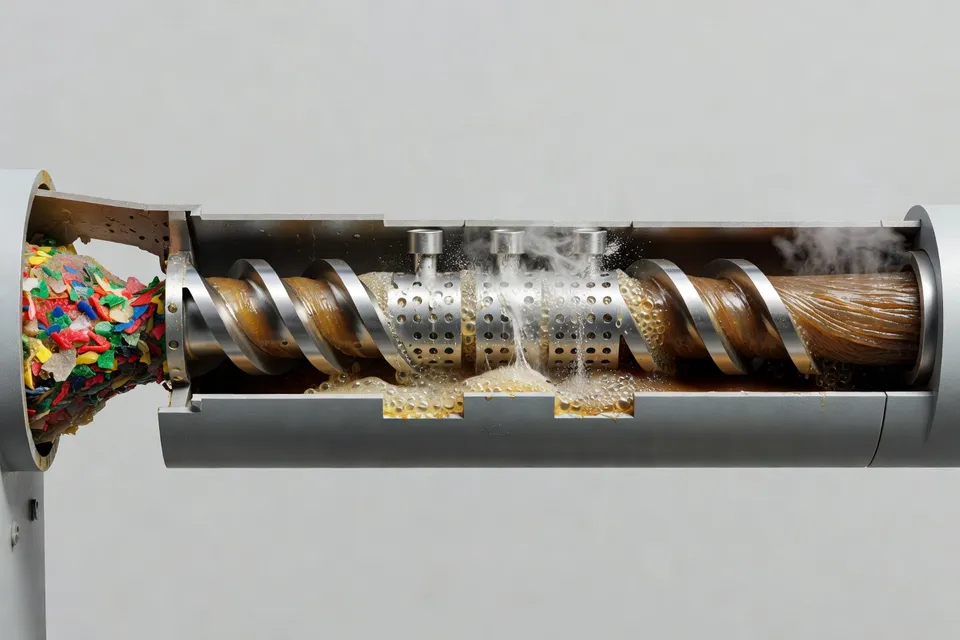
- A single‑screw system using water‑stripping degassing marketed as the first effective application of this approach on a single‑screw extruder, explicitly targeted at cleaning up contaminated feeds.
- High‑capacity melt pumps with advanced heating technology to stabilize melt temperature, cut defects and trim energy use.
Several of these systems are already incorporating AI‑assisted degassing and process optimization, where software continuously evaluates vacuum levels, melt temperature and torque and then adjusts operating parameters to keep the line inside a defined quality envelope. For processors, this matters in three concrete ways:
- Recycled content becomes more manageable. Better devolatilization and mixing expand the usable window for post‑consumer and post‑industrial materials without sacrificing surface quality.
- Operators move from firefighters to supervisors. Instead of chasing issues at the winder, they monitor dashboards and intervene when the control system flags deviations.
- Energy intensity becomes a lever, not a fixed cost. With thermal control and throughput data visible in real time, energy per kilogram becomes another process variable plants can optimize.
The implication for converters and profile, film and sheet producers is clear: future‑ready lines will be specified not just by screw diameter and motor size, but by the sophistication of their control stack.
Compounding: Star Plastics’ twin‑screw playbook
Compounding offers a very practical snapshot of how automation and advanced hardware are changing plant economics. Star Plastics’ expansion illustrates the strategy many engineering plastics compounders are now pursuing.
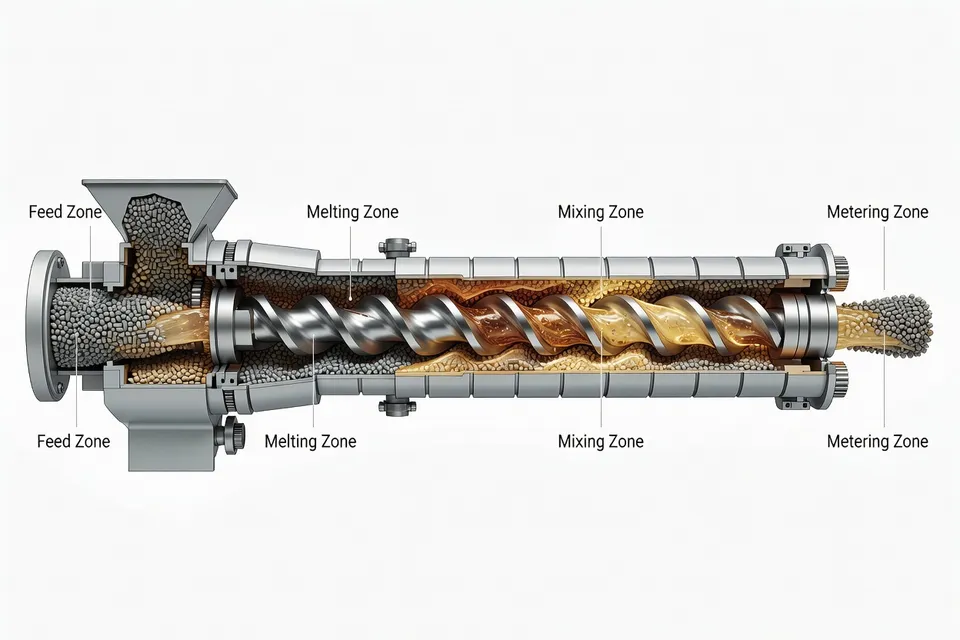
In one project, the company installed a 75 mm twin‑screw Leistritz compounding extruder at its Ravenswood, West Virginia plant as part of an investment of more than $5 million. The machine was described as Star’s largest to date and was brought online with trials running shortly after installation. The high‑torque design improves material incorporation and dispersive mixing, with a screw layout that can be reconfigured to tune output quality for different formulations.
According to the company, the new line tripled capacity in the targeted product space and widened the range of compounds it could offer. A second twin‑screw, a 58 mm Coperion machine, was planned to follow, reinforcing a strategy built around flexible, high‑output equipment.
Automation is embedded in how these lines are run:
- Gravimetric feeding and recipe control reduce operator intervention and keep filler and color loadings within tight tolerances.
- Integrated controls allow coordinated start‑ups and shutdowns, cutting the risk of off‑spec material at transitions.
- Data from torque, melt pressure and temperature sensors feed back into maintenance planning, supporting condition‑based servicing rather than calendar‑based shutdowns.
For OEMs and molders sourcing compounds, this kind of investment translates directly into more consistent lots, better availability of specialty grades and greater confidence in long‑term supply.
Rubber: retreading and tire plants get smarter
In rubber, automation is spreading from greenfield tire plants into retreading and millroom operations, with companies like VMI acting as bellwethers. Recent announcements highlight several advances:
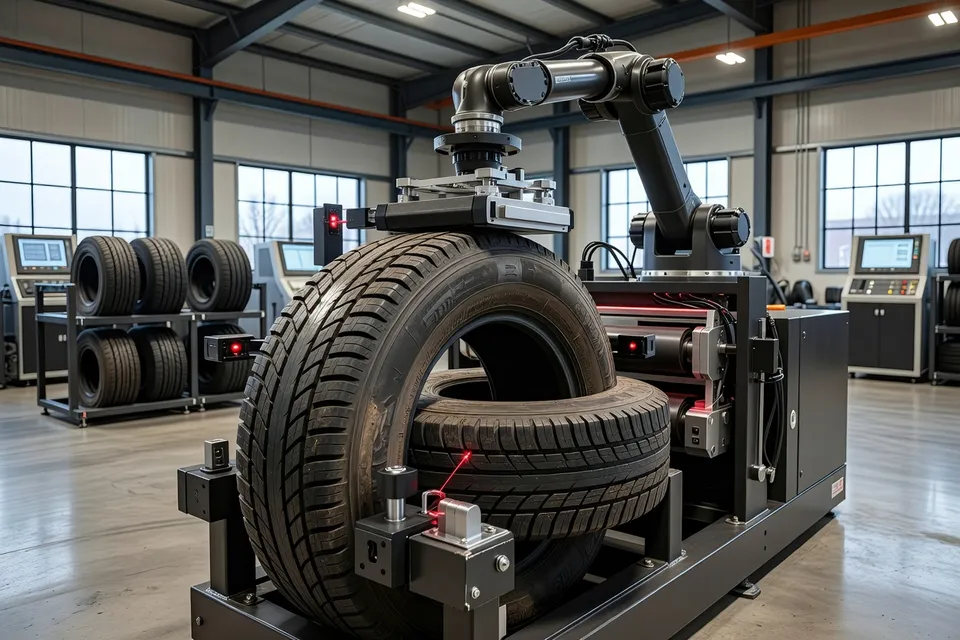
- New automation solutions on the VMI RETRAXX retreading system, including an automatic splice unit and automatic recipe loading, described as first steps toward higher automation levels in retreading.
- A Pendulum type stacker promoted for higher stacking speed and accuracy in handling rubber strips, targeting improved downstream uniformity.
- Continuous development of extrusion and batch‑off systems, including a Closed Air Circulation feature that improves cooling capacity, delivers more consistent compound handling and reduces contamination risk.
VMI has emphasized that the rubber industry is searching for ways to improve output quality, cut energy use and manage more complex compound portfolios, all while helping customers become more agile and sustainable. Automation is central to that pitch.
The company has also been recognized beyond pure productivity metrics. It received an EcoVadis Gold rating and later an EcoVadis Platinum medal, placing it among the top tier of assessed companies for environmental stewardship, ethics, labor and human rights and sustainable procurement. For tire and rubber processors, that signals that automation roadmaps are increasingly aligned with ESG goals, not just throughput.
Industry coverage has further noted VMI’s award for Tire Manufacturing Innovation of the Year for a next‑generation integrated quality monitoring system on its MAXX and MILEXX platforms, and a separate Plant Automation award for its Revolute system. These recognitions underscore a sustained push toward machine platforms that combine mechanical precision with real‑time quality analytics.
Injection molding: AI‑ready cells in production
While the provided sources focus more heavily on extrusion and rubber machinery, they also point to automation gains in injection molding, particularly in high‑volume consumer and baby product manufacturing.
Kasem International, a molding specialist in Thailand, describes how it has applied robotic automation and smart controls to its plastic injection molding operations for premium baby bottles and related products. The company highlights several pillars:
- High‑speed robots handling molding, assembly, packaging and inspection tasks in one continuous flow.
- Closed‑loop sensor controls that monitor pressure, temperature and injection speed and adjust them in real time to hold dimensions and cut scrap.
- AI‑driven analytics that scan production data for irregular patterns before defects occur, improving reliability and reducing unplanned downtime.
- Automated quality inspection where each molded piece is checked before packaging, supporting “zero‑defect” tolerances.
Kasem frames this as a way to meet strict global safety and hygiene requirements while maintaining cost competitiveness and sustainable use of materials.
How an AI‑ready molding cell behaves
Across the molding sector, a consistent pattern emerges from such examples and broader industry reporting:
- Robots are no longer optional accessories; they are becoming standard on high‑volume presses, handling part removal, insert loading and downstream tasks.
- Smart sensors and closed‑loop controls turn molding cells into self‑tuning systems, where machine learning can gradually learn the “signature” of good parts and react when the process drifts.
- Plants are designing for lights‑out windows, running certain product families unattended for extended periods while staff focus on setups, maintenance and problem solving.
For brand owners reliant on tight tolerances and traceability—especially in regulated segments like baby care and medical—this combination of robotics and AI offers both risk reduction and differentiation.
What it means for processors and brand owners
Taken together, these threads from extrusion, compounding, rubber processing and molding point to a clear direction of travel for the rubber and plastics sector in 2026:
- Automation is becoming a baseline expectation. Customers increasingly assume their suppliers can run stable, automated lines, whether that’s a twin‑screw compounding cell, a high‑output film line or a tire building machine.
- AI is moving from pilot to embedded feature. From AI‑assisted degassing in extrusion to integrated quality monitoring in tire building and generative AI in tire R&D, software is becoming a core part of the value proposition.
- Sustainability and automation are intertwined. Equipment marketed for lower energy use, better handling of recycled content and reduced waste is winning awards and contracts, suggesting that ESG and OEE are converging metrics.
For processors considering their next capital project, the question has shifted. It is less “Should we automate?” and more “How far toward autonomous, data‑driven production can we go with this investment, and how will that position us with customers over the next decade?”
Those who answer it convincingly—by pairing advanced machines with upskilled teams and clear performance metrics—will set the pace in the next phase of rubber and plastics production.
Editorial Insights
- How should processors rethink capital investment decisions when automation and AI become standard features rather than premium options?
- Once automation and AI are embedded rather than optional, the investment lens shifts from payback on labor savings to total system performance over the asset’s life. Processors need to evaluate how a line handles variable feedstocks, enables higher recycled content, supports predictive maintenance and connects to plant‑wide data systems. The winning projects will be those that align machine capability, software roadmap and workforce skills with the customer’s long‑term expectations on quality, sustainability and responsiveness.
- What are the most realistic workforce implications as production lines move toward autonomous, data‑driven operation?
- As lines become more self‑optimizing, the demand shifts from manual machine tenders to technicians who can interpret data, troubleshoot complex systems and fine‑tune processes. Roles migrate toward recipe management, quality analytics and maintenance planning, while routine handling is delegated to robots. Plants that treat automation as a people strategy—investing in training, clear career paths and cross‑functional skills—will extract more value than those that see it purely as headcount reduction.
- In practical terms, how does smarter automation support the industry’s sustainability and circularity goals?
- Smarter controls and analytics make it easier to stabilize processes running recycled or more variable feedstocks, reducing scrap and widening the usable window for secondary materials. Energy consumption can be monitored at a granular level, turning kilowatt‑hours per kilogram into an active optimization target rather than a fixed overhead. Over time, this enables plants to design products, recipes and schedules around lower environmental impact without sacrificing throughput or quality.
- What new risks and responsibilities come with embedding AI into core production processes in plastics and rubber plants?
- Embedding AI in the process shifts part of decision‑making from individuals to algorithms, which raises questions about transparency, validation and accountability when something goes wrong. Plants must guard against model drift, biased training data and over‑reliance on automated decisions, especially where safety or regulatory compliance is at stake. Robust change control, explainable logic, and clear lines of responsibility between software vendors and plant owners will become as important as mechanical safeguards.
- How is the growing emphasis on real‑time quality analytics reshaping relationships between processors and their customers?
- When quality data can be captured and shared in real time, discussions move from reactive complaint handling to proactive process transparency and joint problem‑solving. Customers increasingly expect traceability, documented process windows and evidence of continuous optimization as part of the service package. Processors that can offer this level of visibility gain leverage in contract negotiations and are better positioned to secure long‑term, higher‑value supply agreements.
- What role could regulation play in accelerating or slowing the shift toward highly automated, AI‑enabled production lines?
- Regulation that rewards energy efficiency, traceability and responsible use of recycled content can accelerate adoption of advanced controls by turning technical features into compliance advantages. Conversely, unclear rules on data governance, algorithm validation and cross‑border data flows could slow deployment if companies fear regulatory exposure. Well‑designed standards and certification schemes for automated lines would give the market confidence while still leaving room for innovation in how plants achieve compliance.
References
- 1.Rubber World. Todays news. Rubber World.
- 2.Tire Technology International. (2026, July 14). News. Tire Technology International.
- 3.Kasem International. (2026, August 20). How automation is transforming plastic injection molding. Kasem International.
- 4.VMI Group. News: Rubber. VMI Group.
- 5.Plastics Machinery Manufacturing. (2026, August 5). 10 new extrusion technologies reshaping plastics processing in 2026. Plastics Machinery Manufacturing.
- 6.Plastics Technology. (2022, February 17). Star Plastics adds two Leistritz compounding lines. Plastics Technology.