

2026 training wave targets real plant problems, not just theory
Walk the industry’s training calendar for 2026 and a clear pattern jumps out: courses are no longer just about rubber chemistry basics or generic extrusion know‑how. Across rubber, plastics and compounding, organizers are building tightly focused programs that mirror the decisions processors make every day on the plant floor.
From in‑depth rubber manufacturing academies to twin‑screw extrusion boot camps and one‑day innovation summits, the emphasis is on practical skills, data‑driven process control, and cross‑disciplinary problem solving.
ARPM pushes systems‑level rubber manufacturing skills
In North America, the Association for Rubber Products Manufacturers (ARPM) has put down a clear marker with its Advanced Rubber Product Manufacturing Technologies Training in February 2026 in Columbus, Ohio. The multi‑day, in‑person course is positioned as a full walk through the rubber manufacturing lifecycle, from compound development to molding, automation and even product liability.
The published 2026 agenda shows how far this training has moved from classroom slides to systems thinking.
- Day one combines manufacturing cost‑reduction strategies with sessions on printing real rubber, virtual manufacturing for rubber molding, and 3D‑printed molds for rubber applications.
- Day two shifts into sequential material design, automated additive dosing, advanced mixing technologies, and rubber machine automation, alongside metrology and inspection.
- Day three focuses on automation solutions for rubber molding, legal exposure around warranties and specifications, and a case study on avoiding “word traps” in technical documents.
For processors, that mix matters. Cost‑down pressure, chronic labor gaps and rising expectations on traceability mean that compounders, process engineers and quality teams increasingly need to understand how design choices, raw material variability, sensor data and legal language all interact. ARPM’s format—three consecutive days with speakers from equipment makers, material suppliers, software vendors and law firms—encourages cross‑functional troubleshooting rather than siloed learning.
Complementing this is ARPM’s Seals Product Design and Manufacturing Training, a week‑long in‑person program in July 2026 in Noblesville, Indiana. That course drills into rubber science, static and dynamic seal design and producibility—aimed squarely at OEM and Tier suppliers wrestling with leakage, friction and lifetime issues in demanding applications.
Rubber Division’s training calendar deepens core processing know‑how
While ARPM goes deep on factory systems, Rubber Division, ACS is broadening access to core rubber technology skills through a dense 2026 training calendar that spans webinars, one‑day courses and conference‑linked workshops.
The Division’s dedicated Training category highlights:
- An in‑person Processing & Testing of Rubber course in September 2026, including a tour of Akron Rubber Development Laboratory and continuing‑education credits for attendees who complete the program.
- A series of October 2026 webinars ranging from an introduction to the rubber industry for new employees to gear pump technology in rubber applications, aimed at improving extrusion stability and pressure control.
- A virtual course on carbon black manufacturing, properties and rubber applications, and another on optimizing rubber molding through advanced simulations.
Linked to its Global Polymer Summit in Louisville, Kentucky in late September 2026, Rubber Division is also planning short courses on compounding fluoroelastomers, developing a rubber molding process, tire materials science, and essential rubber testing. Packaging these courses around a major technical meeting lets processors send smaller teams who can split their time between training and conference sessions.
For plant managers, the blend of in‑person and online formats is not just about convenience. It allows companies to rotate operators and engineers through targeted modules—say, gear pump extrusion or fatigue in elastomers—without taking entire lines offline. The requirement to attend live and complete evaluations to earn CEUs is also pushing participants to engage rather than passively log in.
Coperion ties extrusion training directly to process performance
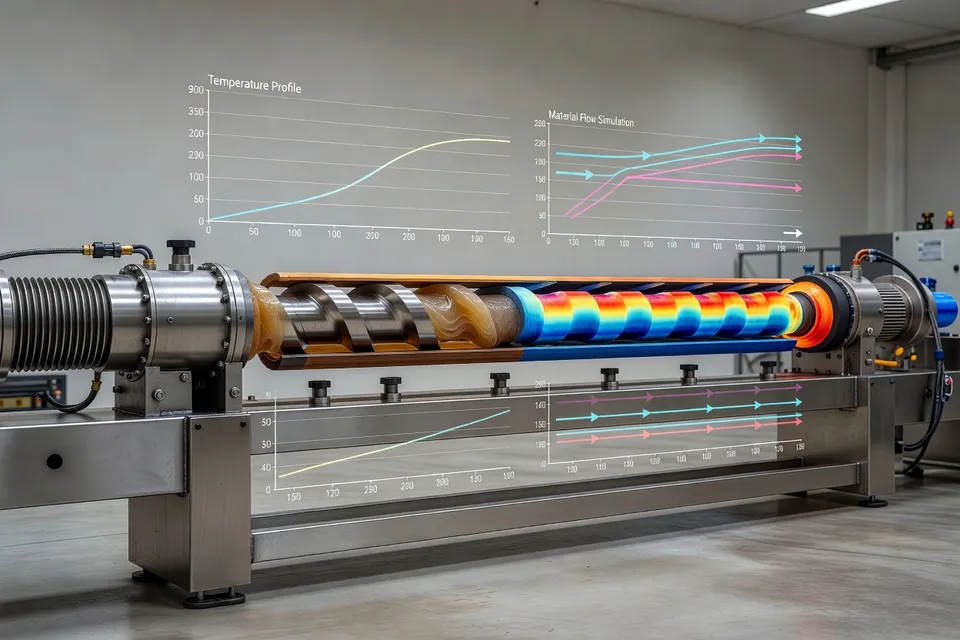
On the compounding side, Coperion has published a structured set of Compounding & Extrusion Training Courses for 2026–2027, supported by its broader training portfolio for feeding and conveying. The program blends classroom theory with hands‑on work on twin‑screw systems and is available as in‑person seminars in Stuttgart and Pitman, New Jersey, as well as customized on‑site and online options.
For 2026, Coperion lists multiple ZSK 101 and ZSK 102 courses at its Pitman lab:
- ZSK 101 sessions in March, June and December 2026, each spanning several days.
- ZSK 102 one‑day courses scheduled back‑to‑back with ZSK 101, allowing participants to build from basic configuration to more advanced setup and troubleshooting in a single trip.
In Europe, three‑day engineering plastics, powder coating and masterbatch courses are slated as presence sessions in March and September 2026, with additional online sessions on request. Tuition fees are structured per participant, with published pricing for Stuttgart‑based courses and separate, dollar‑denominated fees for the Pitman trainings, including course materials and lunches.
Coperion also uses its Virtual Academy to maintain regular contact with processors through webinars on continuous processing, troubleshooting ZSK extruders, lab‑scale extruder selection and PVC or cable compounding, capped by a ZSK basic training webinar in October 2026. For companies unable to send teams abroad, these short, focused modules still provide exposure to best practices in screw design, feeding strategies and process stability.
For rubber and TPE compounders that rely on twin‑screw lines for filled, flame‑retardant or recycled formulations, this matters directly to yield and scrap rates. A better understanding of conveying limits, melting behavior and venting can translate into higher output at constant energy input—and, crucially, fewer off‑spec lots that must be downgraded or reworked.
Innovation summit links molding skills with digital and workforce agendas
At the convergence of these efforts sits the 2026 Injection Molding Innovation Summit, organized by the SPE Injection Molding Division for October 22, 2026 at the Corporate College Conference Center in Ohio.
The one‑day summit is designed for molders who want “practical ideas they can take back to the plant,” and the program reflects that promise. According to coverage of the 2026 agenda, SPE will close the event with a panel on moldmaking with metal 3D printing, featuring speakers from Xact Metal and other tooling experts. That discussion caps a wider program focused on simulation, digital twins, automation, cavity pressure, foam molding and workforce training.
"Together, these sessions show how molders now use data, software, and advanced tooling to reduce risk before production begins." - Editorial coverage in Plastics Engineering said
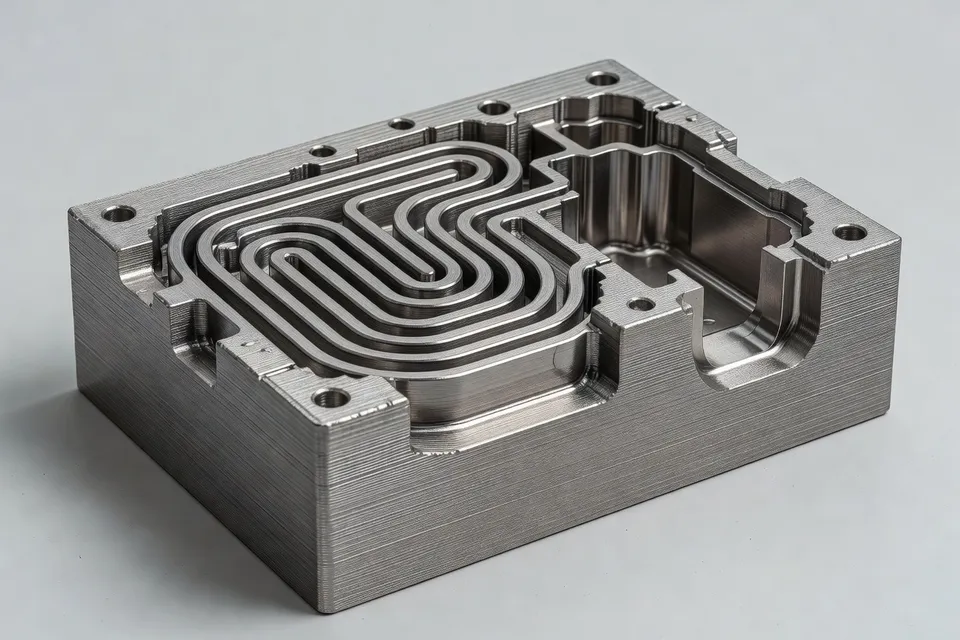
While the summit is plastics‑oriented, the themes are directly relevant to rubber molders: virtual try‑outs to cut down sampling loops, real‑time cavity pressure monitoring to catch cure or fill imbalances, and the use of additively manufactured inserts to manage temperature and flow in complex parts. For companies already sending engineers to ARPM and Rubber Division programs, the SPE summit offers a chance to connect those elastomer‑specific insights with the broader digital transformation of molding.
Global event calendars turn training into a strategic tool
Outside formal courses, global event platforms are making it easier for processors to turn 2026 into a structured learning year. PlasticPortal’s calendar of plastics events shows a dense run of trade shows and technical fairs from late August through October 2026, spanning recycling, compounding, packaging and general plastics and rubber exhibitions from Mumbai to Frankfurt and Taipei.
A snapshot of just one month on that calendar illustrates the range:
| Event (September 2026) | Location | Focus |
|---|---|---|
| Plastics Recycling Show India 2026 | Mumbai, India | Plastics recycling exhibition |
| VietnamPlas 2026 | Ho Chi Minh City, Vietnam | Plastics and rubber industry exhibition |
| Taipei Plas 2026 | Taipei, Taiwan | Plastics and rubber industry exhibition |
| Kunststoffen Beurs 2026 | ’s‑Hertogenbosch, Netherlands | Meeting place for plastics and rubber industry |
| Compounding & Recycling Expo cluster 2026 | Frankfurt, Germany | Recycling, compounding and extrusion shows |
| Colombia Plast 2026 | Bogota, Colombia | Plastics, rubber, petrochemical and packaging fair |
For training managers, this concentration creates an opportunity: align internal development plans with external events. A rubber processor, for example, might send a senior technologist to ARPM’s February course, schedule online Coperion webinars for the mixing team in the first half of the year, and then use a regional show like Kunststoffen or Taipei Plas as a venue to benchmark new machinery and follow‑up with suppliers.
What this means for processors in 2026
The common thread across ARPM’s academies, Rubber Division’s targeted courses, Coperion’s extrusion trainings and SPE’s innovation summit is a shift from isolated lectures to integrated skill‑building ecosystems. Each program tackles a different slice of the value chain, but together they allow processors to:
- Tighten process windows by pairing better material understanding with real‑time measurement and simulation.
- Prepare mid‑career engineers and supervisors for digital tools—virtual manufacturing, additive tooling, advanced automation—that are now entering rubber and plastics plants at scale.
- Link technical training with commercial and legal awareness, especially around specifications, warranties and product liability.
Companies that treat these 2026 offerings as a coordinated curriculum—rather than ad‑hoc trips—are likely to see the biggest payback: fewer quality surprises, smoother launches, and teams that can talk across disciplines from compounding through molding and inspection.
Editorial Insights
- Why are training programs in rubber processing becoming more specialized and plant-focused?
- Because the biggest losses in processing now come from practical failures at the interface of materials, equipment and data, not from a lack of basic theory. Training that mirrors real plant decisions helps teams reduce scrap, shorten launch cycles and respond faster to variability in raw materials, automation and quality requirements.
- What does the shift toward digital tools mean for rubber and plastics processors?
- Digital tools are moving from optional add-ons to core process controls, especially where simulation, virtual trials and real-time monitoring can prevent costly physical trial-and-error. The commercial value is straightforward: fewer off-spec lots, better consistency and more confidence when introducing new formulations or tooling.
- How can shorter courses and webinars still deliver meaningful skills development?
- Short formats work best when they are tightly targeted to a single process challenge, such as extrusion stability, compounding control or testing methods. They allow companies to upskill specific roles without taking whole teams offline, which makes training easier to sustain across the year.
- Why is cross-functional training becoming more important in processing operations?
- Modern processing problems rarely stay inside one department, because material selection, equipment settings, documentation and inspection now influence one another directly. Training that brings together technical, quality and commercial issues helps companies avoid disconnected decisions that can later become performance, warranty or liability problems.
- What is the broader business value of treating training as part of a yearly strategy?
- A coordinated training plan turns education into a production tool rather than a one-off benefit. When companies align courses, webinars and trade events, they build a more adaptable workforce, improve supplier benchmarking and create a stronger foundation for process stability and continuous improvement.
References
- 1.Rubber Division, ACS. (2026, September 1). Events from August 7 – September 12 › Training ›. Rubber Division, ACS.
- 2.Coperion. (2026, August 25). Compounding & extrusion training courses 2026 & 2027. Coperion.
- 3.SPE. (2026, August 13). 2026 Injection Molding Innovation Summit. SPE.
- 4.Rubber World. (2026, January 16). ARPM announces 2026 advanced rubber manufacturing training. Rubber World.
- 5.PlasticPortal. (2026, September 1). Calendar of plastics events. PlasticPortal.