


Two September and June shows shaping Southeast Asia’s plastics map
Walk the aisles of VietnamPlas 2026 in Ho Chi Minh City this September and InterPlas Thailand 2026 in Bangkok in June, and a clear picture emerges: these two shows are no longer just national events, but coordinated regional platforms where suppliers, processors, and brand owners stress‑test their technology strategies for the next decade.
VietnamPlas’ 24th edition runs from 9–12 September 2026 at the Saigon Exhibition and Convention Center (SECC), with show hours from 9:00 to 17:00 and an early close on the final day. Organisers Vinexad and Yorkers project around 650 exhibitors over 22,000 square metres, drawing companies from more than 15 countries and regions. Just three months earlier, InterPlas Thailand marked its 33rd edition from 17–20 June 2026 at BITEC Bangkok, again framed explicitly as ASEAN’s most comprehensive showcase for plastics machinery, technology, chemicals, and raw materials.
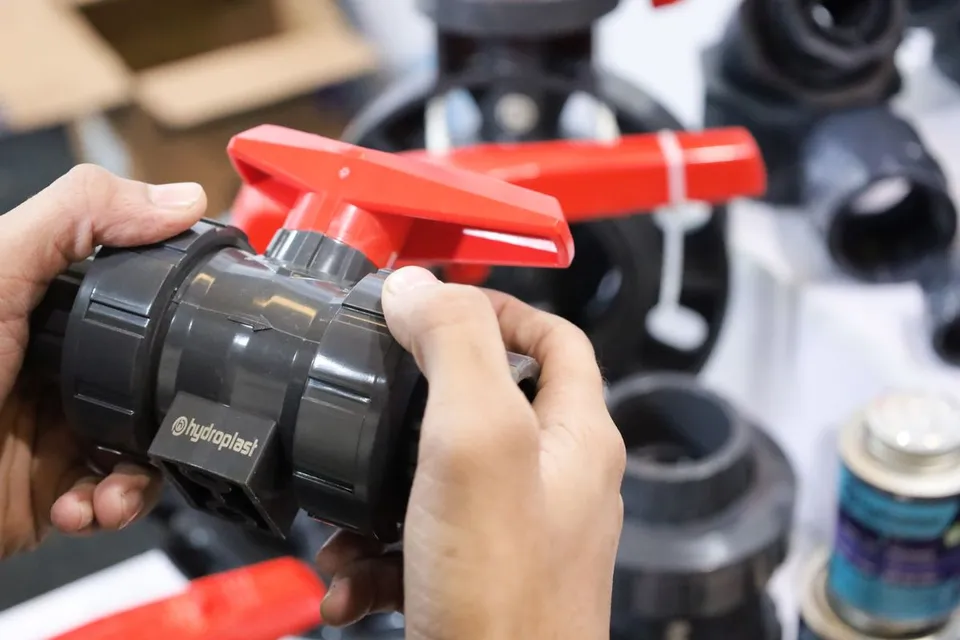
For producers across the region, the calendar synchronisation matters. Equipment builders are using InterPlas to validate their ‘green plastics’ narratives in front of large Thai and ASEAN customer bases, then carrying those same solutions into VietnamPlas where demand is being driven by rapid industrialisation and supply chain relocation.
VietnamPlas 2026: automation and scale arrive together
The Vietnam investment story is spelled out in the numbers. The 2026 edition of VietnamPlas is expected to gather 650 exhibitors on 22,000 m², covering plastics and rubber processing machinery, raw materials, recycling technologies, and automation and smart manufacturing solutions. For a country where plastics converting has traditionally been fragmented, this concentration means processors can benchmark their own plants against global standards in a single visit.
Italian automation specialist Piovan is one of the suppliers responding to that demand. Its Vietnam branch will exhibit at stand B709 at SECC, promoting technologies for material handling and drying tailored to local processors. Highlighted systems include the Quantum high‑precision gravimetric blender and a DPA compressed‑air dryer for hygroscopic polymers, alongside dedusting equipment supplied through Pelletron. On the surface, that looks like a routine product showcase; in practice, it is a signal that more sophisticated process control is entering Vietnamese plants.
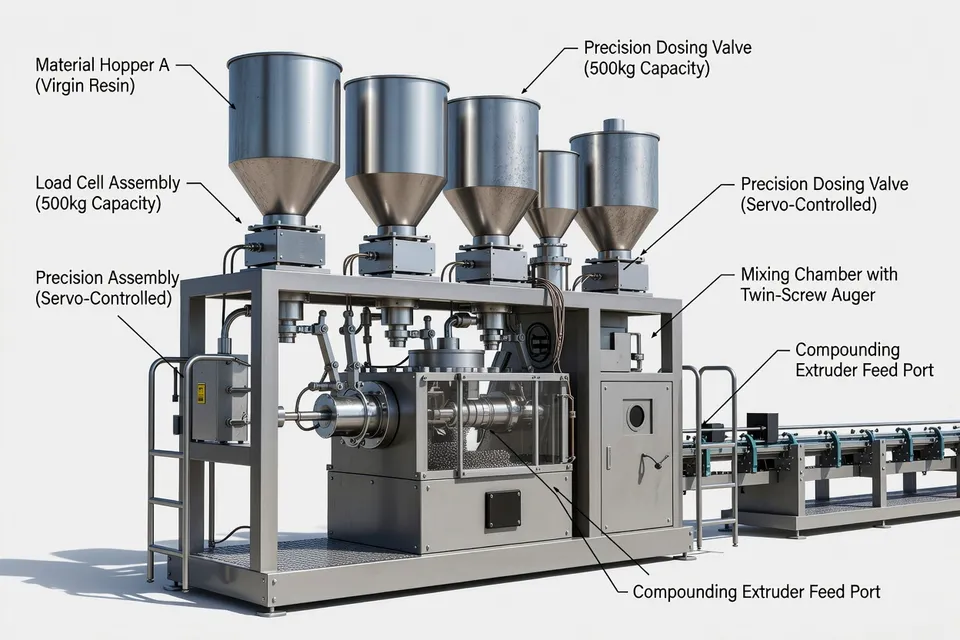
Local processors at SECC repeatedly point to two pain points: inconsistent material quality and rising energy costs. A gravimetric blender capable of tight dosing control allows them to stabilise recipes using increasing proportions of recycled content, while compressed‑air drying offers an alternative to traditional desiccant systems that can be oversized or poorly maintained. Combined with dedusters, these investments reduce scrap rates and improve uptime on imported injection and extrusion lines.
VietnamPlas’ exhibitor mix reinforces this shift. Beyond automation, the show’s scope explicitly includes recycling machinery and smart manufacturing technologies, indicating that buyers are not only shopping for standalone machines but for integrated production cells. In discussions on the show floor, several domestic compounders note that international brands visiting VietnamPlas now arrive with checklists tied to corporate sustainability metrics, pressing suppliers for traceability and energy‑use data rather than just price.
"VietnamPlas has become the place where Vietnamese processors meet global sustainability and automation standards in one shot." - A senior project manager at a European materials supplier said
As a result, sales conversations at SECC increasingly centre on future‑proofing: can that dryer accommodate bio‑based resins; can that blender track recipe changes automatically for audits; can dedusting be quantified to support customer claims on cleanliness in packaging and medical applications.
InterPlas Thailand 2026: green plastics as a competitive lens
If VietnamPlas is where Vietnamese processors catch up with global expectations, InterPlas Thailand 2026 is where much of that thinking is being written. The Bangkok show, organised by RX BITEC as part of Manufacturing Expo, took place from 17–20 June 2026 in halls EH103–104 at BITEC, with daily opening hours from 10:00 to 18:00. The 2026 edition carried the theme “Innovations that Advance Green Plastics for All”, explicitly framing the event around technologies and materials that support lower‑impact manufacturing.
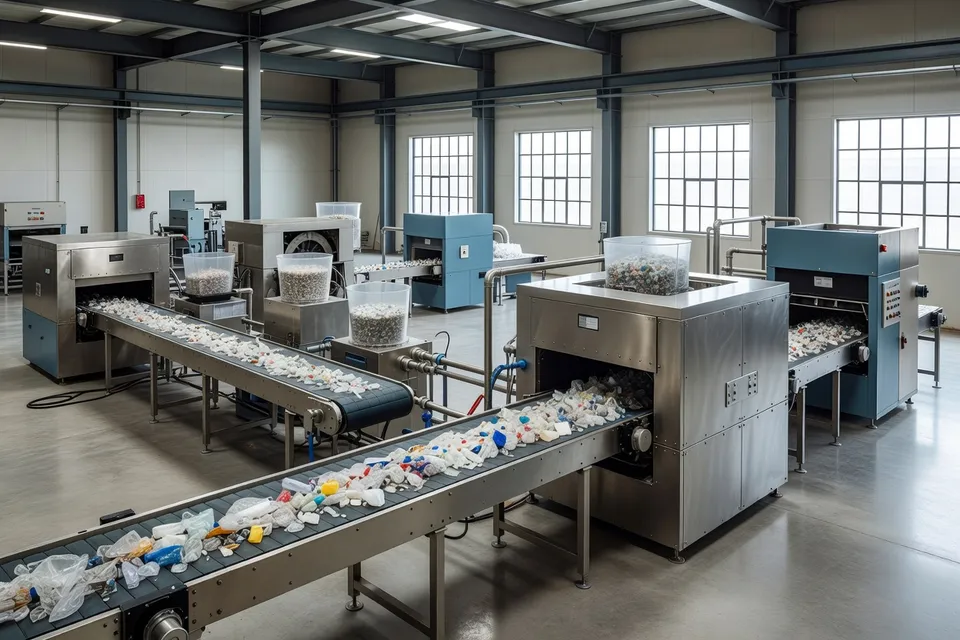
The organiser’s briefing underlines that more than 300 brands were expected to exhibit machinery, chemicals, raw materials, and medical consumables aimed at delivering measurable ROI while enabling greener production decisions. Exhibitor lists from additive producers, materials firms and machinery suppliers show a heavy emphasis on:
- Efficient injection and extrusion equipment
- Advanced resin and additive packages for downgauging and recycling
- Mould and peripheral technologies aimed at energy and material savings
- Recycling and sustainable material technologies integrated into mainstream production cells
Thailand‑based buyers attending InterPlas describe the event as a practical lab for decarbonisation strategies. Rather than broad sustainability promises, exhibitors are increasingly presenting quantified data on cycle‑time reduction, scrap reduction, and energy intensity. That sets a benchmark which many of the same suppliers then carry into VietnamPlas, where Vietnamese processors are under pressure from export customers to match ASEAN peers.
"InterPlas has shifted from a machine show to a decision lab for green investments." - A business development director at a regional machinery distributor said
Twin hubs, one regional playbook
Taken together, VietnamPlas 2026 and InterPlas Thailand 2026 are building a shared playbook for plastics manufacturing in Southeast Asia. Bangkok, with a long‑standing manufacturing base and the 33rd InterPlas edition, functions as the testing ground where suppliers refine sustainability narratives and technical offers. Ho Chi Minh City, via the 24th VietnamPlas, offers access to a rapidly expanding converter base that is still shaping its preferred technology stack.
For processors, the implication is clear. Attending both shows in the same year allows plant managers and owners to cross‑compare offers: automation and material handling solutions showcased by companies like Piovan in Ho Chi Minh City can be evaluated against the broader machinery and green‑materials landscape seen in Bangkok. For suppliers, committing to both events is no longer optional; it is how they signal regional seriousness to customers that increasingly source across borders.
The commercial consequence is a tightening feedback loop. Equipment and materials that perform well with Thai customers under the ‘green plastics’ lens at InterPlas are rapidly introduced into Vietnamese lines via VietnamPlas, accelerating technology transfer without waiting for multi‑year product cycles. At the same time, the volume and diversity of exhibitors and visitors at VietnamPlas give suppliers early visibility into how smaller converters and family‑owned factories interpret and adapt those technologies.
In 2026, that dynamic is on full display. From SECC in September to BITEC in June, Southeast Asia’s plastics sector is converging on a shared agenda: automation that supports recycled and bio‑based materials, machinery that cuts energy use, and show floors where regional engagement is measured not just in booths and visitor counts, but in how quickly new ideas cross borders and enter production.
Editorial Insights
- How are regional plastics exhibitions reshaping technology decision-making for processors in Southeast Asia?
- Regional shows are evolving from simple product showcases into strategic platforms where processors benchmark automation, materials, and sustainability solutions against global standards in a compressed timeframe. By seeing complete production cells, data-backed efficiency claims, and diverse supplier offers side by side, plant managers can align their investment roadmaps with emerging regional norms rather than making isolated, incremental purchases. This regional lens is accelerating convergence on smarter, more energy-efficient, and recyclate-ready technology stacks.
- Why is automation increasingly linked to the effective use of recycled and bio-based plastics in the region?
- Automation is becoming the bridge between ambitious material targets and reliable plant performance. Precise dosing, stable drying, and better contamination control allow converters to run higher shares of recycled and alternative resins without sacrificing quality or uptime. As sustainability metrics tighten, automated control and data capture turn what used to be trial-and-error material changes into auditable, repeatable processes that can satisfy demanding downstream customers and certification schemes.
- How is the push for ‘green plastics’ changing the way investment ROI is calculated in plastics manufacturing?
- Return on investment is shifting from a narrow focus on machine price and throughput to a more layered calculation that includes energy intensity, scrap rates, and the ability to meet future regulatory and customer requirements. Data-backed claims on cycle-time reduction, downgauging, and recyclability are increasingly treated as hard financial levers rather than marketing promises. This is pushing buyers to favour equipment and materials that not only lower current operating costs but also de-risk their exposure to tightening climate and waste policies.
- What role do traceability and production data play in the emerging regional plastics supply chain?
- Traceability and granular production data are becoming prerequisites for participation in higher-value supply chains, especially in packaging, medical, and export-oriented segments. Buyers increasingly demand visibility into material sources, energy use, and process conditions, turning previously internal plant information into a commercial asset. Converters that can document recipe changes, cleanliness levels, and efficiency metrics are better positioned to secure long-term contracts and respond quickly to audits or new compliance frameworks.
- How might smaller converters and family-owned factories be affected by the rapid regional shift toward advanced, greener technologies?
- Smaller converters face a dual pressure: they must keep pace with rising automation and sustainability expectations while managing limited capital and technical resources. On the one hand, regional exhibitions give them early exposure to new solutions and practical pathways to incremental upgrades; on the other, the gap between basic setups and data-rich, low-impact cells is widening. Those that can selectively adopt modular technologies and leverage supplier support will find opportunity, while laggards risk being locked into lower-margin, more volatile business.
- What long-term ethical questions does the region’s fast-paced plastics modernisation raise?
- The rapid move toward higher-output, lower-impact plastics production raises questions about who benefits from efficiency gains and how external costs are handled. There is a tension between enabling economic growth and locking societies into complex, resource-intensive material systems that remain difficult to fully decarbonise or detoxify. Over time, ethical scrutiny is likely to focus on whether today’s investments genuinely reduce cumulative environmental burdens or primarily optimize a business model that still depends on large volumes of plastic.
References
- 1.PiovanGroup. (2026, July 28). Piovan at VietnamPlas 2026. PiovanGroup.
- 2.EUROMAP. Global exhibition calendar. EUROMAP.
- 3.Neventum. (2026). VietnamPlas 2026. Neventum.
- 4.Showsbee. National Plastics Conference 2026. Showsbee.
- 5.Canton Fair net. Plastics trade show list worldwide 2026-2027. Canton Fair net.
- 6.PlasticPortal.eu. Plastics exhibitions and trade fairs from around the world. PlasticPortal.eu.
- 7.Plastics Technology. (2026, June 18). Rubber Tech 2026. Plastics Technology.
- 8.Messe Düsseldorf. K trade fair online portal. K-Online.
- 9.VIR. (2026, September 1). VietnamPlas 2026 set for Ho Chi Minh City this September. Vietnam Investment Review.
- 10.AsianNet & TradeAsia. (2026, August 24). 2026亞洲塑橡膠工業展覽會正式開幕 助力中小企業拓展全球市場與國際買主對接. PR Newswire.