

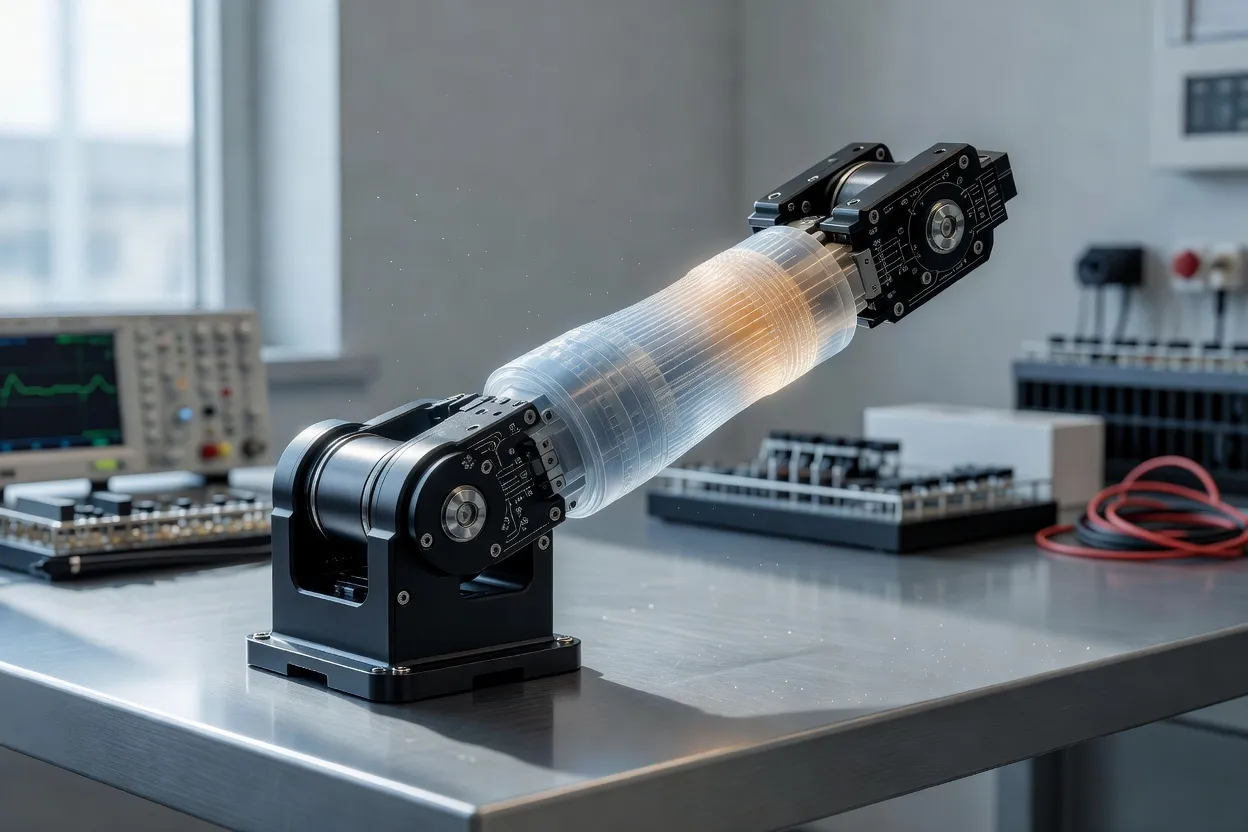
Kerala’s new shape‑memory patent puts smart polymers on the industry map
When a polymer patent from two college labs in Kerala appears in the national register, it usually passes quietly. This one did not. In September 2026, academic couple Smitha Roy of UC College, Aluva, and Dr K. Arvind of SB College, Changanassery, were granted an Indian patent for a family of temperature‑responsive shape‑memory polymers designed to revert to their original form after deformation.
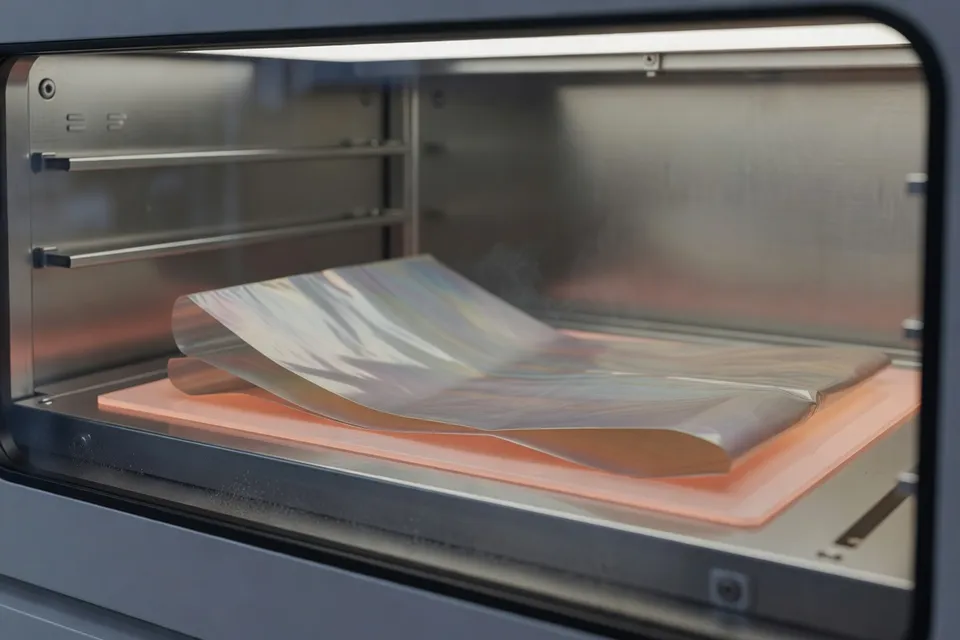
The patent, effective for 20 years from 20 October 2025, formalises a platform technology aimed at applications that need materials to "remember" a programmed geometry when the temperature crosses a trigger window. The story behind it — and its implications for processors and automation engineers — is more ambitious than a single smart material.
From college labs to programmable motion
Shape‑memory polymers (SMPs) are not new to science, but they have largely remained the preserve of specialised medical devices, aerospace components and research prototypes. Most commercial systems rely on a thermal cycle: the polymer is set in a permanent shape, deformed into a temporary state below or above a transition temperature, then driven back to its original geometry when the stimulus is applied.
Roy and Arvind’s work sits squarely in this lineage, but with a focus on robust temperature‑driven recovery behaviour that can be engineered into thin films, fibers and small components rather than only bulk actuators. The Indian patent, as reported in Kerala‑based media, covers polymer compositions that can switch from a deformed to a permanent shape in response to realistic operating temperature shifts, aligning them with environments encountered in clothing, consumer devices and light‑duty robotics.
For processors, the detail that matters is that the materials are described as insoluble and durable, yet amenable to conventional polymer shaping routes. This positions the patent not just as a laboratory curiosity but as a potential feedstock for extrusion, film casting, fiber spinning or injection molding, provided the formulations can be tuned to standard processing windows.
A patent in a crowded but changing landscape
Globally, SMP patenting has formed a steady but niche stream over the past two decades, covering everything from endovascular foams to bidirectional, functionally graded and photo‑activated systems. Much of that activity has clustered in the US, Europe and East Asia, where patents span:
- Medical foams and vascular grafts that expand in situ.
- Bidirectional SMPs that toggle between shapes without reprogramming.
- Functionally graded SMPs with spatially varying transition temperatures.
Against that backdrop, an Indian patent emerging from teaching‑focused colleges signals two shifts. First, advanced responsive polymers are no longer confined to elite research institutes. Second, shape‑memory behavior is being framed explicitly around wearable and robotic use‑cases rather than only high‑value, low‑volume markets.
For resin suppliers and compounders, this matters: it indicates that regional IP portfolios for smart materials are beginning to broaden, potentially opening licensing, joint‑development or toll production opportunities that don’t run solely through multinational players.
Why robotics and smart textiles care
Soft robotics and smart textiles developers have spent years stitching together partial solutions: liquid‑crystal elastomers for programmable motion, silicones for soft actuators, and classic elastomers for stretch and grip. Many of these platforms excel at continuous deformation under fields or pressure, but are less suited to applications that demand discrete, shape‑locking events.
Shape‑memory polymers occupy that missing niche. Once programmed, they can:
- Lock a robotic gripper into a secure geometry when heated or cooled through a threshold.
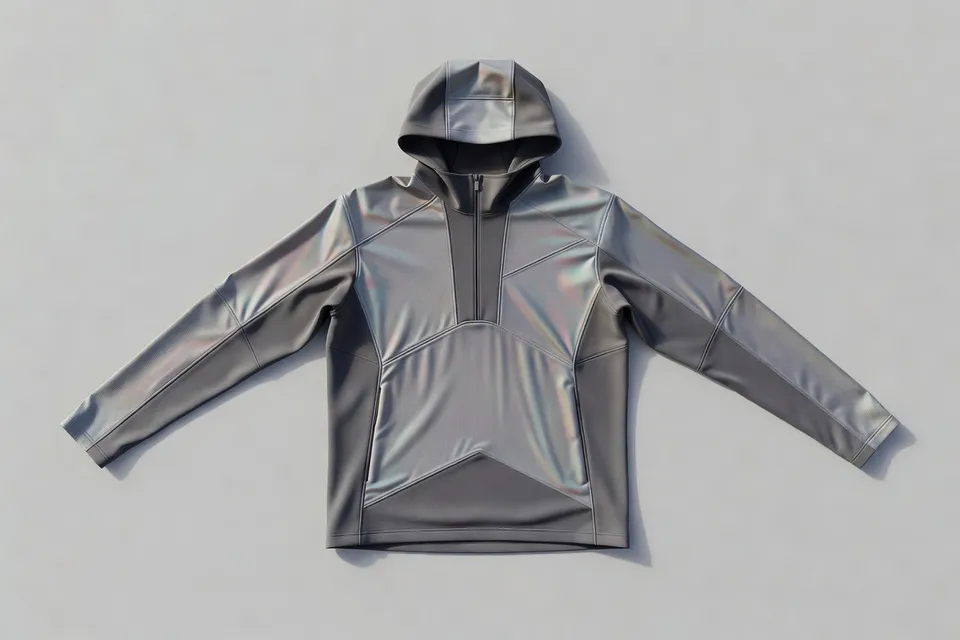
- Tighten or loosen sections of a garment in response to body temperature.
- Deploy or retract small components without motors — for example, vents, flaps or micro‑valves.
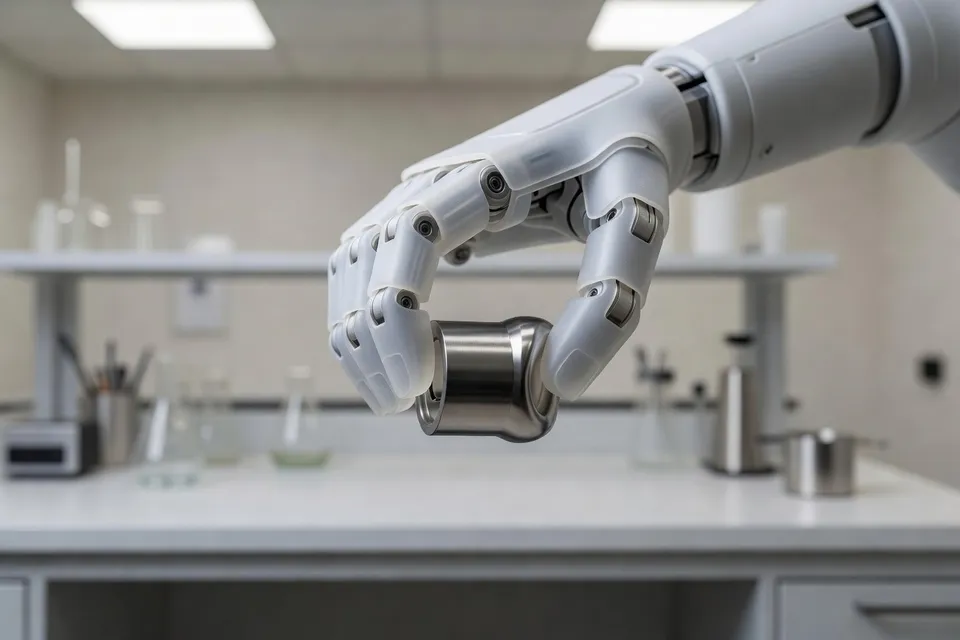
Recent research has already demonstrated rubber‑based shape‑memory interpenetrating networks that act as robotic grippers, and stiffness‑tunable actuators where SMP layers increase rigidity by more than an order of magnitude while retaining flexibility. Kerala’s patent adds a temperature‑responsive, potentially more process‑friendly chemistry to that ecosystem.
For automation engineers, the practical draw is the possibility of quasi‑passive actuation: devices that change shape based on thermal events already present in the system, such as waste heat from electronics or ambient conditions, rather than requiring dedicated electromechanical drives.
Processing realities: what converters should watch
Despite the promise, shape‑memory behavior complicates factory life. Converters weighing this new patent against current lines will need to scrutinise several operational questions:
- Transition window and cycle stability: At what temperatures do the materials program and recover, and how many cycles can they withstand before fatigue undermines the memory effect?
- Compatibility with existing equipment: Do extrusion or molding temperatures sit safely above or below the critical transition range, or will processing inadvertently reprogram parts?
- Integration with traditional resins: Can the Kerala formulations be blended or co‑extruded with commodity polymers without losing the memory response?
Evidence from other SMP systems suggests that careful control of crosslink density, crystallinity and segment architecture is needed to keep the memory behavior sharp. Functionally graded SMP patents, for example, have relied on post‑curing in temperature gradients or gradient photomasks to distribute glass transition temperatures along a part.
If Roy and Arvind’s patent supports similar control without elaborate post‑processing, it could lower the barrier for adoption in mid‑scale factories, especially those serving textile or consumer goods brands with growing interest in responsive features.
AI and automated discovery: why timing matters
The patent also lands at a moment when AI‑driven polymer discovery and self‑driving labs are moving from theory to practice. Recent work described on the research circuit highlights:
- A closed‑loop ecosystem where AI, robotics and analytics iteratively design and test polymers, targeting performance and sustainability.
- Massive open polymer datasets designed specifically to train models on structure–property relationships.
- Generative AI tools that propose new polymer chemistries from desired properties, then validate them experimentally.
In that context, the Kerala SMP patent is more than a static legal document. It is a data point that can feed into these discovery engines — a defined composition and property set from a region under‑represented in global materials datasets.
For Indian institutions and local industry, this creates a clear opportunity: link patent‑backed chemistries like Roy and Arvind’s to AI‑enabled screening of blends, co‑polymers and processing conditions, shortening the path from lab‑scale smart polymer to validated, scalable product.
Commercial and sustainability implications
From a commercial standpoint, shape‑memory polymers have historically faced three hurdles: cost, reliability and recycling. Recent breakthroughs elsewhere show how these might be addressed:
- Novel plastics that depolymerise to monomer vapor at around 90 °C and then reform on cooling hint at future SMP‑like systems that combine programmable shape with closed‑loop material recovery.
- AI‑guided tools for rubber‑like materials have already cut development times and filtered out unpromising formulations, suggesting similar workflows could optimise SMP compositions for robustness and processability.
If Kerala’s patent can be paired with such advances, processors could eventually offer smart components that are both programmable and easier to reclaim, aligning with regulatory pressure on chemical recycling and extended producer responsibility.
In the near term, however, the most realistic impact is incremental but concrete: regional suppliers experimenting with SMP masterbatches for technical textiles, robotics labs prototyping grippers or hinges, and OEMs testing temperature‑responsive inserts in wearables.
What industry should do next
For plastics and rubber professionals, three immediate steps could turn this patent from headline to practice:
- Engage the inventors: Joint development or licensing discussions with the Kerala team could anchor pilot projects in real formulations rather than speculative chemistries.
- Map applications with clear value: Focus on niches where programmable shape has a direct payoff — safer grips, adaptive fit, passive safety mechanisms — rather than diffuse "smart" branding.
- Prepare lines for smart materials: Audit processing windows, quality control and testing protocols so that shape‑memory behavior can be measured and managed, not just assumed.
Shape‑memory polymers have long been framed as futuristic. With a 20‑year Indian patent rooted in practical temperature‑responsive behavior, Kerala’s researchers have nudged them closer to day‑to‑day manufacturing — and given regional processors a tangible reason to revisit how their materials remember.
Editorial Insights
- How do shape-memory polymers change the way plastics and rubber processors should think about motion and mechanics in products?
- Shape-memory polymers shift motion from being purely mechanical to being partly embedded in the material itself. Instead of adding motors, springs or complex kinematics, processors can program geometry changes that are triggered by realistic temperature shifts, allowing components to lock, deploy or adapt with minimal hardware. This rewires design thinking: material selection becomes a functional decision about actuation and safety, not just strength and cost.
- What are the main processing risks when integrating temperature-responsive shape-memory polymers into existing conversion lines?
- The biggest risks sit around thermal management and cycle fatigue. If molding or extrusion windows overlap with the transition range, parts can be unintentionally programmed or partially relaxed on the line, leading to inconsistent behavior in the field. Repeated heating and cooling during downstream steps can also erode the memory effect. Converters will need tighter control of temperatures, residence times and post-processing, plus robust testing protocols to verify stable recovery over many cycles.
- How might temperature-driven shape-memory behavior be leveraged to reduce energy consumption in automation and robotics?
- Temperature-responsive systems enable quasi-passive actuation, where shape change is driven by existing thermal events rather than dedicated drives. Grippers, vents or adaptive supports can respond to waste heat from electronics or ambient shifts, cutting the need for motors, sensors and control electronics. This simplifies architectures, reduces maintenance and can lower overall energy draw, especially in distributed or low-power robotic applications.
- What ethical and safety questions arise when garments and consumer products can autonomously change shape with temperature?
- Autonomous shape change raises concerns around predictability, comfort and failure modes. If a product tightens, releases or deploys components in unexpected thermal conditions, users could face discomfort or even injury. There is also a transparency issue: people should understand when and how their products will move. Clear design rules, conservative transition windows, and rigorous testing under realistic scenarios will be needed to ensure that responsive features enhance safety rather than introduce hidden risks.
- How can AI-driven materials discovery realistically accelerate commercial deployment of smart polymers in mid-scale factories?
- AI tools can rapidly explore formulation space, screening blends, crosslink densities and segment architectures before a single batch is compounded at scale. By learning from existing datasets and patent-backed compositions, they can narrow options to those that balance sharp memory behavior with standard processing windows and durability. For mid-scale factories, this means fewer trial-and-error campaigns, faster qualification of masterbatches, and a more data-driven path from lab concept to reliable, repeatable production.
- What are the most realistic near-term sustainability gains from adopting shape-memory polymers in the plastics and rubber sector?
- In the near term, the gains are likely to come from smarter, lighter components rather than radical recycling breakthroughs. By integrating actuation into the material, designers can remove mechanical parts, cut weight and extend product life through adaptive fit or passive protection. This reduces material use and complexity, which can improve repairability and end-of-life handling. As chemistries evolve toward easier depolymerisation and reprocessing, these incremental steps lay the groundwork for more circular smart systems.
References
- 1.Onmanorama Staff. (2026, September 3). Kerala couple gets patent for breakthrough shape-memory polymers. Onmanorama.
- 2.Phys.org. (2026, August 18). Novel plastic turns into a gas when heated—then reforms once cooled. Phys.org.
- 3.Tech Xplore. (2026, August 10). 3D printing method creates soft actuators with switchable heat-driven motion. Tech Xplore.
- 4.Phys.org. (2026, September 4). AI-driven polymer discovery could replace years of trial and error with closed-loop testing. Phys.org.
- 6.bioplastics MAGAZINE. Daily news. bioplastics MAGAZINE.