

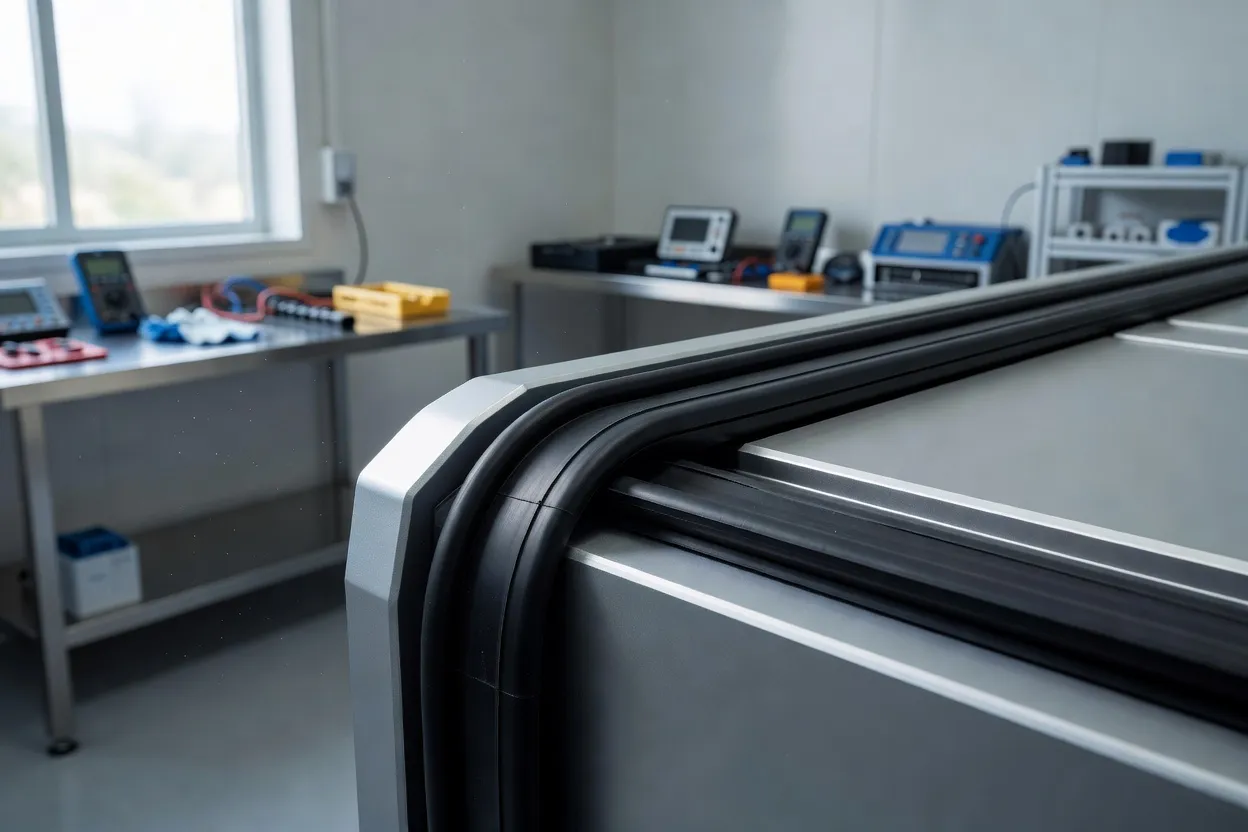
Factory-of-the-Future Moves From Vision to Dryer Settings
In August 2026, natural rubber producer Sri Trang moved its "factory of the future" talk into the production hall, tying artificial intelligence directly to dryer performance and plant-wide data flows. The group’s Sri Trang AI Machine (SAM) programme takes a practical tack: start with specific bottlenecks, then wire them into a broader AI-driven manufacturing architecture.
Sri Trang has already deployed an AI Dryer concept at two rubber manufacturing facilities and has set a schedule to expand this technology to six plants in 2026 and another eight in 2027. The system sits between raw-material receiving and finished-goods inspection, using data on moisture, energy use and product quality to adjust dryer operation automatically rather than relying on operator feel.
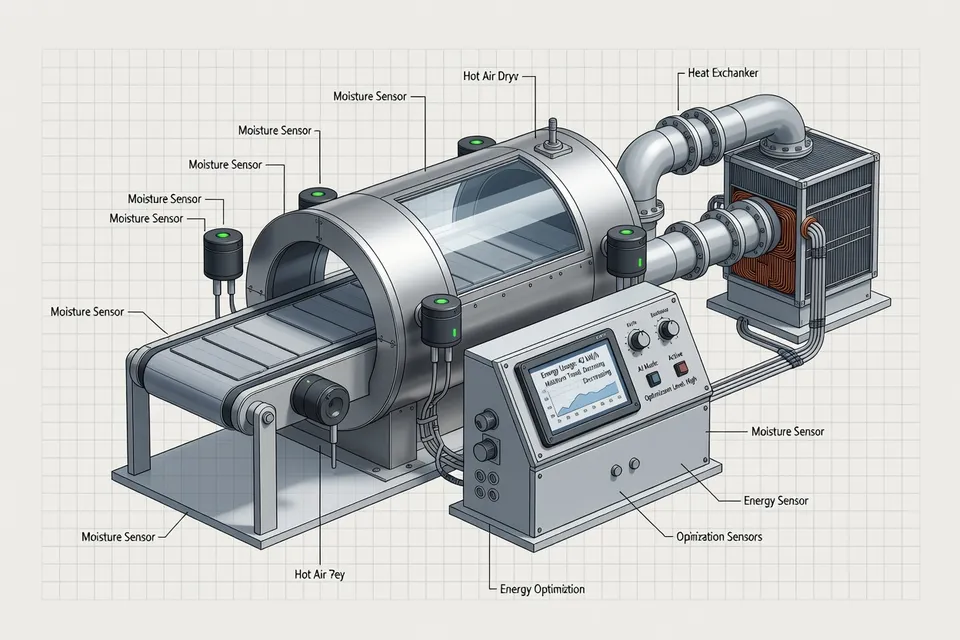
This forms part of a wider "factory of the future" project, which Sri Trang describes as an integration of machinery, automation, data and AI from raw-material receiving and quality assessment through production, energy management, quality inspection and operational monitoring. The same SAM approach is being extended from block rubber into the group’s rubber glove business, giving a common control philosophy from upstream latex to finished medical products.
For processors, that level of integration matters more than the headline. It means AI is designed into the workflow – data structures, maintenance routines, and operator roles – not bolted onto a single machine. The Thai group’s public messaging stresses "practical applications and tangible outcomes" over generic innovation language, a signal that future supplier discussions will hinge on concrete metrics such as dryer uptime, energy per tonne, or off-grade rates rather than pilot‑project demonstrations.
AI for Better Recyclate: Fraunhofer’s K3I-Cycling Toolbox
On the plastics side, a different slice of the value chain is being digitised. A 27 August 2026 article from Kuhn Fachmedien describes the K3I‑Cycling project led by Fraunhofer LBF with 16 partners, funded by Germany’s Federal Ministry for Research, Technology and Space. Here, the goal is not faster throughput on one line but industrial‑grade recyclate derived from mixed lightweight packaging waste.
The project couples real materials analytics with machine learning to classify polyolefin recyclates by ageing state and contamination, sorting them into quality clusters that can be used in defined applications. The work package run by Fraunhofer LBF focuses on practical recyclate production at laboratory and pilot scale, evaluation of mechanical properties, and the design of additive packages to stabilise performance.
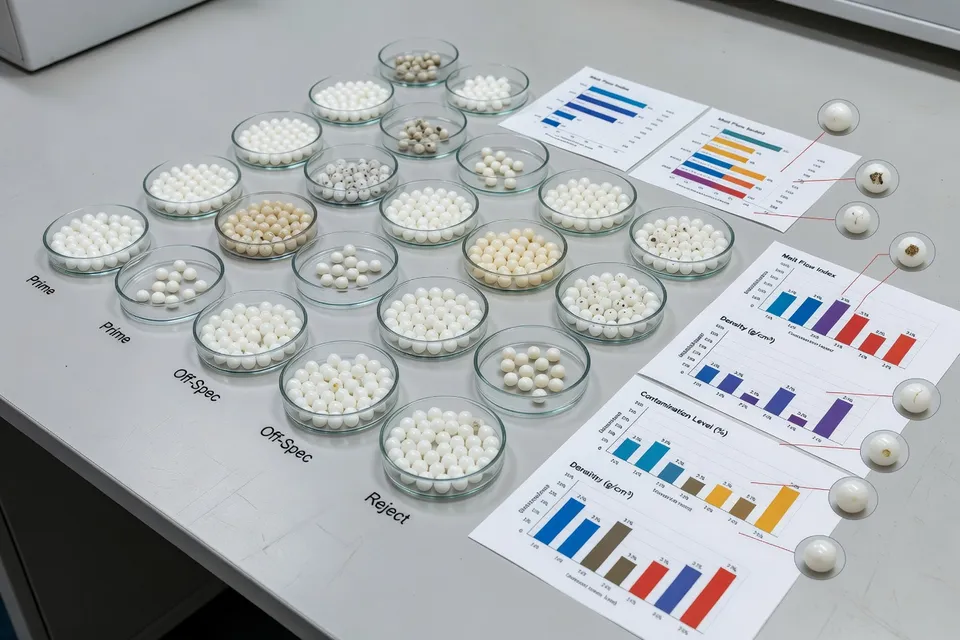
Instead of treating "mixed lightweight packaging" as a single low‑grade stream, the K3I‑Cycling team is building a toolbox that lets recyclers and converters read the material like a specification sheet: what contamination range, what ageing profile, which additives, and which downstream product window it fits. In parallel, they have developed an Artificial Neural Twin (ANT) to model the entire sorting chain from collection to end user, allowing targeted optimisation of parameters such as purity, logistics distance and price across the value chain.
For compounders and brand owners, this is a practical bridge between lab analytics and plant purchasing. Instead of asking whether recyclate is "good enough", they can match clusters to product tiers and adjust recipes or processing conditions accordingly. It also raises the bar on supplier transparency: once machine learning tools can link packaging design, waste stream signatures and recyclate performance, the discussion about "design for recycling" becomes quantifiable.
Quality Control Without Guesswork: Paper Bottles and Computer Vision
AI-driven inspection is also moving into fibre‑based packaging that competes directly with plastics. In a University of Surrey case study on the Pulpex project, researchers report using infrared thermography combined with computer vision to monitor the coating and drying process for cellulose‑based paper bottles, developing a fast method for in‑line quality control.
The team established a proof of concept that IR thermography can track the drying process from start to finish and detect subtle temperature variations that correspond to defects in the coating layer. Building on this, the follow‑on SustaPack project, backed by a £1 million EPSRC Prosperity Partnerships award, is using mechanistic modelling, computer vision and AI to turn this into a robust, commercially deployable quality‑control technology.
"We are using mechanistic modelling, computer vision and artificial intelligence (AI) to develop a robust QC technology, which isn’t yet commercially available." - Professor Joseph Keddie, professor of soft matter physics at the University of Surrey said
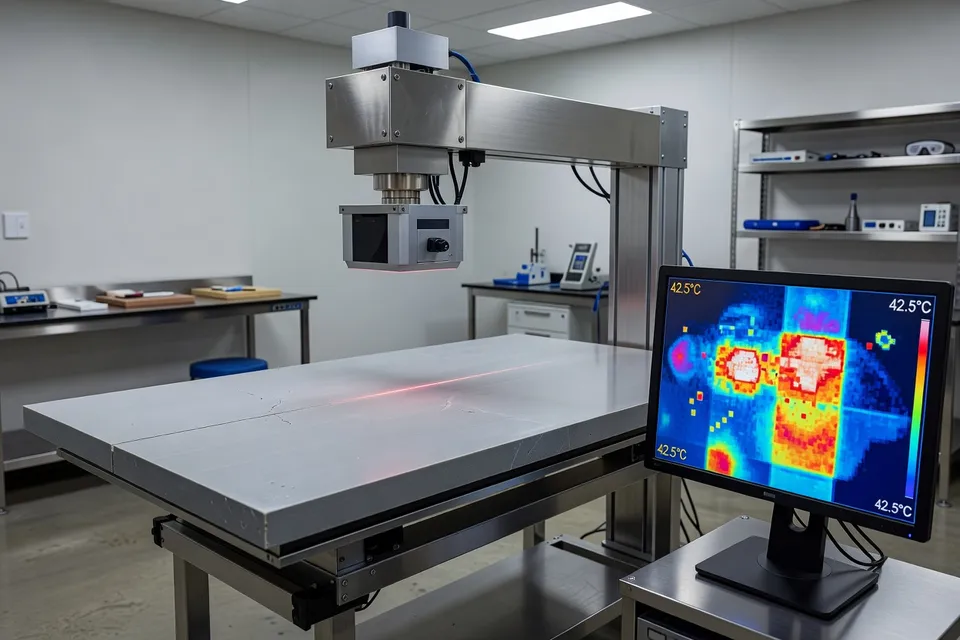
The stated aim is to achieve real‑time defect detection and 100% reliability in paper bottle production while improving energy efficiency and reducing water use. For plastics converters, this is not just a rival technology story; it is a glimpse of how combined thermal imaging and AI could be repurposed for online thickness, chill and adhesion checks on multilayer films and coated rigid packaging.
Injection Moulders Raise the Bar on Visible Parts
While some projects tackle data and recycling, others focus on the uncomfortable step where a previously hidden technical part becomes the visible face of a product. Czech moulder Okula Nýrsko a.s. reports on such a case in its EMURA 3 front panel project for a Daikin air-conditioning unit, where a functional component was pulled into the visual design of an interior product.
The panel had to meet strict technical standards and very high visual expectations, forcing a rethink of process settings. During production preparation, Okula ran a Moldflow analysis and optimised the filling process. Despite that, testing exposed sink marks caused by material shrinkage – a common defect that becomes unacceptable on a highly visible surface.
The final solution was a targeted adjustment of the injection moulding process with nitrogen assistance, stabilising the process while maintaining geometry and dimensional stability and achieving the required surface quality. While the project does not rely on AI per se, it highlights the sort of multi‑parameter optimisation that AI‑based process monitoring could automate in future: combining flow simulation data, cavity pressure curves, and surface inspection results into a closed‑loop recipe.

For moulding shops, the lesson is immediate. When a customer elevates a part from "technical" to "design component", the plant must present a defensible path to surface stability – whether via simulation‑driven parameter sets, gas‑assist tuning, or, increasingly, algorithmic pattern recognition for defect risk.
What Processors Can Do Now
Taken together, the Sri Trang AI dryer rollout, Fraunhofer’s K3I‑Cycling toolbox, Surrey’s thermal‑imaging QC work and Okula’s EMURA 3 panel project point to a common pattern: start with a specific production problem, then build the AI or data solution around it.
Processors in rubber and plastics can borrow several concrete steps:
- Map one process chain end‑to‑end. Sri Trang’s project spans raw material intake to energy management and inspection; a smaller plant can begin with one line, but must still define data owners and decision points.
- Pair analytics with a business question. K3I‑Cycling’s material clusters are designed around industrial usability, not academic classification; recyclers and converters should define what "industrial‑grade" means in their own product families before investing in sensors.
- Upgrade inspection where defects hurt most. Surrey’s work shows that thermal imaging plus AI is viable for coatings with tight performance windows; plastics producers can pilot similar approaches on coextruded films, barrier layers or decorative surfaces where scrap is costly.
- Treat visible parts as separate process classes. Okula’s nitrogen‑assist solution underscores that visual components justify extra process development; feeding such cases into an AI‑supported recipe management system can prevent each new project from starting at zero.
None of these examples rely on hype. They all involve incremental changes – new sensors on existing equipment, machine‑learning models built on current lab data, or targeted process tweaks – that add up to better output stability and higher‑value product positioning. For plants under pressure to prove both efficiency and circularity, 2025–2026’s AI projects offer a workable template: pick one operational pain point, wire it into data, and insist on results that can pass a customer audit.
Editorial Insights
- Why is it critical for rubber and plastics processors to embed AI into end-to-end workflows rather than treating it as a bolt-on to individual machines?
- Embedding AI into the full workflow forces plants to standardise data structures, maintenance routines and decision points, so optimisation is driven by reliable information rather than operator intuition. When AI spans raw material intake, energy management and inspection, improvements such as lower off‑grade rates or higher uptime become sustainable, auditable performance gains instead of fragile gains tied to one machine or shift. This approach also makes it easier to extend successful models to adjacent lines or product families, turning isolated pilots into a scalable manufacturing architecture.
- How can AI-driven materials analytics change the economics of using recyclate in higher-value applications?
- AI-supported classification of recyclate by ageing, contamination and mechanical properties lets processors sort material into well-defined quality clusters instead of treating it as a single low-grade stream. Once recyclate can be matched to specific product tiers and stabilised with tailored additive packages, converters can move it into higher-margin uses with predictable performance, rather than discounting it into low-value outlets. Over time, this reduces quality risk premiums, broadens the addressable market for recyclate and supports more robust long-term supply contracts.
- What role can AI-enabled quality control play in narrowing the sustainability gap between plastics and alternative packaging materials?
- AI-enhanced inspection tools, combining thermal imaging, computer vision and mechanistic modelling, can deliver real-time defect detection and more stable coating and drying processes. For both plastics and fibre-based formats, this means less scrap, lower energy and water use, and more consistent barrier performance, which directly improves the environmental footprint per functional unit. When such systems are tuned to critical layers and surfaces, they help producers meet stricter sustainability claims without sacrificing line speed or aesthetics.
- How should regulators approach the rise of AI- and data-driven manufacturing in the rubber and plastics sector?
- Regulators will increasingly need to treat process data and AI models as part of the compliance infrastructure, not just as internal plant tools. That implies encouraging transparent metrics on energy use, defect rates and recyclate quality while setting clear expectations around data integrity, auditability and model validation. Thoughtful regulation in this space can accelerate adoption of AI that demonstrably improves safety, resource efficiency and circularity, without prescribing specific technologies or stifling line-level innovation.
- Why do highly visible parts demand a different process strategy, and how might AI reshape that approach?
- When a component becomes part of a product’s visual identity, familiar defects such as sink marks or flow lines move from minor nuisances to commercial deal-breakers. These parts justify separate process classes with deeper simulation, tighter parameter windows and additional technologies like gas assist. AI can turn that intensive development into reusable know‑how by learning from simulations, cavity pressure data and surface inspection, then proposing recipes that systematically balance geometry, aesthetics and cycle time for each new visible part.
- What practical first steps can smaller processors take to adopt AI without falling into hype or overinvestment?
- Smaller plants can start by mapping a single process chain end-to-end, identifying a specific pain point—such as dryer instability, scrap-heavy coatings or inconsistent recyclate performance—and then instrumenting that area with the minimum sensors needed to answer a clear business question. From there, simple machine-learning models or rule-based analytics can be deployed to support measurable improvements like energy per tonne, defect rates or material utilisation. This incremental approach keeps investment tied to verifiable outcomes and builds internal confidence before broader rollouts.
References
- 1.European Rubber Journal. (2026, August 25). Sri Trang eyes factory of future in transformation drive. European Rubber Journal.
- 2.Creallo. (2026, September 4). Creallo official blog | AI-powered online parts manufacturing .... Creallo.
- 3.Extrusion. (2026, August 24). Сase studies. Extrusion.
- 4.Plastic Portal.
- 5.Kunststoff.
- 6.University of Surrey. (2026, September 4). Advancing sustainable packaging through robust quality control. University of Surrey.