


Demand falls as Q1 2026 sets a weaker tone
Global rubber consumption entered 2026 on the back foot. Data from the International Rubber Study Group (IRSG) show total rubber consumption fell 5.3% year-on-year in the first quarter of 2026, with overall production down 3.3%. The downturn spans both natural rubber (NR) and synthetic rubber (SR), underscoring how tire and industrial demand have cooled in key markets.
Behind the headline figure lies a sharp regional divergence. Consumption in Europe, the Middle East and Africa (EMEA) dropped 9.7%, while the Americas saw an even steeper 10.9% decline compared with the first quarter of 2025. By contrast, Asia-Pacific demand slipped just 0.5%, a marginal pullback that points to relative resilience in China, India and Southeast Asia’s tire and rubber goods industries.
Regional rubber consumption changes, Q1 2026
| Region | Consumption change |
|---|---|
| Global | -5.3 % |
| EMEA | -9.7 % |
| Americas | -10.9 % |
| Asia-Pacific | -0.5 % |
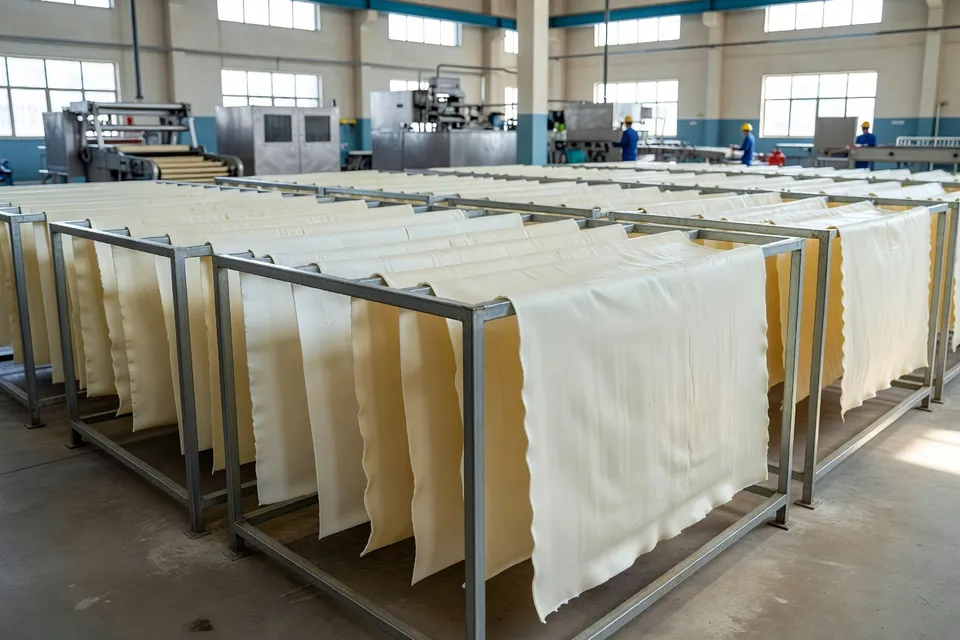
That regional pattern is already reshaping trade conversations. Producers and compounders in Asia who once relied on steady export pull from Western markets are now weighing more domestic and intra-Asian outlets, just as Western buyers begin to rethink inventory and sourcing strategies in light of weaker end-use consumption.
Natural rubber: softer demand, tighter supply, firmer prices
Within the natural rubber sector, IRSG figures show global NR production fell 1.2% year-on-year in Q1, while NR consumption dropped a steeper 6.3%. In simple terms, factories are using less natural rubber, but supply is not loosening proportionately. That imbalance is being felt most directly in Asia.
Price and market intelligence from SunSirs describe China’s natural rubber market through mid-2026 as a story of high-level volatility rather than outright weakness. In May 2026, domestic spot natural rubber prices were reported in a 17,500–17,900 RMB/ton trading range, with a benchmark price near a two-year high and a cumulative increase of roughly 14% from the start of the year. Analysts attributed this to a structural supply-demand gap, low inventories and weather-related disruptions in producing regions.
By late August, SunSirs put the composite benchmark price for standard natural rubber at 17,791.67 RMB/ton, up from 16,483.33 RMB/ton earlier in the month. A separate short-term outlook characterized the spot market as in consolidation and fluctuation, with prices at the high end of the one-year range and upside described as limited, yet supported by tight supply.
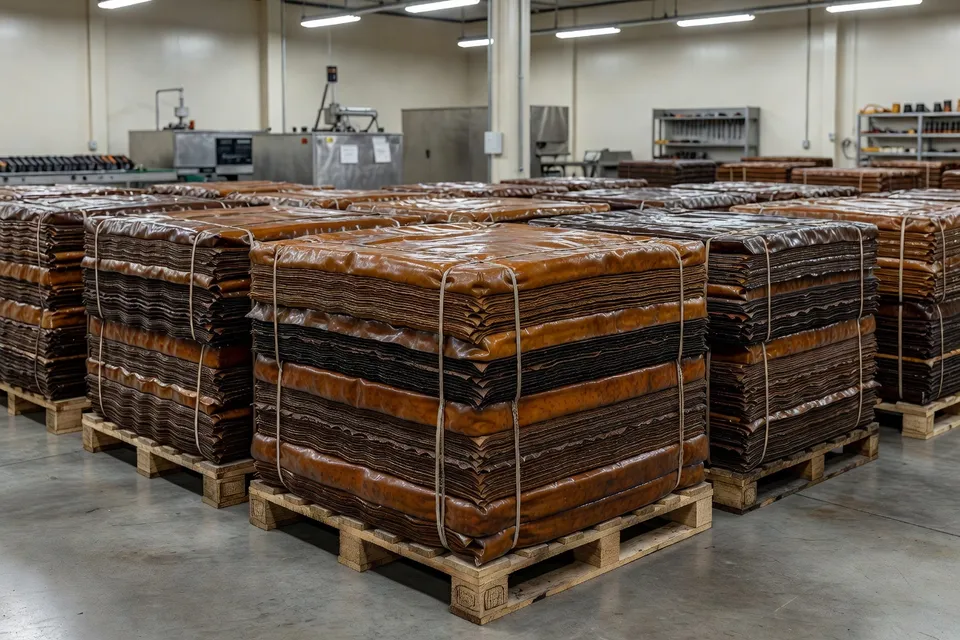
TDD-Global’s August 2026 Rubber Special Issue (202608) adds more texture. It reports an upward trend in dry natural rubber prices during August, driven by a combination of supply-demand imbalance, seasonal rainfall affecting raw materials, reduced imports and limited inventory destocking at major ports. At the same time, downstream demand from tire and related industries was described as constrained, and traders were reluctant to sell at high cost levels.
Taken together, the picture is one of demand-led weakness in volume but not in price. For processors and compounders, that means higher raw-material costs even as finished goods orders plateau or soften.
Synthetic rubber and SBR: rebounds amid uneven consumption
On the synthetic side, IRSG reports global SR production down 4.7% year-on-year in Q1 2026, with SR consumption declining 4.3%. While less severe than the fall in natural rubber use, the numbers still point to broad caution across automotive and industrial applications.
China’s synthetic rubber markets, however, have shown bursts of strength. SunSirs’ bulk commodity intelligence bulletins highlight across-the-board gains in the domestic rubber sector in August 2026, noting that synthetic rubber outperformed natural rubber on price increases. A focused analysis on styrene-butadiene rubber (SBR) reports that East China SBR prices reached 14,650 RMB/ton as of August 18, up 8.99% from 13,441 RMB/ton at the beginning of the month, with Sinopec raising ex-factory prices multiple times for a cumulative 800 RMB/ton increase.
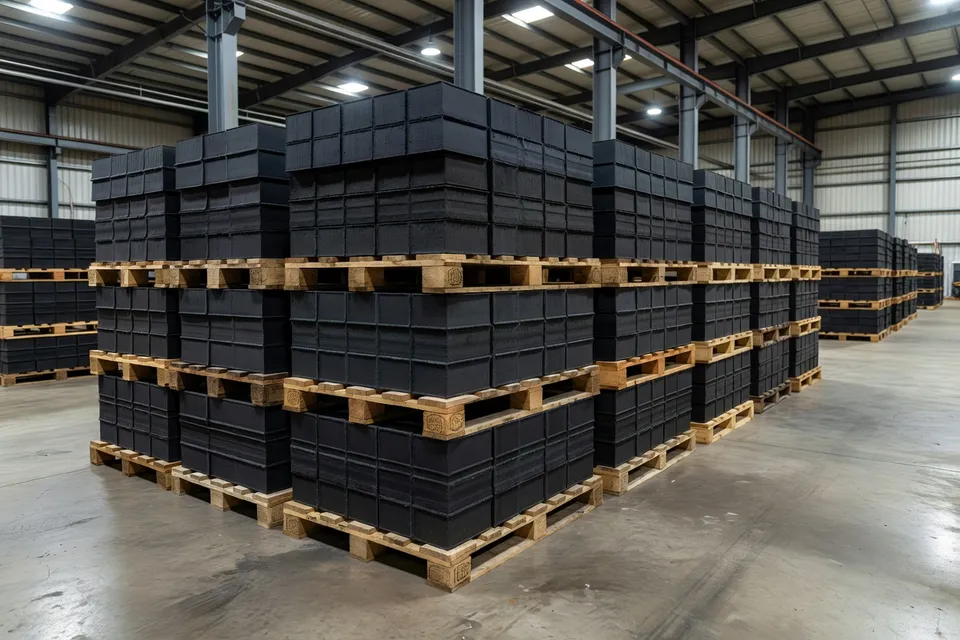
By early September, market notes show major Chinese suppliers adjusting ex-warehouse prices for both emulsion SBR and butadiene rubber (BR) upward, reinforcing the idea that synthetic rubber pricing is in an active, if volatile, upcycle. For tire makers balancing natural and synthetic inputs, these moves erode some of the traditional flexibility to arbitrage between feedstocks.
Tire sector: mixed demand, steady operations
The demand side of the story is also visible in tire output and corporate moves. One Chinese market update cited July 2026 rubber tire casing production at 102.658 million units, up 8.1% year-on-year, highlighting that domestic tire plants remain busy even as global rubber usage declines.
Internationally, tire industry news compiled by MarkLines shows a steady flow of investment and product launches in August 2026: new OE approvals such as Continental’s EcoContact 7 for VW’s ID.Polo, Hankook supplying EV tires to Polestar 4, and multiple projects in tire recycling and reclaim rubber capacity. At the same time, Continental has completed portfolio moves that leave it on a path to operate as a pure-play tire manufacturer, with its tire segment benefiting in the first half of 2026 from lower raw-material costs and strong margins, though the company warned those cost tailwinds would reverse in the second half.
This juxtaposition—robust tire output in China, continued OE and sustainability investments by global brands, yet weaker overall rubber consumption—is central to understanding 2026’s market. Tire makers are pressing ahead with efficiency and circularity projects while quietly trimming raw-material use per unit and rebalancing inventories.
Why prices consolidate as consumption falls
For processors and converters, the most immediate challenge in 2026 is working through a demand slowdown with no corresponding relief on feedstock prices.
Several overlapping drivers help explain why:
- Tight supply and weather disruption: Reports from Thailand highlight fluctuating raw material prices for latex, smoked sheets and cup lump, with seasonal rains curbing tapping and constraining supply.
- Low inventories and cautious selling: Both SunSirs and TDD-Global point to limited inventory destocking at major ports and traders reluctant to offer material aggressively at high cost levels.
- Regional demand rebalancing: Asia-Pacific’s relatively mild 0.5% decline in consumption contrasts with steep drops in EMEA and the Americas, keeping regional supply chains tighter than global demand figures alone would suggest.
The result is a market where rubber futures remain range-bound rather than collapsing. External commodity data show rubber futures trading in a tight band around 219–223 US cents per kilogram in August 2026, supported by higher oil prices—which make crude-based synthetic rubber less competitive—yet capped by persistent weakness in China’s auto sector.
In China’s spot market, natural rubber is described as "consolidation and fluctuation" near the upper end of its one-year price cycle, with limited additional upside but no clear downside path as long as supply remains constrained.
Operational implications for processors and tire makers
For rubber processors, compounders and tire manufacturers, the Q1 consumption decline combined with price consolidation carries several practical consequences in 2026:
- Margin squeeze: Finished goods demand is soft in Western markets, but feedstock costs remain elevated, compressing margins for export-oriented producers.
- Recipe and material optimization: With both NR and SR prices firm, compounders are re-examining formulations—substituting grades, adjusting filler systems, and using more data-driven tools to reduce material intensity, a trend echoed in technical work on AI-assisted rubber development in the August 2026 issue of Rubber World.
- Inventory discipline: The experience of high, volatile prices with structural supply tightness is reinforcing more cautious inventory strategies. Processors interviewed at recent industry events describe shorter replenishment cycles and closer tracking of port and warehouse stocks to avoid being caught with high-cost material if demand weakens further.
- Regional sourcing shifts: With Asia-Pacific consumption holding up better than in EMEA and the Americas, some global groups are evaluating whether to shift more sourcing and even production into Asian hubs where supply chains are tighter but demand is more predictable.
As IRSG summed up in its bulletin, the latest data "point to weakening rubber demand amid a challenging global economic environment and softer consumption across major markets." For companies across the rubber value chain, the task through the rest of 2026 will be to adapt operations and sourcing to that reality without assuming that high raw-material prices will quickly unwind.
Editorial Insights
- What does a decline in global rubber consumption combined with firm pricing signal about the health of the rubber value chain?
- When volumes fall but prices consolidate rather than collapse, it typically indicates structural tightness on the supply side and selective resilience in regional demand. This environment stresses the middle of the value chain: processors and tire makers face margin pressure even as upstream producers retain pricing power, forcing more focus on efficiency, formulation optimisation and disciplined capacity planning.
- How could the current rubber market cycle reshape long-term sourcing and production strategies for manufacturers?
- Persistent regional divergence between demand and supply is likely to accelerate a shift toward more production and sourcing in regions with relatively stable consumption and tighter but more predictable supply chains. Over time, manufacturers may redesign their footprints around multi-hub models, closer-to-market compounding, and diversified feedstock contracts to reduce exposure to single-region slowdowns and weather-driven disruptions.
- In what ways might tighter rubber supply and higher input costs influence sustainability and circularity initiatives in the tire and rubber sector?
- Higher and more volatile raw-material prices tend to strengthen the business case for reducing material intensity, extending product life and recovering more value from end-of-life goods. As feedstock risk rises, projects in recycling, reclaim rubber, and low-loss tread designs become not just environmental priorities but strategic levers to secure material availability and protect margins across future cycles.
- What are the operational risks for processors and compounders in a market where inventories stay low and traders are reluctant to sell aggressively?
- Low inventories and cautious selling create a structurally fragile supply environment, where unexpected demand spikes or weather events can translate quickly into sharp price moves and physical shortages. Processors and compounders must respond with tighter stock monitoring, shorter replenishment cycles, and more flexible formulations to avoid being trapped with either excess high-cost material or insufficient feedstock when orders shift.
- How might the current imbalance between natural and synthetic rubber markets affect future material choices in tire design?
- With both natural and synthetic rubber experiencing price firmness and episodic volatility, the traditional strategy of switching between them for cost relief is less reliable. Tire designers are likely to move toward more holistic optimisation, balancing performance, sustainability and supply risk by adjusting polymer blends, filler systems and design architectures rather than relying on simple feedstock substitution.
- What longer-term ethical and societal questions does a structurally tight rubber market raise?
- A market that remains tight despite weaker demand raises questions about how risks and rewards are shared along the chain, particularly between raw-material producers and downstream manufacturers exposed to cost shocks. It also surfaces broader concerns around resilience: societies increasingly depend on rubber-intensive mobility and logistics, so ensuring fair, stable access to critical materials becomes part of the debate on responsible industrial development.
References
- 1.European Rubber Journal. (2026, August 14). IRSG: Global rubber consumption falls 5.3% in first quarter. European Rubber Journal.
- 2.TDD-Global. (2026, August 31). Natural rubber market analysis: Prices, trends, and insights. TDD-Global.
- 3.SunSirs. (2026, August 26). Commodity news – Natural rubber. SunSirs.
- 4.MarkLines. (2026, September 3). News – Tire. MarkLines Automotive Industry Portal.
- 5.Rubber World. (2026, August 20). August 2026. Rubber World – The Technical Service Magazine for the Rubber Industry.
- 6.SunSirs. (2026, September 4). Commodity news – SBR. SunSirs.