

A conference calendar that looks like a roadmap
Walk the European plastics conference calendar for 2026 and a pattern emerges quickly: policy, recycling technology, and design-for-circularity are no longer side sessions, they are the main program. From Brussels to Frankfurt, Berlin, Düsseldorf, Vienna and Den Bosch, organisers are deliberately turning technical gatherings into living roadmaps for how Europe intends to hit its 2030 plastics circularity targets.
Three events in particular crystallise that shift: Chemical Recycling Europe’s annual conference in Brussels, AMI’s Compounding & Recycling Expo at Messe Frankfurt, and a new wave of value‑chain forums around additives, colour and design led by groups such as Lifocolor and Plastics Europe. Taken together, they outline how regulation, infrastructure and product design are being stitched into a more coherent plan.
Brussels: chemical recycling put on trial – and to work
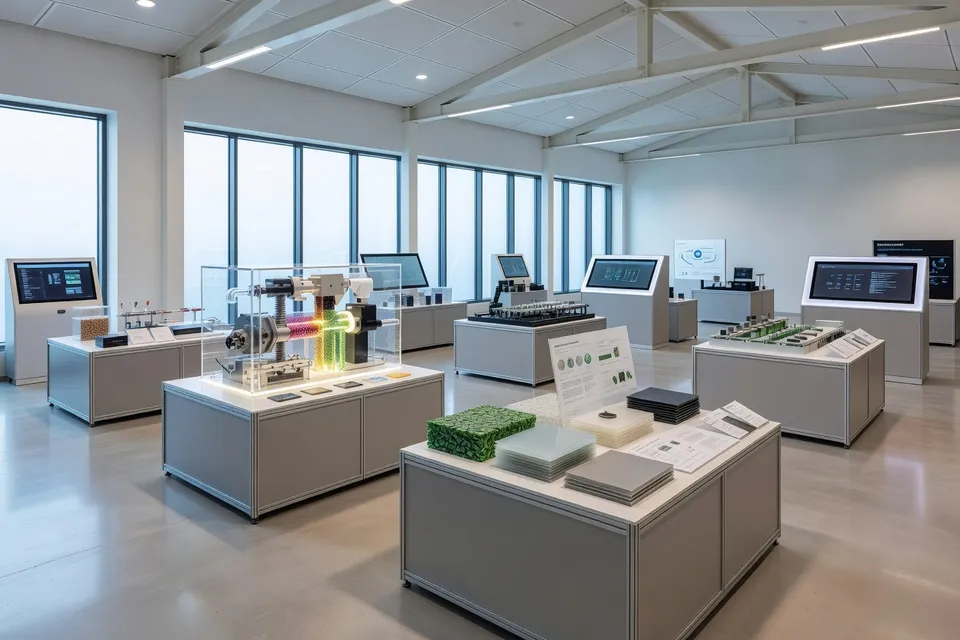
Chemical Recycling Europe (CRE) has framed its 2026 annual conference explicitly around "Getting Ready for 2030 Targets: Powering Circular Plastics Made in Europe". The meeting runs 29–30 September 2026 in Brussels, beginning with a networking dinner on the 29th and a full programme on the 30th, with registration opening at 08:30 and CRE President Valentijn de Neve delivering the welcome at 09:00.
The morning sessions drill into chemical recycling’s status as a pillar of European resilience and its evolving regulatory framework, moderated by Beatriz Santos, editor at Sustainable Plastics. Speakers from the European Commission, consulting firm Systemiq, DOW and LyondellBasell are lined up to test how far policy has caught up with technology and where mass‑balance rules, the Packaging and Packaging Waste Regulation (PPWR) and other legislative levers still lack clarity.
Later sessions move from policy into hard project reality. One slot, announced by Aduro Clean Technologies, will present Hydrochemolytic Technology for polyolefin recycling, explicitly tracking its progression from pilot validation toward industrial deployment and the investment decisions (FIDs) that must follow. For processors and recyclers, this is where abstract debates translate into bankable criteria: which advanced routes can genuinely absorb mixed polyolefin streams at scale, under European compliance rules, and with feedstock and offtake contracts that lenders will accept.
Frankfurt: compounding and recycling forced to share the stage
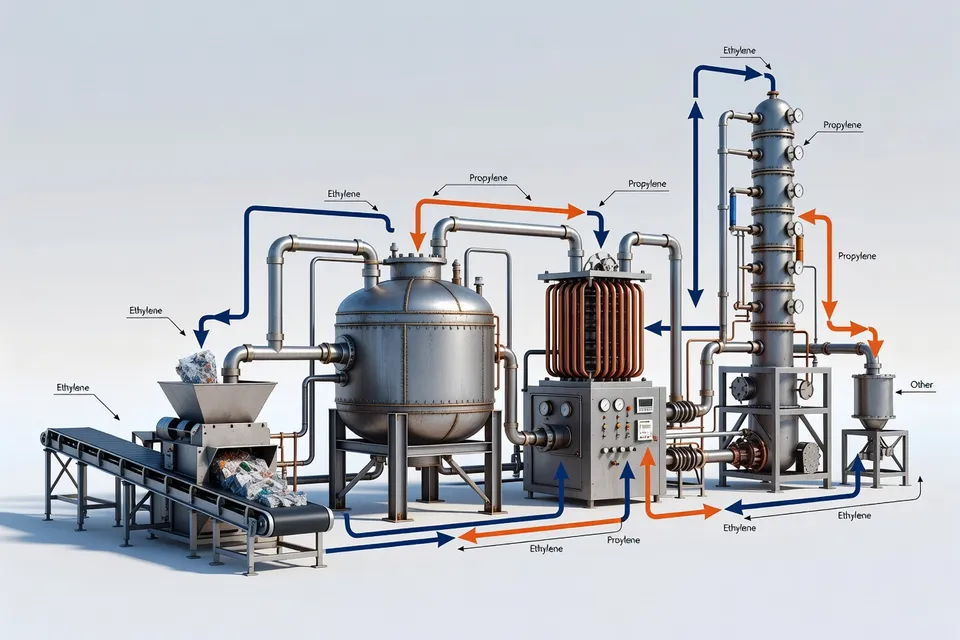
If Brussels is where policy is argued, Frankfurt is where the implications run straight into compounding lines and recycling plants. AMI has positioned its Compounding & Recycling Expo 2026 at Messe Frankfurt as "Europe’s premier expo for polymer performance and circularity", held 23–24 September 2026 and free to attend on prior registration.
Alongside the trade show, AMI has now released a detailed conference programme built around two free‑to‑attend theatres – one focused on recycling, the other on compounding. The agenda reads less like a conventional technical seminar and more like a stress‑test of Europe’s circular plastics plan. Key blocks cover:
- PPWR and other regulatory developments shaping recycled‑content obligations and market access.
- Advances in mechanical and chemical recycling, including case studies in post‑consumer polyamide 6.6 and rPET markets.
- Material innovations and additive packages designed to carry higher recycled content into demanding applications.
- The economics of plastics recycling and the performance of masterbatch, PVC compounds and bioplastics markets under tightening rules.
Speakers span the value chain: flexible packaging groups such as Constantia and Coveris, additive and colour specialists including Holland Colours and Lifocolor Farben, resin producers like Ineos, and equipment and testing firms such as Maag, Netzsch, Aimplas and Food Contact Centre.
"The free‑to‑attend exhibition showcases the growing overlap between polymer compounding and recycling, bringing the full value chain together for two days of innovation, collaboration and technical insights." - AMI press information said
For compounders and recyclers, the practical consequence is clear. Circularity is no longer treated as an upstream waste‑management issue; it is a compounding specification. Those making concentrates, functionalised fillers or impact‑modified grades must now sit in the same room as recyclers trading bale purity and melt‑filter performance – and reconcile what is technically possible with what PPWR and brand owners will actually buy.
Berlin and Düsseldorf: policy and technology tighten the screws
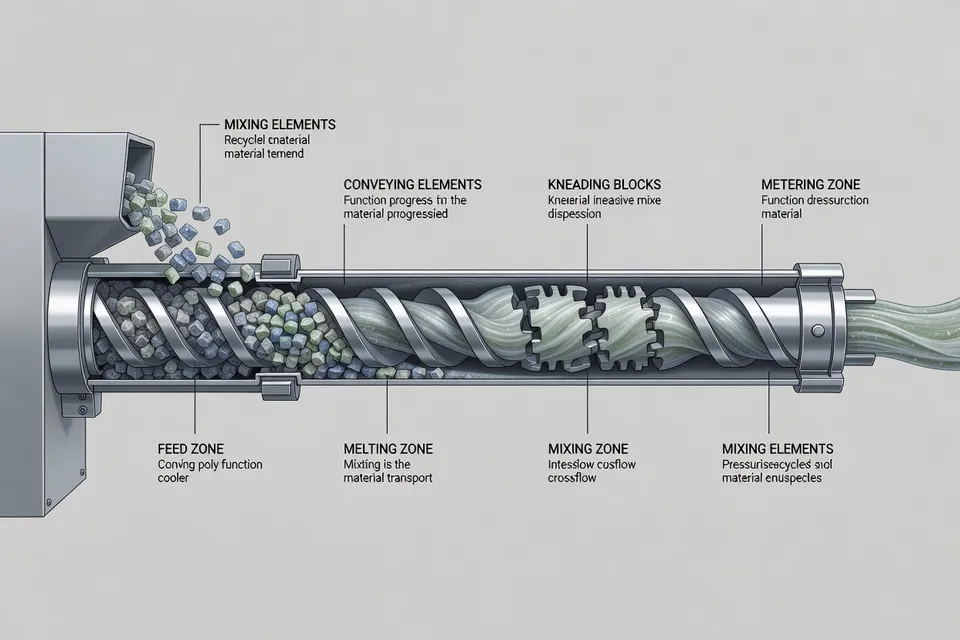
While CRE and AMI provide the headline stages, they are flanked by more specialised European conferences that nonetheless feed directly into circular roadmaps. Plastics Europe Germany, for example, is convening an "Innovation Conference 2026 of the Plastics sector" in Berlin on 11 September 2026, explicitly focused on transferring plastics research into industrial applications. That framing matters: much of the circularity challenge now lies not in discovering new chemistries, but in getting proven lab concepts through demonstration, financing and deployment in plants that already face energy‑price and margin pressure.
On the regulatory side, ACI’s Future of Chemical Recycling conference in Düsseldorf on 28–29 January 2026 has built its agenda directly around PPWR and EU legislative drivers. Session titles talk about "redefining policy shifts driving investment and compliance strategy" and "redefining value chains through multilateral collaboration". For brand owners and converters, these meetings function as advanced warning systems: they highlight where future design‑for‑recyclability criteria or mass‑balance rules may land, and therefore which material choices made in 2026 will still be acceptable – or stranded – by 2030.
Design and additives: circularity gets tactile
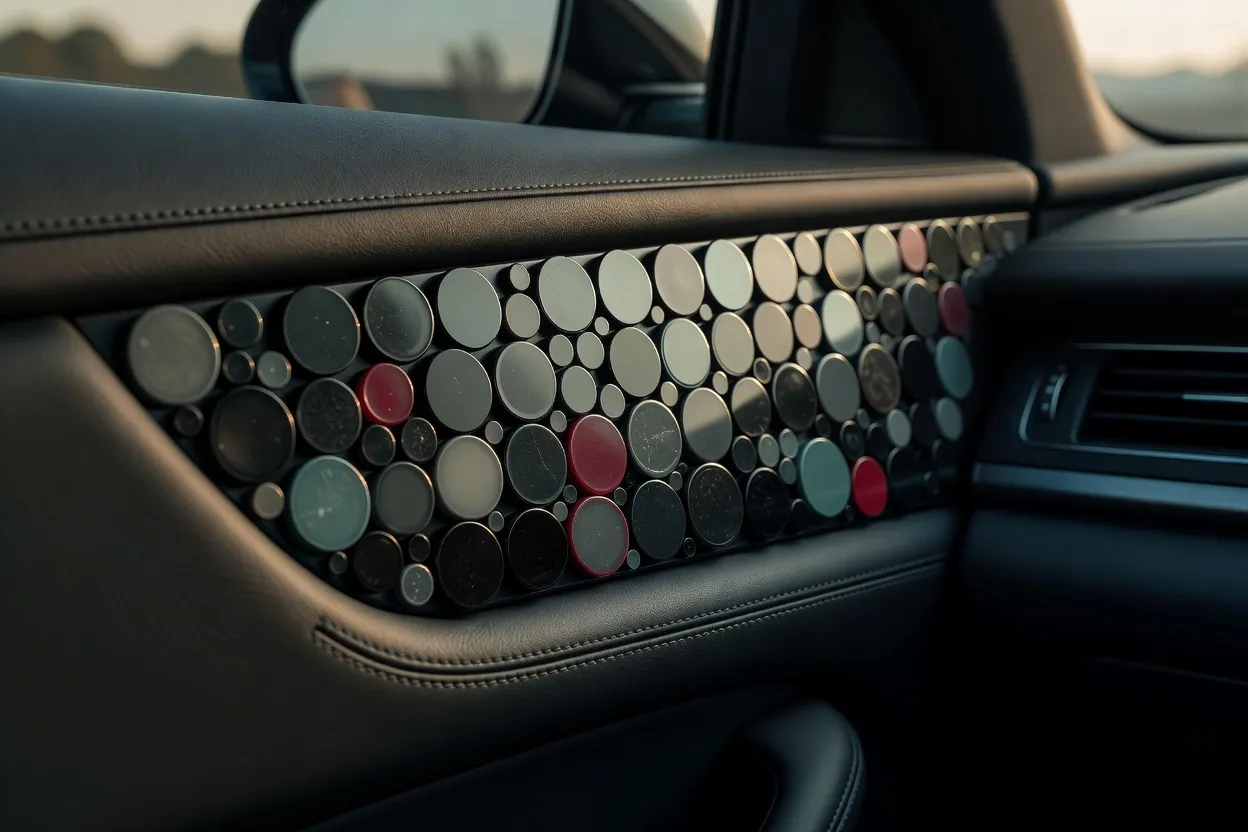
Circular roadmaps are often framed in tonnes and targets, but the European conference slate shows a more tactile layer emerging: haptics, colour and consumer perception are being pulled into the conversation. At Kunststoffenbeurs 2026 in Den Bosch on 16–17 September 2026, masterbatch producer Lifocolor will exhibit in Hall 1, stand 120 with a portfolio explicitly geared to material change and regulatory compliance.
Central to its messaging is Velvet PET, an additive masterbatch that gives PET bottles the soft feel of HDPE extrusion blow‑moulded bottles while still running on existing ISBM lines and remaining approved for food contact. Lifocolor pairs that with new hologram, granite and metallic effect masterbatches, all food‑safe and processable up to 280–300 °C.
For packaging designers and brand owners, the signal is straightforward. As European recycled‑content requirements harden, and mono‑material packaging becomes a default route to recyclability, aesthetic and tactile differentiation cannot rely on multi‑layer structures or metallised films. Instead, it is being pushed into the masterbatch space – where colour and effect have to coexist with recyclability, food‑contact compliance and stable behaviour in streams that increasingly contain PCR.
Why processors and brand owners are paying attention
Individually, these conferences might look like familiar fixtures on the European plastics calendar. Viewed together, they are something closer to a rolling design office for Europe’s circular plastics economy.
- Processors and recyclers now have multiple, consecutive forums – in January (Düsseldorf), June (Frankfurt advanced recycling events), September (Frankfurt Expo and Brussels CRE), and November (Vienna for flexible packaging) – in which regulatory expectations and technology claims are tested face‑to‑face.
- Brand owners and retailers gain direct access to debates on rPET economics, PA6.6 recycling and food‑contact safety, enabling more informed commitments on recycled content that align with real plant capabilities.
- Additives and colour suppliers such as Lifocolor can show how design and haptics can be re‑engineered for mono‑material, food‑contact compliant packaging without sacrificing shelf appeal.
The practical impact is already visible in how exhibitors pitch their presence. AMI’s Frankfurt Expo promotions emphasise polymer performance and circularity rather than generic "innovation". CRE’s agenda puts chemical recycling under the spotlight not as a silver bullet, but as one tool whose economics, emissions and compliance must be interrogated before 2030 commitments are locked in.
For European plastics and rubber companies, the message from the 2026 conference circuit is not that circularity is aspirational or optional. It is that the roadmap is being drawn in real time – and if you are not in these rooms, someone else will decide how your materials fit into Europe’s circular plastics future.
Editorial Insights
- How are European plastics conferences reshaping the way companies plan for circularity targets beyond traditional R&D cycles?
- European plastics events are increasingly acting as operational roadmaps rather than isolated knowledge exchanges, forcing companies to align technology choices, investment timing and compliance strategies against clearly signposted circularity milestones. Instead of treating circularity as a long‑term R&D theme, processors and brand owners are expected to convert conference insights into near‑term specifications, capex decisions and portfolio rationalisation. For B2B players, attending these forums becomes part of risk management: missing them means planning in a vacuum while rules, infrastructure and market expectations evolve in real time.
- What strategic risks do plastics processors face if they treat circularity mainly as a waste-management issue instead of a product-specification challenge?
- Viewing circularity purely as downstream waste handling overlooks how recycled content, design-for-recyclability and mass-balance rules are being hardwired into product specifications and market access conditions. Processors that fail to integrate these parameters into compounding, additive selection and quality systems risk producing grades that meet legacy performance but fall short of future compliance or brand-owner procurement criteria. The consequence is potential asset underutilisation, stranded formulations, and loss of high-value contracts to competitors who have embedded circular metrics into their technical and commercial decision-making.
- Why is the transition from lab-scale circular technologies to full industrial deployment proving to be a critical bottleneck for the plastics sector?
- Many circular solutions are technically validated, but struggle at the stage where demonstration plants, financing decisions and integration into existing sites must converge. Rising energy costs, margin pressure and uncertainty around future regulatory interpretation make investors cautious, particularly for technologies that require complex feedstock contracts and long-term offtake agreements. As a result, the bottleneck is less about fundamental science and more about de-risking projects, securing bankable business models and proving stable operation under real-world supply and compliance conditions.
- How are evolving European regulatory frameworks changing the economics of plastics recycling and compounding?
- Tightening rules around recycled content, packaging performance and traceability are shifting value from simple volume throughput to quality, compliance and feedstock stability. Mechanical and chemical recyclers must demonstrate not just technical capability, but alignment with future mass-balance accounting, food-contact safety and design-for-recyclability criteria, which influences pricing and capital allocation. For compounders, regulatory trajectories now shape which additives, resins and formulations will remain marketable, making policy intelligence as critical to profitability as process optimisation.
- What ethical considerations arise as advanced recycling and circular design become central to Europe’s plastics roadmap?
- The growing reliance on advanced recycling and circular design raises questions about how environmental benefits are measured, communicated and shared across the value chain. There is a risk that complex technologies or clever design might be used to badge incremental improvements as transformation, while real impacts on emissions, resource use and social outcomes remain modest. Ethical practice demands transparent accounting, honest claims and balanced attention to both technical feasibility and long-term environmental integrity, rather than chasing short-term compliance optics.
- How is the role of aesthetics and haptics in packaging evolving under stricter circularity and recyclability expectations?
- As multi-layer structures and complex barrier systems become harder to justify in a circular economy, visual and tactile differentiation is migrating into the realm of colour and additive technology applied to simpler, mono-material formats. Designers are being challenged to create shelf appeal and distinct brand identity without compromising recyclability, food-contact compliance or process stability in streams containing significant post-consumer material. This shift elevates masterbatch and effect formulation from a purely creative tool to a strategic lever that must reconcile marketing ambitions with robust end-of-life performance.
References
- 1.Chemical Recycling Europe. (2026, August 18). Morning agenda CRE Conference 2026. Chemical Recycling Europe.
- 2.K-online. AMI: Conference program released for Compounding & Recycling Expo 2026. K-online.
- 3.Skyseven Chemical. (2026, September 4). Plastics Europe Germany: Innovation conference addresses the transfer of plastics research into industrial applications. Skyseven Chemical.
- 4.Plastics Engineering. Events archive. Plastics Engineering.
- 5.AMI. Events – plastics conferences & exhibitions. AMI.
- 6.Plastics Technology. Plastics industry events & exhibitions: global expo guide. Plastics Technology.
- 7.Lifocolor. (2026, September 1). Visit us at Kunststoffenbeurs 2026! Lifocolor.
- 8.RDAbbott. (2026, June 4). Global Polymer Summit 2026 (September 28–30). RDAbbott.