


Input costs surge as rubber prices reset the economics of tyres
A steep run-up in rubber prices during 2026 is reshaping cost structures across tyre and rubber manufacturing, turning raw material procurement into the central economic battleground for producers.
Natural rubber futures climbed to around 249.90 US cents per kilogram on 10 September 2026, close to their highest levels since 2013, with prices up 14% over the month and more than 40% year-on-year according to market data. Synthetic rubber has followed a similar trajectory, with benchmark prices flat at 16,158.33 CNY per tonne on 10 September but still up 17.87% over the past month and 31.64% versus a year earlier. These simultaneous spikes in natural and synthetic feedstocks are feeding directly into tyre compound costs and squeezing margins in downstream rubber products.

Natural and Synthetic Rubber Price Increases, September 2026
| Rubber type | YoY increase (%) | MoM increase (%) |
|---|---|---|
| Natural rubber | 40 % | 14 % |
| Synthetic rubber | 31.64 % | 17.87 % |
International balances underline why tyre makers are feeling the pinch. The latest forecast from the International Rubber Study Group (IRSG) points to global rubber consumption of 15.36 million tonnes in 2026, marginally exceeding projected production of 15.28 million tonnes, signalling a supply-demand deficit that is helping to keep prices elevated. At the same time, structurally moderate but positive demand growth means this mismatch is unlikely to disappear quickly, forcing manufacturers to adjust to a higher-cost environment rather than waiting for a rapid correction.
Tyre manufacturing: growing revenue on a tighter margin base
The European rubber tyre manufacturing and repair sector illustrates how industry economics are shifting. IBISWorld estimates the European market size at €51.1 billion in 2026, with annual revenue growth of 3.3%. Yet the business base is thinning: there are 2,305 firms, down at a compound annual rate of 1.4% between 2020 and 2025, and the market is highly fragmented, with no single company holding more than 5% share. In practical terms, that means thousands of relatively small and mid-sized tyre manufacturers and repairers must absorb rapidly rising input costs in highly competitive conditions where passing prices through is difficult.
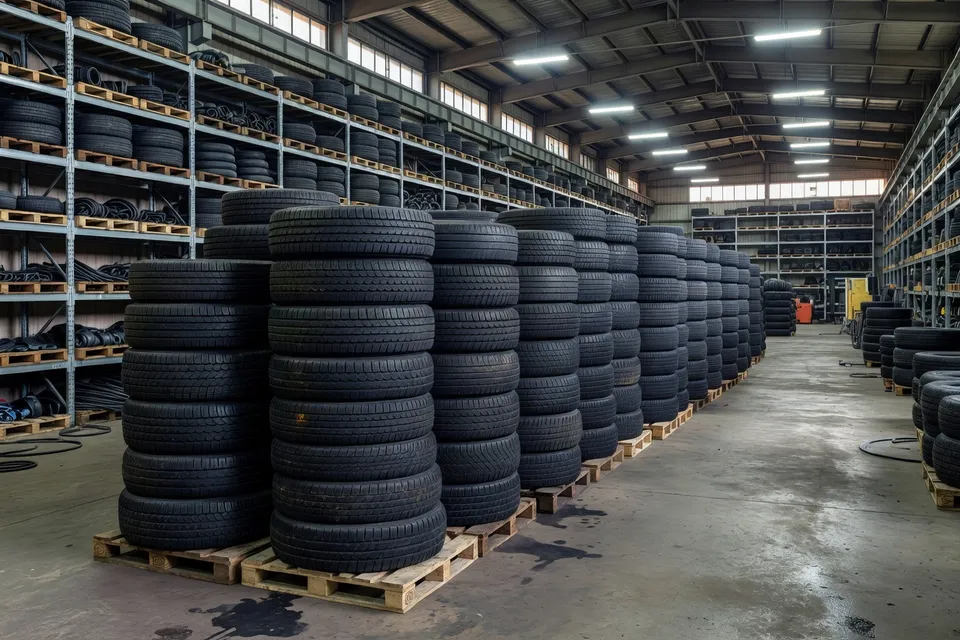
Country-level data show diverging trajectories. Germany ranks first in Europe for tyre manufacturing and repair, with 2025 revenue of €9.3 billion and just 21 businesses, but its market size has been declining at a 2% CAGR between 2019 and 2024, even as competition intensifies. Spain’s industry reached €4.0 billion in 2026, with 97 businesses, after a period where business numbers fell at 3.3% annually from 2021 to 2026 while revenue grew around 1%. Smaller markets such as Belgium and Sweden are seeing outright contraction: Belgium’s tyre segment stood at €120.3 million in 2025, with the number of businesses down at a 7.9% CAGR and revenue shrinking at 7.5% annually from 2020 to 2025. Sweden’s market, at €22.8 million in 2026, has seen business counts decline at 3.8% and revenue at 5.0% each year over 2020–2025, with further decline expected.
European Tyre Manufacturing Market Sizes by Country, 2025-2026 (EUR Billion)
| Country | Market size (EUR billion) |
|---|---|
| Germany | 9.3 EUR billion |
| Spain | 4 EUR billion |
| Turkey | 4.1 EUR billion |
| Belgium | 0.1203 EUR billion |
| Sweden | 0.0228 EUR billion |
These figures point to a clear pattern: revenue resilience is increasingly decoupled from local capacity, as consolidation and cross-border sourcing allow large tyre groups to serve European demand while trimming footprint in higher-cost or structurally weaker markets. For smaller national players, however, shrinking scale amplifies the impact of raw material volatility and tariff costs.
Turkey and emerging hubs: growth plus volatility
Turkey offers a contrasting example of expansion under pressure. IBISWorld puts the size of Turkey’s rubber tyre manufacturing and repair market at €4.1 billion in 2026, supported by 443 businesses. The business count grew at a modest 0.4% CAGR between 2020 and 2025, but industry revenue expanded far faster, with IBISWorld reporting a 26.9% compound annual growth rate over the same period. That mix of rapid revenue growth and relatively stable firm numbers suggests scale-up of existing plants and rising export orientation.
Yet survey data from the Istanbul Chamber of Industry’s Sector PMI highlight how fragile that growth can be at plant level. In August 2026, the chemicals, plastics and rubber sector posted the sharpest slowdown in output and new orders among ten tracked categories, as selling price inflation accelerated. Production in this segment eased for the second consecutive month, with the rate of decline the steepest since June 2025. Earlier PMI releases for May 2026 reported severe supply-chain disruption, substantial lengthening of suppliers’ delivery times and the fastest input cost inflation in over four years for chemicals, plastics and rubber, with the sector posting the sharpest rise in both input and selling prices among all categories.
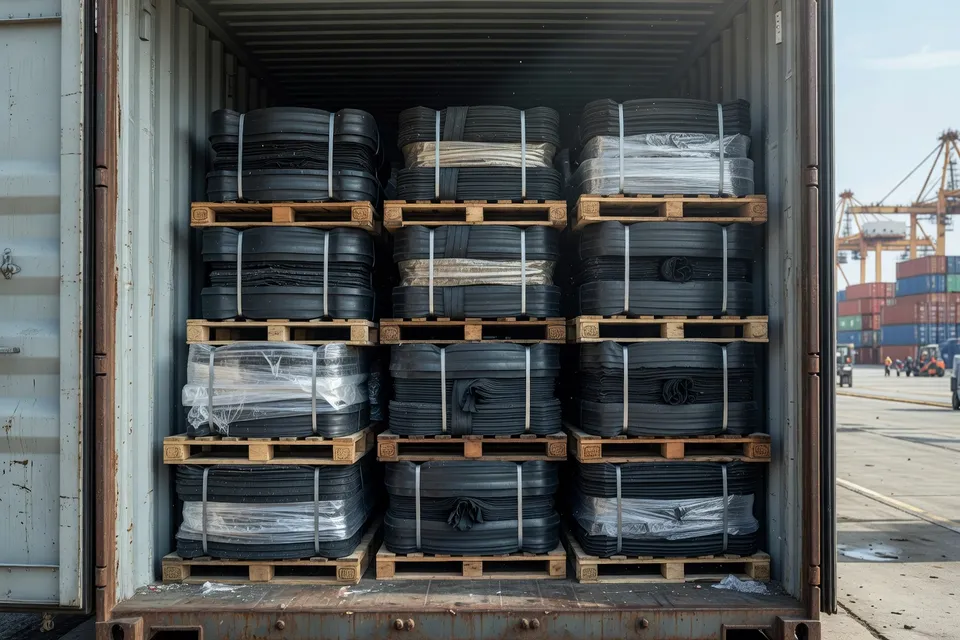
For tyre and rubber processors in Turkey, this combination of strong medium-term growth and acute short-term cost stress is translating into more cautious capacity decisions. Plants that expanded aggressively on the back of export orders now face higher feedstock, energy and logistics costs, plus more volatile order books. Many are responding by shifting towards shorter planning cycles for raw material purchasing, tightening working capital, and revisiting contract terms with OEMs to include more frequent price adjustments.
North American rubber products: tariffs and recession risk in the mix
In the United States, the broader rubber products manufacturing sector is also experiencing a recalibration of economics. Kentley Insights’ 2026 market research report on NAICS 3262 Rubber Products Manufacturing estimates industry sales of $49.5 billion in 2025, following $49.8 billion of sales in 2024. Over the past three years, the industry has slightly declined at an annual rate of –0.2%, even as tariff costs remain material at around $1.4 billion. A separate 2025 edition showed the industry growing at 3.1% annually over the prior three-year period, with an estimated $2.7 billion in tariff costs.
Within that aggregate, the rubber product manufacturing segment (NAICS 32629) reached a market size of $23.7 billion in 2026, with revenue growing at a 2.1% compound annual rate between 2021 and 2026. The number of businesses slipped to 1,182, down 0.5% per year over that period. Specialty rubber products manufacturing (NAICS 326299) posted $12.4 billion of sales in 2025, after $12.5 billion in 2024. Taken together, these data show a mature market with modest growth, rising trade frictions, and gradual consolidation.
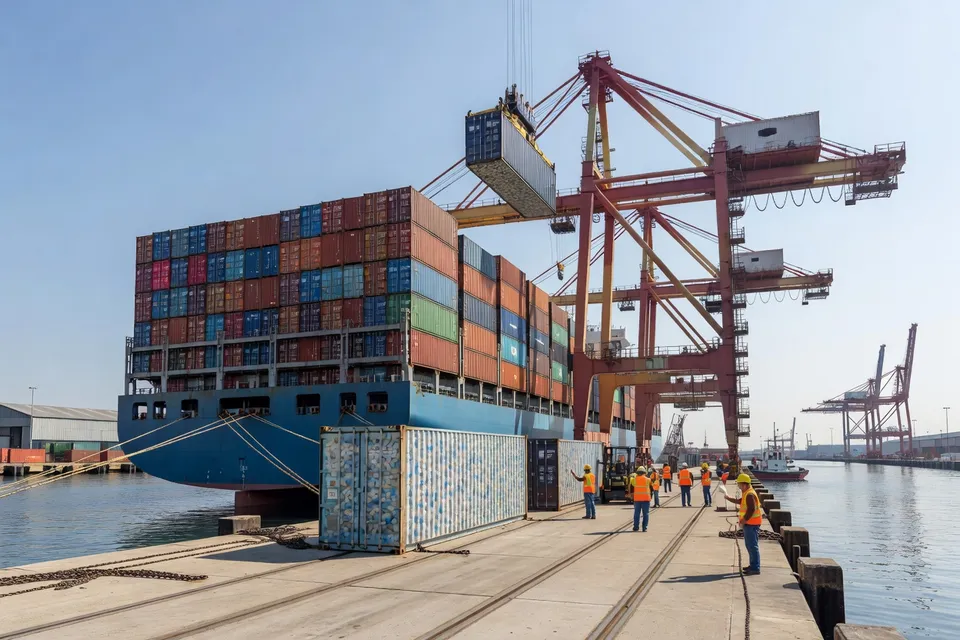
For US tyre and rubber suppliers, tariffs are no longer a marginal cost item. They shape sourcing decisions, particularly for synthetic rubber and specialty components imported from Asia. Reports point to producers using more regionalized supply chains, diversifying away from single-country dependence and negotiating cost-sharing arrangements with automotive and industrial customers as part of long-term contracts.
Global rubber markets: moderate growth, structurally tight supply
On the demand side, global rubber market studies converge around steady but unspectacular growth. Business Research Insights forecasts the global rubber market at USD 68.93 billion in 2026, rising to USD 137.77 billion by 2035, a CAGR of 8% over the period. Other analyses show lower but still robust growth: IMARC Group estimates the market at USD 49.5 billion in 2025, reaching USD 71.4 billion by 2034 at a 4.10% CAGR. Grand View Research places 2025 global rubber revenue at USD 50.8 billion, with a projected USD 79.8 billion by 2033 at a 6.0% CAGR from 2026. Several reports highlight Asia-Pacific as the dominant region, with shares in the mid‑30% to mid‑50% band, reflecting the concentration of tyre manufacturing and automotive demand.
IRSG’s World Rubber Industry Outlook adds nuance, describing the market as entering a phase of structurally moderate growth as global macro momentum slows and the automotive sector matures. It expects total rubber demand to rise 2.1% in 2025, with a 1.75% CAGR through 2032, and notes a natural rubber deficit of 488,000 tonnes in 2025, narrowing from 689,000 tonnes in 2024. Synthetic rubber demand is forecast to grow more slowly, at around 1.36% CAGR through 2032. Synthetic rubber market reports cited by Rubber World put the segment at US$19.9 billion in 2024, with projections of US$24.6 billion by 2030 at a 3.6% CAGR, or US$39.95 billion by 2030 at 4.8% CAGR, depending on methodology.
For tyre manufacturers, these global numbers imply a demand curve that is still rising but less forgiving. The era when volume growth alone could offset margin compression from higher input costs is fading. Instead, producers face a more complex equation: navigating structurally tight natural rubber supply, faster price cycles in synthetic rubber, and regionally divergent growth rates across automotive, industrial and consumer segments.
Strategic responses: pricing, mix and localization
In practice, several strategic responses are taking shape across the tyre and rubber value chain:
- More dynamic pricing models: With rubber futures moving sharply over weeks rather than years, suppliers are pushing for shorter contract tenors, index‑linked pricing, and explicit pass‑through clauses for raw material, tariff and freight costs.
- Product mix shifts: Specialty rubber products and engineered elastomers that serve higher‑margin niches—such as technical seals, advanced hoses or phenolic resin‑modified compounds—are gaining strategic importance. Market reports on specialty rubber and phenolic resins in tyre and rubber show faster growth rates than bulk commodity rubber, encouraging investment in R&D and compounding capability.
- Regionalization of sourcing and production: With Asia‑Pacific dominating demand and continuing to expand capacity, global tyre groups are deepening regional manufacturing footprints there while rationalizing plants in structurally weaker European markets such as Belgium, Sweden and Greece. At the same time, the US and Turkey appear focused on maintaining competitive hubs for specialty products and export‑oriented tyres.
- Operational discipline: Sector PMI evidence from Turkey underscores the need for tighter inventory, procurement and capacity discipline in chemicals, plastics and rubber: steep rises in input and selling prices, combined with output slowdowns, expose plants that run with loose cost control.
For processors, converters and brand owners, the new economics of tyre and rubber manufacturing boil down to accepting that volatility is now structural. Those able to build agile pricing frameworks, diversify material sources, and pivot towards higher‑value applications will be best positioned to turn a challenging cost environment into sustained competitive advantage.
Editorial Insights
- How is the structural volatility in natural and synthetic rubber prices changing the way manufacturers manage procurement and costing?
- Persistent price swings in both natural and synthetic rubber are forcing manufacturers to treat procurement as a strategic discipline rather than a routine purchasing function. Many are moving to shorter contract cycles, index-linked formulas, and multi-sourcing strategies, while embedding raw material pass-through mechanisms into customer pricing. This shift demands closer integration between purchasing, finance and sales, with real-time cost visibility becoming a core competitive capability.
- What are the broader economic implications of consolidation and cross-border sourcing for smaller tyre and rubber businesses in mature markets?
- Consolidation and cross-border sourcing allow large groups to sustain revenue while trimming local capacity, but they intensify pressure on smaller firms that lack scale and purchasing leverage. As production shifts to more competitive hubs, local specialists face higher exposure to input cost spikes, tariffs and freight, with limited ability to pass increases through. Over time, this can hollow out national industrial bases, concentrate technical know-how in fewer locations, and raise barriers to entry for new players.
- How does the combination of tight rubber supply and moderate demand growth affect the sustainability agenda in tyre and rubber manufacturing?
- A structurally tight supply environment raises the economic value of every tonne of rubber, which can reinforce the business case for material efficiency, recycling and alternative elastomers. At the same time, moderate demand growth reduces the cushion that once allowed volume expansion to mask inefficiencies and waste. Manufacturers that integrate design-for-recyclability, lower-loss compounds and more efficient use of natural rubber into mainstream product strategies are better positioned to reconcile cost pressure with environmental expectations.
- Why are specialty rubber products and engineered elastomers becoming more central to competitive strategy, and what does that mean for traditional tyre compounds?
- Specialty rubber and engineered elastomers serve higher-margin applications that are less exposed to pure commodity price cycles, making them attractive in a world of volatile feedstock costs. They also demand more advanced formulation and application knowledge, which can create defensible differentiation and closer customer relationships. As investment shifts toward these niches, traditional tyre compounds risk becoming more commoditized, pushing tyre portfolios toward value-added features such as durability, energy efficiency and tailored performance to avoid pure price competition.
- How are tariff regimes and regionalization of supply chains reshaping long-term planning for rubber product manufacturers?
- Tariffs have moved from being a minor irritant to a core variable in cost models, prompting manufacturers to redesign supply chains around regional clusters and diversified sourcing. Long-term planning now weighs not just labour and energy costs, but exposure to trade measures, logistics risk and political stability. This encourages closer collaboration with customers on cost-sharing and localization, but it also locks capital into specific regions, making strategic reversals more expensive if policy landscapes change.
- What ethical and long-term considerations arise from managing tyre and rubber capacity through aggressive consolidation and cost optimization?
- Aggressive consolidation and cost-cutting can improve short-term resilience but may erode local employment, technical ecosystems and community-based manufacturing traditions. Over the long term, concentrating production in a few cost-optimized hubs increases systemic vulnerability to regional shocks, whether climatic, political or logistical. An ethically conscious approach balances efficiency with redundancy, skills preservation and fair sharing of volatility burdens along the value chain, rather than pushing all risk onto smaller suppliers or end-users.
References
- 1.IBISWorld. (2026, March 13). Rubber tyre manufacturing and repair in Europe industry analysis, 2026. IBISWorld.
- 2.Kentley Insights. (2026, September 6). Rubber products manufacturing market report 2025. Kentley Insights.
- 3.Kentley Insights. (2026, June 9). Rubber products manufacturing - 2026 U.S. market research report with updated recession risk, forecasts, & tariff analysis. MarketResearch.com.
- 4.ISO. Sectoral PMI 2026.08 ENG. ISO.
- 5.Rubber World. Market reports. Rubber World.
- 6.Business Research Insights. Rubber market. Business Research Insights.
- 7.Bernama Biz. News. Bernama Biz.
- 8.Trading Economics. Commodity rubber. Trading Economics.