

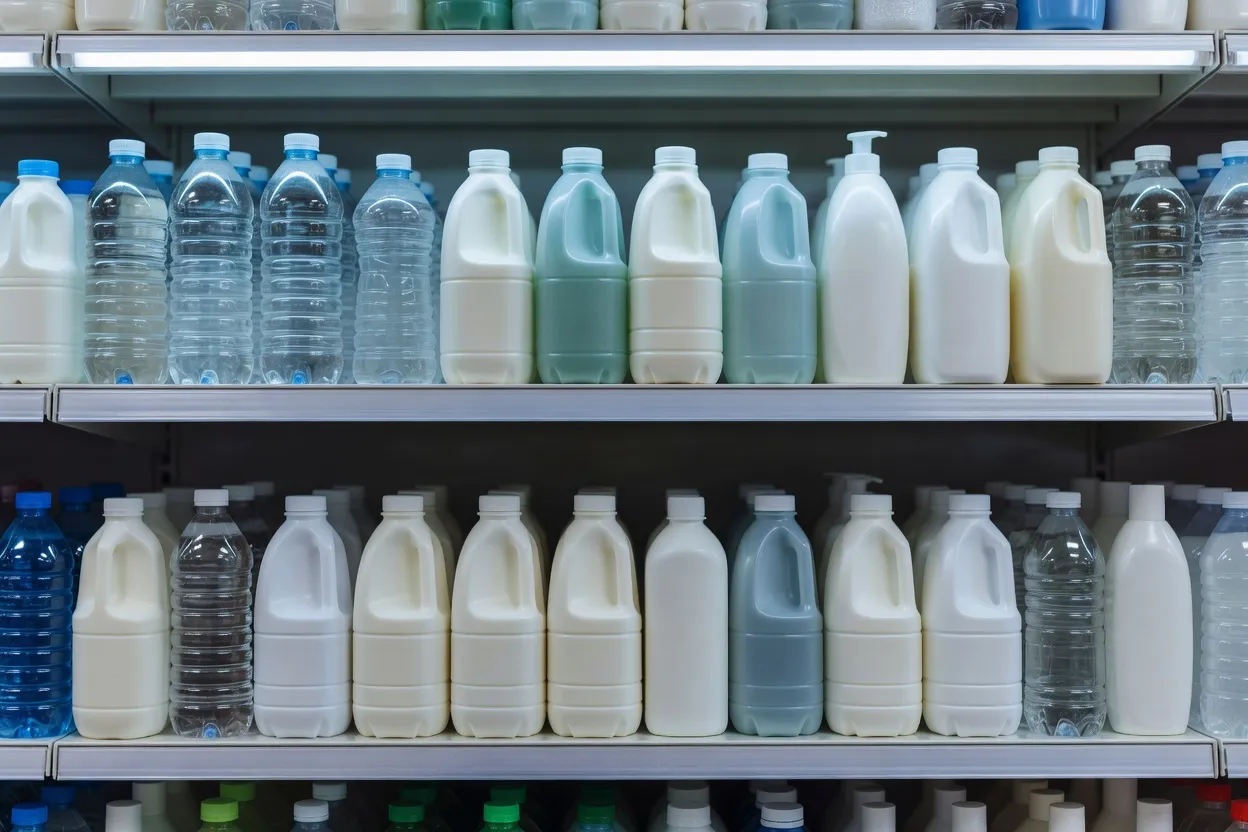
Bottles and containers remain the backbone of packaging growth
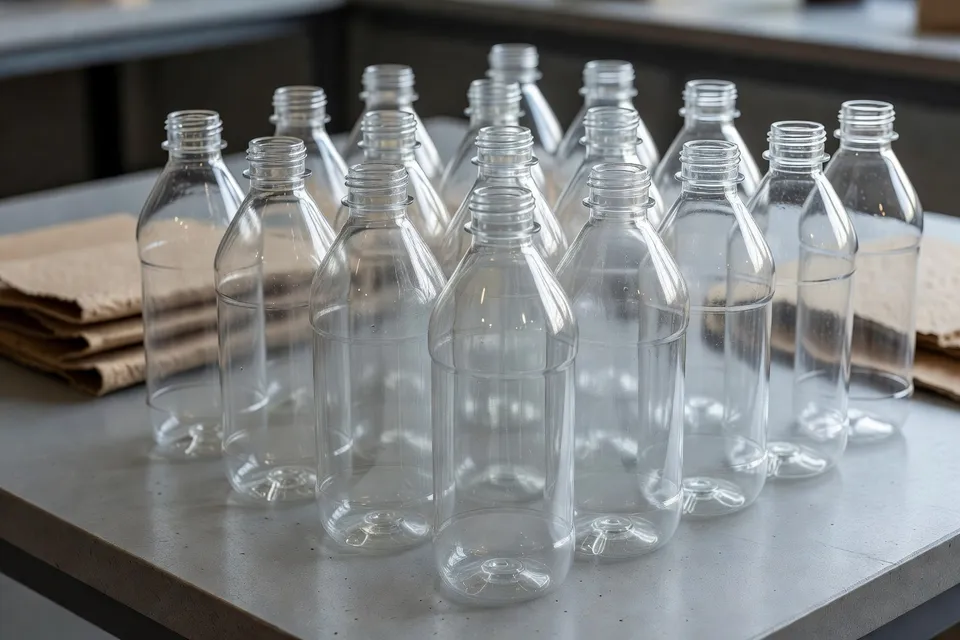
Across multiple market trackers, plastic bottles and containers are emerging as one of the most reliable engines of global packaging expansion through the late 2020s and early 2030s. Forecasts point to sustained value and volume growth in these formats, underpinned by bottled beverages, personal care, household chemicals, and pharmaceuticals, even as sustainability regulations tighten.
Fact.MR estimates the global plastic bottles and containers market at USD 177.5 billion in 2025, rising to USD 185.7 billion in 2026 and USD 290.9 billion by 2036, implying a long‑run compound annual growth rate of 4.6%. In parallel, Straits Research places the segment at USD 154.41 billion in 2025, with an upward trajectory to USD 245.77 billion by 2034 on a 5.3% CAGR from 2026. Persistent Market Research offers a slightly more conservative path, from USD 137.2 billion in 2025 to USD 190.5 billion by 2032 at 4.8% CAGR.
Plastic bottles and containers market value by source, 2025 (USD Billion)
| Source | Market value (USD billion) |
|---|---|
| Fact.MR | 177.5 USD billion |
| Straits Research | 154.41 USD billion |
| Persistent Market Research | 137.2 USD billion |
Taken together, these independent estimates sketch a consistent picture: plastic bottles and containers are not a mature, flat market, but a steadily expanding one, broadly tracking or modestly outpacing overall plastics demand growth through the next decade.
Demand drivers: beverages, personal care and pharma
The demand structure behind this growth is highly skewed toward fast‑moving consumer and healthcare applications. Fact.MR’s definition of the plastic bottles and containers market covers rigid PET, HDPE, PP and LDPE formats used in beverages, food, cosmetics, pharmaceuticals, household care and industrial products. That breadth helps explain why growth has proven resilient across economic cycles.
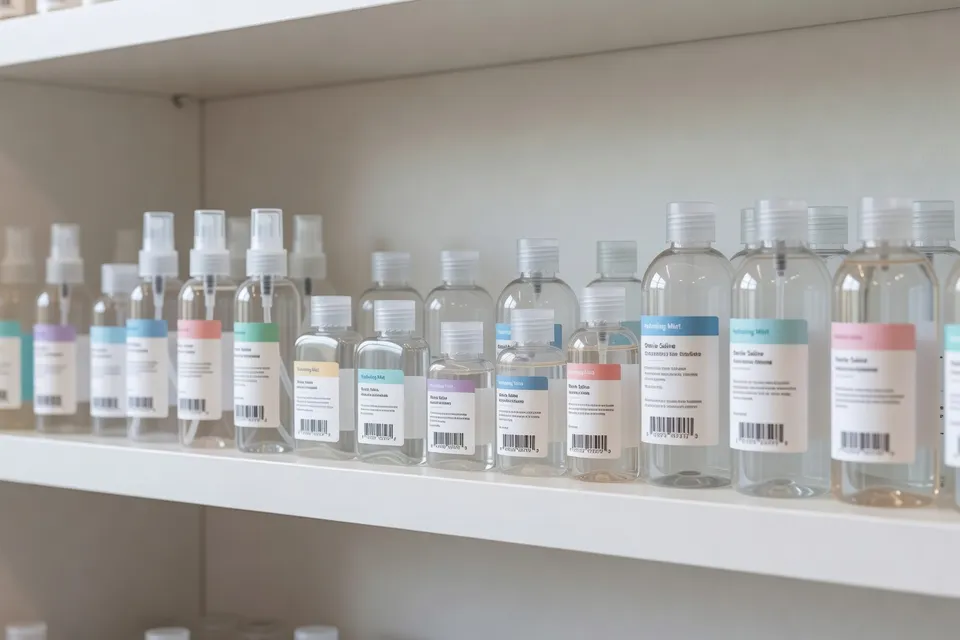
Volume data from Mordor Intelligence reinforces this cross‑category pull. Global shipments of plastic bottles and containers are projected to climb from 42.08 million tonnes in 2025 to 52.72 million tonnes by 2031, at a 3.78% volume CAGR. Within that, beverages account for 38.53% of the 2025 volume base, while pharmaceuticals are expected to grow fastest among end uses at a 5.01% CAGR through 2031.
Process technology and capacity bands are also telling. Stretch blow molding commands 56.73% of revenue in 2025, reflecting continued reliance on PET bottles for drinks and personal care. Containers in the 251–500 ml range hold 33.12% of 2025 volume, underscoring the dominance of single‑serve and personal‑use packaging, while formats above 1,000 ml are projected to grow at 4.74% CAGR, tied to bulk household and industrial products.
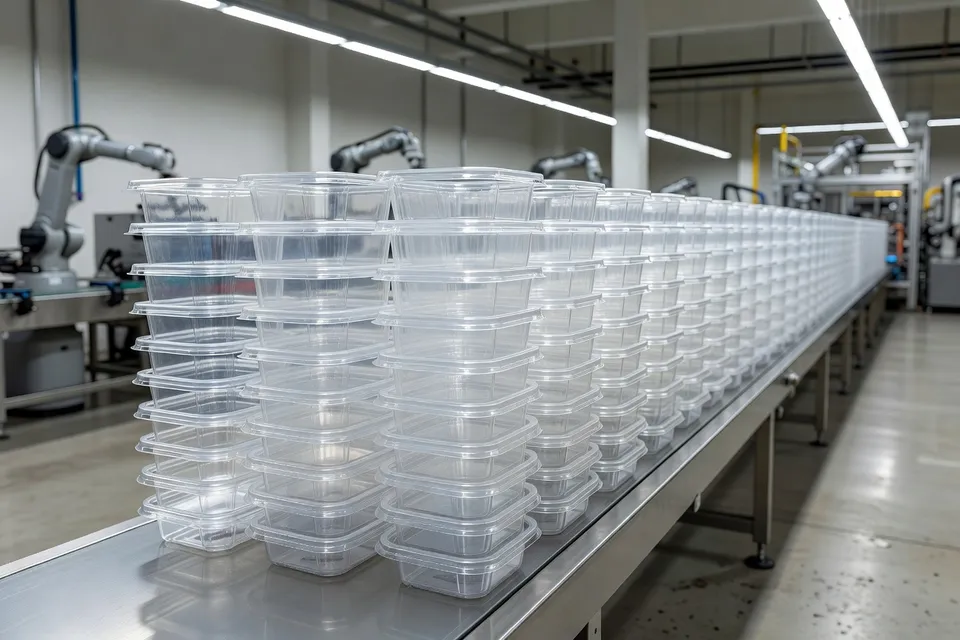
For brand owners, these numbers translate into a clear operational message: PET and HDPE bottles in mid‑size capacities remain the volume workhorses of packaging portfolios, and they are set to grow both in units and tonnage over the forecast horizon.
Regional dynamics: Asia Pacific leads, Africa accelerates
Regionally, plastic bottles and containers are mirroring broader plastics trends but with some notable distinctions. Mordor Intelligence reports Asia‑Pacific accounting for 37.65% of global plastic bottles and containers volume in 2025, making it the largest regional market. Africa, however, is identified as the fastest‑growing region, with a projected 4.73% CAGR in volumes to 2031.
Other sources align with this picture of emerging‑market leadership. Straits Research finds Asia Pacific holding 38% of the plastic bottles and containers market value in 2025. Spherical Insights notes that Asia Pacific is expected to grow at around 6.0% CAGR in bottles and containers, while North America drives roughly 27.6% of global demand.
For multinational beverage and personal care companies, the implication is straightforward: future demand for rigid plastic packaging will be concentrated in Asia and Africa, with mature markets such as North America and Europe providing stable but slower‑growing revenue streams. Capacity planning, resin sourcing and logistics will need to adjust accordingly, favoring investment in blow‑molding and stretch‑blow infrastructure in high‑growth regions.
Competitive positioning: scale players and process economics
The bottles and containers segment is relatively fragmented but anchored by a handful of global players. Fact.MR lists majors such as Amcor, ALPLA, Silgan, Gerresheimer and Graham Packaging in its coverage of rigid plastic containers for beverages, personal care and pharmaceuticals. Separate competitive intelligence from Spherical Insights highlights Amcor plc as a market leader with over 8.5% share in 2025, and the top five players jointly holding 26.8% of global bottles and containers sales.
Plastic bottles’ role in broader plastics growth
The expansion of bottles and containers is tightly coupled with the wider plastics economy. Fortune Business Insights pegs the global plastics market at USD 533.59 billion in 2025, rising to USD 832.62 billion by 2034 at a 5.1% CAGR. Market Data Forecast and Straits Research both plot similar trajectories, with 2025 plastics demand in the range of USD 561–602 billion and forecast CAGRs slightly above 5%.
Within that macro picture, rigid packaging is a standout growth platform. Fortune Business Insights values the global plastic packaging market at USD 480.62 billion in 2025, with expectations of reaching USD 835.88 billion by 2034 on a 6.41% CAGR. Asia Pacific holds 51.86% of that market in 2025, and rigid plastics are projected to account for nearly two‑thirds of plastic packaging revenue in 2026.
"The global plastic packaging market was valued at USD 480.62 billion in 2025 and is projected to grow from USD 508.43 billion in 2026 to USD 835.88 billion by 2034." - Plastics Market team at Fortune Business Insights said
In volume terms, this growth is underpinned by plastic production rising from 428.7 million metric tons in 2023 to 579.2 million metric tons by 2028 at a 6.2% CAGR, according to BCC Research. As long as packaging remains the dominant end use for polyethylene and polypropylene resins, bottles and containers will continue to absorb a large share of incremental capacity.
Sustainability pressure reshapes, but does not derail, growth
The most significant strategic variable for bottle producers is not demand, but regulation. Multiple sources emphasize accelerating policy and corporate commitments around recycled content, circularity and waste management.
Fact.MR’s circular plastics market analysis projects demand rising from USD 98.7 billion in 2026 to USD 187.0 billion by 2036 on a 6.6% CAGR, reflecting structural shifts toward recycled resins and closed‑loop systems. In parallel, Fortune Business Insights expects the global recycled plastics market to double from USD 65.34 billion in 2026 to USD 126.3 billion by 2034 on 8.6% CAGR, with Asia Pacific commanding over 60% of market value.
These trends are starting to intersect directly with bottles and containers. Mordor Intelligence identifies bio‑based and compostable plastics as the fastest‑growing material segment in bottles and containers, with a forecast 4.96% CAGR to 2031. Pharmaceuticals, one of the most regulated end uses, is the fastest‑growing application in the segment, suggesting stricter packaging compliance is compatible with volume growth.
For resin producers and converters, the operational challenge is to align bottle portfolios with emerging sustainability mandates without undermining the economics that underpin packaging growth. That includes:
- Scaling rPET and recycled HDPE supply to support brand‑level recycled content targets in beverages and personal care.
- Investing in circular design and lightweighting to reduce material intensity per unit while maintaining barrier performance.
- Coordinating with waste‑management and recycling infrastructure, particularly in Asia and Africa, where the fastest demand growth and greatest collection gaps coexist.
Strategic outlook for 2026–2034
From a market‑intelligence standpoint, the message for executives is that plastic bottles and containers will continue to sustain packaging growth rather than being phased out over the next decade. Value‑based forecasts from Fact.MR, Straits Research and Persistent Market Research cluster around mid‑single‑digit annual expansion for the segment, while volume data from Mordor Intelligence confirms corresponding increases in global shipments.
As broader plastics demand rises—whether at around 5% CAGR per Fortune Business Insights and Market Data Forecast, or closer to 4.8% per Fact.MR’s global plastic market analysis—the bottles and containers segment is positioned to remain one of the most resilient and strategically important components of the packaging value chain.
For processors and brand owners, the next phase of growth will be defined less by whether plastic bottles survive, and more by which production systems, resin choices and recycling partnerships allow them to grow while meeting tightening sustainability and regulatory standards. In that environment, competitive positioning will hinge on marrying high‑volume, cost‑efficient production with credible progress on circularity — a combination that investors and regulators are increasingly treating as non‑negotiable.
Editorial Insights
- What does sustained growth in plastic bottles and containers imply for long-term investment in rigid packaging?
- Steady, mid-single-digit expansion in bottles and containers suggests rigid packaging will remain a core profit engine rather than a sunset segment. This supports continued capital deployment into blow-molding capacity, tooling, and automation, particularly in mid-size formats and standard resins. Investors can treat the segment as a long-duration asset class, but with an expectation that performance will increasingly hinge on integrating recycled content, circular design, and compliance capabilities into the production base.
- How should packaging converters rethink their technology roadmap as single-serve and personal-use formats remain dominant?
- Persistent demand for mid-volume, single-serve bottles puts process efficiency in stretch and injection blow molding at the center of competitiveness. Converters will need to prioritize platforms that enable lightweighting, faster cycles, and precise neck finishes while accommodating higher recycled content ratios. Over time, technology roadmaps will likely favor modular, multi-cavity systems that can rapidly switch between personal care, beverage, and healthcare specifications without sacrificing uptime.
- What are the sustainability risks if bottle and container volumes grow faster than collection and recycling systems?
- If packaging output outpaces investment in collection, sorting, and recycling, the result is higher leakage into the environment and rising regulatory backlash, particularly in fast-growing regions. This imbalance can translate into punitive fees, design restrictions, and reputational damage for brands that rely heavily on rigid plastics. Strategically, closing the gap will require co-development of packaging and infrastructure, with producers taking a more active role in funding and designing local circular systems.
- How will the geographic shift toward Asia and Africa reshape procurement and risk management in rigid plastics packaging?
- As demand centers tilt toward Asia and Africa, procurement strategies will increasingly revolve around securing resin, rPET, and recycled HDPE in markets with volatile supply chains and uneven regulation. Companies will need more diversified sourcing, local partnerships, and contingency planning to manage price swings, quality variability, and policy shifts. Risk management will extend beyond feedstock to include political, infrastructure, and environmental factors that directly affect plant uptime and logistics.
- What ethical questions arise from relying on plastic bottles as a core delivery system for essential goods like beverages and medicines?
- Using plastic bottles as the default conduit for daily hydration, hygiene, and healthcare raises questions about who ultimately bears the environmental cost of convenience. Communities with weak waste systems can experience disproportionate pollution despite benefiting least from the value created along the packaging chain. Over the long term, ethical strategies will involve designing formats that minimize harm, sharing responsibility for end-of-life management, and ensuring that affordability does not depend on externalizing waste burdens.
- How might growing adoption of bio-based and recycled resins change brand positioning for everyday packaged goods?
- As alternative and recycled resins become a larger share of bottle portfolios, environmental performance will move from a niche claim to a baseline expectation in mainstream brands. Packaging specifications will increasingly be treated as a visible signal of corporate responsibility, influencing consumer trust in categories from beverages to personal care. This shift encourages clearer communication on material choices, verification of sustainability claims, and closer alignment between marketing narratives and technical realities on the production floor.
References
- 1.Global Market Insights. (2026, September 1). Plastic bottles and containers market size, 2026–2035. Global Market Insights.
- 2.Straits Research. (2026, September 3). Plastics market size, share, growth, analysis, report, 2034. Straits Research.
- 3.Fortune Business Insights. (2026, June 8). Plastics market size, share, trends, growth report 2026–2034. Fortune Business Insights.
- 4.IMARC Group. (2022, October 28). Plastics market size, share and growth forecast 2034. IMARC Group.
- 5.Plastics Industry Association. (2026, June 30). Global plastics market to hit $832 billion by 2034. Plastics Industry Association.
- 6.Fact.MR. (2025, November 14). Global plastic market: Global market analysis report – 2035. Fact.MR.
- 7.Market Data Forecast. (2026, July 1). Plastics market size, share, trends and growth report, 2034. Market Data Forecast.
- 8.Zion Market Research. (2025, May). Plastic market size, share, trends, growth report 2034. Zion Market Research.