

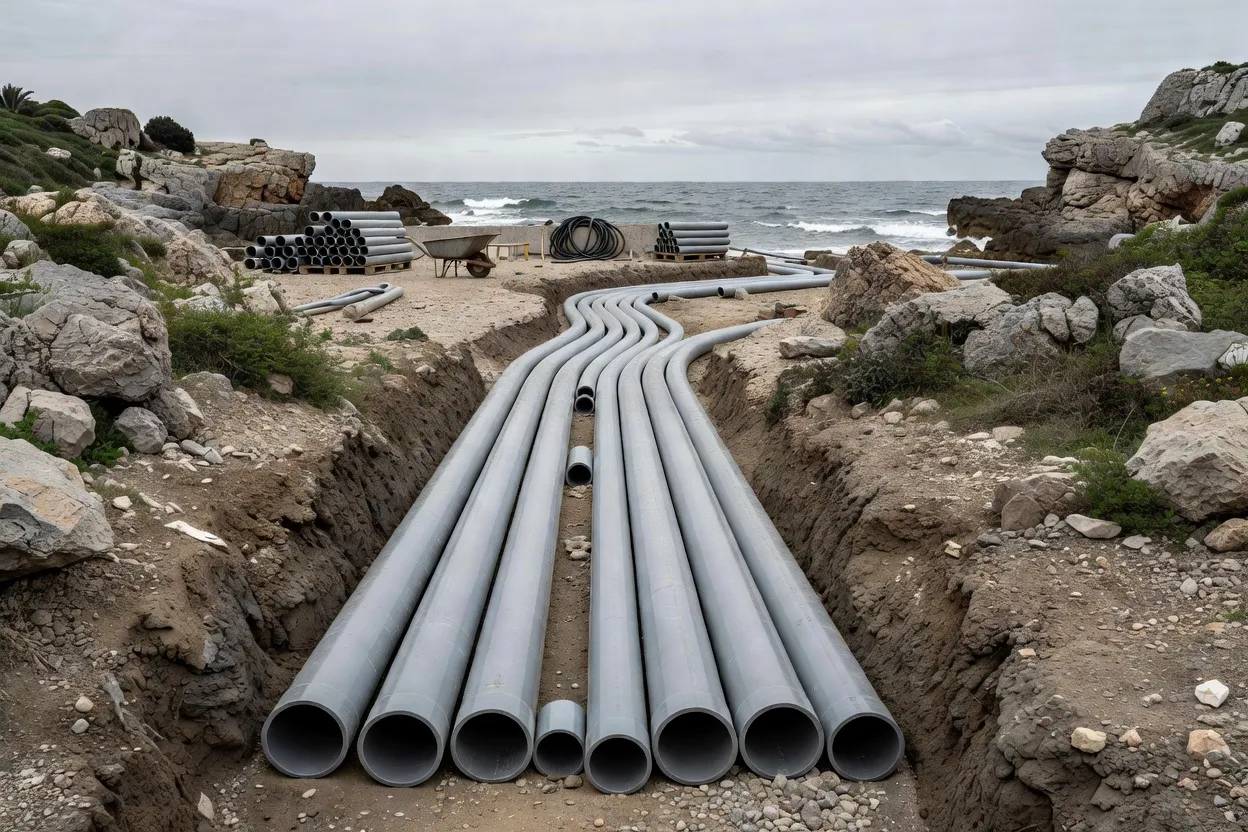
Egypt’s fresh move against EU-origin PVC closes another route
Egypt’s latest decision in September 2026 to impose fresh anti-dumping duties on EU-origin PVC marks a new turn in a trade defence cycle that started with tariffs on US material and escalated when the EU targeted Egyptian exports. While the detailed duty structure on European cargoes has not been publicly tabled in the same way as previous measures against US PVC, the ChemOrbis coverage makes clear that Cairo is tightening protection for its domestic PVC chain amid concerns over underpriced import volumes and mounting pressure on local producers.
According to ChemOrbis, Europe already ranked as Egypt’s third-largest PVC source before the latest decree, making the new duties commercially meaningful rather than symbolic. For Egyptian processors buying imported suspension PVC (S-PVC) K67 for pipe, fittings and profiles, the move effectively raises landed costs on EU material and narrows the set of competitive suppliers at a time when supply from the US is also constrained by Egypt’s earlier anti-dumping order on American PVC resin.
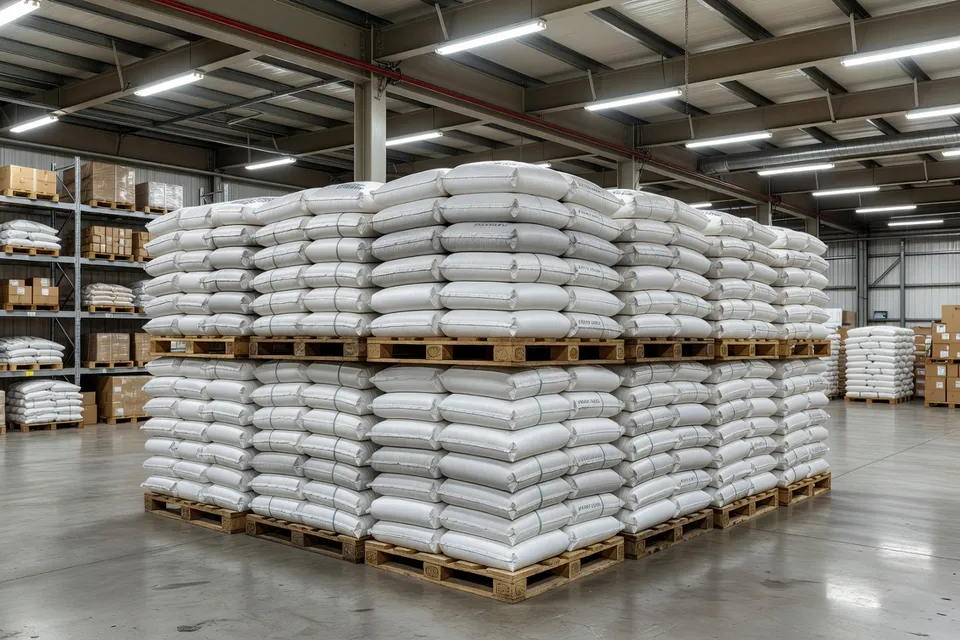
EU’s 2025 definitive duties shut the door on low-priced Egyptian and US S-PVC
On the other side of the Mediterranean, the European Commission’s January 2025 definitive anti-dumping duties on S-PVC from Egypt and the United States crystallised a trend already visible in provisional tariffs adopted in July 2024. The definitive regulation applies to suspension PVC, not mixed with other substances, classified under CN code ex 3904 10 00, and confirms that Egyptian and US exporters were selling into the EU at dumped prices that caused material injury to Union producers.
The duty rates are steep. For Egyptian producers, the EU set 100.1% on Egyptian Petrochemicals Company and on all other Egyptian exporters, with a lower rate of 74.2% for TCI Sanmar Chemicals S.A.E. US suppliers face 58.0% for Westlake Chemicals, 71.2% for Formosa Plastics Corporation, 62.3% for Oxy Vinyls and Shintech, and 77.0% for all other US exporters. These figures sit on top of normal customs duties and apply to the net, free-at-Union-frontier price, making most Egyptian and US-origin S-PVC structurally uncompetitive in the EU market.
EU Anti-Dumping Duties on S-PVC Exporters, 2025
| Exporter | Duty rate (%) |
|---|---|
| Egyptian Petrochemicals | 100.1 % |
| TCI Sanmar | 74.2 % |
| Westlake | 58 % |
| Formosa | 71.2 % |
| Oxy Vinyls/Shintech | 62.3 % |
| Other US | 77 % |
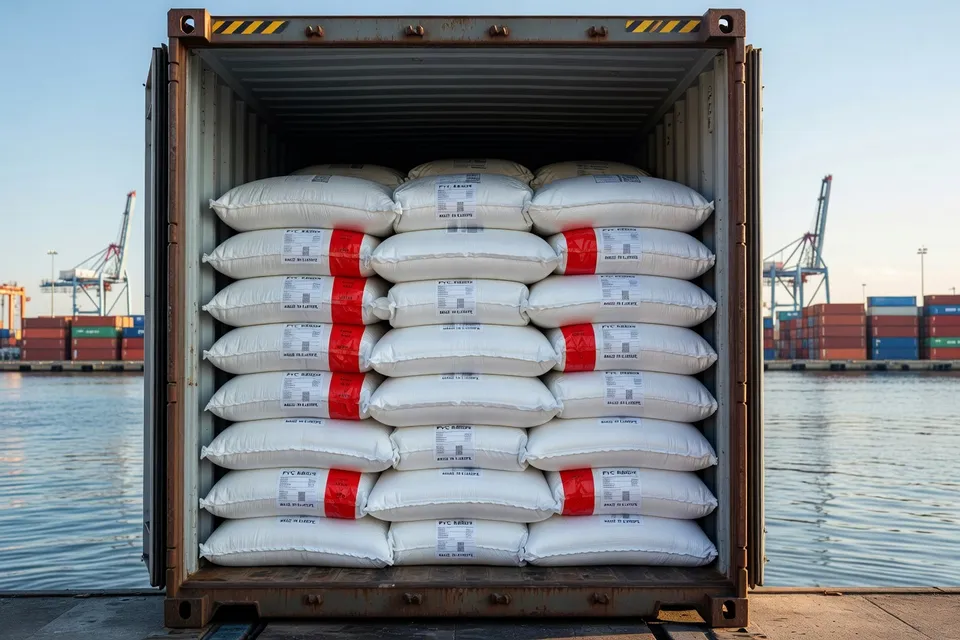
The Commission’s trade policy note stresses why Brussels acted: the investigation showed dumped imports from Egypt and the USA eroded EU market share and threatened to push domestic plants towards closure if left unchecked. The EU’s PVC market is valued at €3.5 billion, underlining the systemic nature of the case for regional producers and converters in construction, packaging and automotive applications.
Egypt’s earlier targeting of US PVC set the stage
Egypt was not just a defendant in the EU’s PVC case; it had already deployed anti-dumping tools of its own. A decision announced by the Ministry of Trade and Industry imposed final anti-dumping duties on US-origin PVC imports falling under tariff item 3904100090, at a rate of 9% of the CIF value for five years. In February 2025, Cairo went further, raising the anti-dumping duty on SPVC K67 from 9% (not less than $86/ton) to 13% (not less than $107/ton), while cancelling the previous duty on other K values.
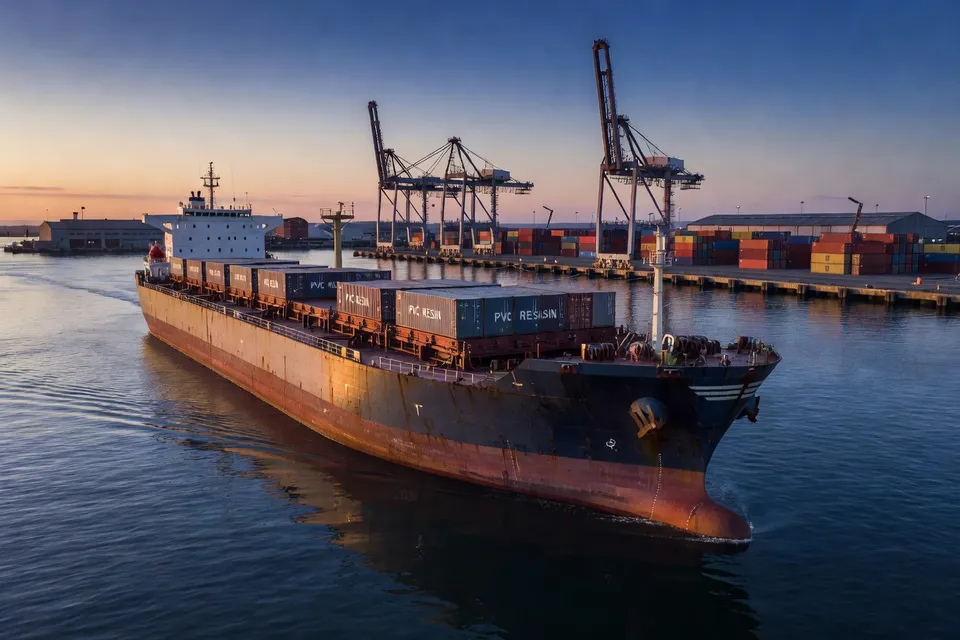
These measures were designed to curb low-priced US resin that local authorities concluded was being imported at a dumping margin equal to the duty rate. For Egyptian processors, the result was a clear shift in sourcing economics: US PVC became notably more expensive relative to regional and Asian suppliers, encouraging a pivot towards alternative origins even before the EU’s definitive tariffs tightened the regulatory environment for Egyptian exports.
Trade flows pivot as traditional corridors lose viability
Taken together, the EU’s definitive duties on Egyptian and US PVC and Egypt’s successive anti-dumping actions against US and now EU-origin material are reshaping trade flows in several ways.
First, two-way trade in PVC between Egypt and the EU is being progressively ring-fenced by duties. The EU’s tariffs render Egyptian S-PVC structurally unattractive in Europe, while Egypt’s new measures raise the cost of European resin in the Egyptian market. At the same time, US material faces anti-dumping barriers both into Egypt and into the EU, constraining one of the major global export streams for PVC.
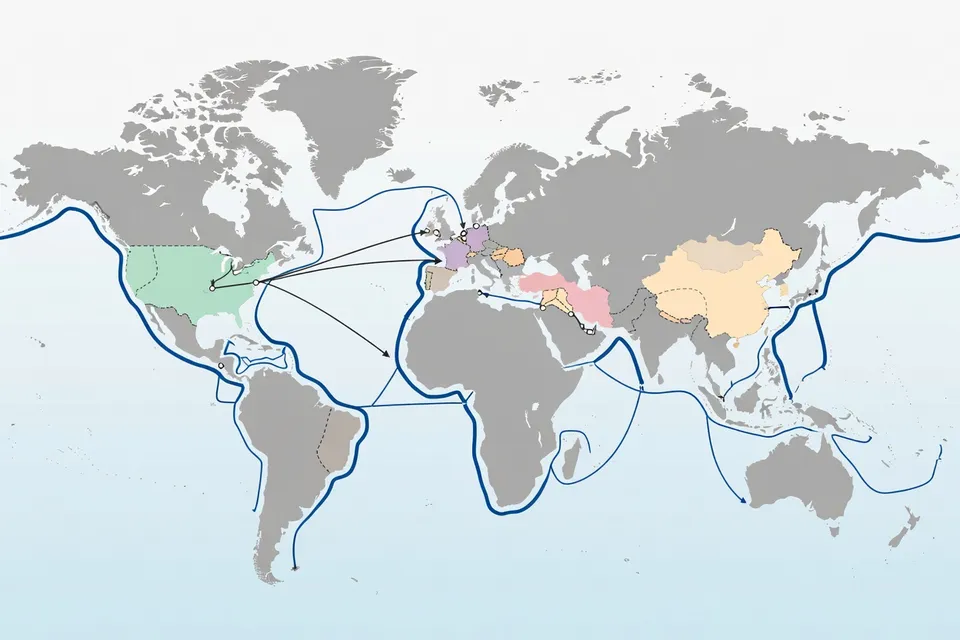
Second, these measures are being introduced against a backdrop of deep trade integration. The EU–Egypt Association Agreement, in force since 2004, created a free-trade area for industrial products and made the EU Egypt’s largest trading partner, accounting for roughly a quarter of Egypt’s total trade in goods and standing as the largest origin for Egyptian imports. Within that framework, PVC had moved relatively freely until trade defence instruments cut across the liberalisation schedule.
For EU converters and building-material producers, the loss of cost-competitive S-PVC from Egypt and the US forces a rebalancing towards intra-EU supply or towards alternative exporters not covered by the duties, likely at higher base prices or with longer lead times. The Commission openly acknowledged that without these measures, Union PVC producers risked further market-share losses and potential plant closures, indicating that Brussels was willing to trade short-term cost pressure on downstream users for long-term industrial capacity preservation.
For Egyptian producers, the duties have immediate implications for competitive positioning. EPC and TCI Sanmar face near-total closure of their traditional low-price route into the EU, where duties of 74.2–100.1% effectively wipe out price advantages. Their sales strategies will need to pivot towards markets where tariff barriers are lower or absent, such as parts of Africa, Asia or domestic buyers prepared to pay higher netbacks for secure local supply.
Processors weigh sourcing risk, price volatility and regulatory exposure
PVC processors in both regions now face a more complex procurement calculus.
Egyptian converters must navigate layered duties on US and EU material, compare delivered costs from Asian suppliers, and account for potential volatility in domestic pricing, given that local producers operate behind strengthened tariff walls. Depending on contract structures, some processors may seek longer-term arrangements with Middle Eastern or Asian exporters to lock in availability, even if spot prices occasionally look more attractive from now-penalised origins.
In the EU, converters are being pushed to diversify away from high-risk origins. While the definitive duties have removed the immediate threat of ultra-low priced S-PVC from Egypt and the US, they also increase the EU’s dependence on regional producers and on a smaller group of external suppliers. That concentration raises exposure to plant outages, logistics disruptions or feedstock swings, and may amplify price cycles relative to the pre-duty period when imports could quickly arbitrage regional imbalances.
Strategic implications: trade defence becomes a structural cost driver
For executives across the PVC value chain, the key takeaway is that trade defence has become a structural driver of cost and trade flows, not just a temporary policy noise.
Anti-dumping duties of up to 100.1% in the EU, combined with Egypt’s multi-layered tariffs against US and now EU suppliers, are materially altering where resin can move profitably and how pricing power is distributed between producers and converters. The existence of a long-standing EU–Egypt free-trade framework does not insulate PVC from such measures; instead, it highlights that trade defence can override tariff liberalisation when injury findings are strong.
PVC buyers who continue to rely on intercontinental supply routes must now treat anti-dumping regimes as part of their core risk matrix, alongside freight, energy and feedstock costs. In practical terms, that means more attention to origin diversification, to contract clauses anticipating regulatory shifts, and to internal models for landed-cost scenarios under different duty structures.
As Egypt’s latest action against EU-origin PVC shows, this is not a static environment. Trade defence on PVC has moved from isolated cases into an evolving policy landscape, and the companies best positioned competitively will be those that build this regulatory volatility into their sourcing and investment decisions rather than treating it as a one-off shock.
Editorial Insights
- How does the growing use of anti-dumping duties change the way PVC processors should think about long-term sourcing strategy?
- Anti-dumping regimes turn origin choice into a structural risk factor rather than a purely commercial decision. PVC processors need to build regulatory scenarios into their supply models, favour multi-origin portfolios, and avoid overreliance on any corridor that is already under investigation or subject to provisional measures. Longer-term contracts should explicitly address duty pass-through, renegotiation triggers, and contingency supply to avoid being locked into suddenly uncompetitive origins.
- What are the main sustainability and environmental implications of increasingly inward-looking PVC trade policies?
- Trade defence can encourage more regionalised supply chains, cutting transport-related emissions, but it may also lock markets into older, less efficient production assets if external low-carbon capacity is priced out. In addition, sudden shifts in trade flows can disrupt recycling, compounding capacity planning issues for mechanical and chemical recyclers. Sustainability strategies therefore need to consider not only plant-level performance but also how policy-driven trade patterns affect the overall lifecycle footprint of PVC products.
- In what ways do high PVC trade barriers reshape pricing power between resin producers and downstream converters?
- When major low-cost export streams are constrained by duties, domestic and regional producers gain pricing leverage because converters have fewer credible alternatives. This tends to elevate floor prices, compressing margins for pipe, profile and film manufacturers unless they can pass increases downstream. Over time, concentrated supply amplifies the impact of outages and feedstock shocks, making price cycles sharper and pushing converters to invest more in inventory strategies and price-risk management.
- What regulatory lessons should PVC value chain players draw from the increasing use of trade defence instruments?
- The key lesson is that formal trade agreements do not shield specific products from defence actions when injury can be demonstrated. Producers and converters need early-warning mechanisms around investigations, stronger participation in inquiry processes, and internal teams that track global trade remedies across key polymers. Firms that integrate regulatory intelligence into capex, market entry and contract decisions are less likely to be blindsided by sudden duty changes that can strand assets or contracts.
- Are aggressive anti-dumping measures in PVC more likely to protect industrial capacity or to raise long-term costs for society?
- In the short to medium term, steep duties can prevent rapid erosion of local production and preserve jobs, skills and strategic capacity in key construction materials. Over a longer horizon, however, persistent barriers can entrench higher-cost producers, keeping prices elevated for housing, infrastructure and consumer goods. The societal trade-off hinges on whether protected capacity uses the breathing room to modernise and improve efficiency or simply relies on policy shields to maintain its position.
- How should PVC producers in emerging export regions position themselves as traditional trade corridors become less viable?
- Producers in emerging hubs need to focus on markets with lower regulatory risk, invest in robust compliance and data to avoid dumping allegations, and differentiate beyond price through reliability, specifications and service. Building diversified customer bases, including regional downstream integration, can reduce exposure to single-market policy swings. At the same time, engagement with trade bodies and standards organisations helps shape fair competition rules before disputes escalate into punitive duties.
References
- 1.ChemOrbis. (2026, September 9). Egypt imposes fresh antidumping duties on EU-origin PVC. ChemOrbis.
- 2.ChemOrbis. 2026 Egypt polymer prices, news and analysis. ChemOrbis.
- 3.Directorate-General for Trade and Economic Security. (2025, January 10). Commission counters dumped polyvinyl chloride from USA and Egypt. European Commission.
- 4.European Commission. (2024, July 11). Commission Implementing Regulation (EU) 2024/1896 of 11 July 2024 imposing a provisional anti-dumping duty on imports of certain polyvinyl chloride (PVC) originating in Egypt and the United States of America. EUR-Lex.
- 5.European Commission. (2025, January 9). Reglamento de Ejecución (UE) 2025/36 de la Comisión, de 9 de enero de 2025, por el que se establece un derecho antidumping definitivo y se percibe definitivamente el derecho provisional establecido sobre las importaciones de determinado cloruro de polivinilo originario de Egipto y de los Estados Unidos. EUR-Lex.
- 6.Lexcovery. (2025, January 10). Commission Implementing Regulation (EU) 2025/36 of 9 January 2025 imposing a definitive anti-dumping duty and definitively collecting the provisional duty imposed on imports of certain polyvinyl chloride originating in Egypt and the United States. Lexcovery.
- 7.Germany Trade & Invest. (2025, December 26). Polyvinylchlorid mit Ursprung in Ägypten und USA. Germany Trade & Invest.
- 8.European Commission. (2026, April 15). EU trade relations with Egypt. European Commission.