

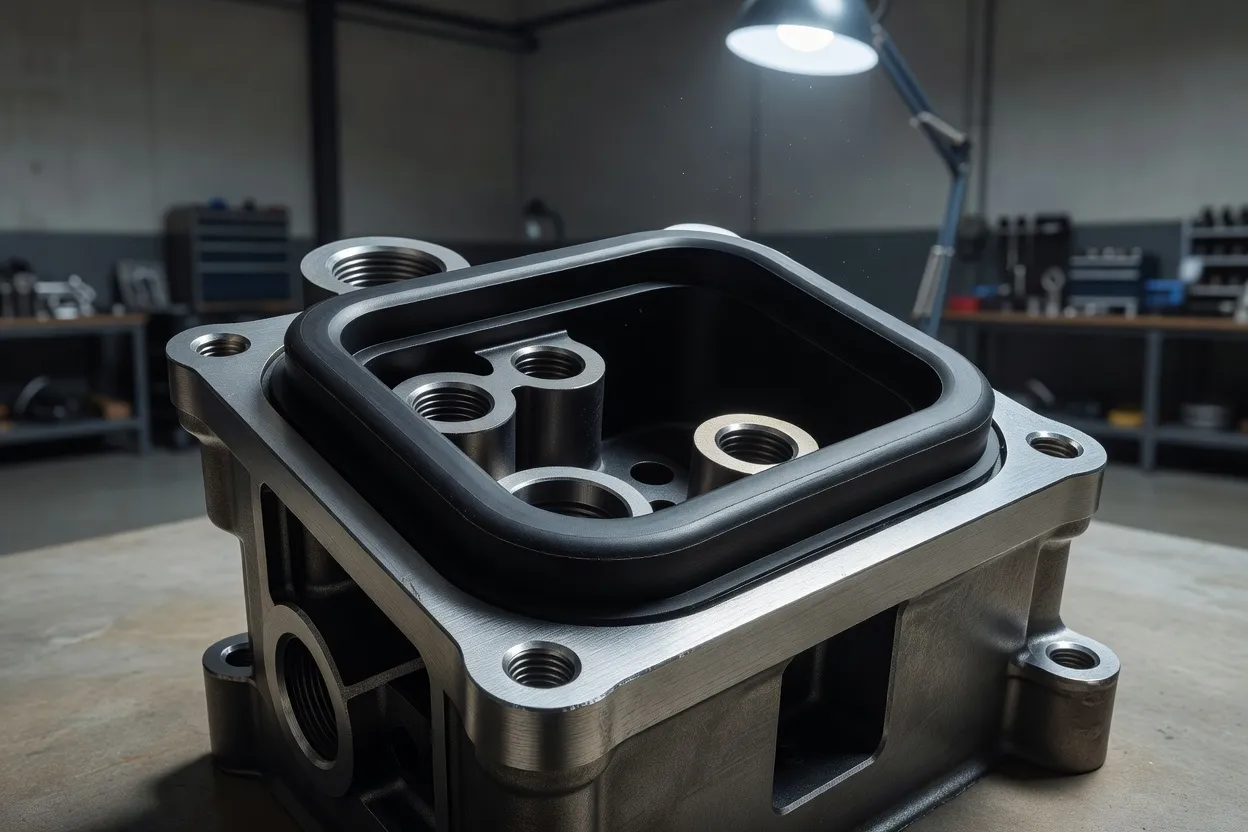
From hand-trimmed flash to flash-free seals
For many LSR processors, trimming flash and sorting borderline parts is still part of the daily routine, especially on large seals where tolerances sit down in the micron range. The common picture is uneven clamping across big tools, low-viscosity silicone sneaking into any gap, and batch variations only caught once quality checks start eating into good hours on the floor. In 2026, a new generation of "smart" LSR molding cells is starting to show that a different outcome is realistic: large-format seals leaving the press burr-free and ready for assembly, with rework becoming the exception instead of the rule.
The change is not one silver bullet. It comes from a combination of intelligent cold runners, tie-bar-less electric machines, tighter process monitoring and LSR grades designed to reduce secondary operations. Together, these elements are moving LSR molding closer to the kind of stable, data-driven process window thermoplastic shops already expect.
Intelligent cold runners take over cavity balancing
One weak link in multi-cavity LSR tools has always been balancing: keeping all cavities filled evenly despite viscosity shifts, temperature gradients and small mechanical differences between nozzle pins. Until recently, that balancing has mostly depended on experienced mold technicians making manual adjustments during start-up and whenever a material or batch change introduces new behavior.
ELMET’s SMARTshot i cold-runner system, scheduled for its public introduction at Fakuma 2026, is built explicitly to automate that task. The system continuously analyzes the injection process inside the mold, adjusts individual nozzle-pin positions, and automatically balances cavities without human intervention once the process window is defined. Instead of static settings, pin positions become controlled variables, moving in response to real flow and pressure conditions.
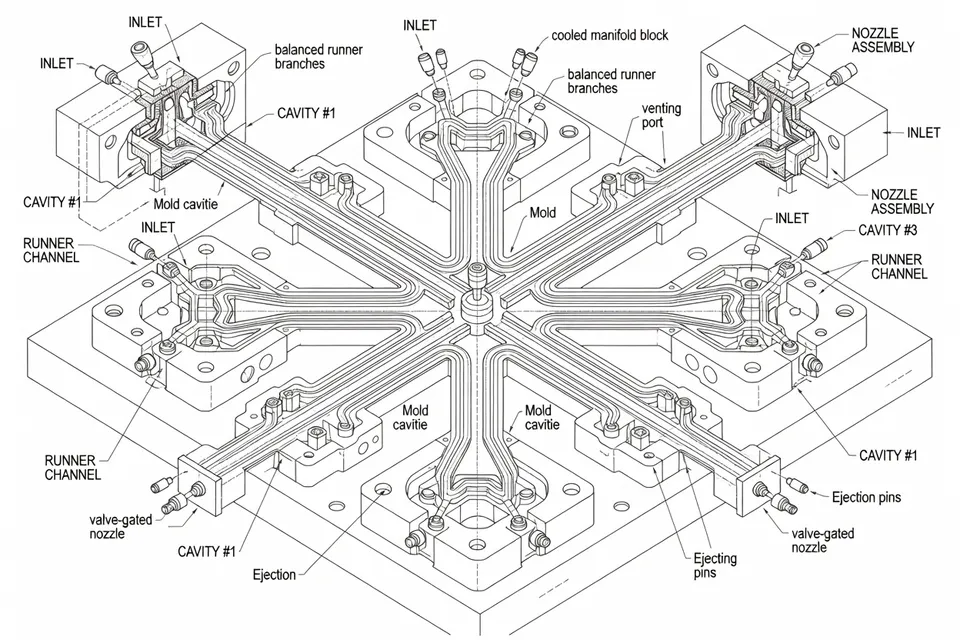
For a plant manager, the practical benefit is straightforward: less time chasing fill imbalances and far fewer short shots or overpacked cavities across a family tool. When cavity balance is maintained in real time, overall part variation tightens and the line produces more usable parts per cycle without adding operators or inspection capacity. That directly reduces the volume of parts that need hand inspection or rework and cuts scrap tied to imbalance rather than to fundamental mold or material problems.
Tie-bar-less electric machines clamp evenly, hold seals closed
The other key element is the machine sitting under the LSR tool. At Fakuma 2026 in Friedrichshafen, ENGEL is using its victory electric 1565/220 to run a large LSR seal for an EV inverter component as a live demonstration of what tie-bar-less technology can do for silicone. The machine provides 2,200 kN of clamping force with a 1565 injection unit aimed at larger shot volumes.
On this press, the tie-bar-less design is not about mold freedom alone. It is used to achieve near-perfect platen parallelism so clamping force is spread evenly over the entire mold surface. With low-viscosity LSR, that even force distribution becomes critical. Any small gap between mold halves is quickly turned into flash as silicone tracks along the split line. When the platens close uniformly, the mold stays sealed across its full area during injection, and the seal can be molded without flash.
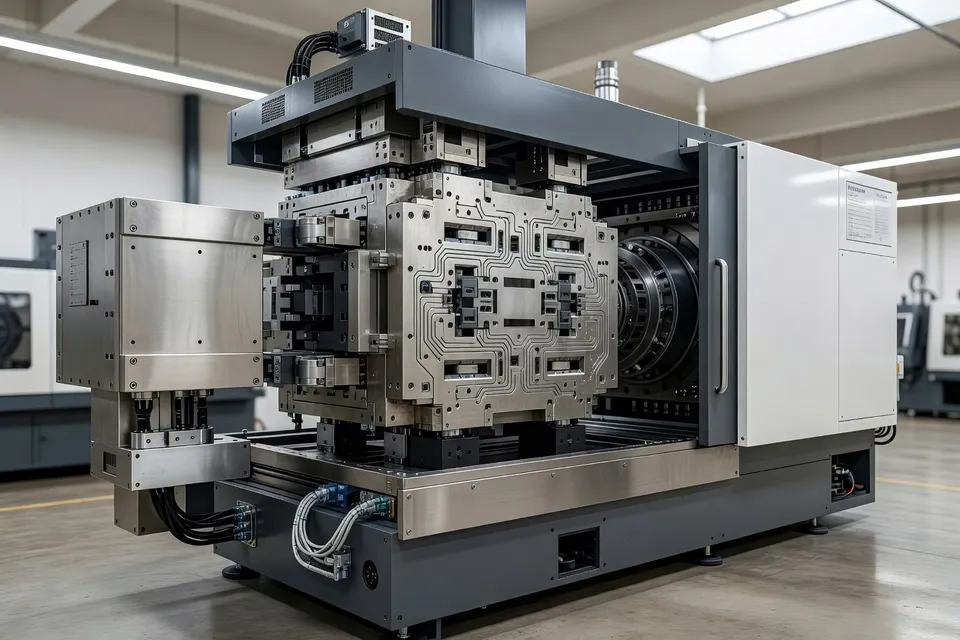
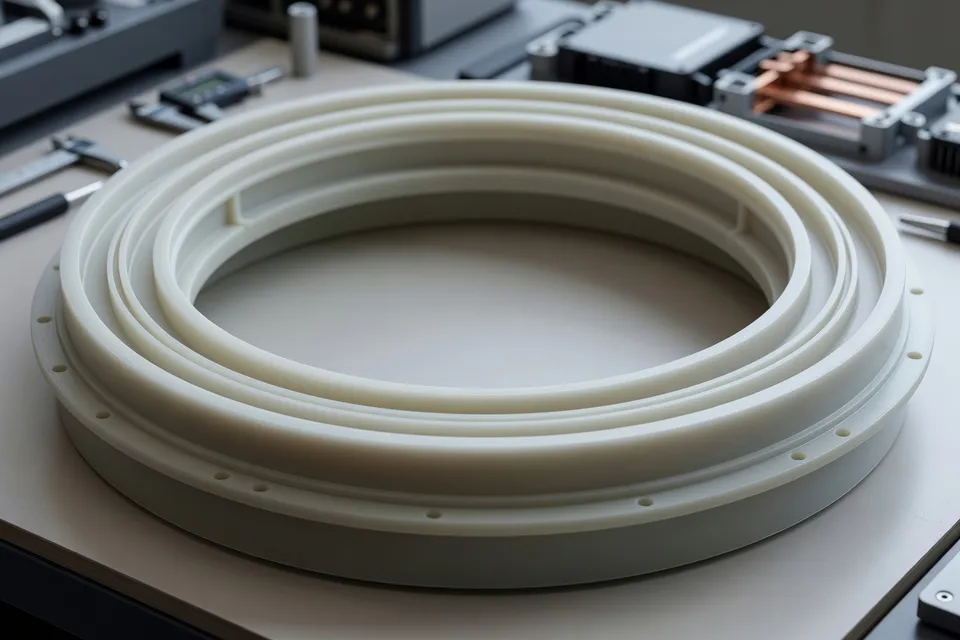
Live at the show, ENGEL reports that the inverter seal—measuring 484 x 202 x 29 mm—is produced in roughly 70 seconds, leaving the machine burr-free and ready for downstream assembly without rework. The same cell couples automated part removal and process monitoring to keep the sequence stable and traceable. For processors that currently send operators to trim every large LSR seal, the demonstration gives a concrete benchmark: a fully automated, large-part LSR process where flash is essentially engineered out of the system.
Materials and molds tuned for fewer secondary steps
Smart hardware only delivers its full value when the material and mold design support the same goal: minimizing secondary steps. On the material side, suppliers are introducing grades that can eliminate or reduce postcuring for specific applications. WACKER’s ELASTOSIL LR 5471, announced on September 7, 2026, is described as a non-postcure liquid silicone rubber with self-adhesive properties and very low volatile content. In the right medical or electronics applications, that makes it possible to mold parts and move them directly into packaging or assembly without a separate oven stage.
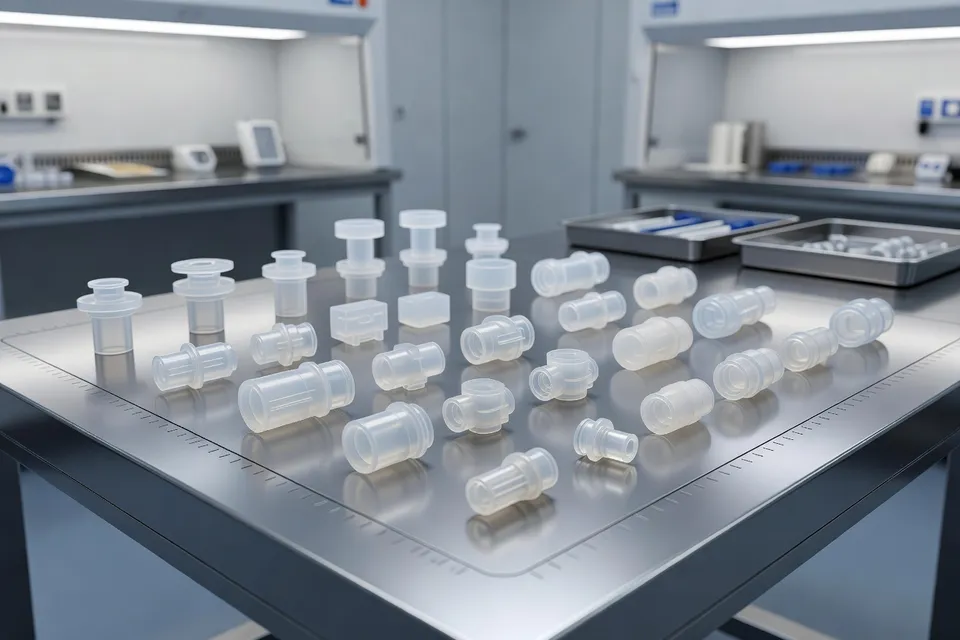
Process-customized LSR is also emerging for high-volume medical production. Earlier in 2026, DuPont launched its Liveo C6-8XX medical-grade LSR series, highlighting lower viscosity and improved rheology aimed at faster, more consistent molding cycles and automated manufacturing. Lower viscosity here is not just a material brochure term; it translates to cleaner filling behavior in complex geometries and more predictable pressure profiles at the cold runner, which aligns well with automatic cavity control systems.
On the tooling side, mold suppliers are designing high-precision LSR tools specifically around smart cold runners and tie-bar-less machines. The SMARTshot i system, for example, is presented as part of an integrated approach where nozzle layout, pin actuation and cavity geometry are coordinated to allow the system’s analytics to work effectively. The result is a mold that does not simply tolerate process variability but actively uses machine feedback to keep each cavity within a tight window.
What this means for processors: where rework really drops
For a plant running legacy LSR tools on conventional hydraulic presses, the idea of "no-rework" seals can sound like a trade-show slogan. The Fakuma 2026 demonstrations and the broader 2026 LSR trends point to a more practical roadmap.
"The next stage of silicone manufacturing is increasingly about controlling variables—material, mold, machine and data all working together." - DX editorial team at SiliconeDX said
First, processors that regularly fight flash and inconsistent fill on multi-cavity LSR tools can look at intelligent cold runners as a way to stabilize cavity balance, particularly where material lots or ambient conditions change frequently. That can be a retrofit path: replacing a conventional cold runner on an existing mold with a system capable of adjusting pin positions automatically.
Second, for large-format, tolerance-critical seals, the ENGEL cell shows the benefit of tie-bar-less electric machines in concrete terms—large LSR seals leaving the press burr-free, with cycle times in the tens of seconds rather than minutes. Where a plant is planning to add capacity for EV or power electronics parts, specifying tie-bar-less clamping and LSR-ready injection units during the machine selection phase becomes a direct lever to cut future rework cost.
Third, material choices now influence not only part performance but the amount of post-molding work. Selecting non-postcure, self-adhesive LSR grades can take entire oven lines out of the process for suitable applications, freeing space and reducing energy and handling time. At the same time, medical-grade LSRs optimized for automated molding can be matched with smart tooling to keep cycle variation low enough for lights-out operation in validated environments.
Next steps a molder can copy
For operations teams looking to move LSR work off the bench and into stable, automated cells, the examples emerging in 2026 suggest a sequence of practical steps rather than a wholesale reinvention:
-
Map where rework really comes from. Separate flash removal, cavity imbalance, and postcuring from material or design issues. That clarifies whether the main gains will come from clamping, runner design, or resin choice.
-
Audit clamping behavior on large tools. Simple platen-parallelism checks on current machines will show how much uneven closing is contributing to flash. If the gap is large, tie-bar-less options with documented LSR performance—like the victory electric series at Fakuma—deserve a closer look.
-
Engage toolmakers on intelligent cold runners. Where multi-cavity tools drive most of the sorting work, discuss SMARTshot-style systems that can actively balance cavities. The goal is a mold that stays in balance across resin lots and environmental swings without constant manual tuning.
-
Review LSR grades against process steps. Flag applications where non-postcure or self-adhesive LSRs can safely remove ovens or bonding steps without compromising compliance or performance.
-
Plan data and monitoring alongside hardware. Smart molding is not only sensors and algorithms; it is how those signals reach operators. Systems like ENGEL’s digital assistants and process monitoring around the LSR cell show how guidance and alarms can be integrated into daily work rather than left in engineering reports.
Taken together, these moves turn "smart LSR molding" from a conference topic into a grounded improvement project. The target is clear: large and complex silicone parts that leave the machine within tolerance, without flash, and without a long queue at the trimming bench.
Editorial Insights
- How does reducing rework in LSR molding change the economics of high-volume seal production?
- When flash and post-molding operations are engineered out of the process, labor tied to trimming, inspection, and sorting drops sharply while usable parts per cycle rise. This shifts the cost structure from manual rework to capitalized, stable output, improving overall equipment effectiveness and making previously marginal LSR programs more attractive at scale. Over time, plants that invest in rework-free cells gain a structural cost advantage and more predictable margins on tight-tolerance silicone components.
- What are the main process risks when moving from manual LSR tuning to automated, data-driven cavity balancing?
- Transitioning to automated balancing changes the failure modes: instead of inconsistent manual adjustments, the risk shifts to sensor reliability, algorithm robustness, and correct process window definition. If those foundations are weak, a smart system can amplify errors across all cavities rather than isolate them. To mitigate this, operations teams need disciplined validation, clear alarm strategies, and a training curve that treats data interpretation as a core shop-floor skill, not a specialist-only task.
- In what ways can smarter LSR molding contribute to more sustainable production in silicone processing?
- Tighter cavity balance and cleaner clamping reduce scrap and rework, cutting material waste and the energy consumed in secondary operations. When oven stages and manual trimming are minimized, overall energy intensity per good part falls and worker exposure to cutting, dust, and heat also decreases. Over a full production campaign, these gains turn process optimization into a tangible sustainability lever rather than a purely productivity-driven exercise.
- How might increasing automation in LSR cells affect workforce skills and shop-floor roles over the next few years?
- As molding cells handle cavity balancing, clamping control, and monitoring autonomously, repetitive trimming and inspection work will shrink while the need for technicians who understand data, sensors, and integrated systems grows. Roles evolve from reactive troubleshooting to proactive process ownership, where operators interpret trends, manage recipe changes, and oversee cell reliability. Plants that invest in upskilling rather than simple headcount reduction will be better positioned to capture the full value of these technologies.
- What regulatory and qualification implications arise when LSR parts move directly from the press into assembly without postcuring or secondary bonding steps?
- Bypassing postcuring and separate bonding stages tightens the link between molding conditions and end-use performance, which raises the bar for process validation, documentation, and change control. Regulators and customers will expect robust evidence that volatile levels, adhesion, and dimensional stability remain within specification across lot and environmental variations. That pushes molders toward more sophisticated monitoring, traceability, and risk assessment frameworks embedded in the cell, not added after the fact.
- Why are large, tight-tolerance silicone parts a strategic proving ground for smart LSR molding technologies?
- Large seals and complex silicone geometries are unforgiving: small deviations in clamping or flow quickly translate into flash, leak paths, or assembly issues. That makes them ideal test cases to demonstrate whether intelligent runners, precision clamping, and tuned materials can truly hold micron-level tolerances in real production, not just in lab trials. Success in this segment strengthens confidence to roll similar concepts into smaller parts and broader applications, accelerating the overall shift to data-driven silicone processing.
References
- 1.Adsale Plastics Network. (2026, September 8). ELMET’s smart cold runner for LSR injection molding debut at Fakuma 2026. Adsale Plastics Network.
- 2.Adsale Plastics Network. (2026, September 11). action: ENGEL to show automated injection molding cell ... Adsale Plastics Network.
- 3.ENGEL. (2026, September 3). LSR meets tie-bar-less technology: ENGEL's victory electric shows what's achievable. ENGEL.
- 4.WebWire. Press release. WebWire.
- 5.SiliconeDX. Smart lsr molding trends 2026 silicone overmolding custom parts. SiliconeDX.
- 6.ENGEL. Fakuma 2026. ENGEL.
- 7.Plastics Technology. Articles. Plastics Technology.
- 8.AMI Plastics. Compounding world. AMI Plastics.