

Generative AI moves into the engineering workflow
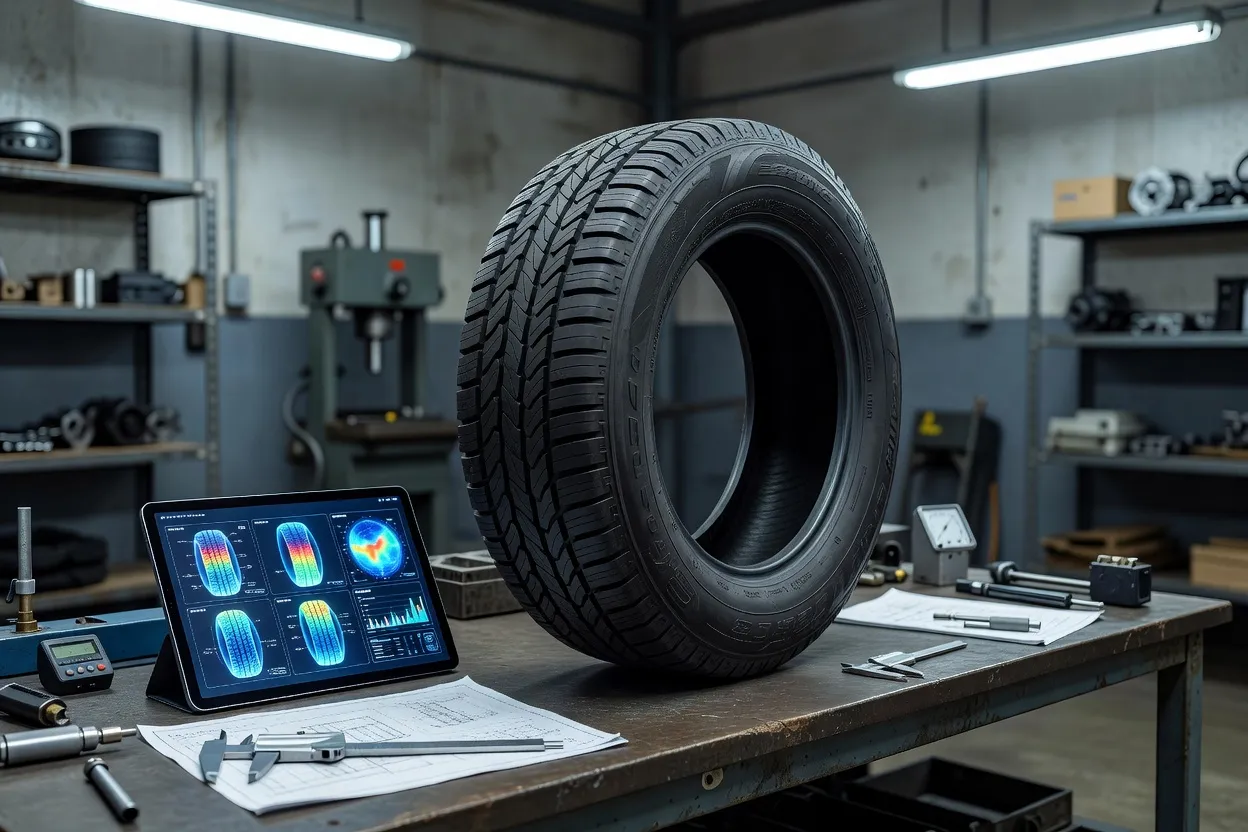
Yokohama Rubber (The Yokohama Rubber Co., Ltd., a Japanese tiremaker headquartered in Hiratsuka) has begun full-scale operation of a proprietary generative AI system that searches internal technical documents and returns answers for tire development teams. The company said the system went into operation in August 2026 and is intended to speed decisions in areas including material development and tire design.
The move is notable not because it replaces simulation or lab work, but because it targets a familiar weakness in advanced R&D: knowledge retrieval. Tire engineers work with a broad body of internal reports, manuals, case studies, and development records, and Yokohama is now using retrieval-augmented generation, or RAG, to surface the most relevant material faster than a manual search process would allow.

How the system is designed to work
According to Yokohama, engineers enter questions tied to a specific development objective or project situation, and the generative AI searches the company’s accumulated technical documents for the most relevant information. The system is built with an AI agent that interprets the user’s intent and then repeats a cycle of planning searches, retrieving information, and evaluating the results to improve answer quality.
A practical safeguard is built into the workflow: the system displays links to the original source documents used to generate each response, allowing staff to check the basis for the answer before using it in interpretation or decision-making. That matters in tire development, where a technically plausible answer still has to be checked against formulation constraints, testing history, and platform-specific design requirements.
Yokohama said the platform expands the practical environment of its HAICoLab (an AI utilization framework launched in October 2020) and builds on earlier AI tools the company developed for predicting rubber compound properties, generating new rubber compounds, and supporting mold design. In other words, the new system does not stand alone; it extends a broader digital development stack that already blends simulation, prediction, and design support.
Why this matters for tire R&D
The immediate implication for processors and technical teams is speed. Yokohama says the new system is meant to provide rapid and accurate access to technical information needed for development decisions, including material development. That can shorten the time engineers spend hunting through archives and help them move earlier to evaluation, iteration, and validation.
For a tiremaker, this is more than an office productivity upgrade. Internal technical knowledge is often spread across teams, projects, and years of experiments. A system that can pull together that history quickly can improve continuity when experienced engineers retire, teams change, or a program has to be restarted after a specification shift. It can also make it easier for less experienced staff to work from established know-how rather than rebuilding it from scratch.
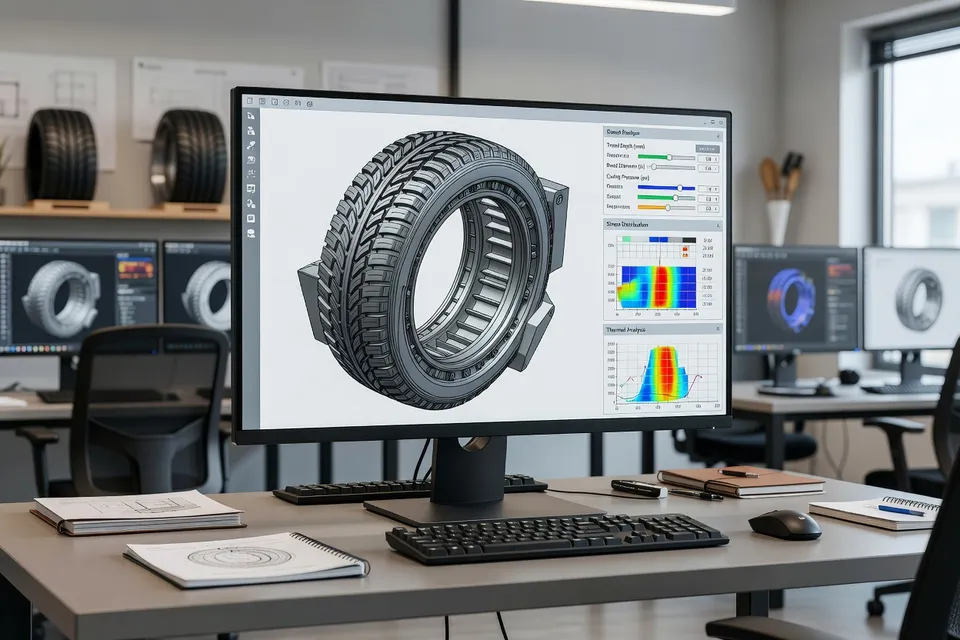
The industry context is important. Yokohama is already using data-driven tools in other parts of development, including a previously announced mold design support system based on simulations and AI, which used large numbers of virtual experiments and surrogate modeling to relate mold design factors to tire characteristics. The new generative AI layer addresses the front end of the process: asking better questions, finding the right technical evidence, and giving engineers a more direct path from knowledge to action.
That shift suggests the next competitive edge in tire R&D may come not only from faster simulation or stronger test benches, but from faster access to the institutional memory behind them. For suppliers, materials developers, and equipment partners, the message is clear: digital tools are moving deeper into the core of formulation and design work, where the value of accumulated technical data is becoming easier to organize and reuse.
A measured step, not a finished transformation
Yokohama has not disclosed quantified gains such as shorter development cycles or lower testing costs in the material reviewed here. That restraint leaves the broader performance claim unproven, but the strategic direction is clear. The company is using AI to make its internal knowledge base more usable, and in a sector where development is expensive and iterative, that can be as consequential as a new material ingredient or a new simulation model.
For tire developers, the significance lies in how quickly a question turns into a usable engineering answer. Yokohama is betting that the answer to that problem is not just more data, but better retrieval of the data it already has.
Editorial Insights
- Why is knowledge retrieval emerging as a bottleneck in advanced plastics and rubber R&D, even in highly digitized organizations?
- As simulation, testing, and data collection become more sophisticated, development teams accumulate vast volumes of reports, models, and trial histories that are poorly indexed for day-to-day use. The constraint shifts from generating data to finding the specific, context-relevant lessons hidden in that data when engineers need them. Without effective retrieval, organizations risk repeating old experiments, losing tacit know‑how as staff turn over, and slowing decisions despite having the “right” data somewhere in their systems.
- How can AI-driven knowledge search impact sustainability efforts in material and tire development?
- AI-supported retrieval can surface prior work on lightweighting, recyclability, bio-based feedstocks, and durability trade-offs much faster than manual search. By reusing validated formulations and test data instead of starting from scratch, teams can reduce redundant experiments, lower waste from trial-and-error, and more quickly align designs with regulatory and environmental targets. Over time, this makes it easier to embed sustainability criteria into everyday technical decisions rather than treating them as separate initiatives.
- What strategic advantages can early adopters of generative AI in R&D knowledge management gain over competitors?
- Organizations that can reliably convert historical experiments and design decisions into on-demand guidance shorten learning curves and reduce development risk. This allows them to respond faster to specification changes, tailor products for niche applications, and maintain continuity when key experts leave. In an industry where incremental performance gains accumulate over long product cycles, the ability to reuse institutional memory systematically can become as differentiating as proprietary materials or processing equipment.
- What safeguards are essential when integrating generative AI into critical engineering workflows?
- AI systems need to be designed so that engineers can trace each response back to the underlying technical sources, rather than accepting generated text at face value. Clear validation steps, version control of input documents, and alignment with existing approval procedures help ensure that recommendations remain consistent with formulation limits, test histories, and safety requirements. The aim is to augment engineering judgement, not bypass it with opaque automation.
- How might AI-based knowledge systems reshape the skills expected of future R&D engineers in the rubber and tire sector?
- As information retrieval and summarization become automated, greater emphasis falls on framing good questions, interpreting results in context, and understanding system limitations. Engineers will need stronger data literacy, familiarity with AI tools, and the ability to integrate insights from diverse experiments into coherent design decisions. This shifts development roles away from document hunting toward higher-value reasoning and cross-disciplinary collaboration.
- What ethical considerations arise when long-term product safety decisions rely on AI-assisted retrieval of historical data?
- When AI systems mediate access to decades of experiments and field performance, there is a risk that gaps, biases, or misindexed data could distort the evidence engineers see. Ethical deployment requires transparency about coverage, regular audits of recall quality, and clear responsibility for final decisions. Given the long service life of many rubber and tire products, ensuring that safety-critical lessons are neither buried nor misrepresented becomes as important as speeding up daily workflows.
References
- 1.The Yokohama Rubber Co., Ltd. (2026, August 28). Yokohama Rubber develops proprietary generative AI system for tire development. The Yokohama Rubber Co., Ltd.
- 2.The Yokohama Rubber Co., Ltd. (2026, August 28). Yokohama Rubber develops proprietary generative AI system for tire development. The Yokohama Rubber Co., Ltd.
- 3.reifenpresse.de. (2026, August 28). Yokohama Rubber setzt neues generatives KI-System in der Reifenentwicklung ein. reifenpresse.de.
- 4.MarkLines Co., Ltd. (2026, August 31). Yokohama Rubber deploys RAG-powered generative AI in tire development. MarkLines Co., Ltd.
- 5.Modern Tire Dealer. Yokohama taps artificial intelligence. Modern Tire Dealer.
- 6.Tyre News. Yokohama's AI move raises a bigger question about tyre R&D. Tyre News.