

Additives move recycling from theory to practice in flexible packaging
Walking the halls ahead of the Plastics Europe Innovation Press Conference 2026, one theme kept coming up in conversations with converters and ink suppliers: recyclability is now being decided in the ink kitchen as much as on the film line.
Evonik (Evonik Industries AG, a Germany-based specialty chemicals company active in additives and materials.) has put that reality under the spotlight with TEGO Res 1100, a co‑binder for solvent‑based printing inks designed to make deinking a standard step in mechanical recycling of flexible plastic packaging. At the Plastics Europe Innovation Press Conference scheduled for September 11, 2026, the company is showcasing additive technologies "that help make circularity a reality," with TEGO Res 1100 flagged as a featured solution for easier recycling of printed packaging.
The co‑binder is formulated into solvent‑based inks and engineered so that, during the washing stage of mechanical recycling, the ink detaches more readily from the film surface. Evonik positions this as a design‑for‑recycling tool: instead of leaving residual color and odour in recyclate streams, converters can strip printing more completely, enabling cleaner polyolefin recyclate and expanding its use into higher‑value applications.
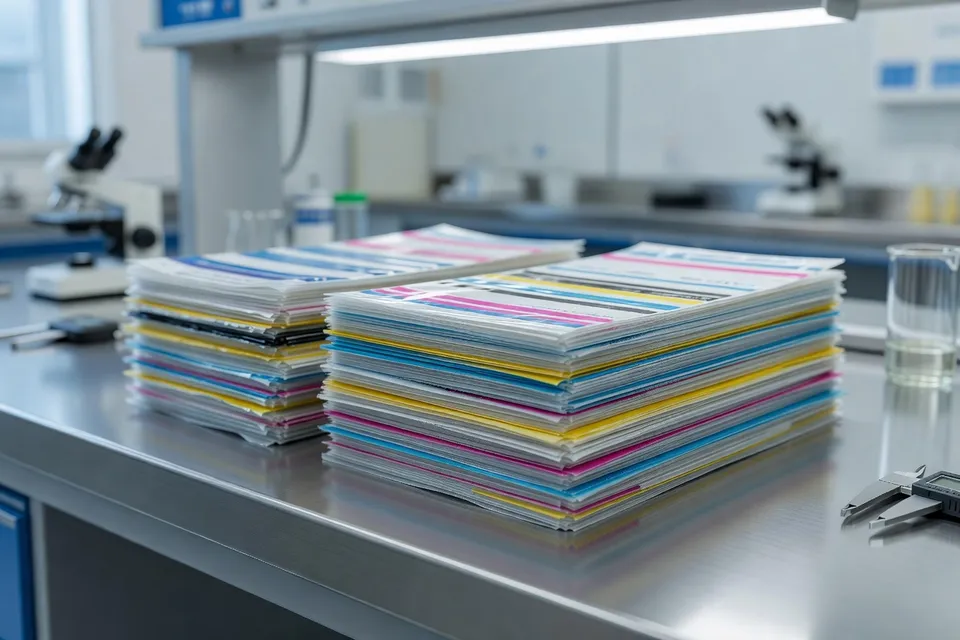
Constantia Flexibles (Constantia Flexibles, a producer of flexible packaging for consumer and pharma markets headquartered in Vienna.) has been the key industrial test bed. Since August 2024, the company has evaluated TEGO Res 1100 across laminated structures in its EcoLam and EcoVer families of polyethylene and polypropylene film solutions marketed under the Ecolutions portfolio. Trials used white inks formulated with the co‑binder on commercial laminates, then ran the material through deinking and recycling tests. According to Constantia’s disclosure, core properties like printability, ink adhesion, seal integrity and abrasion resistance were maintained, while ink removal in mechanical recycling improved significantly.
The collaboration has just been recognised with the German Packaging Award 2026 in the sustainability category, awarded jointly to Constantia Flexibles and Evonik for the TEGO Res 1100 deinking solution. For European converters facing the upcoming Packaging and Packaging Waste Regulation (PPWR), the signal is clear: design‑for‑recycling is no longer a generic slogan. It now includes concrete ink formulation decisions that can be implemented without changing packaging structures or pressroom processes.
"TEGO Res 1100 – The Design for Recycling Solution for Printing Inks" was evaluated across a range of flexible packaging laminate structures, showing effective ink removal without changing packaging structures or printing processes. - Bernadette Hoeritzauer, Group Communication Manager at Constantia Flexibles said
For printers and brand owners, that combination of drop‑in implementation and award‑level validation matters. It suggests that future competitive advantage in flexible packaging will come from how inks are specified, not only from polymer choice. As one technical manager at a European converter put it during the press conference briefings, "If I can keep my existing ink system and still get better recyclate, that’s a change I can implement in one planning cycle rather than three." The operational implication: ink rooms, not just extrusion lines, are becoming central to circularity discussions.
Bio-based rubber fillers step into tire and industrial applications
While packaging specialists debate ink recipes, rubber compounders are watching a different kind of additive move toward high‑demand use. Godavari Biorefineries (Godavari Biorefineries Limited, an India-based integrated biorefinery and specialty chemicals producer.) has secured a European patent EP3313916, titled "A Biofiller for Rubber Reinforcement," covering a biodegradable filler intended to partially replace conventional carbon black in tires and other rubber goods.
According to filings reported in early September 2026, the European Patent Office granted the patent on August 12, 2026, with disclosure to Indian stock exchanges on September 5 under securities regulation rules. The technology is based on microcrystalline lignocellulose—renewable plant‑based material—which undergoes surface treatment using aldehydes or ketones to enhance compatibility and reinforcing performance in rubber compounds.
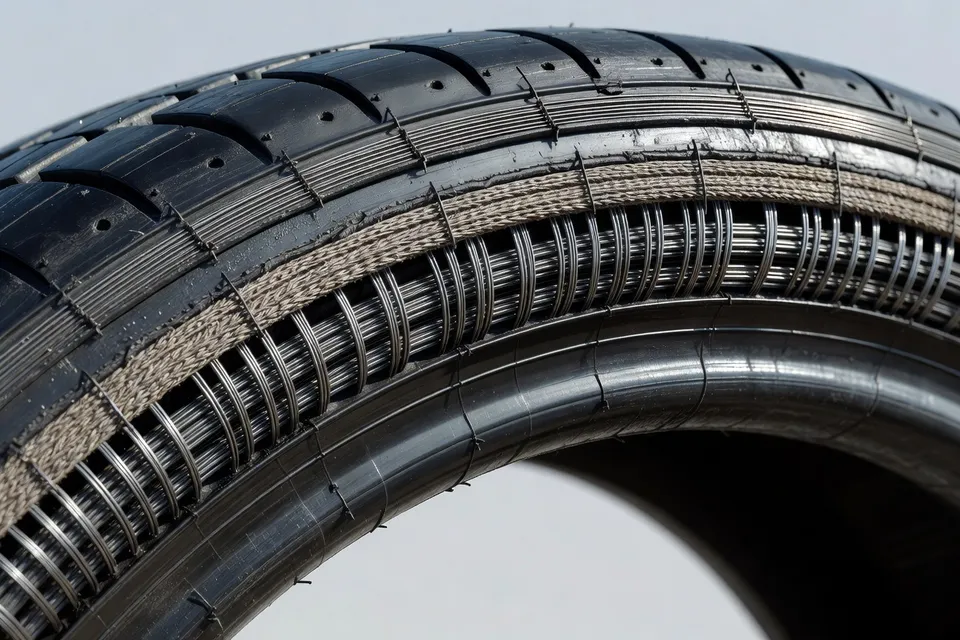
The biofiller is described as efficient, economic and biodegradable, engineered to partially substitute carbon black while maintaining or potentially improving key mechanical properties of rubber products. Godavari lists potential applications in tires, footwear, belts, bags and industrial rubber goods, and stresses the scalability of its manufacturing process for industrial deployment.
From a processor’s perspective, the patent does more than protect intellectual property in Europe. It sends a practical market signal: bio‑based reinforcement is moving from lab concept to protected technology explicitly aimed at mainstream tire and industrial rubber streams. Compounders now have a defined alternative route to decarbonise black‑rich formulations without rewriting performance expectations.
Chemically recycled PA6 proves its case in structural components
If additives and fillers are nudging recyclability in packaging and rubber, structural applications are getting their own proof‑point. LATI (LATI Industria Termoplastici S.p.A., an Italy-based producer of engineering thermoplastic compounds.), Crossen Engineering (Crossen Engineering, a U.K. engineering and manufacturing company.) and Bloc Blinds (Bloc Blinds, a Northern Ireland manufacturer of made-to-measure blinds.) have jointly demonstrated a chemically recycled PA6 compound in a structural component for a motorised blackout blind.
The project replaced a traditional fossil‑based compound with Latieco 62 CR G/30, a polyamide 6 reinforced with 30% glass fibre whose polymer matrix is derived entirely from chemical recycling. The compound was used in structural elements of a motorised blackout blind prototype developed by Bloc Blinds, with Crossen Engineering providing technical and manufacturing support.
According to project data reported in September 2026, the chemically recycled material delivers an indicated Global Warming Potential (GWP) reduction of around 70% compared with the standard fossil‑based PA6 compound. GWP values drop from approximately 5.5–6 kg CO₂ equivalent per kilogram to about 1.5–2 kg CO₂ equivalent per kilogram for the recycled‑matrix solution.
Crucially for design engineers, the material met mechanical, dimensional and functional requirements for the structural components.
Performance validation in a demanding use case
Bloc Blinds subjected components moulded from the recycled PA6 compound to more than 1,000 operating cycles, under expected test conditions, and reported performance comparable to the conventional fossil‑based compound. The validation confirms that engineering thermoplastics obtained via chemical recycling can deliver reliability, structural stability and repeatable operation—requirements that typically keep recycled materials away from structural roles.
This matters both technically and commercially. On the technical side, it challenges the widespread assumption that recycled polymers belong only in non‑critical applications like housings or packaging. On the commercial side, it gives OEMs in building products, consumer goods and industrial components a tested example they can use in internal debates: a recycled PA6 has already performed structurally in a commercial‑style product, with quantified carbon benefits.
What this shift means for high-demand users
Taken together, these developments point to a broader shift in where recycled polymers and new additives are allowed to play. Ink co‑binders such as TEGO Res 1100 are giving flexible packaging recyclers cleaner streams without asking converters to redesign laminates. Bio‑based fillers like Godavari Biorefineries’ lignocellulosic biofiller are positioning themselves as partial carbon black substitutes in tire‑grade and industrial rubber compounds. Chemically recycled PA6 is proving that structural reliability and lower GWP can coexist in glass‑reinforced parts.
For processors, the operational throughline is that process compatibility is being treated as seriously as sustainability claims. TEGO Res 1100 integrates into existing solvent ink formulations; the biofiller targets established rubber mixing lines; the recycled PA6 is used in conventional injection moulding of structural parts. That pragmatic focus will determine how quickly these technologies migrate from award stages and patent bulletins into everyday production.
For brand owners and OEMs, the commercial opportunity lies in matching these material options to products where sustainability differentiation commands a premium or protects market access under tightening regulation. High‑demand uses—packaging with strict recyclability requirements, tires under decarbonisation pressure, structural components in building and interiors—are no longer out of reach for recycled and bio‑based solutions. The story at the 2026 events and patent desks is that they are starting to move in.
Editorial Insights
- How is the focus on process-compatible additives reshaping investment and upgrade decisions in plastics and rubber processing plants?
- Additives that drop into existing ink kitchens, rubber mixing lines and injection moulding cells lower the barrier to entry for sustainability upgrades, shifting investment from large-scale equipment changes to more targeted formulation work. This allows processors to test and scale low-carbon technologies within current asset bases, turning material selection and additive specification into strategic levers rather than disruptive capex projects.
- What are the most significant sustainability gains when recycled and bio-based materials enter high-demand, rather than secondary, applications?
- When recycled and bio-based materials move into structural components, high-wear rubber and primary packaging, the carbon and resource savings apply to the most material-intensive parts of product portfolios. This amplifies the impact of each tonne of alternative material used, while also normalising their presence in performance-critical roles, which can accelerate market acceptance and drive further optimisation of recycling and biofeedstock supply chains.
- How might design-for-recycling in inks and polymers change commercial negotiations between converters, compounders and brand owners?
- As recyclability becomes a specification item alongside colour, adhesion and mechanical performance, buyers will increasingly negotiate around verified recycling outcomes and carbon footprints rather than purely price and runnability. This can lead to multi-parameter contracts where material suppliers and converters are rewarded for delivering cleaner recyclate streams and lower GWP, with brand owners leveraging those metrics for regulatory compliance and market differentiation.
- What regulatory trends are likely to accelerate the adoption of recyclability-focused inks, biofillers and chemically recycled engineering polymers?
- Policies that tighten recyclability criteria, embed recycled content targets and recognise lower-GWP materials in procurement or labelling schemes create clear demand signals for process-compatible solutions. As rules shift from voluntary frameworks to mandatory performance thresholds, materials that can demonstrate traceable recycling pathways and quantified climate benefits will gain faster approval and become preferred options in compliance-driven sectors.
- What ethical questions arise when performance-critical applications finally accept recycled and bio-based materials at scale?
- Once recycled and bio-based options meet technical requirements in demanding uses, continuing to rely solely on fossil-based materials becomes harder to justify from a long-term risk and responsibility standpoint. Ethical debates shift toward how quickly companies choose to transition, how transparently they communicate trade-offs to customers, and whether incremental improvements are enough in light of broader climate and resource constraints.
- How might end users react as high-demand products increasingly incorporate recycled and bio-based inputs without visible changes in performance?
- If durability, safety and everyday usability remain unchanged while sustainability credentials improve, many end users will accept the shift as a quiet upgrade rather than a compromise. Over time, this can reset expectations so that low-carbon materials become the default in tyres, packaging and home products, with visible communication focused more on reassurance and traceability than on technical detail.
References
- 1.Evonik. (2026, September 11). Plastics Europe Innovation Press Conference 2026. Evonik.
- 2.Evonik. (2026, September 11). Plastics Europe Innovationspressekonferenz 2026. Evonik.
- 3.Evonik. (2026, September 3). Evonik wins German Packaging Award 2026 for TEGO Res 1100. Evonik.
- 4.Constantia Flexibles. (2026, September 3). Constantia Flexibles and Evonik win German Packaging Award 2026 for deinking technology. Constantia Flexibles.
- 5.IIPLA. (2026, September 7). Godavari Biorefineries secures European patent for sustainable rubber biofiller technology. IIPLA.
- 6.ChemAnalyst. (2026, September 7). Godavari Biorefineries wins European patent for rubber biofiller. ChemAnalyst.
- 7.Indian Chemical News. Godavari Biorefineries secures European patent for eco-friendly rubber biofiller. Indian Chemical News.
- 8.ChiniMandi. (2026, September 10). गोदावरी बायोरिफाइनरीज को रबर सुदृढ़ीकरण बायोफिलर के लिए मिला यूरोपीय पेटेंट. ChiniMandi.
- 9.CompositesWorld. (2026, September 8). Chemically recycled thermoplastic polymer is successfully demonstrated in structural component. CompositesWorld.
- 10.MFGConnected. (2026, September 8). Chemically recycled thermoplastic polymer is successfully demonstrated in structural component. MFGConnected.