


Seals move from generic components to engineered application platforms
Rubber and plastic seals, once treated as interchangeable commodity parts, are increasingly designed and sold as application-specific systems spanning automotive, engineering machinery, oil and gas, shipping, electrical equipment, semiconductors, defense and aerospace. That shift is quietly reshaping how suppliers formulate elastomers, structure product portfolios and chase growth in an otherwise mature industrial rubber landscape.
DataInsightsMarket (publisher of the Rubber and Plastic Seals market study, covering global demand by application and seal type) estimates the global rubber and plastic seals market at US$ 14.54 billion in 2025, with a projected compound annual growth rate of 4.3% from 2025 to 2033. Valuates Reports (provider of the Rubber and Plastic Seals market forecast) shows a similar growth profile, with market value rising from US$ 13.66 billion in 2023 to US$ 18.68 billion in 2030, also at 4.3% CAGR. Within that consistent growth band, most of the dynamism is coming from how demand fragments by application rather than from headline volume alone.
Automotive seals: from doors and windows to thermal management
Automotive rubber sealing has long been the anchor end-use for elastomer producers, but the segment is now splitting into multiple submarkets with different growth and technology trajectories.
MarketsandMarkets (author of the Automotive Rubber Seals market forecast) projects global automotive rubber seals revenue to increase from US$ 8.40 billion in 2025 to US$ 10.74 billion in 2032, at a 3.6% CAGR. Research and Markets (publisher of an automotive rubber seals market outlook) is more bullish, tracking growth from US$ 21.81 billion in 2025 to US$ 35.87 billion by 2030, at 10.5% CAGR. Fortune Business Insights (analyst of automotive rubber seals across regions) places 2025 market value at US$ 21.19 billion, rising to US$ 33.24 billion by 2034, with Asia Pacific holding 50.07% of revenue in 2025.
Behind those divergent totals, the common story is specialization. Traditional body seals for doors, windows, hood and trunk remain replacement-driven, but electric vehicles add demand for battery pack gaskets, high-voltage cable seals and thermal interface components, where EPDM and silicone-based materials dominate. Dataintelo (researcher on automotive rubber seal strips and seal markets) reports that EPDM seal strips hold 38.5% of automotive seal strip value and that EPDM, silicone and nitrile together account for more than 85% of material share in automotive rubber seals by 2025.

For processors, this means two distinct opportunity sets:
- Volume OE business in conventional glass run channels and window/door exterior seals, where price and logistics drive competition.
- Higher-margin engineered seals for EV cooling circuits, battery housings and underbody aerodynamics, which require tighter tolerances, co-extrusion lines and compound recipes tuned for long-term compression set and chemical resistance.
Tier suppliers able to move up the second curve are pulling in new specifications work directly with OEM design teams rather than competing purely via catalog parts.
Industrial seals: O-rings and gaskets move up the value chain
Industrial rubber itself is larger and faster-growing than the dedicated seals segment, but seals are emerging as a strategic subcategory inside that universe.
Persistence Market Research (author of a global industrial rubber study) values the industrial rubber market at US$ 181.5 billion in 2026, with an expected rise to US$ 299.2 billion by 2033, a 7.4% CAGR. Within the product mix—hoses, conveyor belts, seals and gaskets, mechanical rubber goods, sheets and roofing membranes—hoses command about 24% of revenue, while seals and gaskets represent a smaller but increasingly critical slice tied to leak prevention and safety.
The industrial seals segment itself is now tracked independently. Dataintelo (publisher of an industrial seals market report) puts global industrial seals revenue at US$ 19.55 billion in 2025, reaching US$ 30.87 billion by 2034 at 5.2% CAGR. Rubber materials account for 54.2% of that market, or roughly US$ 10.61 billion in 2025, and plastics for 15.1%, around US$ 2.95 billion, underscoring that most industrial sealing remains elastomer-led but is increasingly supported by engineered thermoplastics such as PTFE and PEEK in backup rings and bearing elements.
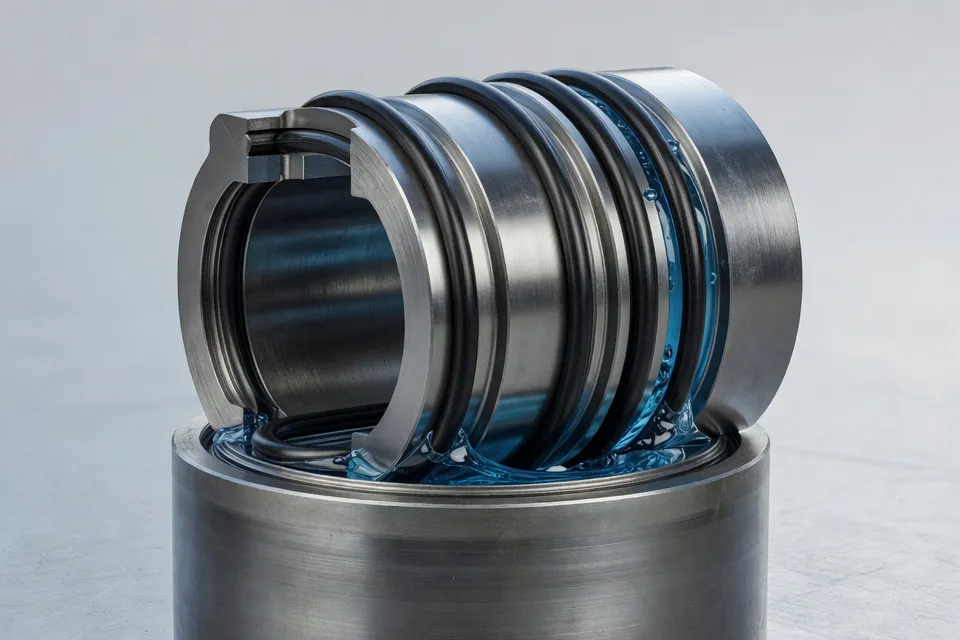
Gaskets and seals as a broader materials market show similar dynamics. Fact.MR (provider of global gaskets and seals analysis) estimates the gaskets and seals market at US$ 65.6 billion in 2025, projected to US$ 111.0 billion by 2036 at 4.9% CAGR. Rubber gaskets and seals hold 34.5% of material share in 2026, driven by NBR, FKM and EPDM formulations that span automotive, industrial machinery and process industries.
For converters, this diversification means customers increasingly purchase function-specific sealing packages—for example, a mix of rubber O-rings, PTFE piston seals and metal gaskets—rather than single-material sets. Suppliers that can co-design these mixed-material stacks, validate them under chemical and pressure cycling, and integrate digital traceability stand to capture share beyond their historical rubber-only scope.
Application segmentation inside rubber and plastic seals
The most direct view of application diversification comes from how rubber and plastic seals are now segmented in market research.
DataInsightsMarket breaks the global rubber and plastic seals market into automobile, engineering machinery, oil and gas, shipping and transportation, electrical, electronics and semiconductor, defense, aerospace and other uses. Each bucket carries different performance and regulatory requirements:
- Automobile: Focus on weather sealing, NVH (noise, vibration, harshness) control and fluid management. Requirements are standardizing around longer warranty horizons and recyclability, pushing compounders toward lower-migration plasticizers and improved aging profiles.
- Engineering machinery: Hydraulic and pneumatic seals for excavators, industrial presses and mining equipment, which demand abrasion resistance and high-pressure endurance; industrial seals data show hydraulic seals alone hold 28.5% of industrial seals value in 2025.
- Oil and gas: High-temperature, chemically aggressive environments for downhole tools and valves, driving adoption of FKM and specialty perfluoroelastomers as well as engineered plastics in back-up rings.
- Shipping and transportation: Bulkhead gaskets, hatch seals and vibration-damping components; marine approvals and fire resistance standards add certification complexity.
- Electrical, electronics and semiconductor: Cleanroom-compatible seals for wafer handling, vacuum equipment and chemical distribution in fabs, where plastic seals benefit from corrosion resistance and low outgassing.
- Defense and aerospace: Lightweight, temperature-resistant seals for hydraulic systems, fuel lines and cabin applications, often specified to military standards and requiring longer qualification timelines.

DIResearch (analyst of global rubber and plastic seals competitive landscape) quantifies the step-change in scale, projecting rubber and plastic seals market value to US$ 16.74 billion in 2026 and US$ 22.84 billion in 2033, at 4.54% CAGR. That trajectory aligns closely with DataInsightsMarket and Valuates Reports, suggesting that segmentation is a structural phenomenon rather than an artifact of one dataset.
Rubber versus plastics: complementary roles in sealing
Materials data point to a complementary, not substitutive, relationship between rubber and plastics in sealing systems.
Grand View Research (author of the gasket and seal materials market study) reports that gasket and seal materials—including rubber and metal—had a global market size of US$ 61.35 billion in 2024, expected to reach US$ 84.11 billion by 2030 at 5.4% CAGR. Rubber accounted for 40% of revenue in 2024, reflecting its flexibility and compression-set behavior, while metals and plastic-based materials fill structural or extreme-environment niches.
In industrial seals, Dataintelo finds rubber at 54.2% of material share in 2025 versus 15.1% for plastics, suggesting elastomers remain the first choice for dynamic seals, with plastics acting as load-bearing or low-friction auxiliaries. DataInsightsMarket’s high-performance seals study further distinguishes rubber high-performance seals—valued for durability and cost—from plastic high-performance seals, which gain share in corrosive and high-purity environments in chemical processing, power generation and pharmaceuticals.
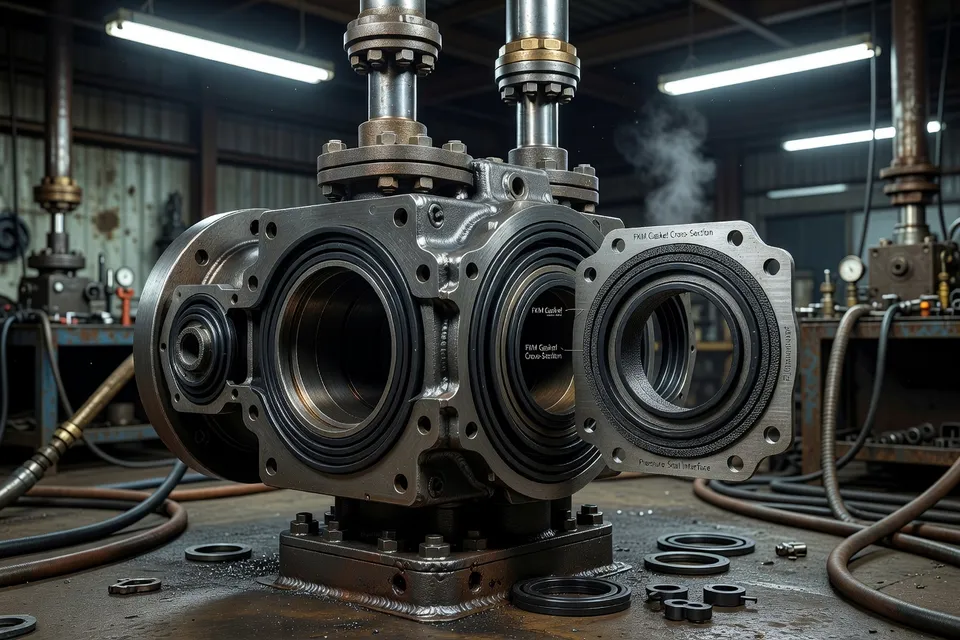
For seal manufacturers, this implies that competitive advantage will depend less on being "rubber" or "plastic" specialists and more on the ability to combine formulations into system-level solutions. Investment priorities are shifting to:
- Multimaterial design capabilities and finite-element modeling of seal stacks.
- Expanded compound libraries spanning NBR, EPDM, FKM, silicone and engineering plastics.
- Close alignment with OEMs and EPC contractors on specification and life-cycle cost, especially in regulated sectors like oil and gas and aerospace.
Implications for processors, OEMs and brand owners
For processors and converters, the diversification of rubber and plastic seals by application changes how capacity and skills need to be deployed over the coming decade.
In automotive, lines configured purely for commodity door seals risk margin compression, while capacity configured for EV-centric sealing—battery pack, thermal management and high-voltage harnesses—will be better aligned with the growth pockets highlighted by automotive rubber seal forecasts through 2032–2034. In industrial machinery and energy, demand for high-performance seals is rising in tandem with stricter safety and environmental standards, making compound certification and traceability as important as throughput.
OEMs and brand owners in sectors such as semiconductors, pharmaceuticals and aerospace are increasingly sourcing seals as critical reliability components rather than low-value consumables. That raises expectations around documentation, change-control procedures and collaboration on material transitions—for example, swapping legacy rubber grades for plastic or fluorinated elastomers in aggressive chemistries.
The macro data from industrial rubber, gasket materials and industrial seals markets point to sustained growth rates in the 3–7% CAGR band across 2025–2035, but the real strategic opportunity lies in picking the right niches within that band. Suppliers that can read the application map—automotive electrification, Asia Pacific industrial build-out, high-purity process industries—and align their product and process investments accordingly will be best placed to capture the next wave of value creation in rubber and plastic sealing.
Editorial Insights
- How does the shift from generic seals to application-specific systems change the competitive landscape for processors and converters?
- As sealing moves from commodity parts to engineered application platforms, competition is less about unit price and more about design capability, materials know-how and validation expertise. Processors that can co-develop multimaterial seal packages, model performance in realistic duty cycles and provide robust documentation and traceability gain leverage in specification work, while catalog-only suppliers are increasingly confined to low-margin, replacement-driven niches.
- What are the main sustainability and regulatory pressures shaping future seal formulations across applications?
- Longer warranty horizons, tighter leak-prevention standards and rising expectations around recyclability are pushing seal formulations toward lower-migration plasticizers, improved aging profiles and better chemical resistance. At the same time, more stringent safety and environmental rules in machinery, energy and transport are making certification, material transparency and end-of-life considerations integral to seal selection, nudging the sector toward cleaner chemistries and more durable, right-sized designs rather than purely cost-driven choices.
- Where are the most attractive growth pockets for seal manufacturers in an otherwise mature rubber and plastics landscape?
- Growth is increasingly concentrated in application niches rather than overall volume, with high-performance sealing for electrified vehicles, engineered machinery, aggressive chemistries and high-purity process industries offering the strongest upside. Manufacturers that can allocate capacity to these demanding segments—combining advanced elastomers, engineering plastics and robust validation—stand to outperform headline market growth, while purely commodity-focused capacity faces intensifying price and margin pressure.
- How does the complementary role of rubber and plastics in sealing systems influence technology and investment decisions?
- Rubber continues to anchor dynamic sealing thanks to its compression-set and flexibility, while plastics increasingly occupy structural, high-purity and extreme-environment roles in the same system. This complementarity means investments are shifting toward multimaterial design, expanded compound libraries and finite-element modeling of seal stacks, with success depending on the ability to optimize interfaces between elastomers, thermoplastics and metals rather than backing a single material family.
- What does treating seals as critical reliability components imply for quality systems and supply relationships?
- When seals are viewed as core reliability elements rather than consumables, expectations around documentation, change control and material traceability rise sharply. Suppliers must integrate more rigorous testing, consistent process control and transparent communication on formulation changes, while OEM relationships become more collaborative and long term, with seal performance tied directly to warranty risk, safety outcomes and brand reputation.
- What longer-term ethical and societal considerations emerge as sealing performance becomes central to safety and environmental risk?
- As more systems rely on seals to prevent leaks, fires and contamination, design and material choices carry direct consequences for human safety and environmental exposure. There is a growing ethical imperative to favor robust, well-validated sealing solutions over minimal-cost options, to disclose performance limits realistically, and to consider failure modes over the full life cycle—recognizing that underengineered seals can externalize risks onto communities and ecosystems far beyond the factory gate.
References
- 1.Data Insights Market. (2024, July 4). Opportunities in emerging rubber and plastic seals industry markets. Data Insights Market.
- 2.Deep Insights Research. (2026, February 5). Global rubber and plastic seals market. DRI.
- 3.Transparency Market Research. (2023, May 19). Industrial rubber products market size, share, growth – 2031. Transparency Market Research.
- 4.Mordor Intelligence. (2020, February 24). Industrial rubber market size, growth report 2031. Mordor Intelligence.
- 5.Lucintel. (2025, September 17). Industrial rubber market: trends, forecast and competitive analysis to 2031. Lucintel.
- 6.Future Market Insights. (2026, May 18). Explore the global industrial rubber market. Future Market Insights.
- 7.Persistence Market Research. (2026, July 19). Industrial rubber market size, share & analysis, 2033. Persistence Market Research.
- 8.Cognitive Market Research. (2024, August 22). Global industrial rubber market report 2024. Cognitive Market Research.