


Oxford study puts price tag on capping virgin plastics
A proposed global cap on virgin plastic production could raise plastics prices, squeeze household budgets, and add new inflationary pressure to everyday goods, according to a fresh modelling exercise by Oxford Economics, commissioned by the International Council of Chemical Associations (ICCA, a global trade body representing chemical producers).
The analysis, released in September 2026 as part of negotiations toward a UN plastics treaty, compares an upstream cap on virgin plastics with policies that instead sharpen waste collection and recycling performance. It concludes that both policy paths can deliver similar cuts in plastic leakage into the environment, but with sharply different economic consequences.
What a 5% virgin cap means for prices and welfare
Oxford Economics modelled a scenario in which global virgin plastic output is capped at 5% below its baseline path. In that case, total plastics prices – combining virgin and recycled resin – rise by 8.5%, as constrained supply meets largely unchanged demand for packaging, consumer goods, automotive parts, and construction materials.
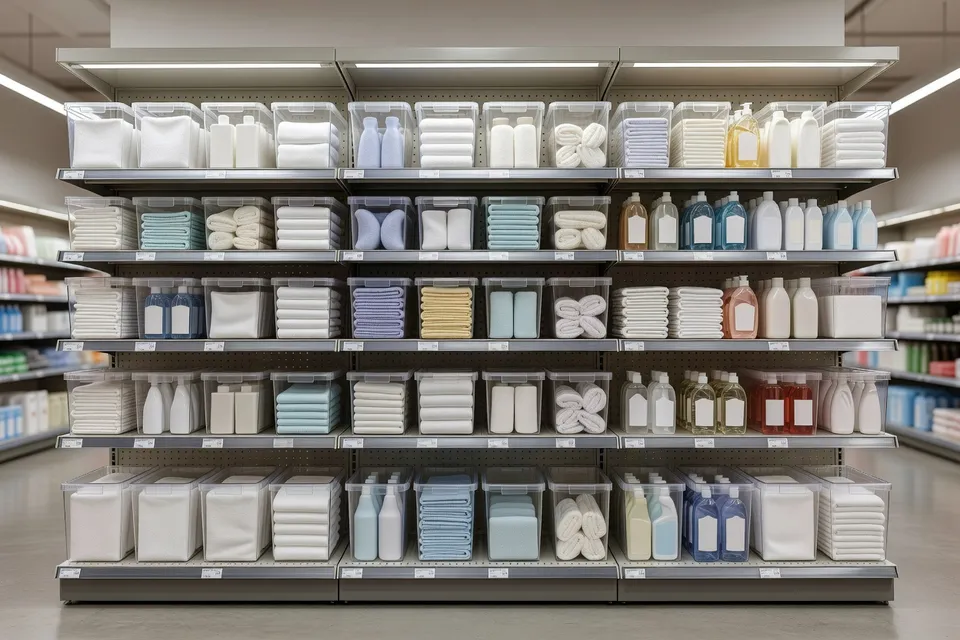
That price shock feeds through the value chain. Higher resin costs increase production expenses for converters and brand owners, and ultimately for retailers, who pass part of the burden on to consumers. The study estimates a USD 128.4 billion decline in global household welfare, reflecting the combined impact of higher prices and lower real consumption.
The macro hit is also visible in output: global GDP is projected to fall by USD 20.2 billion under the cap scenario, as higher input costs suppress activity across plastics-intensive sectors. Oxford Economics’ regional breakdown shows welfare losses spread across all major economies, with declines of USD 38.5 billion in East Asia, USD 37.7 billion in Western Europe, USD 22.1 billion in North America, USD 8.8 billion in Southeast Asia, and around USD 6 billion each in the Middle East and Latin America.
Regional household welfare losses under 5% virgin plastic cap, September 2026
| Region | Household welfare losses (USD billion) |
|---|---|
| East Asia | 38.5 USD billion |
| Western Europe | 37.7 USD billion |
| North America | 22.1 USD billion |
| Southeast Asia | 8.8 USD billion |
| Middle East | 6 USD billion |
| Latin America | 6 USD billion |
For consumer-facing manufacturers, that translates into tighter margins or higher shelf prices for packaged food, personal care, household cleaning products and a wide range of durable goods.
Targeted recycling: similar leakage cuts, lower costs
In a competing scenario, Oxford Economics analysed targeted investments in waste collection, recycling and circularity – concentrating on regions and waste streams with the highest levels of mismanaged plastics. The model finds this path can achieve the same reduction in plastic leakage as the virgin cap, but with a radically different economic profile.
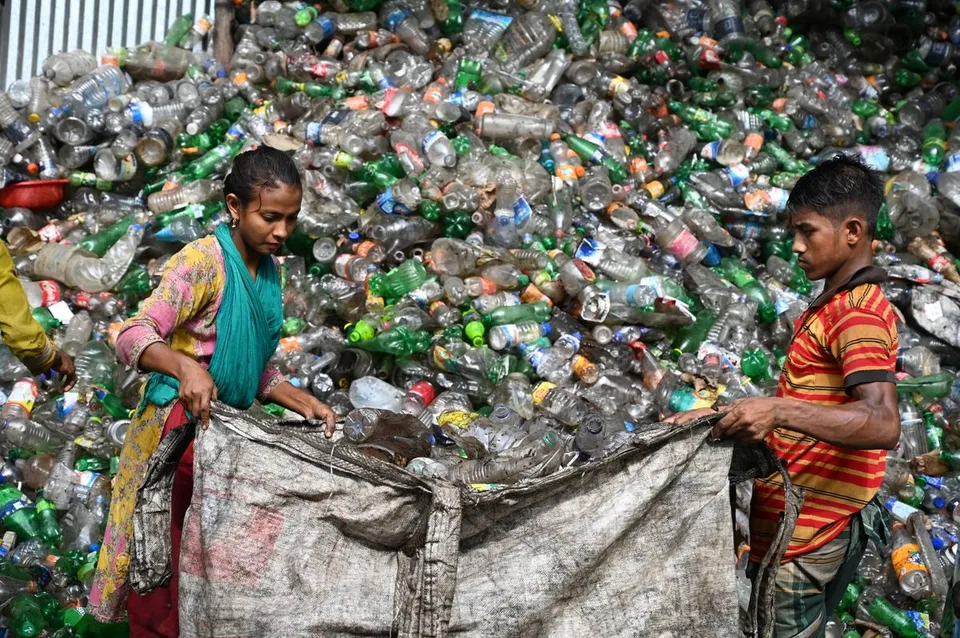
Instead of an 8.5% price increase, the targeted recycling scenario leads to a 0.2% decline in total plastic prices, as improved collection and recycling expand the supply of recycled resins and ease pressure on virgin material. That price relief, combined with more efficient waste management, yields only USD 0.5 billion in global household welfare losses and a USD 0.2 billion increase in global output.
ICCA highlights that the recycling-focused pathway also delivers 68% greater recycling gains than the cap scenario, implying a larger shift toward circular material flows at lower cost to households and industry. For processors and brand owners under mounting recycled-content mandates, that distinction is critical: affordable secondary resin supply reduces both compliance costs and the risk of input shortages.
Why caps bite so hard: the role of plastics in global supply chains
The study underscores how deeply plastics are embedded in global supply chains. Oxford Economics’ earlier work on the plastics value chain, also commissioned by ICCA, describes plastics manufacturing and conversion as a “complex and sophisticated engine of the global economy” that contributes trillions of dollars in output and supports millions of jobs worldwide.
Limiting virgin supply does not eliminate demand for the services plastics provide – lightweight packaging, durable components, hygienic food and medical delivery. Instead, constrained virgin output pushes buyers toward more expensive alternatives or forces them into bidding wars for limited resin, with several knock-on effects:
- Higher first-tier manufacturing costs for converters and packaging producers as resin prices rise.
- Pass-through to downstream sectors, from food and beverage to household products and e‑commerce logistics.
- Disproportionate impact on low-income households, which spend a higher share of income on plastic-intensive essentials, including packaged staples and cleaning products.
- Risk of unintended environmental consequences, as some users substitute heavier or more energy-intensive materials that can increase greenhouse gas emissions or food waste.

In parallel, central banks and macroeconomic forecasters have highlighted plastics as a non-trivial input into consumer inflation baskets. Thailand’s central bank, for example, has warned that spikes in plastic pellet prices, alongside energy and fertilizer shocks, can raise costs for prepared foods, personal care products and cleaning supplies, feeding into headline inflation projections.
A growing plastics market amplifies policy impacts
The economic stakes are magnified by the sheer scale and growth trajectory of the global plastics and resin markets. Market-research groups consistently show plastics, plastic products and plastic resins as multi-hundred-billion to trillion‑dollar segments, expanding steadily through the 2020s.
Grand View Research estimates the global plastic market at USD 963.65 billion in 2025, with revenues projected to reach USD 1,361.25 billion by 2033, a sustained compound annual growth rate of 4.4% over 2026–2033. Its companion report on plastic resins pegs that market at USD 832.86 billion in 2025, rising to USD 1,140.30 billion by 2033.

The Business Research Company, using a slightly different scope, reports that plastic products alone reached USD 1,143 billion in 2025, with expectations of USD 1,564.5 billion by 2030 at a 6.6% CAGR. In parallel, its plastic material and resins series shows the segment growing from USD 829.52 billion in 2025 to USD 1,209.1 billion in 2030, implying a 7.9% CAGR between 2026 and 2030.
Fact.MR’s long-range assessment sees the global plastic market rising from USD 0.67 trillion in 2025 to around USD 1.07 trillion by 2035, reflecting a 4.8% annual growth rate. Across these sources, Asia-Pacific consistently emerges as the dominant region by revenue and volume, driven by China’s manufacturing base and demand from packaging, automotive, and construction.
In that context, an upstream cap on virgin plastics would be hitting a market that is both very large and still expanding. Even modest percentage shifts in prices or volumes translate into tens of billions of dollars in altered costs and revenues for resin suppliers, converters and brand owners.
Implications for converters, brand owners and policymakers
For plastics processors and converters, the Oxford Economics findings sharpen the strategic trade-off between supply-side caps and downstream circularity measures:
- A cap on virgin output raises the cost of feedstock, pressures margins and complicates long-term contracting for both virgin and recycled grades.
- Recycling-centric policies, by contrast, tend to increase availability of recycled resins, especially in packaging, and dampen overall price levels, improving planning visibility for capital-intensive conversion assets.
Brand owners facing recycled-content obligations and carbon targets are likely to view a cap as a double-edged sword. While an upstream limit could accelerate demand for recycled and bio-based materials, the Oxford model suggests it would also raise the cost of meeting those obligations and risk supply disruptions in markets where recycling infrastructure lags.
For policymakers striving to align plastics policy with broader inflation and growth objectives, the study points toward sequencing: building out waste collection, sorting and recycling capacity first, then tightening circularity rules, delivers similar environmental gains at lower macroeconomic cost. As negotiations for a global plastics agreement continue, the choice of instrument – cap versus circularity – will determine not only how much plastic leaks into the environment, but how much consumers pay for the goods that rely on it.
In the meantime, converters, resin suppliers and brand owners are likely to hedge against policy risk by diversifying feedstock sources, investing in mechanical and chemical recycling capacity, and re‑engineering packaging to use less material per unit of service. Those moves will shape both the resilience of the plastics value chain and the price tags on store shelves if a virgin cap ever moves from modelling exercise to binding regulation.
Editorial Insights
- How would a global cap on virgin plastics reshape cost structures across plastics-intensive value chains?
- A binding cap on virgin plastics would show up first in resin pricing, but its real impact would cascade through converters, packagers, and consumer-goods manufacturers as higher input costs and greater price volatility. Tighter supply would complicate long-term contracts, compress margins for processors with limited ability to pass through costs, and push brand owners to re-engineer products to hit cost and sustainability targets simultaneously. The result is a structurally higher cost base for plastics-intensive sectors and a sharper premium on supply-chain flexibility.
- Why might recycling- and circularity-focused policies deliver similar environmental benefits with lower economic friction?
- Policies that prioritize waste collection, sorting, and recycling attack leakage at the point where plastics become mismanaged, rather than at the point of production. By expanding secondary resin supply and improving material recovery, they can reduce environmental leakage while easing pressure on virgin feedstock, moderating price impacts for downstream users. For industry, this translates into more predictable input costs, better alignment with recycled-content commitments, and a clearer investment case for circular technologies without the sharp demand–supply tension created by hard caps.
- What are the inflation and household welfare risks when plastics policy tightens upstream supply?
- Because plastics are embedded in everyday packaged goods, cleaning products, and logistics, tighter virgin supply quickly feeds through into consumer price indices. Higher resin costs raise shelf prices for essentials, particularly affecting lower-income households that spend a larger share of income on plastic-intensive products. From a macro perspective, this can add a new layer of inflationary pressure, complicate monetary policy, and translate into measurable declines in real consumption and welfare, even if the environmental objectives are met.
- How should policymakers sequence plastics regulations to balance environmental goals with growth and price stability?
- A pragmatic sequence starts with aggressive investment in waste infrastructure and recycling capacity, coupled with clear circularity standards, before considering binding caps on virgin production. Building collection, sorting, and processing first allows leakage reductions and higher recycled content to be achieved with limited disruption to supply and prices. Only once circular systems are mature does it become safer to tighten upstream constraints, reducing the risk of unintended inflation spikes, material substitution that worsens other footprints, or supply disruptions for critical applications.
- What strategic moves can converters and brand owners take now to hedge against future virgin plastics constraints?
- Converters and brand owners can reduce exposure by diversifying feedstocks across virgin, mechanical, and chemical recycling streams, and by qualifying multiple grades and suppliers for critical applications. At the same time, light-weighting designs, simplifying material combinations for easier recycling, and investing in take-back or collection partnerships can lower future compliance and feedstock risks. These steps build resilience regardless of the policy path and position companies to benefit from a more circular market rather than simply absorbing higher costs.
- What ethical tensions emerge when plastics policies protect the environment but raise costs for essential goods?
- Policies that curb plastic leakage can deliver clear environmental gains, but if they rely heavily on constraining supply, they risk shifting the burden onto households least able to absorb higher prices for food, hygiene, and medical products. The ethical challenge lies in designing instruments that internalize environmental costs without deepening inequality, for example by prioritizing infrastructure-led solutions, supporting affordable alternatives, and explicitly assessing distributional impacts. A credible long-term framework has to balance planetary limits with fair access to essential services.
References
- 1.Thailand Business News. New Oxford Economics study: Plastic production cap would raise cost of goods. Thailand Business News.
- 2.Yahoo Finance. (2026, June 10). Global plastics market to reach $197.8 billion by 2030, driven by industrial growth and lightweight material demand. Yahoo Finance.
- 3.IndexBox. (2026, June 29). Plastic resins global market in the world: Analysis, forecast, size, trends and insights. IndexBox.
- 4.Mordor Intelligence. (2026, September 3). Plastic resin market size, share & 2031 growth trends. Mordor Intelligence.
- 5.Precedence Research. (2026, September 10). Plastic resins market companies, size & trends 2026-2035. Precedence Research.
- 6.The Business Research Company. (2026, September 17). Plastic products market share forecast report 2026-2030. The Business Research Company.
- 7.Fact.MR. (2025, November 14). Global plastic market: Global market analysis report 2035. Fact.MR.
- 8.Grand View Research. Plastic resin market size & share: Industry report, 2033. Grand View Research.