


Futures-driven rally pushes natural rubber to multi‑year highs
Natural rubber futures and spot prices climbed to multi‑year highs in September 2026, capping a sustained rally that is reshaping costs and margins across the global tire and rubber industry.
Trading Economics (Trading Economics, a provider of global macroeconomic and commodity market data.) shows rubber futures around 238 US cents per kilogram on 18 September 2026, up roughly 6% over the month and nearly 40% year‑on‑year, with prices described as the highest since 2013 and supported by tightening supplies. Earlier in May 2026, rubber futures had already broken through 220 US cents per kilogram, marking a nine‑year high driven by supply shortage concerns linked to weather disruptions.
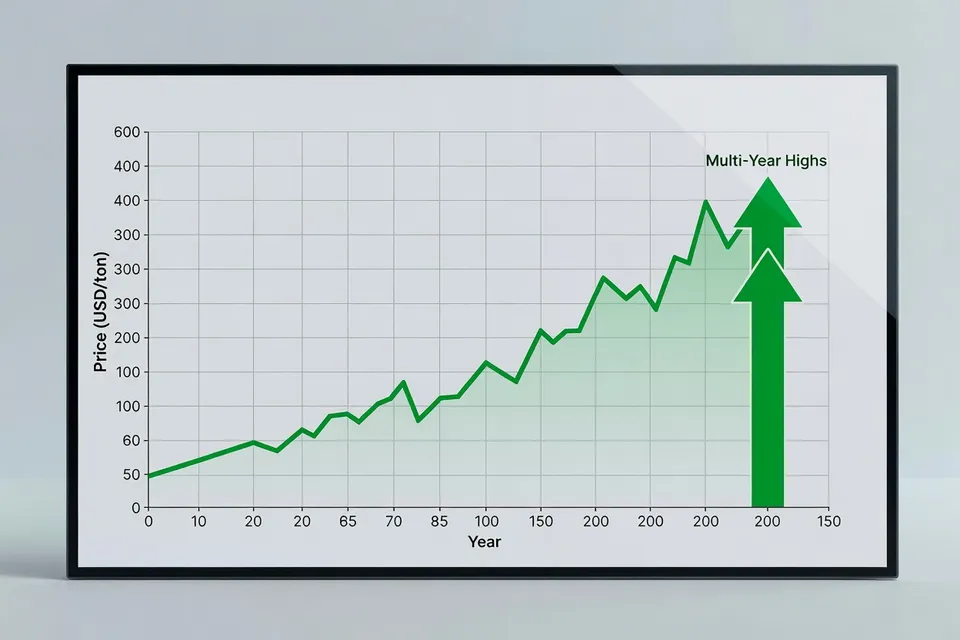
In China, SunSirs (SunSirs Commodity Data Group, a China-based commodity price and market analysis platform.) reports domestic natural rubber spot prices surpassing 17,900 RMB per tonne in early September 2026, a level not seen in nearly two years and representing an increase of about 14% since the beginning of the year. Shanghai rubber futures briefly broke through 18,800 RMB per tonne by 3 September, while Echemi (Echemi, an online chemical and commodity price and market intelligence service.) notes the main natural rubber futures contract on the Shanghai Futures Exchange touching 19,810 RMB per tonne, a near two‑year high before easing back to about 18,670 RMB per tonne.
SunSirs further highlights that specific contracts have set new benchmarks: the RU2701 futures contract reached a nearly two‑year high and the NR2611 contract set a record since its listing, with spot prices rising 6.45% in tandem. This synchronous rally in futures and spot markets has materially strengthened pricing power upstream.
Tight supply, El Niño and export data underpin the price surge
The current price level is not merely speculative. SunSirs cites the latest data from the Association of Natural Rubber Producing Countries (ANRPC), indicating that global natural rubber production fell 5.2% in July to 1.321 million tonnes, while consumption rose 0.8% to 1.297 million tonnes, leaving the market in a tight supply‑demand balance.
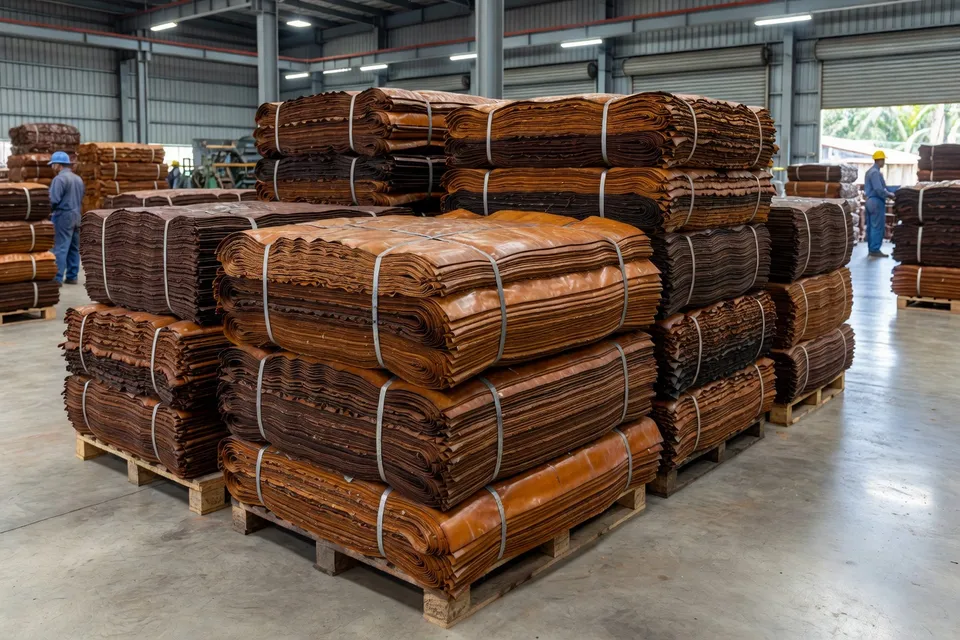
Weather has added torque to that balance. European Rubber Journal (European Rubber Journal, a specialist publication covering global rubber and tire industry developments.) reports that natural rubber futures rose across major exchanges in the trading week ended 11 September 2026, supported by El Niño‑related dry weather and drought conditions, and forest fires in Indonesia that disrupted tapping and harvesting. Earlier coverage from the same title notes that prices had become "technically overbought" by early September, with subsequent profit‑taking prompting a short‑term retracement—but against a fundamentally firm backdrop.
On the trade side, SunSirs data shows Thailand’s exports of natural rubber (excluding composite rubber) at 214,000 tonnes in January 2026, down 10% year‑on‑year. Within that, exports of standard rubber fell 16%, latex exports dropped 18%, and shipments to China declined 13%. Combined exports of natural and mixed rubber to China totaled 214,000 tonnes, also down 10%, signaling constrained flows into the largest consuming market.
China’s high-level consolidation: strong structure, rising risk
The rally has pushed China’s domestic market into what SunSirs characterizes as high-level equilibrium and contention. As of 8 May 2026, China’s spot price reached 17,841.67 RMB per tonne, with the year’s peak at 17,858.33 RMB per tonne—both well above levels observed in early May 2023–2025. By late May, mainstream trading ranges remained between 17,500 and 17,900 RMB per tonne, with prices up more than 2,200 RMB per tonne versus the start of the year.
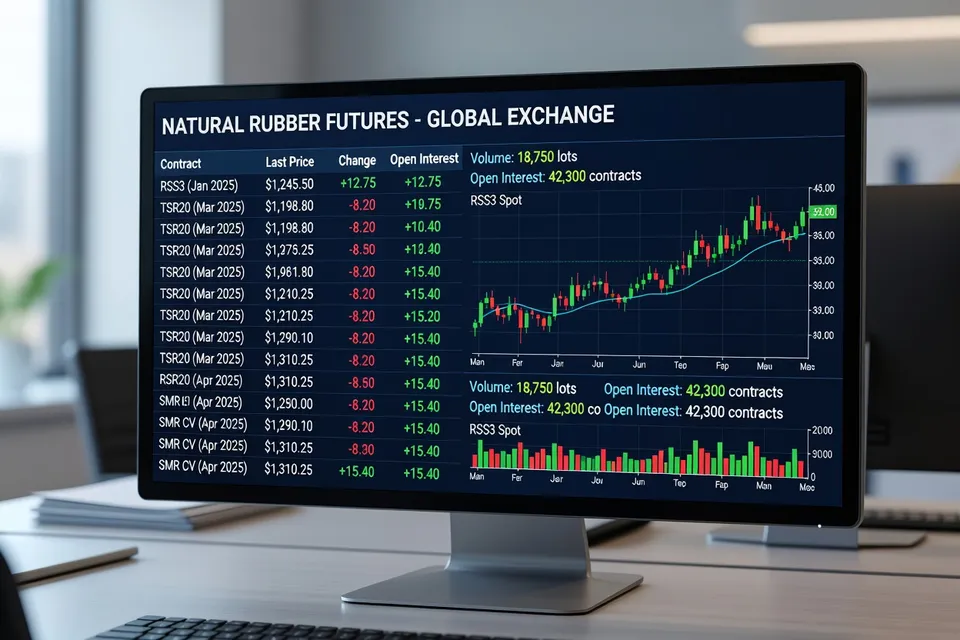
Echemi’s September commentary shows that by 20 September 2026, China’s natural rubber price was around 18,150 CNY per tonne, marginally higher than at the start of the month, while the leading futures contract had pulled back from the 19,810 CNY per tonne spike to around 18,670 CNY per tonne. Technically, spot prices have slipped below the 5‑day moving average, signaling weaker near‑term momentum, but the 10‑day and 20‑day moving averages are still trending upward, indicating that the medium‑term bullish structure remains intact.
Business Society’s analysis, published on Echemi, reinforces this picture of range‑bound consolidation. Its indicator table for 16 September 2026 shows the 5‑day mean difference turning less negative while the 10‑day mean difference shifts more negative, and the 20‑day mean difference stable, collectively suggesting limited upside and a market oscillating at elevated levels.
Cost pass-through: tire price hikes and downstream caution
For downstream processors, the rally has already translated into concrete pricing decisions. SunSirs reports that rubber futures surging to multi‑year highs have prompted tire manufacturers to launch their third round of price increases in 2026, with mainstream all‑steel tire products rising by 2–3%. The article stresses that the sharp increase in upstream natural rubber costs has passed smoothly through to tire spot prices, broadly lifting the price base for finished products.
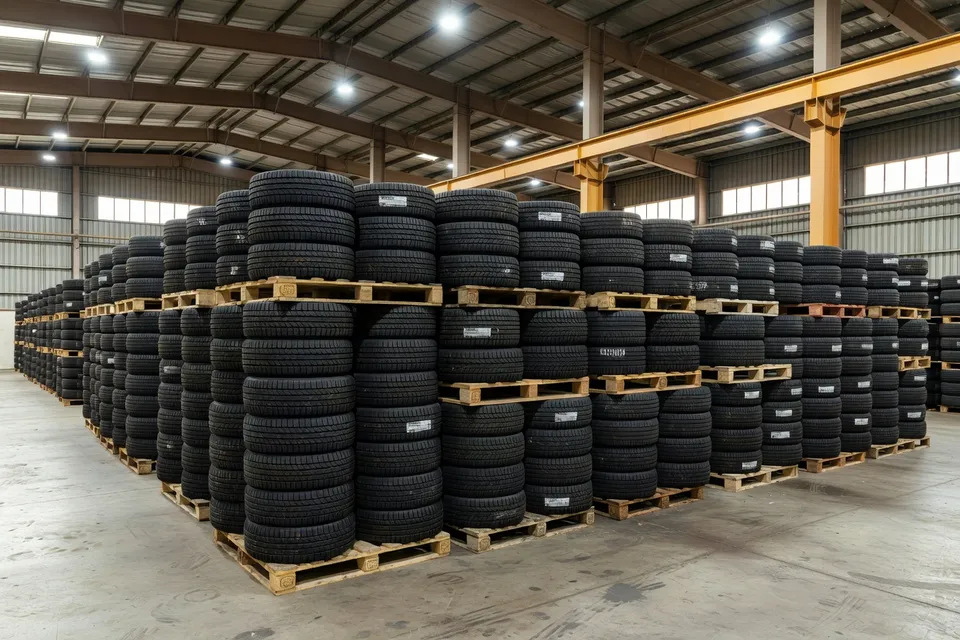
European Rubber Journal’s financial digest shows major tire makers posting higher first‑half 2026 revenues and earnings—such as Bridgestone Tires, Yokohama Rubber, and Apollo Tyres—supported in part by improved pricing and demand recovery. However, the combination of elevated input costs and currency effects has created a complex margin environment for rubber product manufacturers.
In Malaysia, Bernama (Bernama, Malaysia’s national news agency covering markets and commodities.) reports that the Kuala Lumpur rubber market ended lower on 14 September 2026, tracking weaker regional futures and softer demand from Chinese tire manufacturers, as higher raw material costs led many to maintain production controls. Reference prices for SMR 20 fell to 976.5–977.5 sen per kilogram, while latex in bulk hovered around 710.5–717 sen per kilogram, with sentiment weighed by tighter monetary expectations and concerns over the US economic outlook.
A separate Bernama dispatch notes that despite higher costs and geopolitical uncertainties, Malaysia’s rubber market is expected to remain relatively resilient, with demand mainly supported by replenishment rather than speculative buying. The Malaysian Rubber Glove Manufacturers Association (MARGMA, an industry body representing rubber glove producers in Malaysia.) suggests the market could trend upwards, citing supply-side constraints linked to volatile weather across Southeast Asia.
For processors and converters, this configuration means:
- Higher feedstock costs becoming entrenched in contract negotiations through late 2026, especially where benchmarks are linked to TSR20 or Shanghai futures.
- Inventory strategies shifting toward leaner, just-in-time replenishment, as buyers balance the risk of further spikes against the cost of carrying high-priced stock.
- Product pricing discipline tightening, with tire and technical rubber manufacturers seeking to preserve margins by passing through cost increases in multiple rounds instead of single large moves.
Strategic implications: navigating a slow bull market with volatility
Putting the pieces together, natural rubber’s move to multi‑year highs in September 2026 reflects a combination of weather-driven supply constraints, export reductions from key producers, and a structurally firm demand base anchored in automotive and industrial recovery.
SunSirs’ broader outlook framed for 2025–2026 describes the global natural rubber market in terms of "volatile consolidation with gradual upward movement" and a tight balance where supply is only slowly expanding, demand growth diverges regionally, and synthetic rubber provides a ceiling via substitution. Trading Economics’ data, showing rubber up nearly 40% year‑on‑year in mid‑September 2026 and synthetic rubber also higher year‑on‑year, reinforces this picture of a slow bull market in which both natural and synthetic elastomers are repricing.
For executives across the rubber value chain, several strategic themes stand out:
- Risk management: Elevated prices and signs of technical overbought conditions argue for stricter hedging and closer coordination between procurement, treasury and sales, especially around key benchmarks like RU and TSR20 contracts.
- Supply diversification: The January 2026 export data from Thailand underlines exposure to single‑country risks; diversifying sourcing across Southeast Asia and beyond can mitigate disruptions from rainfall, El Niño and local policy changes.
- Cost engineering: Tire makers’ ability to implement 2–3% price hikes in 2026 suggests room for value‑based pricing, but sustained input inflation will intensify efforts to optimize compound formulations, mixing efficiency and product design.
In the near term, market commentary from SunSirs, Echemi, TDD‑Global (TDD‑Global, a China-based B2B marketplace and market analysis provider for chemicals and related commodities.) and ERJ points toward high‑level consolidation rather than a clear trend reversal: upside appears capped by substitution and cautious downstream demand, while downside remains supported by tight supply and weather risk. That makes 2026 a year in which natural rubber behaves as a strategic cost variable—demanding close monitoring and agile response—rather than a stable raw material line item on the balance sheet.
Editorial Insights
- How do sustained high natural rubber prices change procurement strategy for rubber and tire manufacturers?
- Persistent elevated pricing turns natural rubber from a routine input into a strategic risk factor, pushing companies to integrate commodity hedging more tightly with purchasing and sales planning. Buyers increasingly rely on benchmark-linked contracts, staggered buying windows, and closer coordination with finance to manage cash-flow and margin volatility. At the operational level, procurement teams are also under pressure to diversify suppliers and geographies, and to use inventory more actively as a risk buffer instead of merely a logistical tool.
- What are the longer-term sustainability implications of a tight, weather-sensitive natural rubber supply?
- A structurally tight market amplified by weather events underlines how dependent the sector remains on climate-sensitive smallholder production. Over time, this encourages investment in more resilient agronomic practices, improved traceability, and support schemes that stabilize farmer income while maintaining supply. At the same time, sustained price strength may accelerate substitution with synthetic materials and alternative elastomers, intensifying the debate around land use, carbon profiles, and the overall environmental footprint of rubber sourcing.
- How does a slow bull market in natural rubber reshape pricing power along the value chain?
- When feedstock prices grind higher over multiple quarters, upstream producers tend to regain pricing power while downstream players must defend margins through disciplined, multi-step price adjustments rather than one-off hikes. Tire and technical rubber manufacturers can leverage recovered demand to support modest list price increases, but they must also justify value more clearly and segment customers by sensitivity to cost changes. Over time, this environment rewards companies that can communicate price changes transparently, manage contracts proactively, and differentiate products beyond raw material cost.
- What policy and regulatory questions arise when natural rubber behaves as a structurally tight, volatile commodity?
- A market characterized by recurring deficits and weather-driven swings raises questions about how to safeguard supply security while avoiding distortive interventions. Regulators may look more closely at data transparency, stock monitoring, and incentives for investment in sustainable plantations and infrastructure that reduce vulnerability to climate and logistics shocks. At the same time, there is a growing need to align standards for natural and synthetic alternatives, ensuring that substitution decisions are guided by safety, environmental performance, and fair competition rather than short-term price dislocations alone.
- How are product design and material engineering likely to evolve in response to entrenched higher rubber costs?
- Persistently higher input prices tend to accelerate efforts to optimize compound formulations, reduce material intensity, and improve durability so that the total cost of ownership offsets headline price increases. Engineers may push harder on blending ratios of natural and synthetic rubber, fine-tuning performance for different segments rather than relying on standard recipes. Over time, this can drive greater differentiation between premium and value products, with innovation focused on maximizing performance per unit of elastomer consumed.
- What are the broader ethical and societal implications of passing elevated rubber costs through to end users?
- Systematic cost pass-through ultimately raises the price of mobility and essential goods that rely on rubber components, with disproportionate effects on more price-sensitive users and regions. Ethically, this intensifies scrutiny of how value is shared along the chain: from smallholders exposed to climate and price risk, through manufacturers balancing profit targets, to consumers facing higher living costs. It also reinforces the importance of investing in efficiency, safety, and longevity so that society pays more only for genuinely improved performance rather than simply absorbing commodity inflation.
References
- 1.SunSirs. Natural rubber prices hit two-year high. SunSirs.
- 2.TDD-Global. (2026, September 18). NR weekly: Temporary pullback (Sep 17). TDD-Global.
- 3.Echemi. (2026, September 17). Business Society's market outlook for natural rubber. Echemi.
- 4.Bernama. (2026, September 19). Rubber market likely to remain steady with slight downward bias next week. Bernama.
- 5.European Rubber Journal. (2026, September 11). Rubber & tire industry in numbers. European Rubber Journal.
- 6.SunSirs. Tire manufacturers launch third price hike of the year. SunSirs.
- 7.Echemi. (2026, September 21). China's natural rubber market fluctuates with an initial rise and subsequent correction. Echemi.
- 8.Internet Info Agency. (2026, September 4). Natural rubber prices hit two-year high as tire makers step up purchases. Internet Info Agency.
- 9.Trading Economics. Rubber - price, chart, historical data, news. Trading Economics.
- 10.BernamaBiz. (2026, September 14). Rubber market ends lower on weaker regional futures, softer China demand. BernamaBiz.