

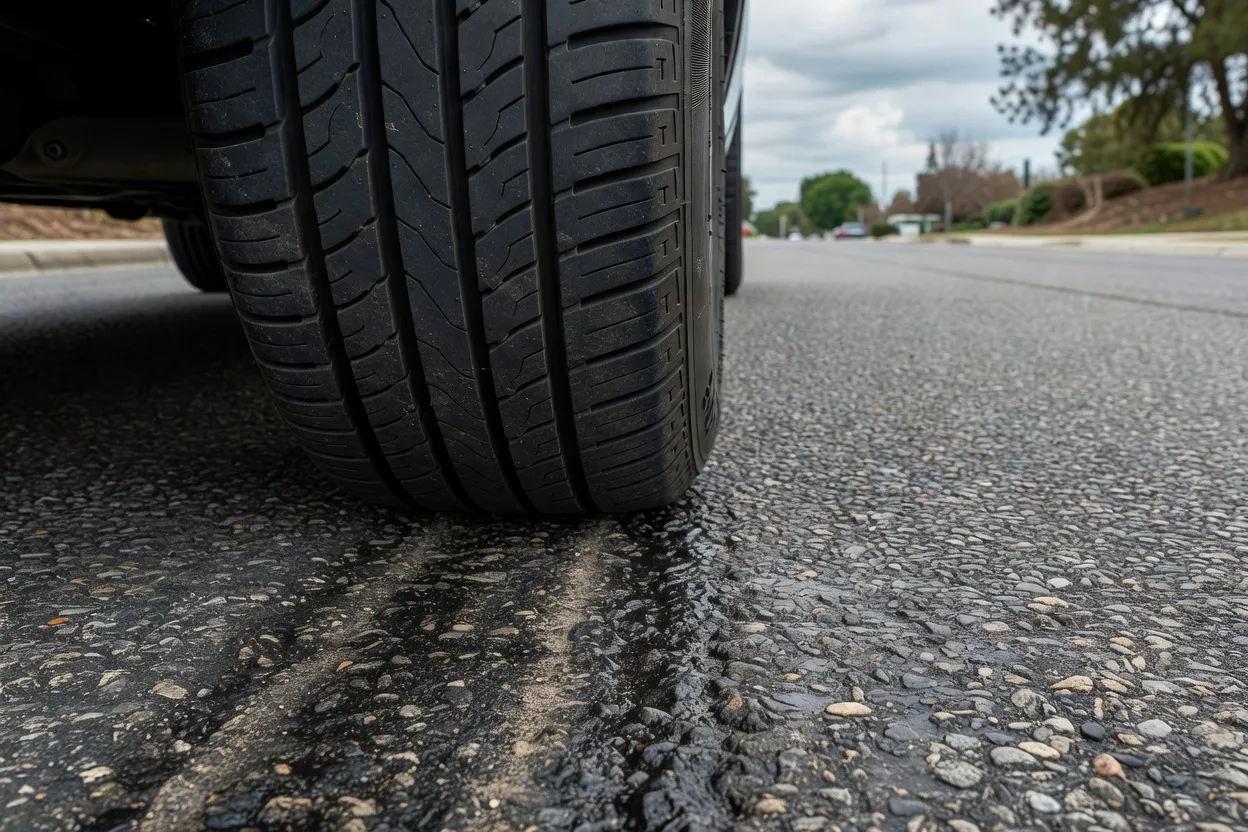
Scientists are revisiting one of rubber compounding’s oldest assumptions: that reinforcement is simply a matter of adding more filler. New work highlighted by RubberWorld examines why very small carbon-black particles can change rubber from a soft material into one capable of carrying extreme loads. At the same time, August 2026 reporting on natural rubber, butadiene and regional supply conditions shows why filler selection cannot be separated from wider formulation and purchasing decisions.
The interface is where performance begins
Carbon black does not reinforce rubber merely because it is present in the compound. Its value depends on how the particles interact with the polymer and how effectively the compound distributes stress through that network. The University of South Florida research described by RubberWorld addresses the long-standing question of how tiny carbon-black particles produce such a large change in mechanical behavior.
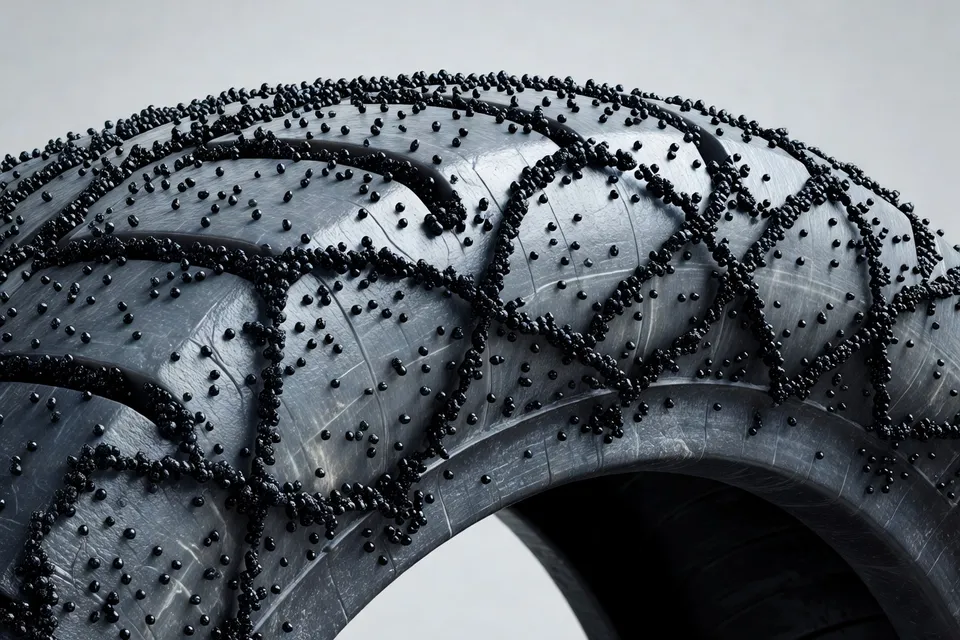
That focus matters on the factory floor. A filler’s reinforcing effect is expressed through the finished compound’s balance of strength, stiffness, abrasion resistance, hysteresis and processability. Increasing reinforcement without controlling dispersion can raise mixing demand, affect viscosity and make downstream shaping more difficult. The practical target is therefore not the highest possible filler loading, but a repeatable particle–polymer structure that delivers the required performance without creating avoidable processing penalties.
For compounders, this shifts attention toward dispersion quality, mixing sequence and the relationship between filler surface characteristics and polymer choice. It also gives suppliers a clearer technical message: grades should be evaluated by the performance they create in a defined formulation, not by nominal filler identity alone.
Silica broadens the sustainability discussion
RubberWorld also points to silica sources derived from bio-origin materials, including rice husk, rice straw, cornflower, sorghum and bagasse. These routes connect filler technology with agricultural residues and offer a potential alternative feedstock story for formulators seeking lower-impact material options.
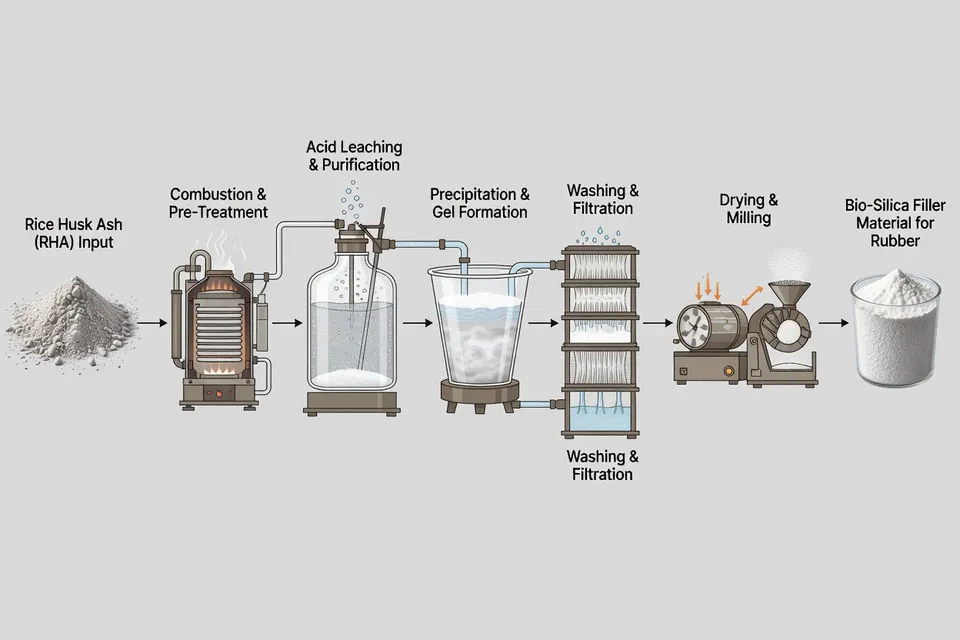
The commercial question is not whether a bio-origin feedstock sounds attractive. It is whether the resulting silica can meet the consistency, purity, surface chemistry and supply requirements of industrial rubber processing. Variability in agricultural residues can affect ash content and particle characteristics, while conversion into a usable reinforcing material requires controlled processing. Those factors place a premium on characterization and lot-to-lot specification.
A converter considering such materials would need to validate more than tensile performance. Cure behavior, compound viscosity, dispersion, dynamic properties, abrasion and aging must be checked against the existing formulation. Any change in mixing energy or cycle time can affect the economics of a high-volume line, even when the filler itself supports a stronger sustainability claim.
Raw-material markets add formulation pressure
The market backdrop is unsettled. Reuters reported through MarketScreener on August 20, 2026, that Asian physical rubber prices were being tracked across regional grades. A separate Reuters report published August 19 described rising Japan rubber futures amid a butadiene rally and supply concerns. The combination highlights a recurring problem for rubber manufacturers: even when a filler is stable, the polymer phase and other feedstocks can move sharply enough to alter compound economics.

That volatility strengthens the case for formulation flexibility. A compound designed around a narrow operating window may become difficult to manage when polymer costs, availability or feedstock relationships change. Robust development work should identify which properties are controlled by carbon black or silica, which depend primarily on the elastomer, and which can be preserved through adjustments in cure chemistry or processing.
The implication for purchasing teams is equally direct. Filler qualification should include supply continuity, regional availability and substitution rules alongside technical data. A technically equivalent grade may not behave equivalently when particle structure, surface treatment or dispersion conditions differ. Substitution therefore requires controlled trials rather than a simple specification comparison.
Reinforcement becomes a systems decision
The strongest lesson from the current research and market signals is that reinforcement is a systems problem. Carbon black and silica determine more than a single mechanical property; they influence mixing, energy use, cure response, component durability and the ability to adapt when raw-material conditions change.
For tire, hose, belt and molded-rubber producers, that means laboratory screening should be tied to production realities from the start. Small-scale data can identify promising filler–polymer combinations, but pilot mixing and representative processing are needed to expose dispersion or viscosity problems. Sustainability assessments also need the same discipline: a residue-derived silica route has value only when its performance and supply profile are reliable enough for the intended product.
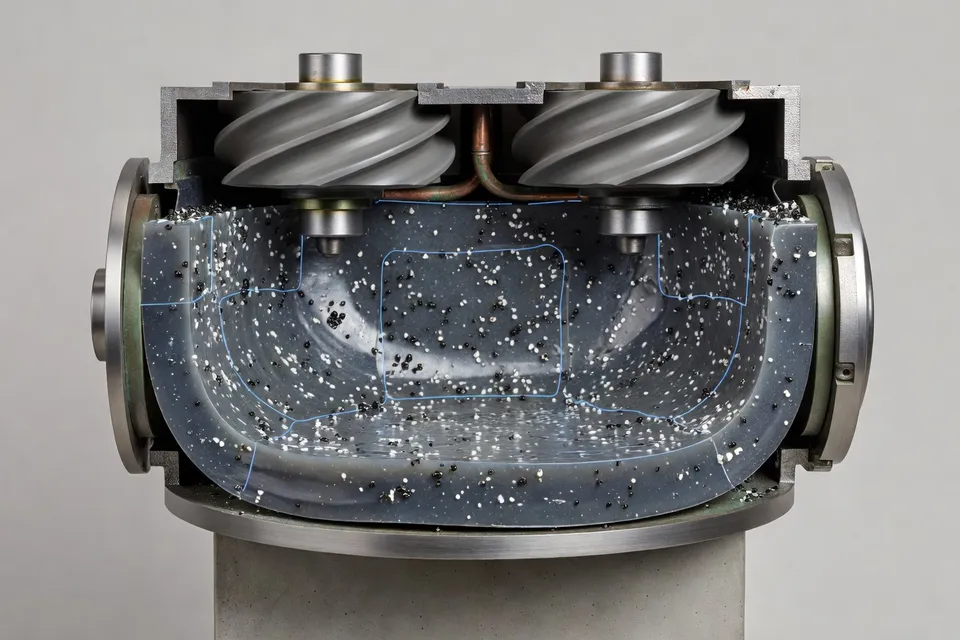
The next gains in rubber reinforcement are therefore likely to come from better control of interfaces and better integration of materials data with plant data. Research into carbon black explains more clearly why reinforcement works; bio-origin silica expands the feedstock conversation; and volatile rubber markets make disciplined formulation strategy a commercial necessity.
Editorial Insights
- Why is filler dispersion often more important than simply increasing filler content?
- Reinforcement depends on how effectively particles form stress-transferring networks within the polymer, not merely on their quantity. Poor dispersion can create weak points, raise viscosity and increase mixing or processing demands, while a well-controlled interface may deliver the required strength and durability at a more efficient loading.
- What must be proven before agricultural-residue-derived silica can become a dependable industrial filler?
- It must demonstrate consistent purity, particle characteristics, surface chemistry and supply across multiple production lots. Validation also needs to cover cure behavior, viscosity, dispersion, abrasion, dynamic performance and aging, because a sustainability benefit has limited commercial value if the material disrupts processing or product reliability.
- What role should qualification standards play when manufacturers replace one reinforcing grade with another?
- Qualification should assess actual compound behavior rather than relying on nominal filler identity or headline specifications. Controlled trials must examine dispersion, viscosity, cure response, mechanical properties and production stability, while supply continuity and regional availability should be treated as part of technical fitness.
References
- 1.Rubber World. (2026, September 9). Carbon Black, Silica & Reinforcing Materials. Rubber World.
- 2.Reuters. (2026, August 20). Asian physical rubber prices - August 20. MarketScreener.
- 3.MarketScreener. (2026, August 20). RUBBER-Japan futures rise on butadiene rally, supply concerns. MarketScreener.
- 4.Sibnovosti. Imports rose by 28%; domestic production fell by 18%; the market is shrinking. Sibnovosti.
- 5.Troy Technical. Report 20260823 163612. Troy Technical.
- 6.ChemOrbis. Plastics news. ChemOrbis.
- 7.ABC Chemicals. ABC Chemicals. ABC Chemicals.
- 8.Straits Research. Plastic market. Straits Research.