

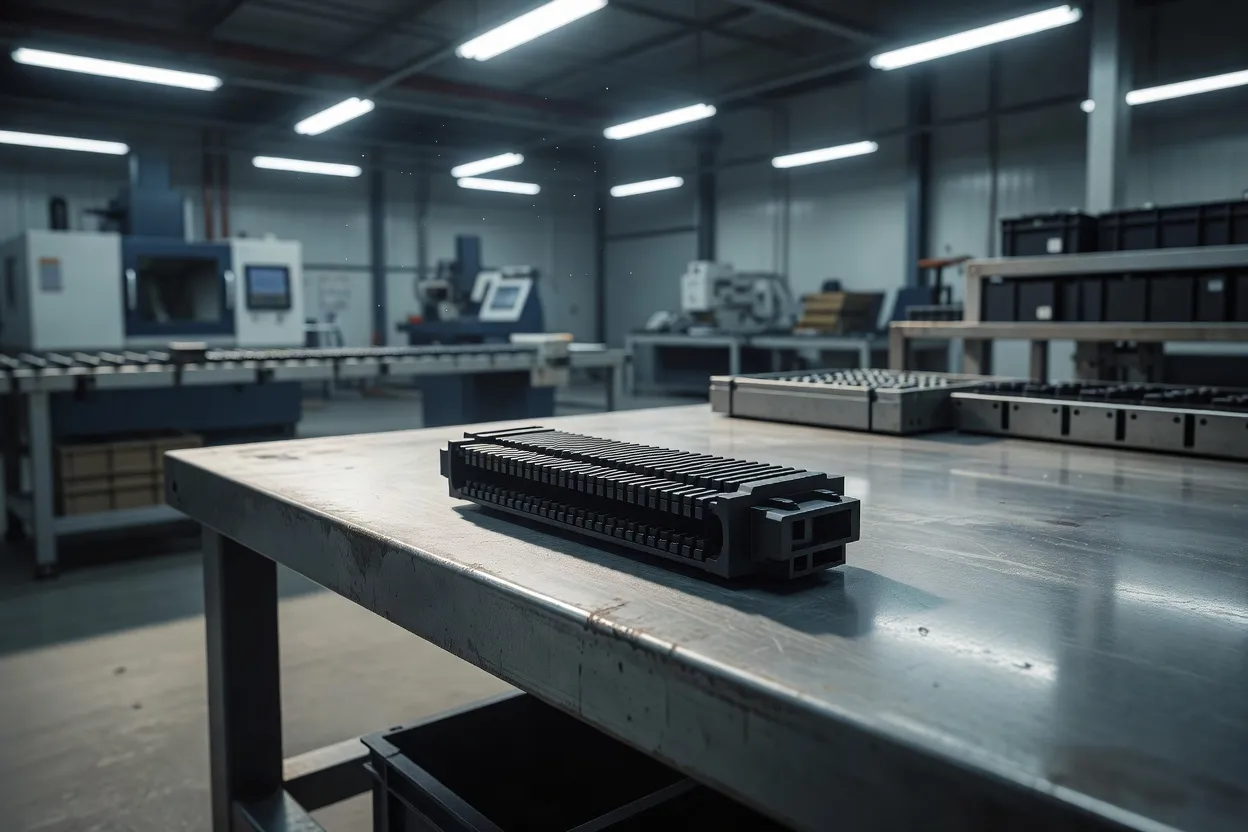
AI is moving injection molding toward a production model in which machines, molds, materials, software and sensors work as a connected system rather than as separate technology purchases.
That shift is becoming visible at Fakuma 2026, where equipment suppliers are presenting artificial intelligence not as a stand-alone software feature, but as an operating layer for automated cells and process decisions. For processors, the commercial question is changing: the value of AI will depend less on whether a machine can generate data and more on whether the factory can turn that data into repeatable production performance.
From smart functions to a connected molding system
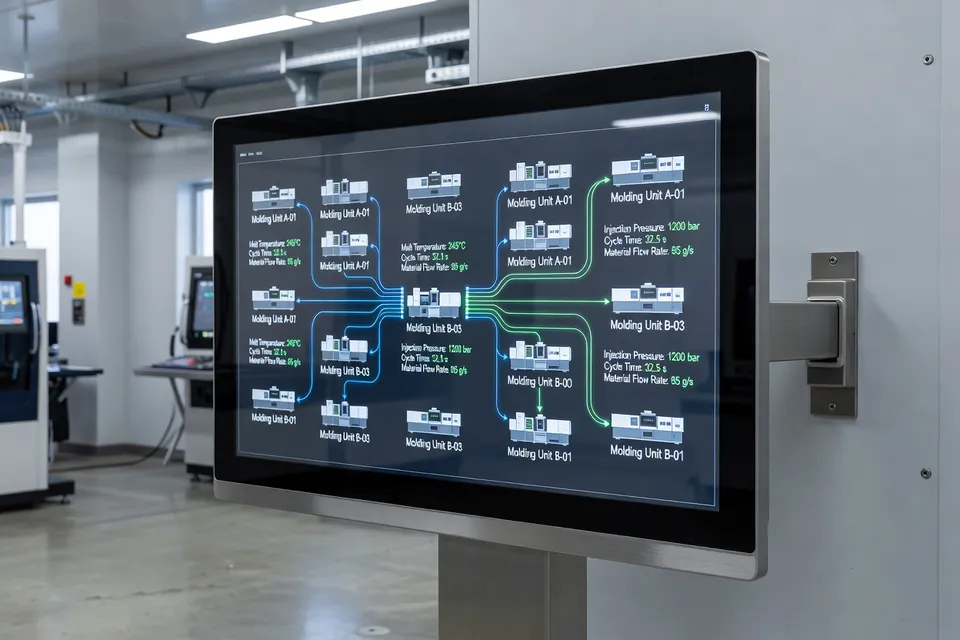
The emerging AI injection-molding ecosystem links simulation, material information, machine controls, process monitoring and production knowledge. The objective is to reduce the distance between what engineers predict, what a machine measures and what operators need to adjust on the shop floor.
This approach addresses a familiar weakness in plastics processing. Molding plants often have useful data in several locations, but the information may remain divided between the machine controller, quality systems, mold-monitoring equipment, material documentation and engineering software. Connecting those layers gives AI a broader operating picture. It can compare current process behavior with expected behavior and help identify when an intervention is required.
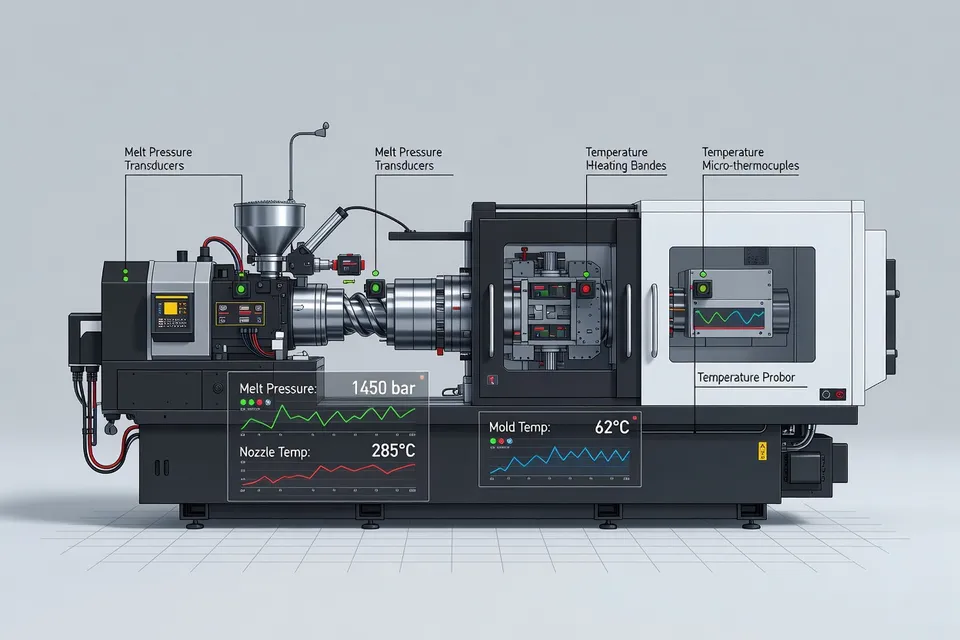
For molders, the implication is practical. AI must fit into the production workflow without adding another isolated dashboard. A useful system should help teams select process settings, recognize deviations, support troubleshooting and preserve the knowledge generated during production. That makes integration and data quality as significant as the underlying algorithm.
ENGEL puts assistance inside the automated cell
ENGEL (ENGEL Austria GmbH, an injection-molding machine and automation supplier) is using Fakuma 2026 to demonstrate an autonomous injection-molding cell upgraded with its ENGEL Virtual Assistant, or EVA. The presentation positions AI as a means of converting production information into measurable performance rather than as a demonstration detached from manufacturing conditions.
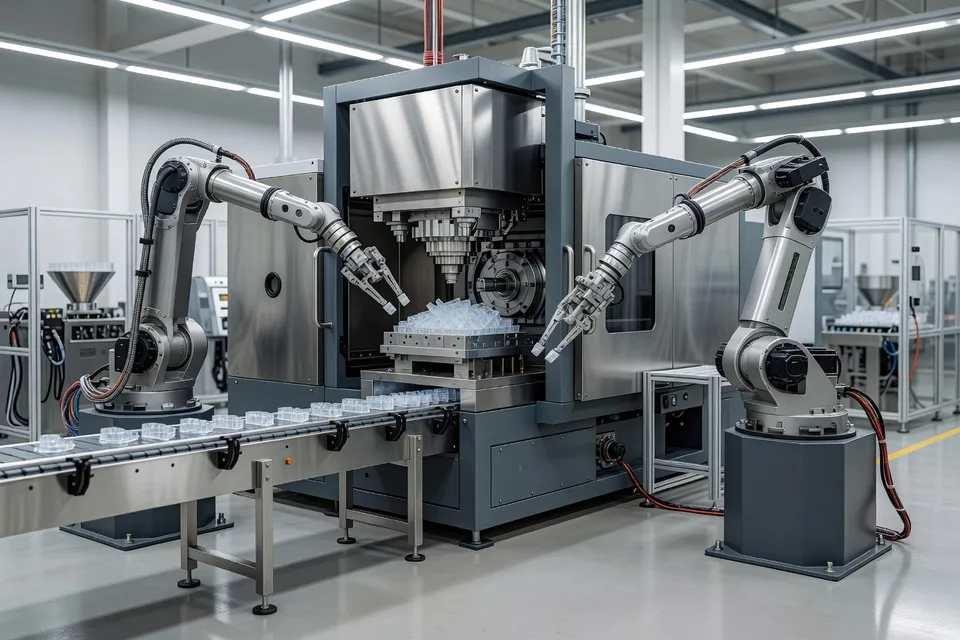
An autonomous cell changes the role of the operator. Instead of manually watching every stage of the cycle, personnel can concentrate on exceptions, material changes, quality decisions and maintenance planning. That does not remove the need for skilled workers. It changes where their time is spent and places greater emphasis on the quality of the recommendations delivered by the system.
The operating challenge will be trust. A processor is unlikely to hand over production decisions simply because an AI tool is available. Recommendations must be traceable to process conditions, compatible with validated settings and clear enough for technicians to accept or reject. Suppliers that connect assistance functions directly with machine operation will therefore have an advantage over systems that produce analysis without a controlled path to action.
Machinery makers widen the data footprint
The wider machinery sector is developing smart and AI-driven technology across injection molding, robotics and digital manufacturing. The direction is significant because autonomous production requires more than an intelligent injection unit. Robots, inspection systems, production software and material-handling equipment must exchange information with the molding machine.
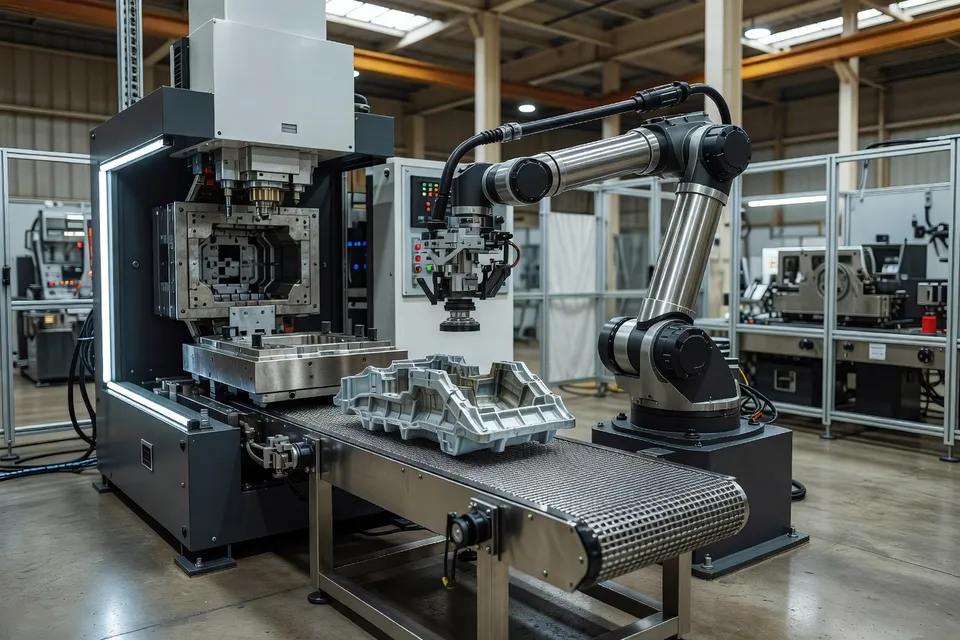
That integration can support closed-loop production: a system detects a deviation, evaluates its likely cause, recommends or applies a correction, and records the result. The quality of that loop depends on reliable sensors and consistent data definitions. If one supplier’s equipment describes a process event differently from another’s, the plant may still require manual interpretation.
For converters and contract molders, interoperability will become a purchasing criterion alongside clamp force, cycle time and energy performance. A machine that can join a broader digital architecture may deliver more long-term value than one with a larger collection of proprietary features. Brand owners will also have an interest in this development because stable, documented processes make it easier to manage quality across suppliers and production locations.
Simulation and materials become production inputs
Simulation has traditionally helped engineers predict filling, cooling, warpage and other molding outcomes before a tool reaches the press. The connected ecosystem extends that role by bringing simulation knowledge closer to live production. Material behavior, mold design and machine data can be evaluated together rather than treated as separate engineering exercises.
That connection could shorten the response to changes in resin grade, color, recycled content or tooling condition. It could also help plants distinguish between a material-related variation and a machine or mold issue. Such distinctions matter because unnecessary process changes can create additional scrap, while delayed diagnosis can consume machine time and labor.
The Plasticker Fakuma 2026 coverage also reflects the broader commercial pressure on processors to extract more value from materials and compounds. AI will not remove the need for disciplined material control, but it can help link material choices with processing outcomes. For compounders and masterbatch suppliers, better process data may create a stronger basis for demonstrating how formulations behave in specific applications.
Rubber industry shows where the model can lead
Developments in tire manufacturing illustrate how AI is expanding beyond machine adjustment into prediction, digital representation and analysis. Michelin (Compagnie Générale des Établissements Michelin, a tire manufacturer) is introducing AI-powered wear prediction and a universal tire digital twin intended to improve safety and performance.
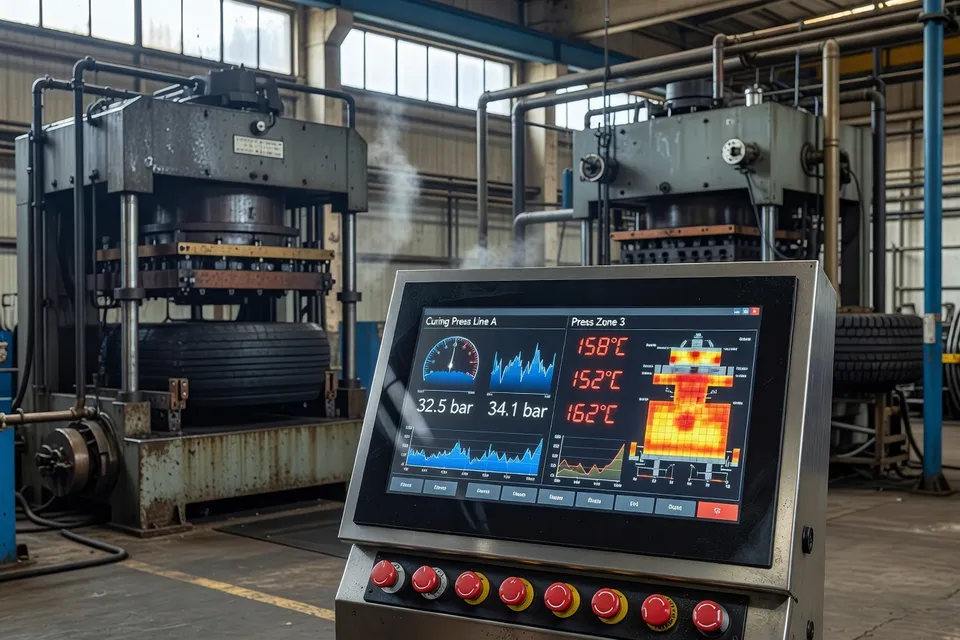
Sumitomo Rubber Industries (Sumitomo Rubber Industries, Ltd., a tire manufacturer) is applying AI to reduce tire-analysis time by 90 percent. These examples come from rubber rather than injection molding, but they point to the same industrial pattern: large volumes of process and product information are being converted into faster decisions.
For plastics processors, the lesson is not that tire-industry applications can be transferred directly. It is that AI becomes more valuable when it remains connected to the physical product throughout its life cycle. In injection molding, that could mean linking machine history, inspection results, mold condition and part performance instead of stopping at the production cycle.
Adoption will depend on the plant, not the pitch
Autonomous molding will arrive incrementally. Plants will first need dependable sensors, clean historical data, stable communications and clearly defined quality limits. They will also need procedures for handling recommendations that conflict with operator experience or validated process windows.
The strongest early applications are likely to be those with a clear operational boundary: detecting process drift, supporting setup, identifying maintenance needs or reducing the time required to analyze a quality problem. These uses offer measurable value without requiring the factory to surrender every decision to an algorithm.
The industry’s next step is therefore organizational as much as technical. Machine builders, software companies, material suppliers and processors must agree on how information is captured, exchanged and acted upon. When those links are in place, AI can move injection molding beyond isolated automation toward production systems that learn from each cycle and respond with increasing consistency.
Editorial Insights
- What should processors prioritize before investing in autonomous molding technology?
- Processors should first establish reliable data collection, consistent process definitions and clearly validated operating windows. AI cannot compensate for weak sensors, fragmented records or unstable production practices; targeted applications such as drift detection, setup support and predictive maintenance are more likely to deliver measurable returns than broad promises of full autonomy.
- Could AI make injection molding more sustainable, or could it simply accelerate production?
- AI can reduce scrap, energy use and unnecessary machine time when it identifies process drift early and links material behavior with production conditions. Those gains are not automatic, however: poorly designed systems may encourage higher output without addressing overproduction, material waste or the environmental cost of additional digital infrastructure.
- How will autonomous production change the skills required in molding plants?
- The need for skilled personnel will remain, but their work will shift from continuous manual adjustment toward exception handling, process validation, data interpretation and maintenance planning. Plants will need technicians who understand both molding fundamentals and digital systems, while training must ensure that workers can challenge recommendations rather than accepting automated decisions uncritically.
- What rules will be needed when an AI system influences product quality or process safety?
- Manufacturers will need clear requirements for traceability, human oversight, cybersecurity, data ownership and responsibility for incorrect recommendations. AI should operate within documented process limits, preserve the reasoning and conditions behind significant decisions, and provide a controlled way for qualified personnel to override or validate its actions.
- What will determine whether customers trust parts made through increasingly autonomous processes?
- Trust will depend less on the novelty of AI than on consistent quality, transparent records and the ability to demonstrate that each part was produced within approved conditions. Clear communication about where automation is used, how decisions are reviewed and how defects are prevented can help ensure that greater machine autonomy does not weaken confidence in manufactured products.
References
- 1.Plastics Engineering. (2026, September 19). AI injection molding ecosystem: Smarter together. Plastics Engineering.
- 2.Adsale CPRJ. (2026, September 11). ENGEL to show automated injection molding cell at Fakuma 2026. Adsale CPRJ.
- 3.Plasticker. News about plastics processing and recycling - Plasticker.
- 4.Leon Thompson. (2026, September 16). Colombia launches Latin America’s first digital transformation center for plastics industry. ColombiaOne.
- 5.European Rubber Journal. (2026, January 6). Michelin launching AI-powered wear prediction technology in tires. European Rubber Journal.
- 6.European Rubber Journal. Michelin unveils “universal” tire digital twin to improve safety performance. European Rubber Journal.
- 7.European Rubber Journal. (2026, September 21). Sumitomo Rubber taps AI to cut tire analysis time by 90%. European Rubber Journal.
- 8.Plastics Machinery Manufacturing. (2026, September 14). Plastics machinery makers develop more smart and AI-driven technology. Plastics Machinery Manufacturing.
- 9.Plastech. (2026, August 31). FCS to show smart injection molding at TaipeiPlas 2026. Plastech.
- 10.Automation Mag. Fanuc showcases smart injection moulding, robotics, digital manufacturing at Fakuma 2026. Automation Mag.