


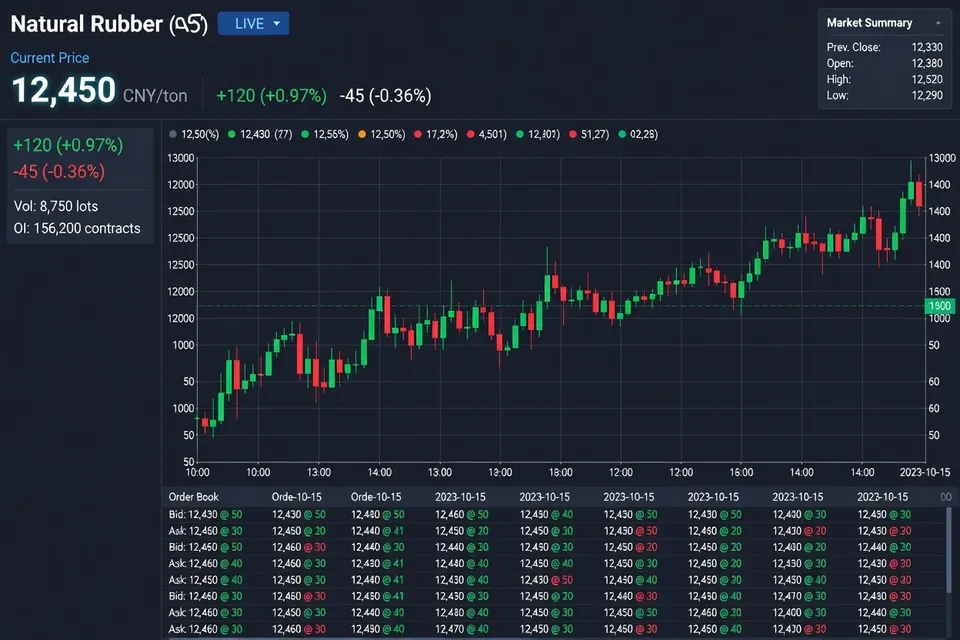
Natural rubber markets are entering the second half of September 2026 with a difficult balance for the tire industry: physical prices remain high, while downstream buyers are limiting their exposure at elevated levels. China’s benchmark market illustrates the tension. Natural rubber was assessed at around 18,150 CNY per ton on September 20, only 0.14% above the beginning of the month, but the path was far from stable. The market reached 18,866 CNY per ton during the period, while the main Shanghai futures contract climbed to 19,810 CNY per ton before retreating toward 18,670 CNY per ton.
High prices, limited follow-through
The September movement points to a market that is strong in price terms but less convincing in demand terms. The near-flat monthly change in China contrasts with the sharp intramonth swings, suggesting that buyers and sellers are contesting value rather than moving confidently in one direction.
For tire manufacturers, that distinction matters. A producer buying only against immediate production requirements can avoid carrying large volumes at a market near a two-year high. A producer seeking to secure several months of coverage faces the opposite risk: waiting may expose it to another supply-led increase if physical availability tightens.
SunSirs reported that domestic spot prices had exceeded 17,900 RMB per ton in early September, approximately 14% above the start of 2026. The same assessment said the main Shanghai rubber futures contract briefly moved beyond 18,800 yuan per ton on September 3. The combination of firm spot pricing and elevated futures values has raised the cost of delaying procurement, but it has also reduced the incentive for tire buyers to build discretionary inventory.
Qingdao signals a firmer physical market
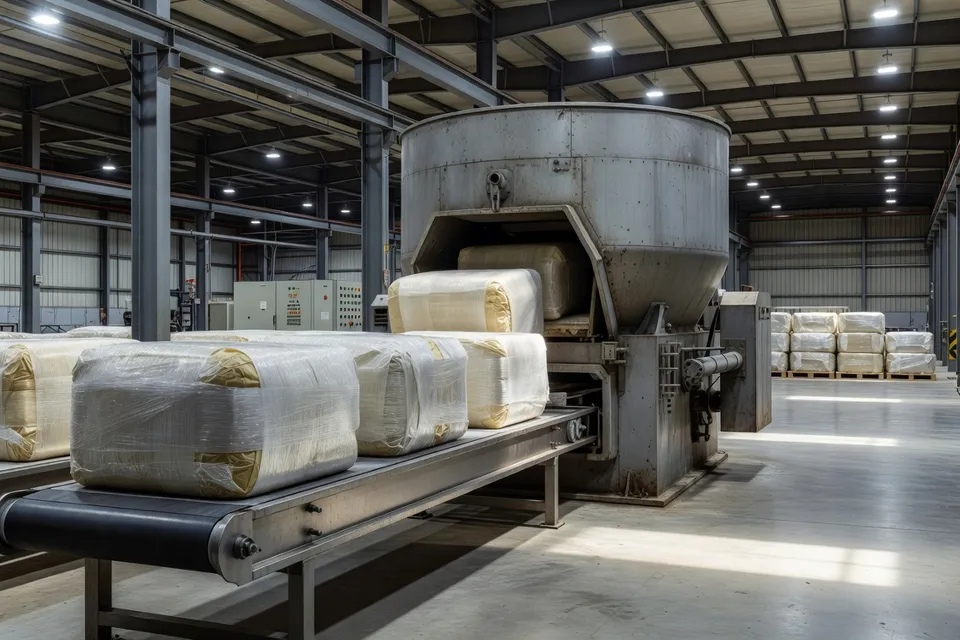
The Qingdao market provided evidence of continued firmness on September 16. Spot traders increased offers by 100–200 RMB per ton. Quotes for 2024-production Yunbao, Guangkeng and Haibao rubber stood at 18,200–18,400 RMB per ton, while 2025-production material was offered at 18,350–18,600 RMB per ton. Vietnam 3L rubber was quoted at 19,100–19,300 RMB per ton.
These differentials create a direct purchasing question for processors: whether to pay more for newer production or accept the commercial and specification considerations associated with older material. The spread also gives sellers room to defend offers even when tire makers resist broad restocking.
Supply growth does not remove near-term pressure
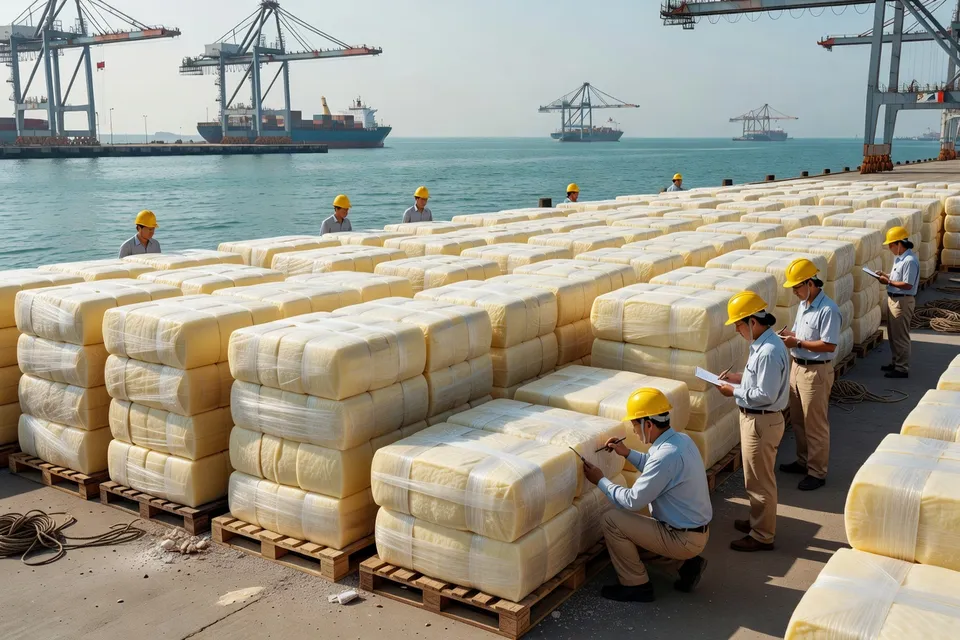
The longer-term supply picture is less restrictive than the spot market. A February 2026 forecast from the Association of Natural Rubber Producing Countries indicated that global production would rise 3.4% year on year in February to 994,000 tonnes, although that monthly output would be 23.9% lower than the previous month. For the full year, production was forecast to increase 2.2% year on year to 15.324 million tonnes.
That annual increase should eventually improve availability, but it does not guarantee smooth supply through every purchasing window. Natural rubber production is seasonal, and monthly output can fall sharply even when the annual trend is positive. The February forecast also projected consumption at 1.088 million tonnes, down 16.6% from the previous month and 15.9% year on year. The contrast between annual supply growth and uneven monthly flows helps explain why prices can remain firm despite a more comfortable full-year outlook.

Tire makers pass through cost selectively
The pressure is already reaching the tire supply chain. SunSirs reported that ZC-Rubber and Sailun issued price-increase notices on the same day in September. Those announcements indicate that manufacturers are seeking to protect margins rather than absorb the entire raw-material increase.
For tire buyers, the commercial effect will depend on contract structure and product mix. Replacement-tire suppliers may have greater scope to adjust prices gradually, while original-equipment programs face tighter customer negotiations and longer approval cycles. Distributors also have to decide whether higher replacement costs can be passed through without slowing sell-through.
The market therefore creates two competing incentives. Higher natural-rubber costs support tire price increases, but cautious purchasing by tire manufacturers and customers can delay the recovery of margins. A price announcement does not automatically translate into stronger profitability if volumes soften or buyers shift orders toward lower-cost alternatives.
Procurement shifts toward shorter commitments
The current pattern favors disciplined coverage rather than aggressive stock-building. Buyers are likely to separate essential consumption from speculative inventory, using shorter purchasing intervals where contracts permit and monitoring futures signals against physical quotes. The objective is not simply to find the lowest price; it is to limit exposure to a sudden reversal while ensuring production continuity.
Sellers, by contrast, have an incentive to maintain firm offers while the physical market remains supported. The reported Qingdao increases show that traders are testing the market’s ability to absorb higher replacement costs. If tire manufacturers continue buying only for immediate needs, spot liquidity could become more uneven even as quoted prices stay elevated.
The main risk for processors is a mismatch between financial-market direction and physical procurement conditions. Futures prices have already demonstrated wide movement in September, while spot offers have remained comparatively firm. That divergence can complicate hedging, especially for companies that use futures protection but purchase specialized grades in the physical market.
Natural rubber’s next phase will depend on whether annual production growth becomes visible in deliverable supply before tire demand strengthens. Until then, the market is likely to remain characterized by high replacement costs, selective purchasing and sharp competition between bullish supply concerns and buyer resistance.
Editorial Insights
- Why can natural rubber prices remain elevated even when annual production is expected to increase?
- Annual growth does not guarantee reliable availability at every purchasing point. Seasonal tapping patterns, weather disruptions, ageing plantations and logistical constraints can restrict nearby supply, allowing prices to remain firm until additional output becomes consistently deliverable.
- How should tire manufacturers manage procurement when spot prices are high but market direction is uncertain?
- A balanced approach separates minimum production cover from discretionary inventory. Shorter purchasing intervals, diversified suppliers and selective hedging can reduce exposure, but financial protection must be matched carefully to the grades and delivery locations actually used in production.
- Could persistent natural rubber costs accelerate changes in tire formulations?
- Higher costs may encourage compound optimization, greater use of synthetic alternatives and more investment in process efficiency. However, natural rubber remains difficult to replace fully in applications requiring high fatigue resistance, resilience and durability, so substitution is likely to be selective rather than universal.
- How could traceability requirements change the economics of natural rubber sourcing?
- Traceability is becoming a commercial requirement as buyers increasingly need evidence that rubber is not linked to deforestation or rights violations. Compliance may raise administrative and verification costs, but it can also improve supply visibility, reward responsible producers and reduce the risk of losing access to regulated markets.
- What is the broader risk of treating natural rubber only as a short-term procurement problem?
- Persistent price volatility reflects deeper structural issues, including plantation ageing, labour constraints, climate exposure and limited investment in smallholder productivity. Companies that focus only on immediate price negotiation may reduce near-term costs while weakening the resilient, transparent supply base needed for future demand.
- How might elevated tire prices affect demand across different market segments?
- The impact is unlikely to be uniform. Fleet operators and industrial users may delay replacement or prioritize lower-cost products, while safety-critical and heavy-duty applications may remain less price-sensitive; manufacturers therefore face a continuing trade-off between protecting margins and preserving volume.
References
- 1.ECHEMI. (2026, September 22). China's natural rubber market fluctuates with an initial ... ECHEMI.
- 2.SunSirs. (2026, September 21). Plastics and rubber industries bulk commodity ... SunSirs.
- 3.SunSirs. News. SunSirs.
- 4.BernamaBiz. News. BernamaBiz.
- 5.ECHEMI. News. ECHEMI.
- 6.SunSirs. News. SunSirs.
- 7.SunSirs. News. SunSirs.
- 8.ECHEMI. News. ECHEMI.
- 9.TDD-Global. Rubber special issue, issue 202608. TDD-Global.
- 10.QinRex. Natural rubber market outlook 2026. QinRex.
- 11.Rubber News. Natural rubber supply and demand 2026. Rubber News.
- 12.Association of Natural Rubber Producing Countries. Market data. ANRPC.