


The recycled PET market is entering the fourth quarter of 2026 with a pronounced regional price divide, exposing different commercial realities for recyclers, converters and beverage-packaging buyers.
Epignosis Insights, a market research and brand intelligence consultancy, said its September 2026 tracker identified geography—not a uniform global shortage of recovered material—as the leading influence on recycled PET pricing. The contrast is clearest between the United States, Europe and China, where collection systems, regulatory obligations and downstream demand are producing different value for the same basic feedstock.

Europe’s regulatory floor
European recycled PET prices remain supported even as demand conditions are not described as especially strong. Epignosis reported colourless recycled PET flakes at €1,331–1,341 per tonne and bottle-grade pellets at €1,718–1,728 per tonne, delivered duty paid in Northwest Europe, at the end of June 2026.
That pricing structure gives European recyclers a materially different operating environment from producers in regions where recovered bottles are traded primarily against virgin-resin economics. The spread between flakes and bottle-grade pellets also highlights the value added by purification, processing and quality control required for contact-sensitive packaging.
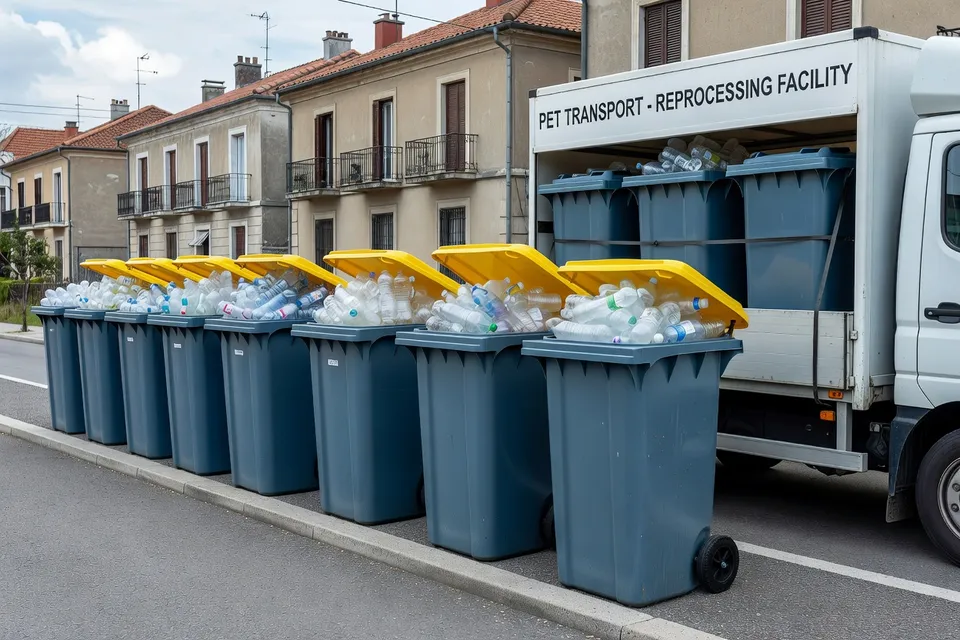
The European Commission’s Packaging and Packaging Waste Regulation, Regulation (EU) 2025/40, became applicable on 12 August 2026. The framework covers packaging placed on the EU market and packaging waste generated across member states, with requirements spanning design, recycled content, reuse and recycling. Its stated objectives include increasing recycled plastics in packaging, reducing virgin-material use and making packaging recyclable in an economically viable way by 2030.
For converters and brand owners, the consequence is a shift in procurement risk. Recycled PET is not simply a discretionary substitute for virgin resin when regulatory requirements create a minimum level of demand. Buyers must increasingly secure qualified material that meets application, traceability and food-contact requirements, while recyclers gain stronger visibility for investments in sorting, washing, flake production and pelletising.
The European market will not be insulated from weak consumption or pressure on packaging volumes. Regulation, however, can maintain a pricing floor when voluntary demand softens. That changes how contracts are negotiated: buyers may place greater value on compliance assurance and reliable supply, rather than treating recycled PET as a purely price-led commodity.
The United States faces a collection constraint
The US market presents the opposite pressure. Epignosis said US bale prices had fallen to their lowest level in two decades, while Argus reported that the US PET recycling rate is about 30%, well below rates in the upper 80% to 90% range in some western European and Asian countries.
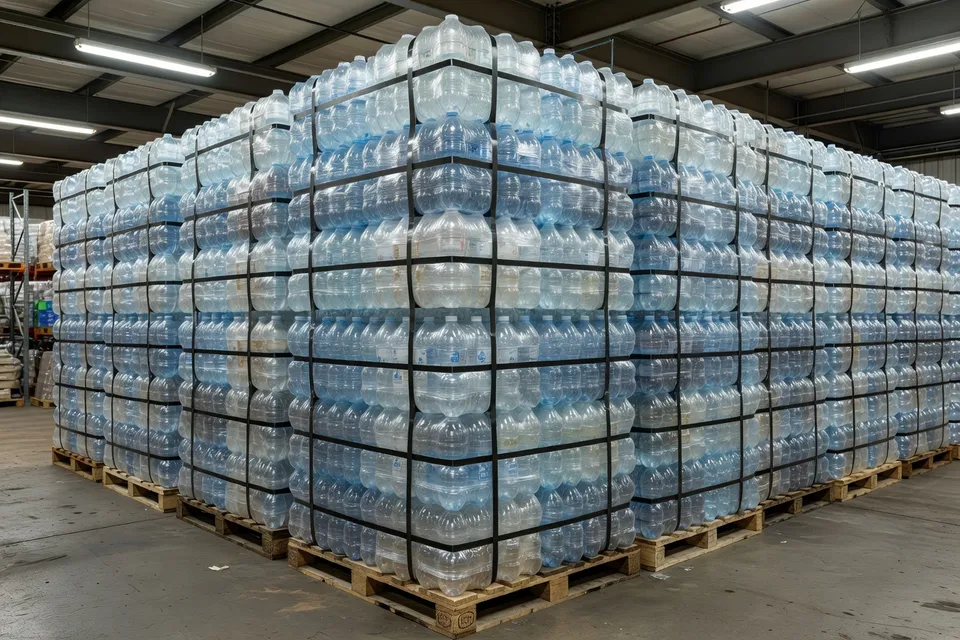
Low bale values can reduce the immediate cost of feedstock for recyclers, but they also signal a weaker collection and demand system. Cheap material does not automatically translate into profitable recycled resin production. Plants still face costs for transportation, sorting, contamination removal, washing, energy and quality control. If end-market demand is insufficient, lower bale prices can weaken the incentive to expand collection or maintain recycling capacity.
NAPCOR (National Association for PET Container Resources, an industry association focused on PET containers and recycling in North America) has identified higher recycling rates and greater recycled-content use as central elements of a US PET decarbonization pathway. According to the roadmap reported by Argus, expanding recycling and recycled-content use could reduce the lifecycle greenhouse-gas emissions intensity of US PET beverage bottles by 57pc by 2050, while total annual emissions could fall by 42pc even as PET production volumes rise.
The roadmap assumes that recycled content in PET bottles could approach 100pc over the long term and that collection and recycling rates could increase to about 60pc. Those targets point to a commercial bottleneck: US processors may have access to low-priced bales today, but they need sustained investment in collection, sorting and demand creation to convert that availability into dependable bottle-grade resin.
For beverage companies and converters, the implication is that spot-market weakness should not be confused with guaranteed long-term supply. A broader recovery system would require stronger collection economics and stable offtake commitments. Without those conditions, regional price weakness may coexist with difficulty sourcing consistent, specification-grade recycled material.
China’s spread narrows
China is showing a third pattern. Epignosis reported that the country’s bale-to-flake spread continues to narrow as feedstock supply outpaces demand. A narrowing spread reduces the processing premium available between collected bales and recycled flakes, putting pressure on recycler margins unless throughput, yield or product quality improves.
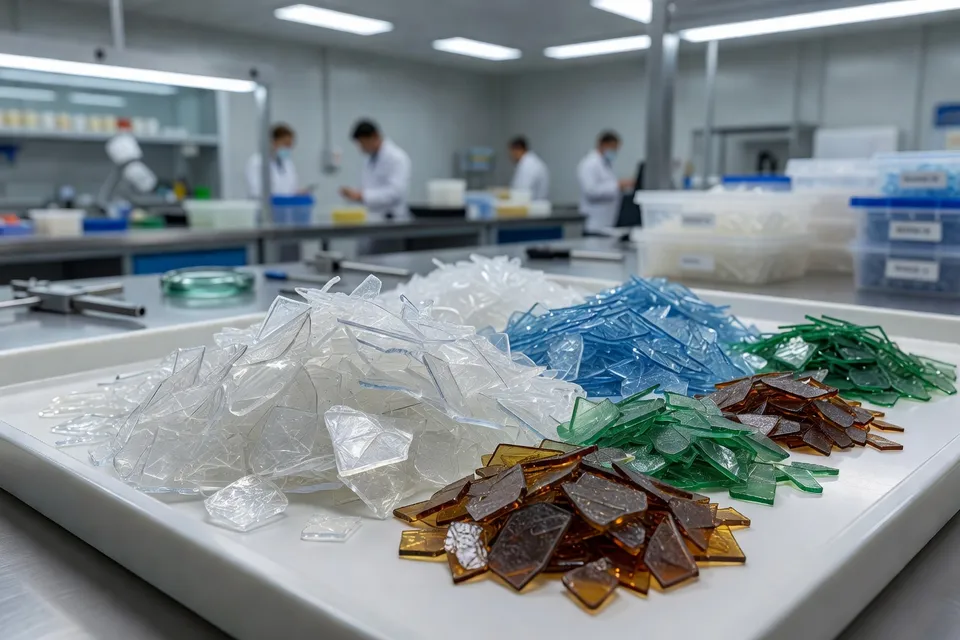
That dynamic matters beyond China because recycled PET supply chains are increasingly sensitive to the location of each processing step. Bale availability, flake demand and pellet specifications do not move in lockstep. When feedstock grows faster than demand for processed output, the economic value of upgrading material can contract even if collection volumes remain healthy.
Processors operating in this environment may need to focus on yield management, contamination control and differentiated output rather than relying on a broad rise in recycled-material prices. Buyers, meanwhile, have an incentive to compare regional material on a delivered and specification-adjusted basis, not on bale prices alone.
A fragmented market for procurement teams
The regional split complicates global purchasing strategies. A multinational packaging group cannot assume that a lower US bale price, firm European pellet pricing and a compressed Chinese processing spread represent one synchronized market. Each reflects a different balance between policy, collection and downstream demand.
Europe offers the strongest regulatory signal. The United States offers a large opportunity to improve recovery rates but currently carries a weaker collection base. China illustrates the margin pressure that can emerge when recovered feedstock expands faster than demand for upgraded material.
For recyclers, the commercial priority is matching plant configuration and product quality with the strongest local demand. For converters, procurement decisions will increasingly include compliance, food-contact suitability, supply reliability and transport exposure alongside resin price. For brand owners, the regional differences reinforce the value of designing packaging and contracts around available recycled-material streams rather than setting uniform global assumptions.
The September 2026 market picture therefore favors regional operating strategies. Regulation can support European prices, system development can reshape US economics, and supply-demand balance can compress processing margins in China. Until collection, policy and demand become more aligned, recycled PET will remain a set of regional markets connected by trade—but priced by local conditions.
Editorial Insights
- Why does recycled PET require a different procurement strategy from virgin resin?
- Virgin resin is generally traded against broader petrochemical and energy conditions, whereas recycled PET also reflects collection quality, processing capacity, certification and regulatory compliance. Buyers therefore need to assess delivered cost, technical performance and supply reliability together rather than treating recycled content as a simple substitute selected on price alone.
- What would most effectively improve recycled PET collection rates?
- Collection systems work best when they combine convenient return points, clear producer responsibility and financial incentives that reward the recovery of clean bottles. Deposit-return models can improve both volume and material quality, but their effectiveness also depends on stable demand for the recovered output and investment in sorting and reprocessing capacity.
- Can recycled-content mandates create a healthy market without causing new supply-chain distortions?
- Mandates can establish dependable demand and support investment, but they do not by themselves create enough suitable feedstock or processing capacity. If obligations rise faster than collection and certification systems, buyers may face premiums, regional shortages or greater reliance on long-distance trade, making coordinated infrastructure planning essential.
- Does greater use of recycled PET automatically make packaging more sustainable?
- Not automatically. The environmental benefit depends on effective collection, efficient processing, low contamination, reasonable transport distances and the displacement of virgin material; packaging design and reuse options must also be considered. A circular system should therefore be judged by verified lifecycle outcomes rather than recycled-content claims alone.
References
- 1.Argus Media. (2026, September 22). Polymer market & industry insights. Argus Media.
- 2.Plasteurope.com. (2026, September 22). Plastics news from North America. Plasteurope.com.
- 3.Epignosis Insights Research Team. (2026, September 22). Global recycled PET (rPET) price tracker. Epignosis Insights.
- 4.Epignosis Insights. Europe circular plastics price tracker. Epignosis Insights.
- 5.ICIS. R-PET. ICIS.
- 6.Research and Markets. Plastic packaging: Global strategic business report. Research and Markets.
- 7.The Business Research Company. Plastic global market report. The Business Research Company.
- 8.The Business Research Company. Automotive tire global market report. The Business Research Company.
- 9.National Association for PET Container Resources. NAPCOR. National Association for PET Container Resources.
- 10.Plastics Recyclers Europe. Plastics Recyclers Europe. Plastics Recyclers Europe.
- 11.Plastics Europe. Plastics Europe. Plastics Europe.
- 12.European Commission. Packaging waste. European Commission.