

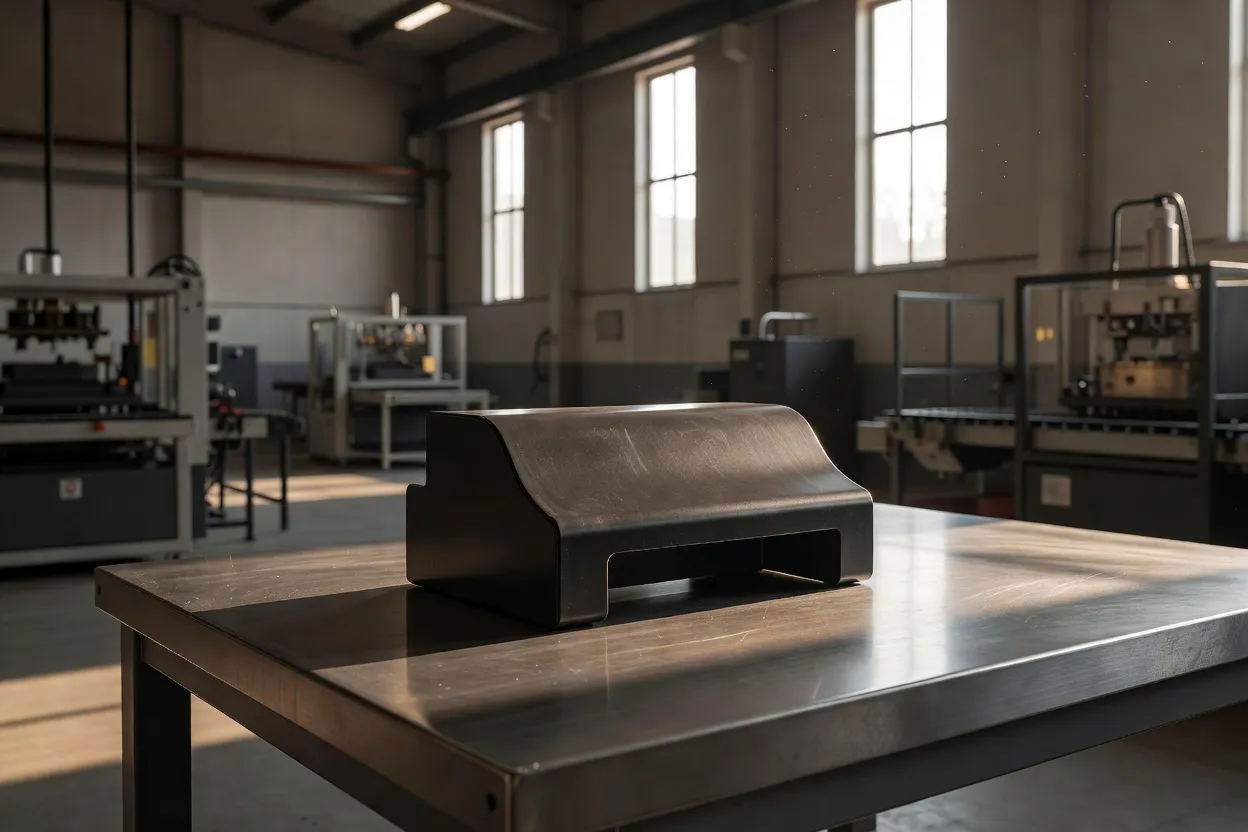
Digital tools are moving deeper into polymer production, shifting Industry 4.0 from a demonstration concept toward an operating discipline for processors managing variable materials, energy pressure and limited technical manpower.
The change is visible in two connected developments. Siemens is presenting digitalization across the plastics machinery life cycle, from equipment development and virtual validation to automation for injection and extrusion machinery and artificial-intelligence-supported predictive maintenance. In Colombia, a new center is being created to help processors apply similar technologies on the factory floor, including digital twins, industrial Internet of Things systems, robotics, machine vision and energy analytics.
Together, the developments point to a practical direction for the sector: digital models are becoming useful when they are linked to live production data and specific plant decisions.
From virtual equipment to production decisions
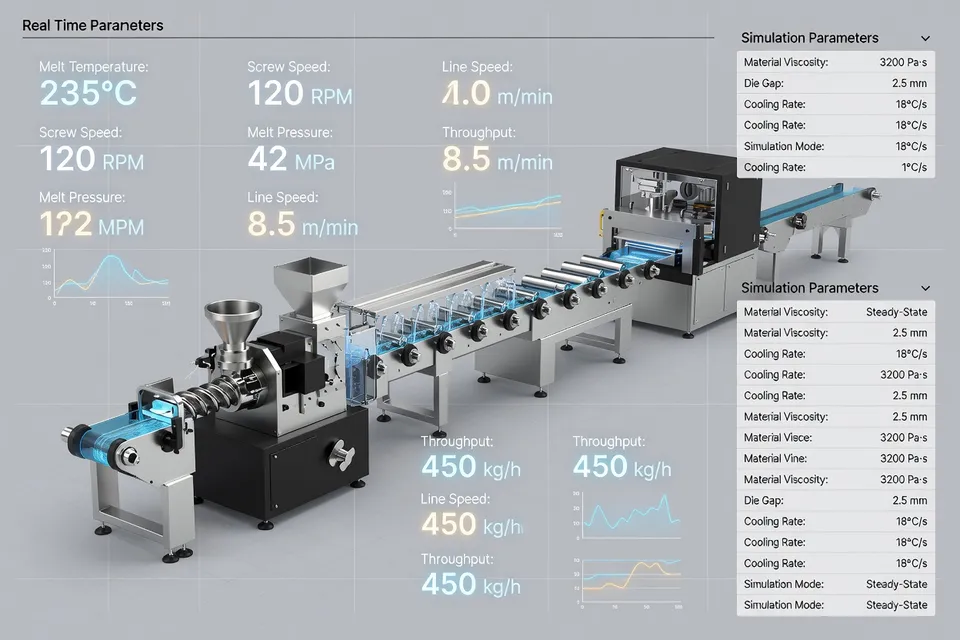
Siemens (a technology company exhibiting digital solutions for plastics and rubber machinery) is using the theme “Digital drives, shaping infinite possibilities” at TaipeiPLAS to show how digital tools can follow machinery through development, production and maintenance. Its approach includes digital twins for machine development, optimization and virtual verification, integrated automation for injection and extrusion equipment, and industrial AI for predictive maintenance.
For processors, the value of that connection lies less in the label “digital twin” than in the questions the model can answer. A virtual representation can be used before equipment is built or modified, while production data can help engineers compare expected and actual behavior. When the same digital thread extends into maintenance, a machine builder and a processor have a clearer basis for identifying abnormal conditions before they become a quality or downtime event.
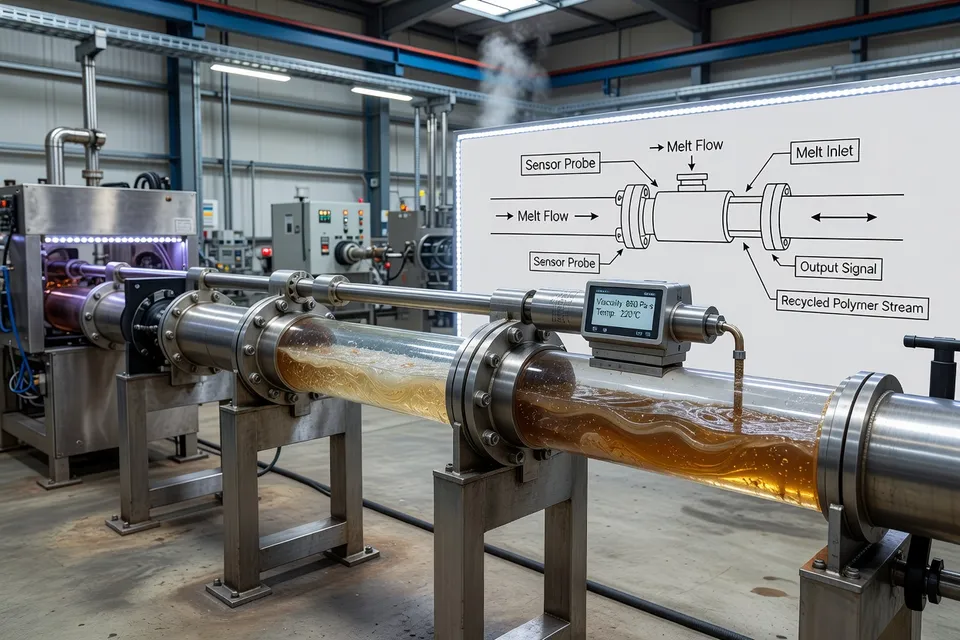
That matters particularly in extrusion and injection molding, where small changes in melt behavior, temperature, pressure or equipment condition can affect output. The latest Industry 4.0 coverage from Plastics Engineering identifies in-line resin monitoring as a way to track melt behavior, manage variation in recycled resin and strengthen quality control. Other reported applications include digital process control for PCR and PIR molding and machine-learning models that predict polymer degradation during extrusion.
These applications place analytics close to the process rather than leaving operators to interpret production history after a problem appears. The result is a more direct feedback loop: measure the material, compare the process with the expected window, and intervene while the run is still recoverable.
Recycled feedstocks raise the stakes
Recycled content makes this feedback loop more valuable and more demanding. Post-consumer and post-industrial resins can vary in viscosity and other processing characteristics, so a fixed recipe may not produce a fixed result across every incoming lot. Inline diagnostics can give processors earlier visibility into melt behavior, while digital controls can help compensate for changing feedstock conditions.
That does not remove the need for incoming-material controls, laboratory testing or experienced process engineers. It changes when information becomes available. Instead of relying only on a certificate of analysis or an end-of-line inspection, a processor can use process data to identify variation as material moves through the machine.
For converters and brand owners, the commercial implication is traceability as well as stability. More detailed process records can support investigations when a batch fails specifications and can help demonstrate that recycled-content production was controlled. The sources do not establish a single standard for such records, but they show the direction of travel: quality systems are becoming increasingly data-based.
Colombia builds an access point for smaller processors
Colombia is preparing i4Plas (Digital Transformation Center for the Plastics Industry, an initiative designed to help plastics processors adopt Industry 4.0 technologies) as Latin America’s first digital transformation center focused on the plastics industry. The initiative is being developed by Acoplasticos (Colombian Association of Plastics Industries, a national plastics-industry association), ICIPC (Institute for Plastics and Rubber Training and Research, a plastics and rubber training and research institute) and KERN IoP.
The center is intended to address three pressures identified in the report: the need to raise productivity, higher energy costs and a shortage of workers with specialized digital skills. Its planned services include digital-maturity assessments, Industry 4.0 audits and transformation roadmaps. That structure is significant for companies that know they need data infrastructure but do not yet know which process should be digitized first.
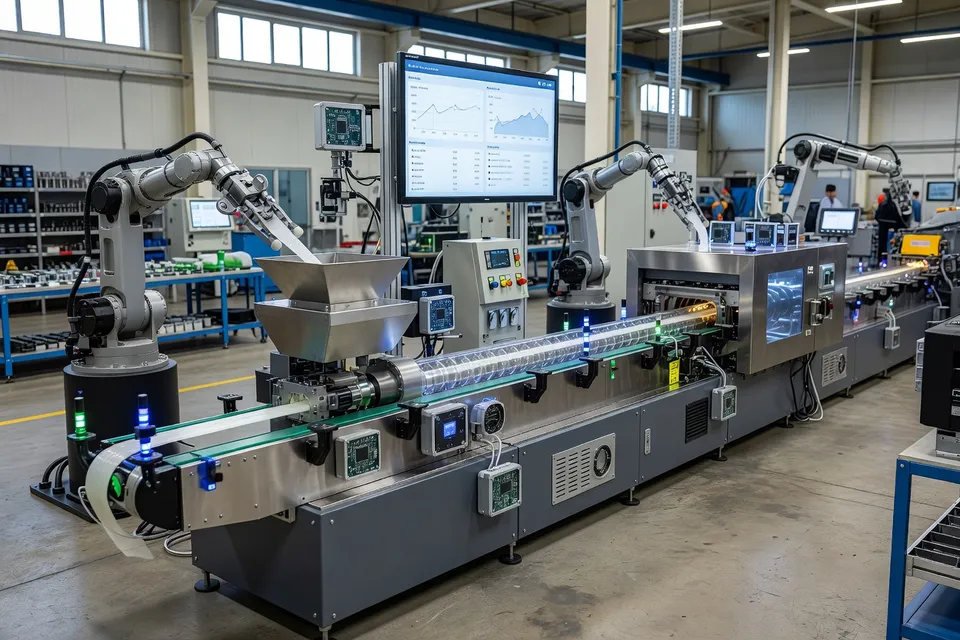
A demonstration laboratory will include digital twins of production lines, collaborative-robotics pilot cells and machine-vision technology. The center also plans to support IoT sensor integration, energy analytics, advanced mold design and additive-manufacturing trials for tooling.
The practical benefit is a lower-risk route to testing. A processor can evaluate a proposed application, train personnel and define a project before committing to a full plant-wide rollout. That is particularly relevant for small and medium-sized companies, where an unsuccessful automation project can consume a disproportionate share of capital and engineering time.
Skills become part of the equipment strategy
The Colombian initiative also plans training for plant data analysts, additive-manufacturing technicians and collaborative-robotics technicians. That focus addresses a common weakness in digital projects: equipment may be installed before the plant has people who can interpret the data, maintain the systems or translate analytics into process changes.
For machinery suppliers, this creates an opportunity to sell more than hardware. A complete project may require sensors, control integration, software models, data governance, operator training and service support. For processors, the purchasing question becomes broader than whether a machine has connectivity. They must determine whether the system can communicate with existing controls, whether data can be used by production and quality teams, and who will own the model when the recipe or material changes.
Inline visibility links sustainability with uptime
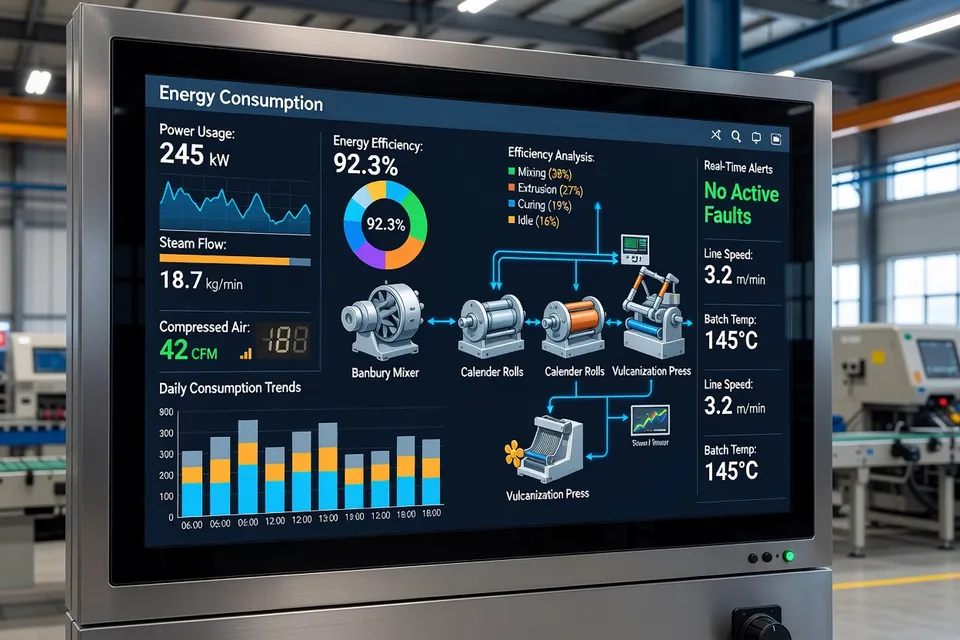
Energy analytics gives the digital strategy another operational target. Rising energy costs are among the pressures cited behind i4Plas, while Siemens is positioning predictive maintenance and life-cycle digitalization alongside machinery automation. Monitoring energy use at the equipment or process level can help plants distinguish a normal change in production demand from an avoidable loss in efficiency.
The same principle applies to maintenance. Predictive systems are most useful when they support a defined action, such as scheduling an inspection, checking a component or preventing an unstable run. If alerts are not connected to maintenance procedures and production priorities, additional data can create noise rather than control.
The emerging model is therefore not a single software purchase. It is a layered operating system for polymer production: digital twins for design and validation, sensors and inline analytics for process visibility, artificial intelligence for prediction, and trained personnel for intervention. As processors handle more recycled feedstocks and face tighter pressure on energy and labor, the plants that gain the most from these technologies will be those that connect each digital capability to a measurable production decision.
Editorial Insights
- What should processors measure before investing in digital transformation?
- The strongest business case usually begins with a clearly defined loss: unstable quality, excessive scrap, unplanned downtime, high energy use or lengthy changeovers. Digital tools create value when they improve a measurable operating result; connectivity without a linked decision can simply add cost and data-management work.
- Can inline analytics make recycled polymers as predictable as virgin materials?
- Inline monitoring can reduce uncertainty by detecting changes in viscosity, pressure or melt behavior while production is underway, allowing faster adjustments and better material classification. It cannot eliminate contamination, inconsistent sorting or inadequate incoming-material controls, so the most reliable approach combines real-time data with laboratory testing, supplier qualification and disciplined process engineering.
- What risks arise when production decisions depend increasingly on algorithms?
- A model can inherit bias from incomplete data, fail when materials or recipes change, and generate alerts that operators cannot interpret or act upon. Plants therefore need clear responsibility for model validation, cybersecurity, data quality and human override, especially where an automated intervention could affect worker safety, product compliance or the acceptance of recycled content.
- How can smaller processors adopt advanced digital systems without becoming dependent on complex platforms?
- A staged approach is more practical than a plant-wide conversion: establish reliable sensor data, connect one high-value process, validate the result and then expand. Open interfaces, portable data formats, transparent ownership of operating data and access to independent technical support can reduce vendor lock-in and make digital investment more manageable for smaller companies.
- How should digital performance claims be judged against sustainability goals?
- Energy savings, reduced scrap and longer equipment life are meaningful only when measured against a defined baseline and assessed across the full production system. A digital upgrade should not be treated as sustainable merely because it uses artificial intelligence; its value depends on whether it lowers material and energy impacts without creating excessive hardware, data-processing or maintenance burdens.
References
- 1.經濟日報. (2026, September 18). 西門子數位驅動,加速塑橡膠產業智慧升級. 經濟日報.
- 2.Thompson, L. (2026, September 22). Colombia launches LatAm’s first digital transformation center for plastics industry. ColombiaOne.com.
- 3.Plastics Engineering. (2026, September 21). Industry 4.0. Plastics Engineering.
- 4.Plastics Engineering. Business. Plastics Engineering.
- 5.Extrusion International. Extrusion International.
- 6.Extrusion International. Extrusion International USA. Extrusion International.
- 7.Plastics Machinery & Manufacturing. Plastics Machinery & Manufacturing.
- 8.中央社. (2026, September 21). 中央社. 中央社.