

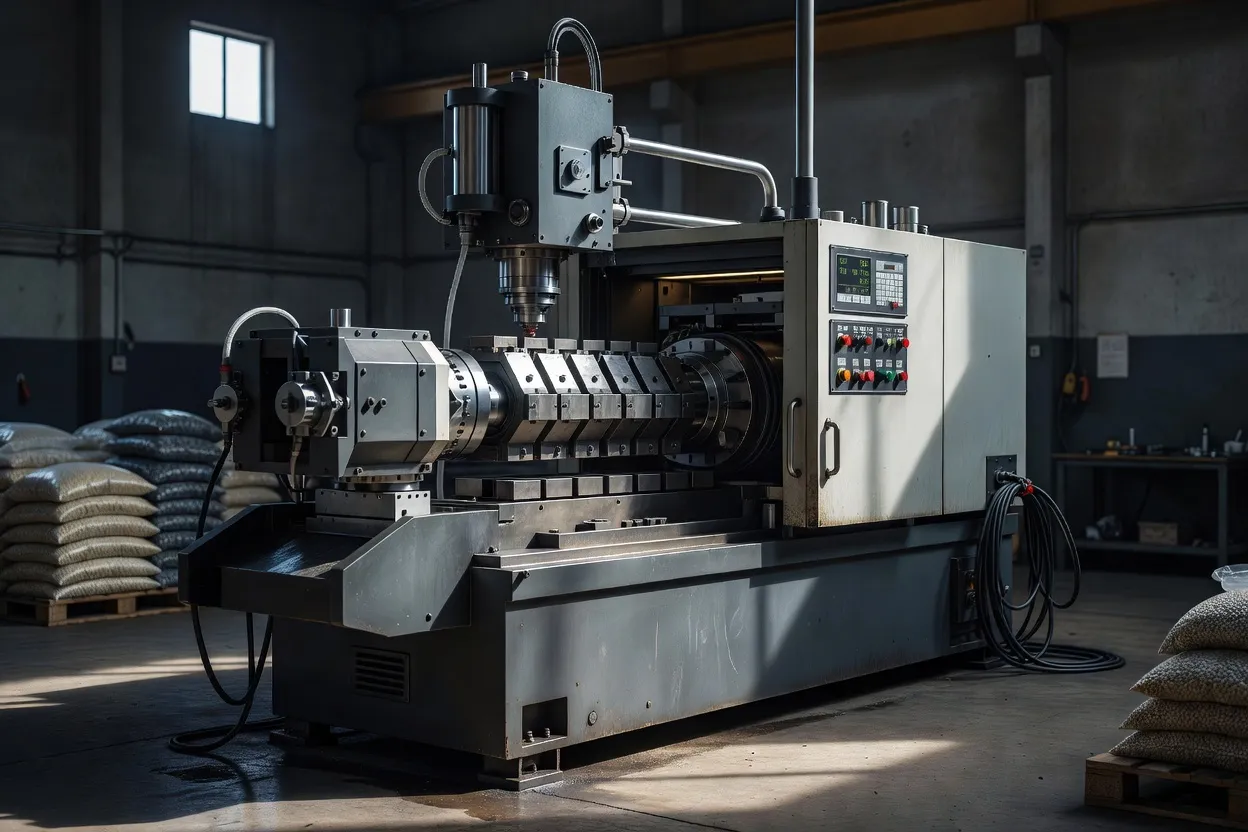
The plastics machinery sector is moving AI beyond dashboards and alerts. New systems are beginning to predict part quality before a mold opens, adjust molding conditions without waiting for an operator, and connect machine-level decisions with broader factory management.
That shift matters because processors have long collected production data without always being able to act on it quickly. The emerging model links sensors, software and machine controls so that information generated during a cycle can influence the next one. For converters facing variable recycled feedstocks, labor shortages and tighter quality expectations, the value is not simply better visibility. It is a shorter path from detecting a problem to correcting it.
From quality inspection to process intervention
Fu Chun Shin (Fu Chun Shin Machinery Manufacturing Co., a Taiwan-based injection molding machine manufacturer) demonstrated the direction at TaipeiPlas 2026 with an AI quality self-monitoring function integrated into the machine control box. The system uses virtual metrology to predict product weight and dimensional quality in real time before mold opening, rather than relying solely on testing after molding.
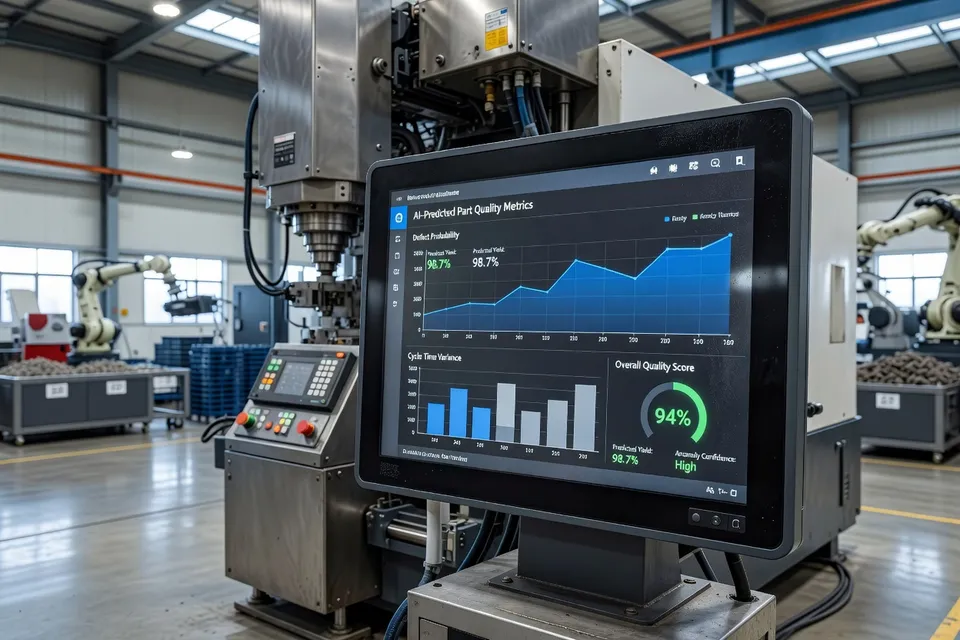
The distinction is operationally significant. A conventional inspection workflow can identify a defect only after material, machine time and handling capacity have already been consumed. Predictive quality information gives the processor an opportunity to intervene earlier. FCS says prediction models can be changed through software, allowing the same system to support different products and making the approach relevant to high-mix, low-volume production.
The company also paired quality prediction with mold water-flow and temperature sensing and control. Its stated operating principle is to establish flow control before temperature control, linking thermal stability to the condition of the cooling circuit rather than treating mold temperature as an isolated setting.
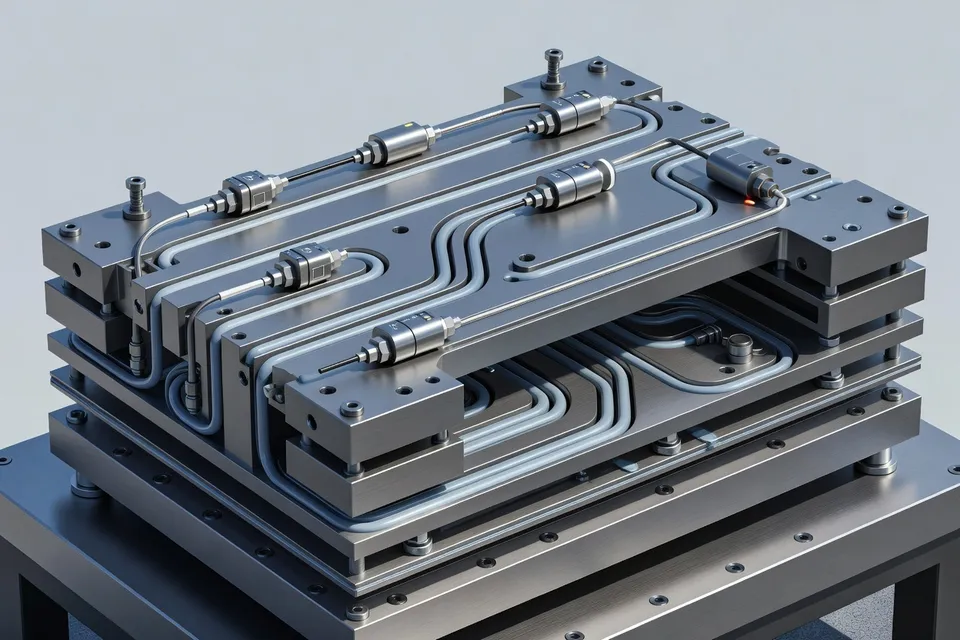
For processors, that points to a broader change in machine design. AI is most useful when it is connected to variables that can be changed automatically. A quality model that only produces a warning still leaves the final decision with an operator. A model tied to molding parameters can become part of a closed-loop process, provided the underlying data is reliable and the correction limits are properly defined.
The machine becomes an active production partner
Haitian (Haitian International Holdings Ltd., an injection molding machine manufacturer) has made AI software a standard feature of its fifth-generation injection molding machines, according to Plastics Machinery Manufacturing. Its HT-Xtend software is designed to support less experienced operators by adjusting molding processes automatically to improve stability.
KraussMaffei (KraussMaffei Group, a plastics machinery manufacturer) is taking a similar approach with APCPlus. The system compensates for outside influences on molded-part quality, including changes in material viscosity, by adjusting the injection molding machine to maintain consistent output. The company says the technology can also reduce material use, energy consumption and cycle time.
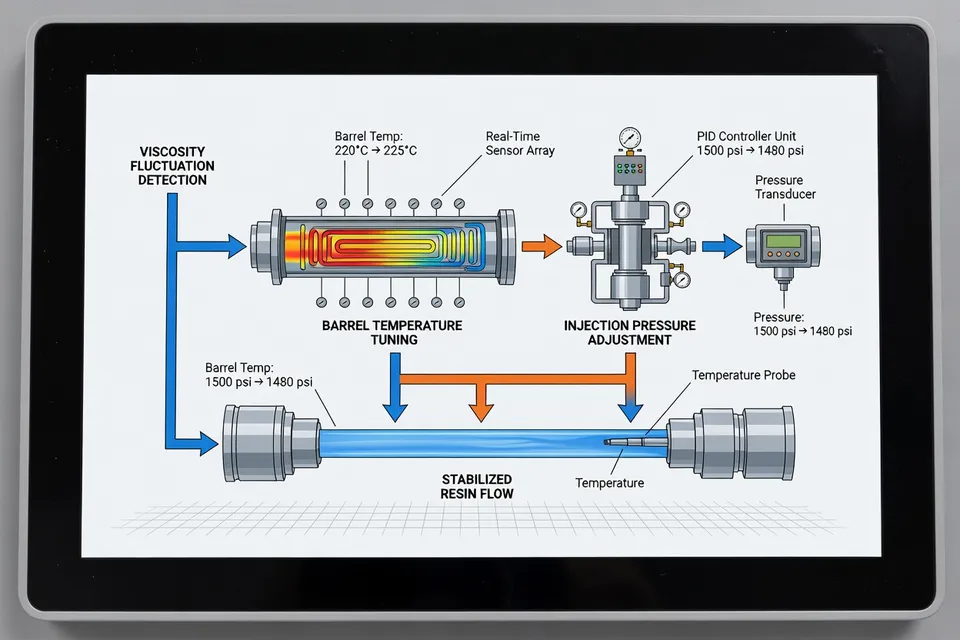
Those functions address a persistent weakness in plastics production: recipes that work under one set of conditions can drift when resin behavior, ambient conditions or equipment performance changes. Automatic compensation does not remove the need for process engineering, but it can reduce the frequency with which engineers must chase routine variation.
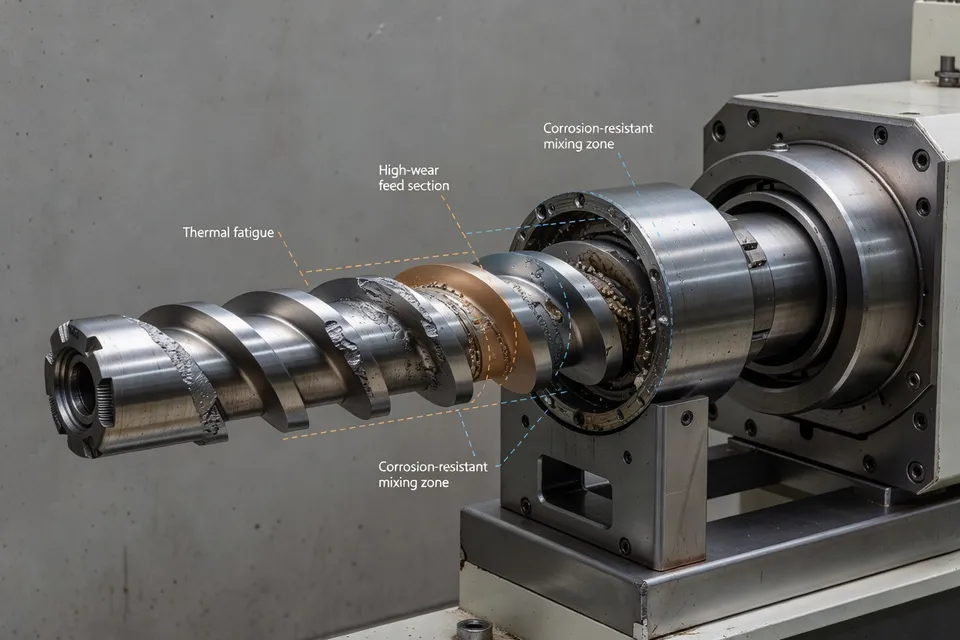
The same principle is being applied to maintenance. KraussMaffei’s liveCare monitors component wear, including screw condition, to support condition-based maintenance. Instead of replacing parts only at fixed intervals or waiting for a failure, processors can use machine data to determine when service is needed. That can help maintenance teams focus on equipment showing evidence of deterioration while reducing avoidable interruptions.
Plant data must lead to plant decisions
Machine intelligence is also expanding beyond individual presses. KraussMaffei’s socialProduction platform monitors production, records energy consumption and identifies events such as machine stoppages, alarms or operating parameters moving outside normal limits.
FCS connected all of its TaipeiPlas 2026 machines to its iMF 4.0 Intelligent ManuFactory system, presenting the platform as a plant-level hub rather than a single-machine application. That architecture matters for processors running multiple machines, auxiliary equipment and production recipes. The commercial question is no longer only whether one press can optimize its cycle. It is whether a factory can coordinate quality, energy and uptime information across the production floor.
FCS also showed an all-electric injection molding system developed with the Chung Yuan Christian University Smart Manufacturing R&D Center. The system combines machine automation with real-time, multistage energy-consumption monitoring. FCS says the approach can examine processing stability when using post-consumer recycled materials by analyzing energy behavior during production.
That application connects AI-enabled control with circular-material challenges. Recycled feedstocks can introduce greater variability than virgin materials, and processors need evidence that a material change has not undermined dimensional or process stability. Energy data is not a substitute for quality testing, but it can provide another signal for identifying changes during production.
Software is becoming part of operator training
The transition from monitoring to control is not limited to automatic parameter changes. Machinery suppliers are also using AI to reduce the time required to diagnose problems and train operators.
Arburg (Arburg GmbH + Co KG, a manufacturer of plastics processing machinery) has introduced an “Ask Arburg” chatbot that searches the company’s knowledge base for answers to equipment-operation questions. Wittmann is developing Aim4Help, an AI knowledge database for troubleshooting equipment, while Reifenhäuser launched its NEXT system with a chatbot intended to help less experienced line operators handle complex tasks using company expertise and live production data.
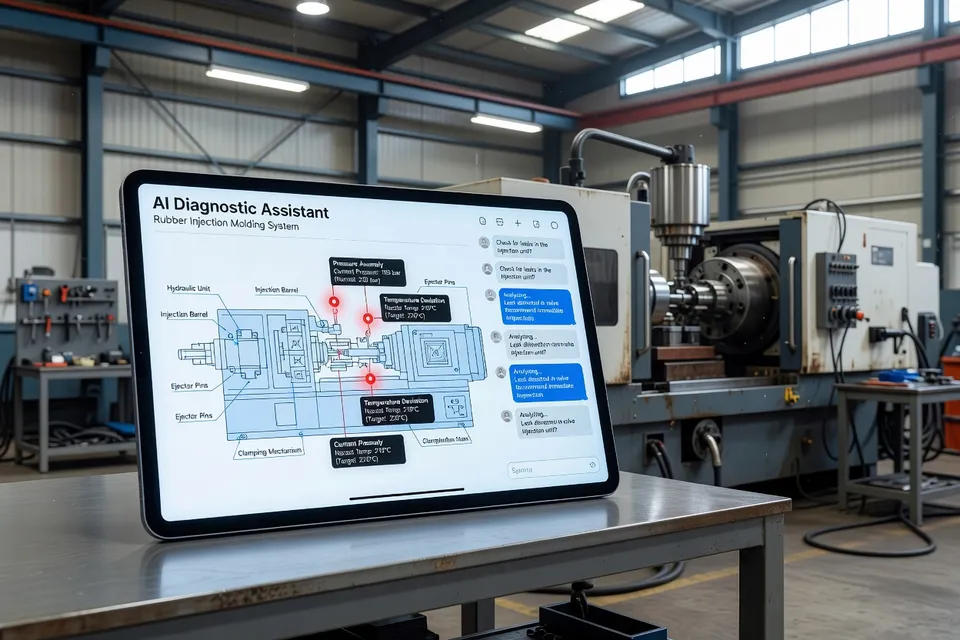
These tools do not directly close the process loop, but they can shorten the human loop. In a plant where experienced technicians are unavailable on every shift, faster access to relevant machine knowledge can reduce prolonged stoppages and help operators distinguish between a routine adjustment and a problem requiring specialist intervention.
At the same time, the rise of natural-language interfaces raises a control question: recommendations must remain traceable and governed. The most practical systems are likely to be those that show why a change is suggested, define who can approve it and record what happened afterward.
Why adoption will depend on integration
TaipeiPlas 2026 reflected the convergence of artificial intelligence, automation, circular materials and systems integration. FCS demonstrated AI-assisted quality monitoring, Chen Hsong presented production management through its iChen Cloud platform, and Huarong showed AI vision technology for quality inspection. The exhibition attracted buyers from 77 countries, while its forum drew nearly 470 participants.
The breadth of applications suggests that AI is no longer being positioned as a standalone feature. Suppliers are attaching it to inspection, maintenance, energy monitoring, operator support and production management. For processors, that creates both opportunity and a purchasing challenge. A machine with an intelligent function may deliver limited value if its data cannot be connected to quality systems, enterprise software or the rest of the plant.
Implementation will therefore depend on more than model accuracy. Processors will need consistent sensor data, clear parameter ownership and procedures for validating automatic corrections. They will also need to decide where human approval remains mandatory, particularly for new materials, new molds and products with demanding regulatory or customer specifications.
The industry’s most consequential step is the move from describing what happened to influencing what happens next. Once AI predictions are connected to machine controls, maintenance planning and factory-level systems, plastics processing becomes less dependent on delayed inspection and individual memory. The result is not a fully autonomous plant by default, but a production environment in which machines can detect variation, recommend action and, within defined limits, correct the process while it is still running.
Editorial Insights
- What determines whether AI can safely move from recommending process changes to making them automatically?
- The decisive factors are the consequence of an error, the reversibility of the adjustment and the quality of the underlying data. Low-risk changes can operate within validated limits, while decisions affecting safety, regulatory compliance or product release should retain human approval, with clear thresholds, audit trails and tested override procedures.
- Can AI make recycled plastics as predictable as virgin materials?
- AI can compensate for some variation in melt behavior, contamination and batch consistency, but it cannot eliminate differences in feedstock quality. Its strongest contribution is to detect changing material behavior earlier and adjust the process within validated boundaries; material characterization and conventional quality testing remain essential.
- Where should processors expect the clearest financial return from AI-enabled machinery?
- The most immediate returns are likely to come from lower scrap, fewer unplanned stoppages and reduced dependence on scarce troubleshooting expertise. Energy savings and material efficiency can strengthen the business case, but value will depend on integrating machine intelligence with quality, maintenance and production systems rather than purchasing isolated software features.
- Will greater automation reduce the importance of skilled plastics-processing personnel?
- It is more likely to change the nature of expertise than remove it. Operators may spend less time making routine adjustments and more time validating models, handling unfamiliar conditions and investigating exceptions, which makes process knowledge especially important when automated recommendations conflict with production realities.
- What is the greatest risk of connecting AI directly to factory controls?
- The central risk is not only an incorrect prediction but an incorrect action repeated at production speed. Model drift, faulty sensors or incomplete operating context can turn a small error into systematic scrap or equipment damage, so deployment requires continuous validation, restricted access, transparent reasoning and a reliable way to return control to people.
References
- 1.Plastics Machinery Manufacturing. (2026, September 22). Plastics machinery makers develop more smart and AI-driven technology. Plastics Machinery Manufacturing.
- 2.Plastech.pl. (2026, September 24). TaipeiPlas 2026: Circular materials, AI and automation. Plastech.pl.
- 3.Plastech.pl. Digitalization. Plastech.pl.
- 4.Plastics Machinery Manufacturing. Have smart factory technologies reached the tipping point for plastics processors? Plastics Machinery Manufacturing.
- 5.Plastics Technology. Plastics Technology.
- 6.Plastech.pl. Plastics. Plastech.pl.
- 7.Society of Plastics Engineers. Industry. Society of Plastics Engineers.
- 8.BBC News. (2026, September 24). AI helps turn old milk bottles into new ones. BBC News.
- 9.Plastech.pl. Technologies. Plastech.pl.