


Recent materials research is pushing polymer development in two directions that matter directly to processors and product designers: improving fire safety without relying solely on conventional additive packages, and replacing part of the fossil-carbon route with carbon dioxide-derived feedstocks. The chemistry is advancing, but the evidence still sits mainly at the laboratory and research-announcement stage rather than in demonstrated industrial production.
Safety moves into the polymer structure
A research team reported a strategy using ZIF-67, a porous metal-organic framework, with different flame-retardant components to improve the fire behavior of polymer materials. Newswise described the approach as a route toward higher fire resistance, lower smoke release and more adaptable high-performance polymer composites.
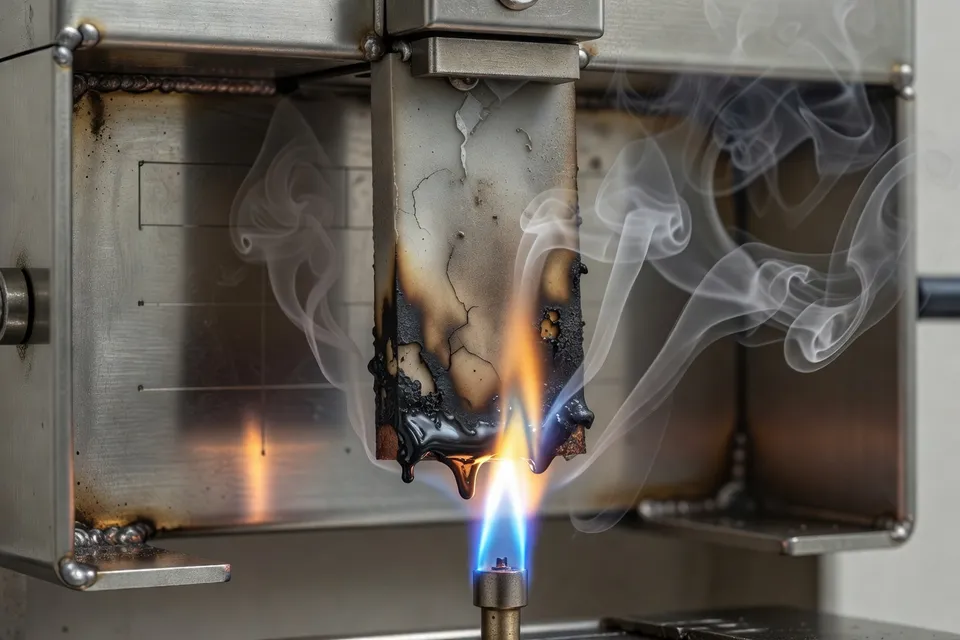
The significance for compounders is the mechanism. ZIF-67 is not presented simply as another bulk filler. Its porous structure gives researchers a platform for combining or coordinating flame-retardant components inside a composite design. That could help researchers tune the relationship between ignition resistance, smoke generation and mechanical performance rather than treating flame retardancy as an isolated pass-or-fail property.
For processors, however, the reported development does not yet establish a production-ready formulation. The available account does not provide a commercial resin grade, processing window, loading level, long-term aging data or a comparison with an incumbent flame-retardant system. Those missing measurements matter because a laboratory improvement can be lost during compounding, molding, moisture exposure or repeated thermal cycling.
The next verification step should therefore be practical rather than purely chemical: confirm whether the ZIF-67 system maintains fire performance after processing while preserving impact strength, surface quality, electrical properties and recyclability. Until those results are reported, the technology is best treated as a promising composite design strategy, not a finished replacement for established safety packages.
Carbon dioxide becomes a feedstock question
A separate report covered researchers developing a high-performance plastic from carbon dioxide that can be repeatedly recycled. The claim links two objectives that are often assessed separately: lowering dependence on conventional carbon sources and retaining a material pathway compatible with multiple recycling cycles.
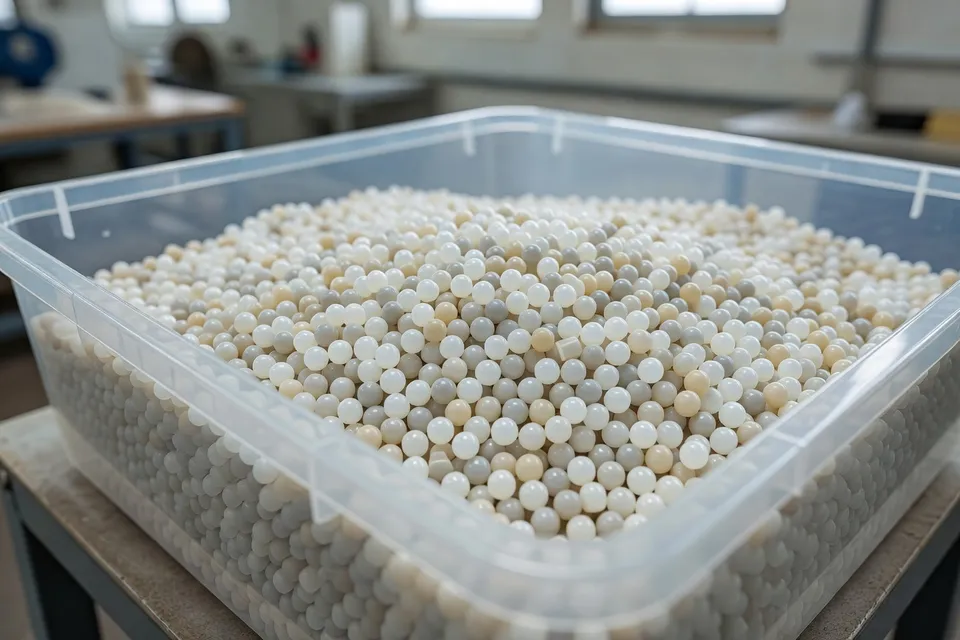
That combination is more consequential than a material described only as “bio-based” or “carbon-efficient.” A feedstock change affects the beginning of the polymer life cycle; repeat recycling addresses what happens after conversion and use. Together, they raise the possibility of retaining material value for longer, provided the polymer can be separated, reprocessed and reused without unacceptable property loss.
The available report does not establish a closed commercial loop. It does not provide a plant capacity, lifecycle boundary, recycling-cycle count, energy balance or benchmark against a named incumbent polymer. Nor does it show whether repeated recycling applies to clean laboratory material or to products containing pigments, fillers, coatings, adhesives and other additives. Those distinctions will determine whether the chemistry can move from a controlled experiment into packaging, durable goods or technical parts.
For recyclers and converters, the commercial question is not only whether the plastic can be recycled repeatedly. It is whether the material can be identified, collected and processed within existing infrastructure. A polymer that performs well in a laboratory but enters mixed waste without a sorting signal may deliver less practical carbon benefit than its chemistry suggests.
A wider materials pipeline
The source pages also show how broad the current polymer innovation pipeline has become. AZoM’s materials index highlighted work on conducting polymers, renewable waste as a possible replacement for petroleum in carbon-fiber production and engineering thermoplastics receiving the highest rating in a high-voltage surface-tracking test at 900 V. These developments address different constraints—electrical performance, feedstock choice and safety qualification—but they share a requirement: material chemistry must be matched with a measurable use condition.
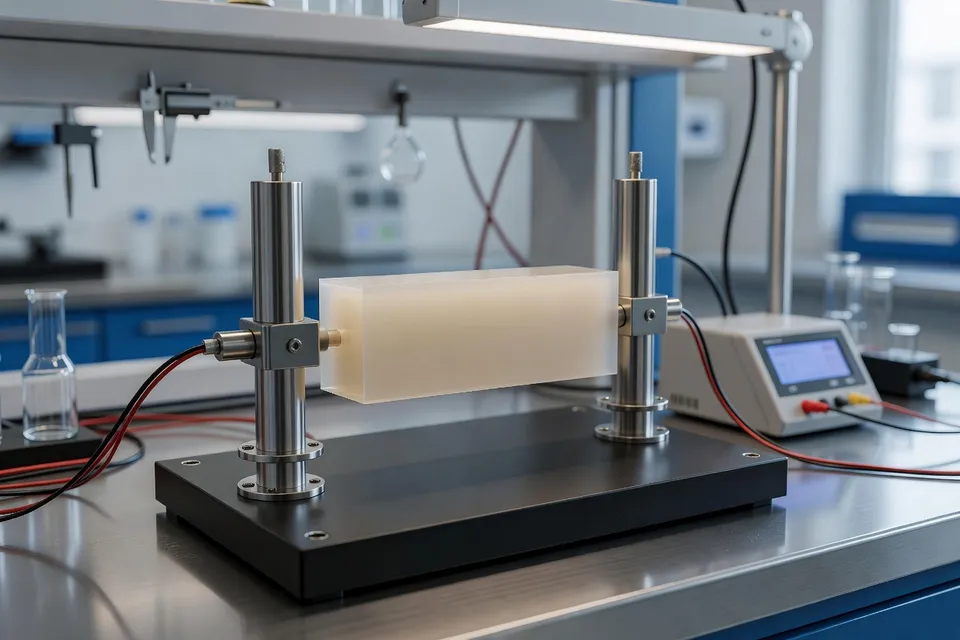
That distinction is important for industry readers. A new molecular design can improve a property in isolation, while a commercial material must satisfy several limits at once. A flame-retardant composite must withstand processing and mechanical service. A carbon-derived plastic must retain performance through recycling and fit waste-management systems. A high-voltage resin must pass a defined electrical test at the stated voltage, not merely claim better insulation.
What processors should watch next
The strongest near-term signal is not a single replacement resin but a shift toward polymers designed around multiple constraints. Fire safety research is linking porous structures with flame-retardant chemistry. Carbon-dioxide-derived plastics are being evaluated alongside repeat recycling. Other work is pairing conducting polymers with molecular doping or using renewable waste in carbon-fiber manufacture.
None of these reports, on the available evidence, closes the gap between laboratory performance and commercial qualification. Processors evaluating such technologies should ask for the formulation, test method, specimen history, processing conditions and property retention after aging or recycling. They should also separate a material’s intrinsic carbon origin from its verified lifecycle emissions.
That discipline will determine which chemistries progress. The field is producing credible mechanisms for safer and potentially lower-carbon polymers, but adoption will depend on whether those mechanisms survive the less controlled conditions of compounding, conversion, use and recovery.
Editorial Insights
- What evidence is needed before a new flame-retardant structure can be considered for production qualification?
- Start with the processed compound, not the laboratory powder: verify dispersion, loading tolerance and stability through the actual compounding and molding window. Qualification should then include fire performance after aging and thermal cycling, alongside impact strength, surface quality, electrical behavior and end-of-life handling; a single small-scale fire result is not enough to replace an established package.
- When can a carbon-dioxide-derived polymer deliver a credible commercial carbon advantage?
- Only when the full comparison uses the same lifecycle boundary and includes feedstock preparation, polymerization energy, conversion, collection and recycling losses. The claim becomes commercially meaningful when repeated recycling is demonstrated on realistic products containing pigments, fillers, coatings or adhesives, rather than only on clean laboratory material.
- What should a processor test first when assessing an unfamiliar polymer with several claimed performance benefits?
- Choose the use condition that is hardest to satisfy and build a controlled trial around it, rather than testing each property in isolation. The trial should define specimen history, processing conditions, measurement method and acceptance limits, then check whether improving one property creates an unacceptable loss in mechanics, appearance, electrical performance or recyclability.
- Can a recyclable polymer be adopted without changing how products are identified and recovered?
- Not reliably. Repeat reprocessing has limited practical value if the material cannot be distinguished, separated and routed through a compatible recycling stream; qualification should therefore include a sorting signal, collection route, contamination tolerance and property retention after realistic recovery operations.
- Where is the economic case most likely to fail when a research material reaches plant trials?
- The case can fail through more than resin price: specialized synthesis, low output, difficult dispersion, slower cycle times, scrap, tooling changes or added inspection may outweigh a lower additive level or a claimed carbon benefit. A pilot should therefore measure total cost per accepted part and compare it with the incumbent over enough runs to capture start-up variation, maintenance and quality-release effort.
References
- 1.AZoM. (2026, September 24). Materials research | Latest science news. AZoM.
- 2.Newswise. (2026, September 24). Materials science research news and press releases. Newswise.
- 3.The Economic Times. Scientists develop high-performance plastic from CO2 that can be repeatedly recycled. The Economic Times.
- 4.BASF. BASF media release. BASF.
- 5.Renewable Carbon. Biopolymers. Renewable Carbon.
- 6.Plastics Engineering. Industry. Plastics Engineering.