


ASEAN’s recycling opportunity is expanding with plastics demand, but uneven policy, pricing pressure and unverified supply remain the main barriers to scale.
Growth is not the same as recycling capacity
The global plastics market was valued at USD 533.59 billion in 2025 and is projected to reach USD 832.62 billion by 2034, with a 5.1% compound annual growth rate. Asia Pacific accounted for 53% of the market in 2025, while packaging was projected to represent 45.51% of the market in 2026. Those figures establish the commercial scale of the plastics system in which ASEAN recyclers operate, but they do not measure collection rates, recycled-content supply or the quality of recovered material in Southeast Asia.
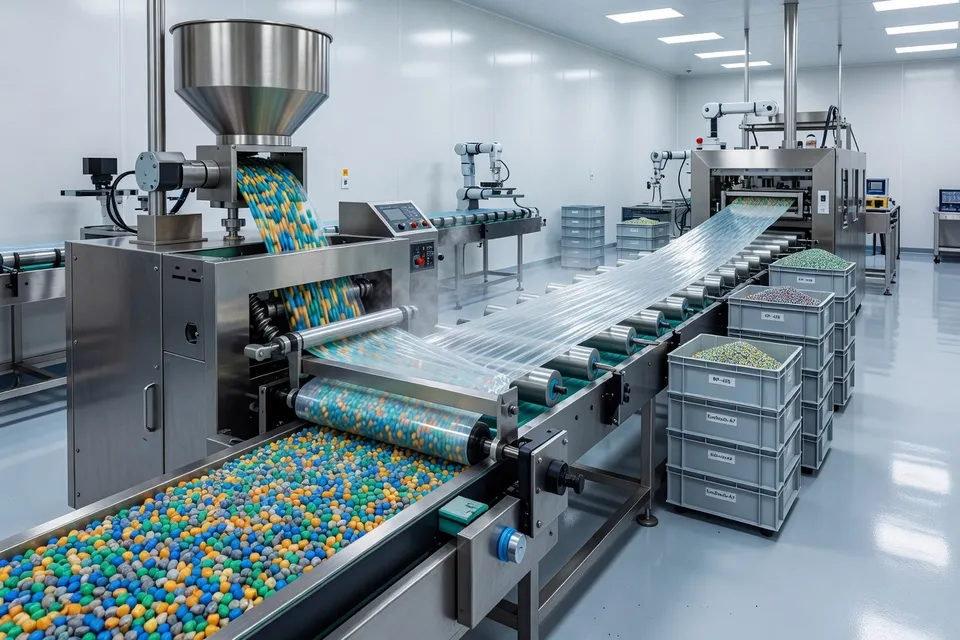
That distinction matters. A larger plastics market creates more potential feedstock and more demand for recycled polymers, yet it does not automatically produce the infrastructure, specifications or procurement commitments needed to move material through a recycling loop. The available market evidence points to growth in plastics consumption, while the recycling case still depends on policy execution and operating economics.
The immediate pressure is visible in resin pricing. Matium reported on September 4, 2026, that spot high-density polyethylene and high-molecular-weight polyethylene railcars had reached the 30s, with low-density and linear low-density polyethylene also trading at levels that allowed deals in the 30s. PET resin had fallen from its peak into the 70s, while clear regrind was reported in the 53-65 range depending on quality and intrinsic viscosity.

These observations are not an ASEAN-wide price index, and the source does not provide a single regional benchmark. They do, however, show why recyclers cannot rely on a simple assumption that virgin-resin volatility will always make recovered material competitive. When prime resin prices weaken, buyers can challenge recycled-content premiums unless recycled material offers dependable quality, traceability or compliance value.
Policy has to create a buyer, not only a target
Matium also reported that producers were seeking September price increases across several resin categories despite high inventories and subdued demand. Its cited market coverage said commodity PE, polypropylene, PVC and PET lacked sufficient cost support for increases, while automotive and construction demand remained soft. For recyclers, weak downstream demand can delay qualification work and make converters more cautious about changing established material inputs.
The policy question is therefore more specific than whether governments support recycling. ASEAN markets need rules that connect collection, processing and demand. A recycled-content requirement without recognized testing methods, accepted grades and enforcement can leave converters facing compliance uncertainty. Conversely, a requirement supported by clear specifications and predictable implementation can give recyclers a reason to invest in sorting, washing, extrusion and quality control.
The same source reported that Sumika Polymer Compounds Europe was expanding polypropylene mechanical-recycling capacity in France in response to upcoming mandatory post-consumer recycled-content requirements for automobiles. The development concerns Europe rather than ASEAN, but its mechanism is relevant: regulation becomes commercially actionable when it identifies a material stream, a downstream application and a date or requirement that changes purchasing decisions.
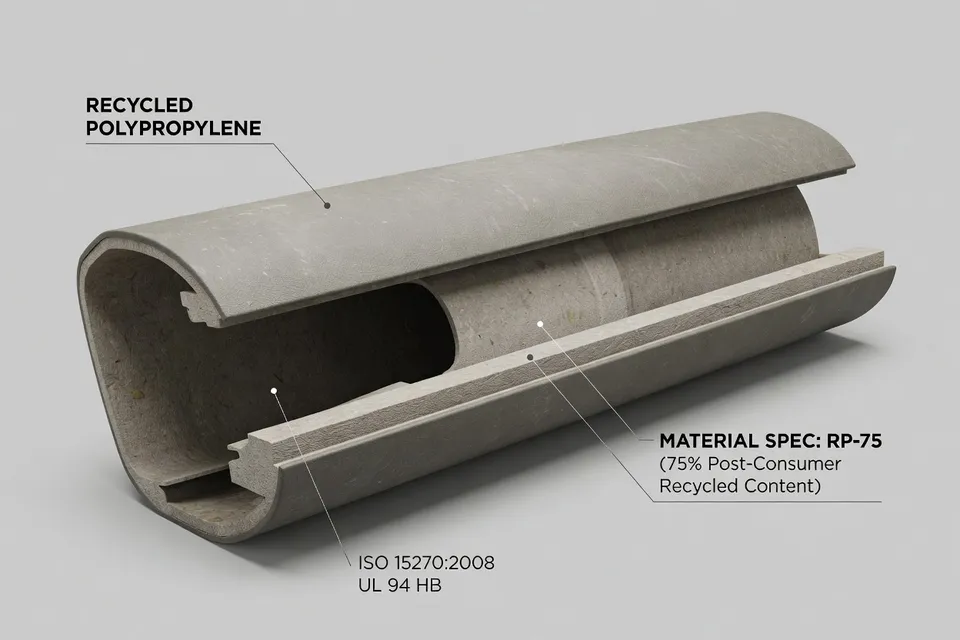
ASEAN policymakers and industry groups can draw a narrower lesson from that example. Broad recycling ambitions will have limited investment effect unless processors can identify which polymers, products and end markets will carry demand. Packaging, automotive components and consumer products may not accept the same recycled feedstock or the same contamination limits. A policy framework that treats them as interchangeable risks producing targets that are difficult to verify at the plant gate.
Trade and quality determine regional scale
PET illustrates the importance of market coordination. ICIS reported on September 4 that PE and PP markets in the Gulf Cooperation Council, Europe and India were under pressure from cost, logistics and supply concerns, even as downstream demand remained subdued. Its coverage also described higher PE and PP prices in the Middle East, supported by crude-oil and feedstock costs and geopolitical uncertainty. The report does not provide an ASEAN recycling forecast, but it reinforces the regional nature of polymer trade and the way freight, feedstock and geopolitical conditions can alter buying decisions.
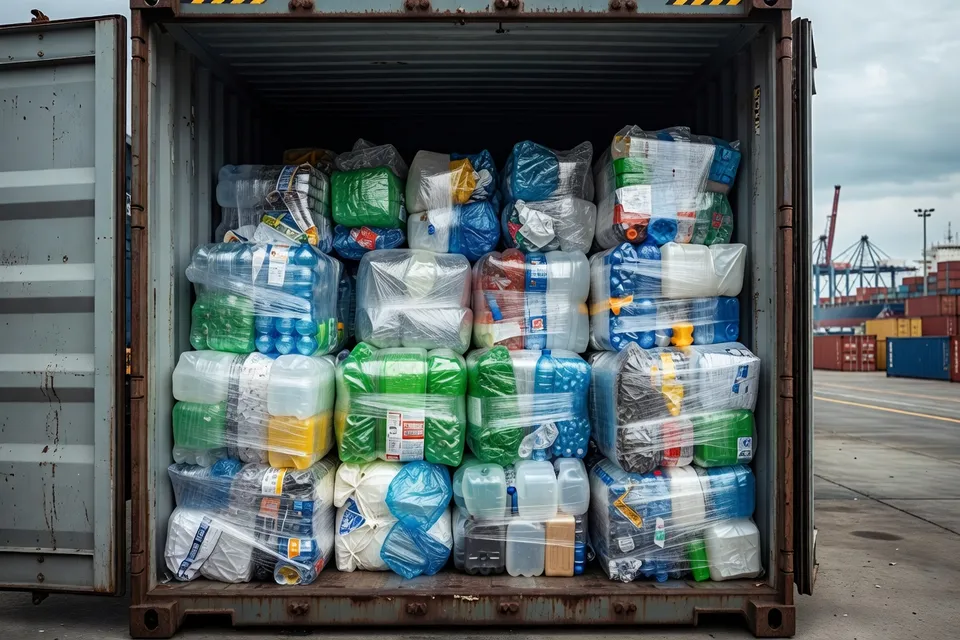
For ASEAN recyclers, cross-border trade raises two linked requirements. First, recovered material needs a specification that a converter in another country can understand and test. Second, customs and waste-shipment rules need to distinguish usable secondary raw material from poorly sorted waste. Without that distinction, regional supply can remain fragmented even when collection volumes rise.
Quality is already embedded in the pricing gap described by Matium: clear regrind values varied with quality and intrinsic viscosity. That is a commercial signal, not proof of a standardized ASEAN market. It indicates that buyers price recovered material according to measurable properties, and that recyclers able to document those properties are better positioned than suppliers selling an undifferentiated “recycled” claim.
The evidence gap remains material
The reviewed sources do not establish ASEAN-wide recycling rates, country-by-country collection performance, installed recycling capacity, recycled-content mandates or verified greenhouse-gas reductions. They also do not show a completed ASEAN plant result tied to a common policy framework. Those gaps limit how far the growth story can be taken.
The strongest supported conclusion is narrower: plastics demand and Asia Pacific’s market weight create a substantial commercial setting for recycling, while resin oversupply, variable pricing and cross-border market conditions can weaken the economics of recovered material. Policy alignment is the mechanism that can connect those forces to investment, but the available evidence does not show that alignment has already been achieved across ASEAN.
For processors, the practical test is whether a policy creates a bankable outlet for a defined material grade. That means a known polymer, an accepted contamination or intrinsic-viscosity range, a buyer specification and a compliance obligation that can be audited. Until those elements converge across markets, ASEAN recycling growth will remain a collection of national opportunities rather than a fully integrated regional system.
Editorial Insights
- What must be verified before a recycled polymer grade can be sold across more than one ASEAN market?
- The supplier needs a documented grade definition covering polymer identity, contamination, moisture, additives and application-specific properties such as intrinsic viscosity for PET. Those limits must be measured with recognized methods, linked to traceable batch records and accepted by the receiving converter and relevant authorities; a generic recycled-content claim is not enough to support regional trade.
- When does a recycled-content mandate create a bankable recycling market rather than another compliance target?
- It becomes investable when the rule identifies the product category, eligible polymer, minimum content, verification method and implementation timetable, while assigning responsibility for reporting and enforcement. Without a defined buyer obligation and an accepted material specification, collection and processing capacity can grow without producing a dependable outlet or return on capital.
- How should recyclers sequence investment when policy, feedstock quality and resin prices remain uncertain?
- Start with a narrow, contract-supported stream—such as a defined PET or polyolefin grade—and validate collection yield, sorting losses, washing performance and product qualification before adding capacity. Expansion should follow measured offtake and batch-quality data, not regional demand projections alone, because low virgin-resin prices can quickly remove an assumed recycled-content premium.
- Which quality controls should be established before recycled resin is approved for a sensitive application?
- The approval plan should define incoming-bale controls, sorting and washing criteria, contaminant testing, polymer identification and application-specific performance tests, with laboratory release retained as the final gate. The required evidence changes by use: a non-critical product may tolerate a wider property range, while food-contact or safety-relevant applications require validated decontamination, documentation and regulatory acceptance.
References
- 1.OPIS. Plastics & polymers archives. OPIS.
- 2.Fortune Business Insights. Plastics market size, share, trends | Growth report [2026-2034]. Fortune Business Insights.
- 3.Association of Natural Rubber Producing Countries. Market news. ANRPC.
- 4.ICIS. Polyethylene terephthalate. ICIS.
- 5.Matium. Market update. Matium.
- 6.Plastics Technology. September 2026 commodity resin prices generally trending flat to down. Plastics Technology.
- 7.Plastics Information Europe. Plastics Information Europe. Plastics Information Europe.
- 8.Research and Markets. Synthetic rubber market—global forecast 2026. Research and Markets.