

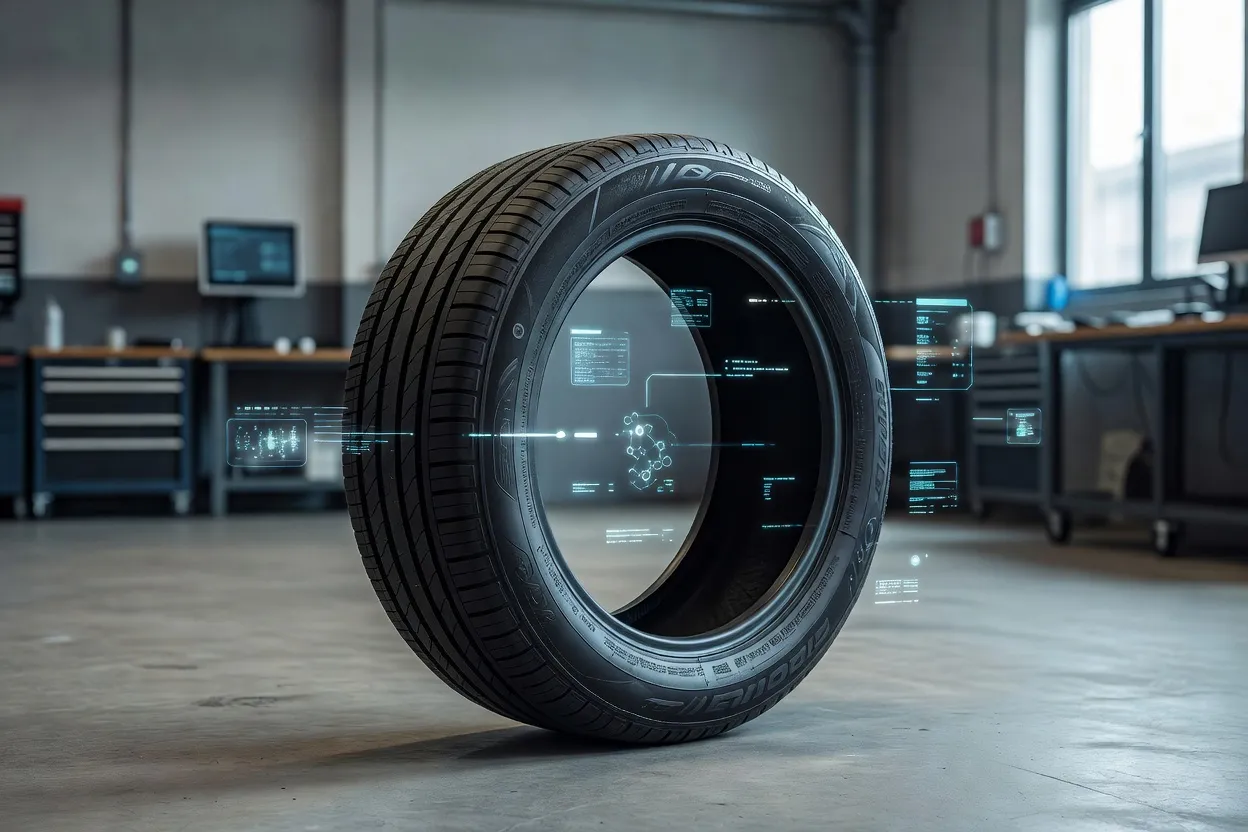
The clearest plant-facing result in this group comes from the Institute for Plastics Processing (IKV) at RWTH Aachen University, which developed an intelligent search engine for rubber compounds during a project reported in 2026. The system connects the requested final-product properties with a recipe and mixing instructions, then models how the internal mixer reaches the required compound quality.
That approach targets a familiar development bottleneck. Rubber compounds are made in discontinuous internal mixers from rubber, fillers, plasticizers, and other chemicals. Each recipe needs its own order of addition and process settings. In the conventional workflow, engineers determine those settings iteratively, using expert knowledge and production machinery because laboratory-to-production scale-up is not yet reliable.
The project does not describe an autonomous mixer that releases every batch without review. It describes mathematical models and an optimization route intended to reduce the number of physical iterations. That distinction matters to a compounder: a predicted recipe is a development instruction until the plant confirms incorporation, dispersion, distribution, and final properties.
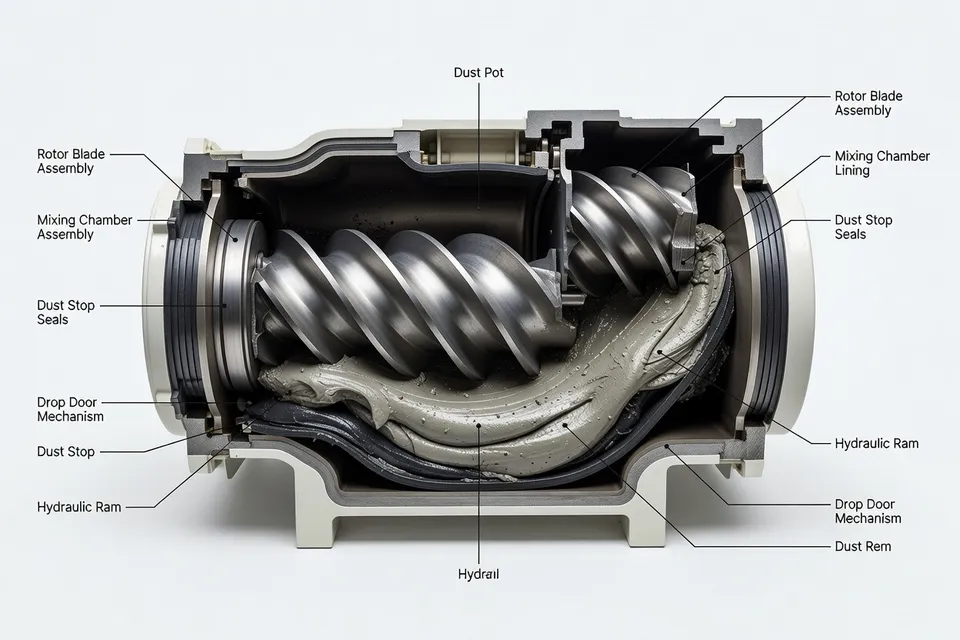
The mixing step is the measurable target
IKV used symbolic regression to describe the internal mixer’s ram path and torque, together with mixing quality. The researchers then extended the models with physical relationships, including torque as a function of shear stress. The modeled quality measures included filler incorporation, dispersion, and distribution.
The project page reports a reduction in energy consumption of up to 40% after model optimization. The source does not present that figure as a universal saving for every recipe, mixer, polymer, or production site. It is a project result tied to the modeled mixing process, so a processor would still need to verify the result against its own batch size, rotor geometry, temperature limits, and quality release tests.
The search engine’s proposed output is broader than a formulation list. It is intended to identify both the recipe and the mixing instructions required to reach the specified product properties. That pairing addresses a common failure mode in scale-up: the right ingredient percentages can still produce an off-spec compound when the addition sequence, ram movement, torque history, or mixing time is wrong.
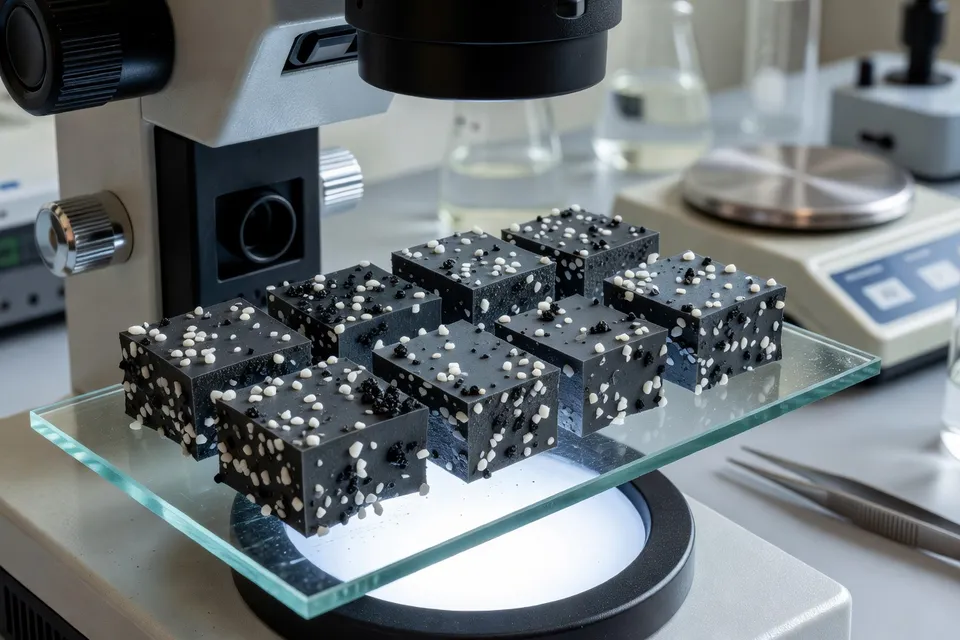
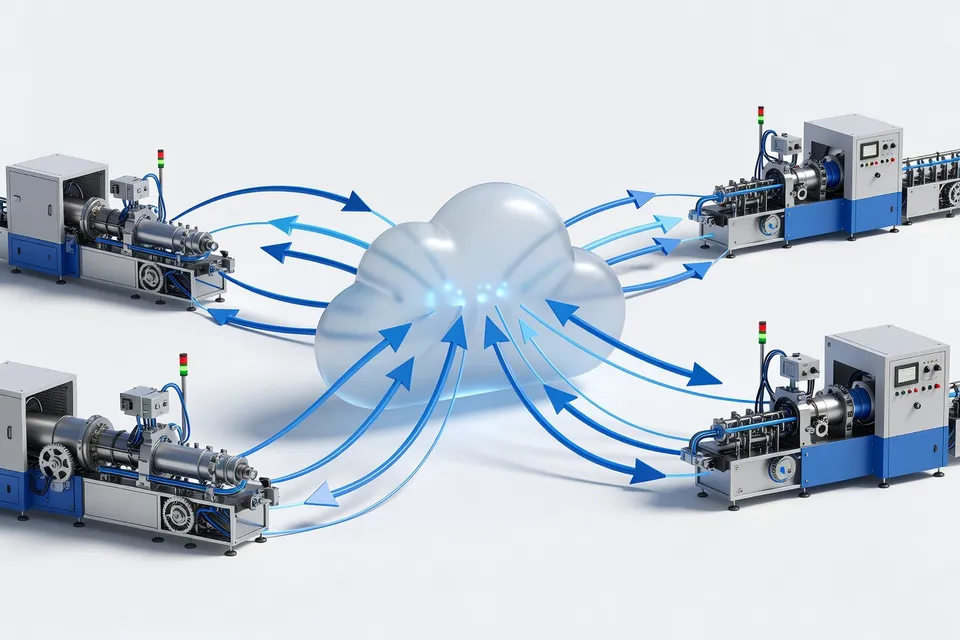
The project’s supporting description places the work across raw materials, mixing, extrusion, injection molding, and final-product properties. It also describes a platform linked to partner databases, with synchronized data masked and filtered through a cloud connection. Those details identify the data problem behind the AI claim. The model needs comparable records that connect materials and process conditions with measured compound performance.
AI changes the search, not the release decision
Other supplied reports place the same issue inside tire manufacturing. Yokohama Rubber has been associated with AI systems for tire performance, manufacturing, and internal information retrieval. NEC separately announced work involving generative AI and retrieval-augmented generation. Those systems can shorten access to engineering records and help users search controlled company information, but information retrieval is not the same as a closed-loop compound controller.
For a plant, the ownership remains divided:
- The formulation engineer defines the target properties and permitted raw-material window.
- The process engineer checks addition order, mixing time, torque, temperature, and power input.
- The laboratory confirms dispersion and physical properties.
- QA decides whether the trial batch can enter production or ship.
- Maintenance must confirm that the mixer and sensors are producing trustworthy signals.
An AI recommendation that cannot be traced to a material lot, machine condition, and test result cannot replace that chain. It can rank a smaller set of trials, flag a process pattern, or retrieve a prior recipe. It cannot establish equivalence where the source data do not contain the relevant polymer, filler, additive, equipment, or geography.
Tire plants are applying models beyond formulation
The supplied tire-industry material also describes digital twins and machine-learning applications aimed at tire-process optimization and factory efficiency. These applications extend the development question from “Which compound should be mixed?” to “Which machine state produced the acceptable tire, and can that state be repeated?”
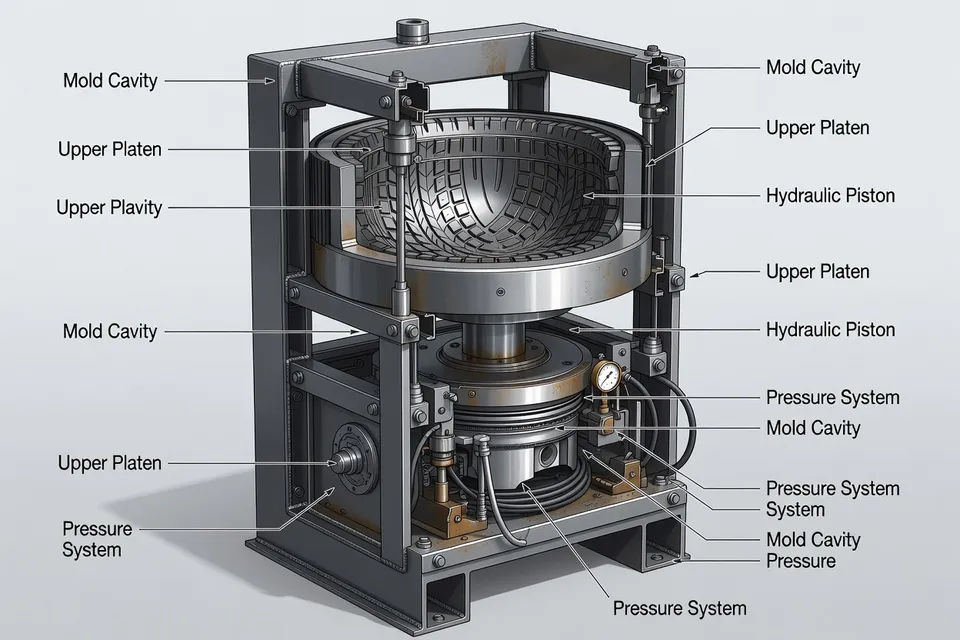
That distinction separates development-cycle compression from production yield. A digital twin can represent a process and test operating scenarios; a machine-learning system can identify relationships in historical production data. Neither description, by itself, proves that a tire plant has removed laboratory testing, eliminated scrap, or released product without conventional controls.
A reported factory-efficiency improvement must be read with its measurement definition. The supplied coverage does not provide one common baseline, time box, unit, and geography for all of the tire and machinery examples. They should not be ranked as if they were comparable plant trials. One site may measure equipment efficiency, another may measure development time, and a third may report access to engineering knowledge.
That missing common unit is also why the IKV energy figure should remain separate from tire-factory efficiency claims. The 40% figure concerns optimized mixing energy in the described research work. It is not a tire-plant productivity benchmark.
What still fails on the floor
The project descriptions identify a practical limitation directly: scaling from laboratory work to production machinery is not currently possible in the general workflow. Development therefore takes place on production equipment. That exposes the plant to the cost of each iteration through mixer time, operator attention, material consumption, cleaning, laboratory queues, and the risk of contaminating a production schedule.
AI can reduce the number of candidate recipes, but it does not remove the need to establish the boundary conditions. A compounder still has to determine whether a proposed setting keeps the batch within temperature and torque limits, whether the filler is dispersed adequately, and whether the finished compound meets the required rheological and mechanical tests.
The data architecture creates another constraint. A cloud-connected platform can combine partner information only after the records are structured, filtered, and made comparable. Missing lot information, changed raw-material grades, sensor drift, undocumented operator intervention, and different test methods can make apparently similar batches unlike one another. A model trained on those records may produce a precise answer to the wrong comparison.
That is why a useful implementation needs refusal conditions. The system should withhold a recommendation when the proposed formulation falls outside the training range, when the mixer signal is incomplete, or when the requested property combination has no validated production example. The supplied sources describe intelligent search and modeling; they do not establish that every system has those automatic QA gates.
The next trial remains physical
A processor evaluating this approach can begin with one established compound rather than a new product family. The plant can select a recipe with a known mixing sequence, record raw-material lots, capture ram path, torque, power, temperature, and time, and link those records to dispersion and final-property results. The AI output can then be compared with the current instruction on the same mixer and in the same material window.
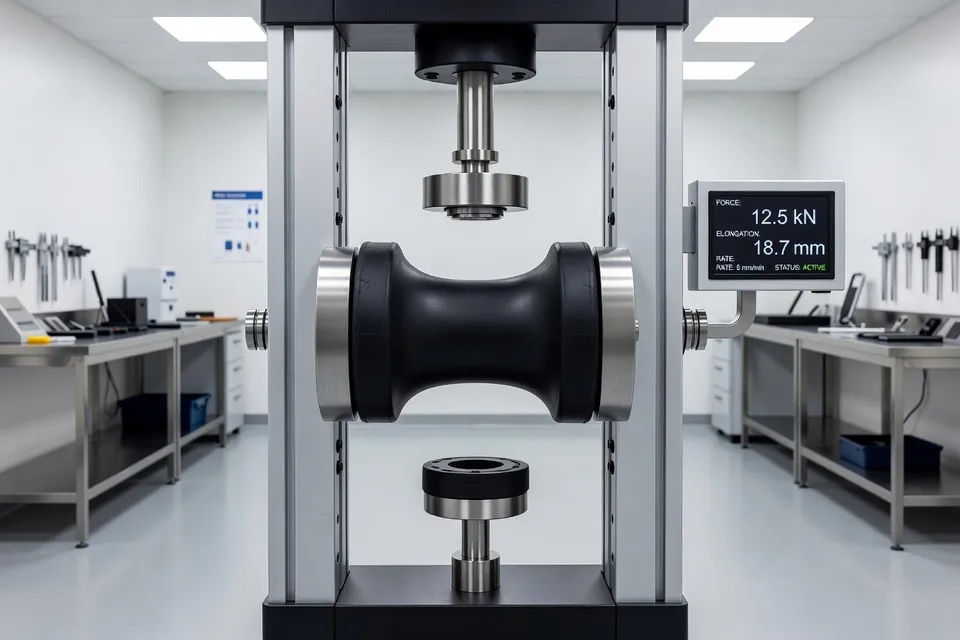
The acceptance record should distinguish predicted settings from released settings. It should show the proposed recipe, the actual addition sequence, the measured energy or power input, the batch quality result, and any deviation that forced operator intervention. If the model recommends a shorter mix, QA still needs the test result that permits release.
The supplied evidence supports a narrower claim than the title’s broad promise: AI is compressing parts of rubber-compound development by improving search, modeling mixing behavior, and organizing plant data. The plant result is settled only when the next trial lot repeats the predicted settings, passes the existing release tests, and records the resource use against the current baseline.
Editorial Insights
- Can an AI-generated rubber recipe be released directly to production?
- No. Treat the output as a development instruction until the plant confirms the actual addition sequence, torque and temperature history, filler incorporation, dispersion, distribution, and final compound properties. The formulation may be inside the approved ingredient window and still fail because the mixer reaches the target state differently. The usual mistake is to approve the predicted recipe while treating the mixing instructions as optional; QA needs the physical trial record and release tests before the batch enters normal production.
- What must be recorded before a plant can trust an AI recommendation for mixing time or power input?
- Tie every batch to the raw-material lots, recipe, addition order, ram path, rotor or mixer conditions, torque, power, temperature, mixing time, and the measured quality results. Use the same test methods and identify operator interventions rather than leaving them in free-text notes. A model needs comparable cause-and-result records, not a folder of recipes. If sensor drift, missing lot data, or a changed grade is hidden in the history, the system can produce a precise recommendation for the wrong material window.
- Does a reported energy reduction transfer automatically to another internal mixer or compound?
- No. Verify it on the intended batch size, rotor geometry, temperature-control condition, and compound family, using the plant’s existing quality release tests and a defined energy baseline. The reported reduction belongs to an optimized modeled process, not every mixer or recipe. A shorter cycle that saves power but worsens dispersion or pushes dump temperature outside the approved window is not a saving; it is a rejected batch with a lower meter reading.
- What is the safest way to introduce an AI recommendation into a rubber-compounding workflow?
- Start with one established compound and run the recommendation beside the current instruction on the same mixer and within the same raw-material window. File the proposed recipe, actual addition sequence, batch signals, operator deviations, energy or power input, laboratory results, and disposition in one trial record. Assign formulation, process, laboratory, QA, and maintenance responsibilities before the run. The failure mode is allowing the model to become the owner of the setpoint: a recommendation may rank trials, but it does not detect a bad sensor, authorize a deviation, or replace release control.
- When should the system refuse to recommend a formulation or mixing instruction?
- Configure a hold condition for missing mixer signals, incomplete material-lot history, formulations outside the validated training range, or property combinations without a comparable production result. The same applies when the requested grade, filler, equipment, or test method differs materially from the records used to build the model. Without refusal rules, the platform may interpolate across a boundary that engineers would reject immediately. The plant still needs a named owner to review the hold and decide whether to generate new physical data.
References
- 1.Bioengineer. (2026, October 4). Artificial bees crack the rubber blend puzzle for cheaper, tougher car parts. Bioengineer.
- 2.IKV Aachen. (2026, September 22). Intelligent search engine for optimised rubber compounds. IKV Aachen.
- 3.Japan Rubber Weekly. Japan Rubber Weekly. Japan Rubber Weekly.
- 4.NEC. NEC. NEC.
- 5.dotData. Yokohama Rubber and dotData revolutionize tire performance and manufacturing by scaling AI. dotData.
- 6.European Rubber Journal. Technology impact of digital twins in optimised tire processes. European Rubber Journal.
- 7.Times of India. Machine learning for machines: This tyre factory’s efficiency soars. Times of India.
- 8.Rubber News. AI use in tire industry development society annual conference. Rubber News.
- 9.Rubber News. AI tire industry impact GPS panel. Rubber News.
- 10.Plastics Engineering. AI injection molding ecosystem: Smarter together. Plastics Engineering.
- 11.Plastics Machinery & Manufacturing. Plastics machinery makers develop more smart and AI-driven technology. Plastics Machinery & Manufacturing.
- 12.Barez Tires. Barez Tires. Barez Tires.