

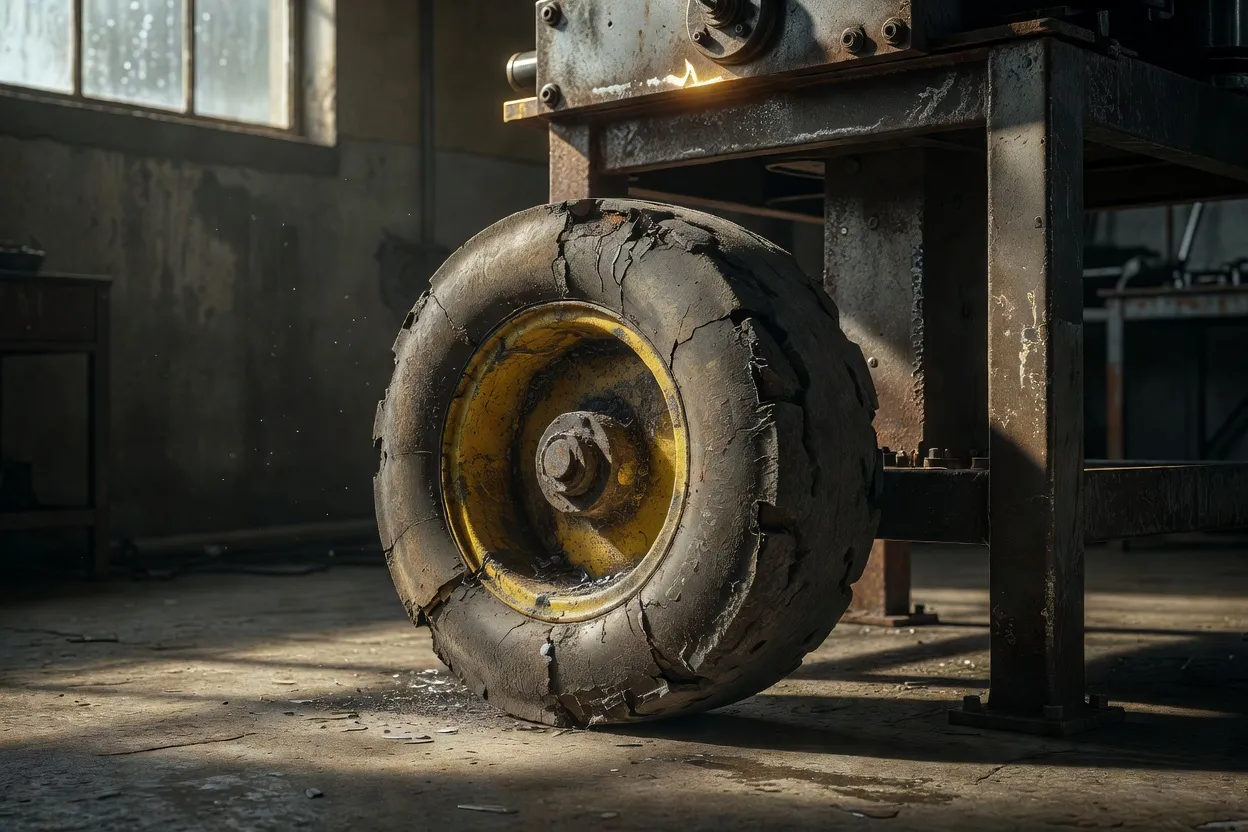
Covestro opened a pilot plant in Leverkusen in September 2026 to move chemical recycling of selected high-performance polyurethane elastomers beyond laboratory development. The project centers on Vulkollan, a material used in forklift wheels, railway buffer elements, automotive jounce bumpers and vibration-control components.
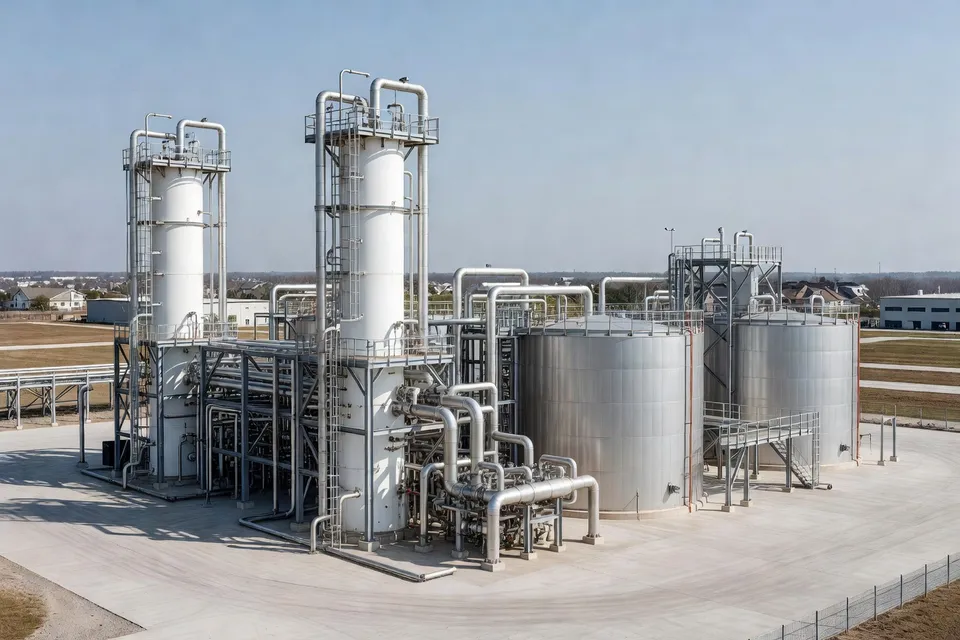
The plant does not establish a commercial recycled elastomer grade. It creates the process window needed to test end-of-life feedstocks, refine separation and purification steps, and generate data for a later industrial-scale decision. Covestro describes the project as a pre-industrialization stage rather than a finished closed-loop supply system.
The process target is purified building blocks
Covestro’s route chemically breaks selected end-of-life Vulkollan into purified building blocks for reuse. The company says the process can recycle more than 90% of the selected material by mass and reduce the carbon footprint by up to two thirds compared with fossil-based virgin material. Those figures are company claims attached to the selected feedstock and the stated comparison; the source does not provide a plant-wide production baseline, a full life-cycle boundary, or a commercial output volume.
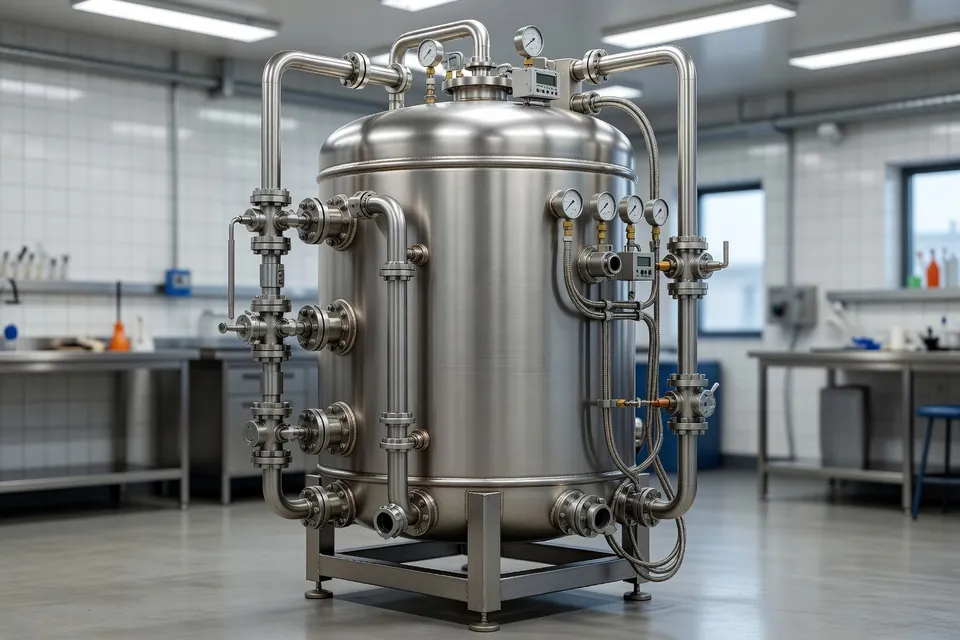
The distinction matters for processors. A high recovery figure does not by itself show that the recovered intermediates meet the same incoming specifications as virgin raw materials. The pilot’s stated purpose is to test different waste streams and improve the process while producing evidence for future scale-up. Feedstock composition, contamination, collection quality and purification performance remain operating variables rather than closed questions.
Covestro says the material class is particularly demanding because Vulkollan serves applications that require high performance, including load-bearing wheels and components exposed to vibration or impact. A recycled input for those uses would need more than chemical conversion. It would require repeatable building-block quality, formulation control, processing data and customer qualification against the relevant virgin or existing recycled grade.
Feedstock control is part of the technology
Covestro is working with customers, recyclers, waste collectors, logistics providers and other partners to develop collection and return systems. The company identifies consistent feedstock quality and economically viable logistics as conditions for a future circular value chain.
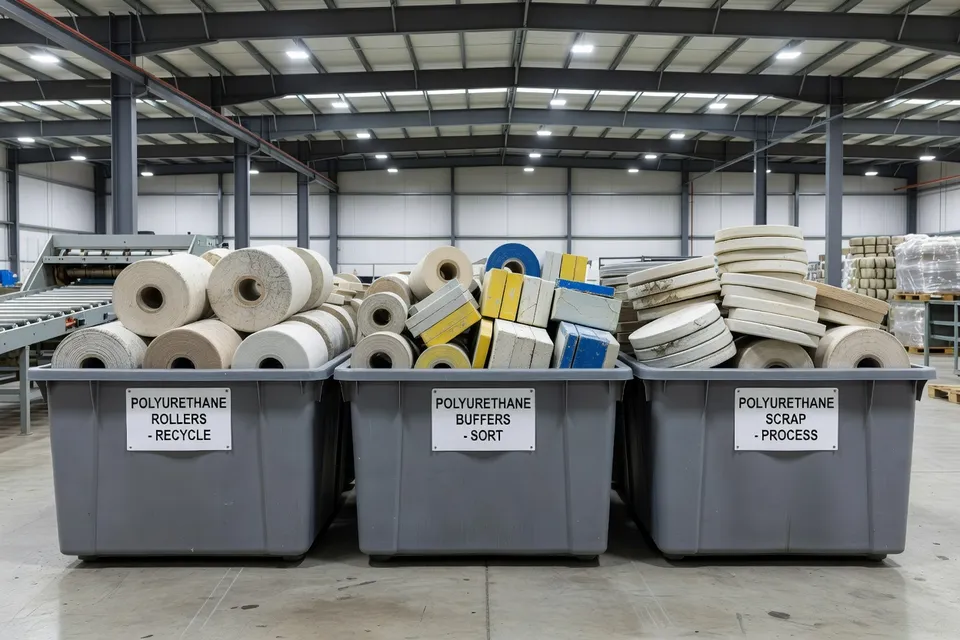
That requirement places the main scale-up risk outside the reactor alone. End-of-life Vulkollan must be identified, collected and delivered in a condition that the chemical process can accept. A pilot may demonstrate conversion on selected material while a commercial system still lacks sufficient volume, sorting discipline or geographic coverage. The next evidence must connect the recycling yield to a defined stream, operating period and recovered-material specification.
The Leverkusen installation is also intended to explore circular routes for selected specialty cast elastomers and thermoplastic polyurethanes. Covestro has not presented those additional routes as completed commercial products. Their relevance is prospective: the same pilot infrastructure may support process development for other elastomer families, but performance and recovery cannot be transferred from Vulkollan without separate trials.
Other non-fossil routes use different evidence
Envalior’s September 2026 Fakuma announcement describes a different mechanism. The company plans to show Xytron B-MB, an ISCC PLUS-certified PPS grade made with used cooking oil, while also presenting work with SECARA on high-purity caprolactam from post-consumer automotive plastics for future circular PA6 production. These are engineering-material examples rather than evidence that recycled Vulkollan has reached a qualified commercial elastomer grade.
The distinction between a mass-balanced feedstock and chemical recycling is operational. A mass-balanced grade assigns certified alternative feedstock through a chain-of-custody system, while Covestro’s pilot aims to recover chemical building blocks from a specified end-of-life elastomer stream. Each route needs its own verification: certification and allocation records for the former; feedstock acceptance, conversion yield, purification and product qualification for the latter.
Trelleborg’s reduced-carbon-footprint EPDM announcement belongs to the same broader materials shift but does not, on the available evidence, establish the same recycling route. A lower-footprint EPDM grade and a chemically recycled polyurethane elastomer address different polymer systems, input pathways and qualification requirements. A buyer cannot treat one as a performance or carbon benchmark for the other without matched data.
The qualification gate remains ahead
For a processor or component buyer, Covestro’s opening changes the question from whether chemical recycling is technically imaginable to which measurements will support a release decision. The pilot must show that different end-of-life streams can be handled consistently, that recovered building blocks meet defined purity requirements, and that material made from them retains the needed performance in the intended application.
The available announcement does not report a commercial production campaign, customer qualification, sales volume or finished recycled Vulkollan grade. It reports a pilot opening, a stated recovery potential for selected material and a carbon-footprint comparison against fossil-based virgin material. Those facts support a mechanism story, not a claim that the commercial elastomer market has already shifted.
Covestro’s next checkable gate is the pilot data package: the tested waste-stream definition, operating window, recovered-building-block specification, repeatability results and customer-trial status. Until those measurements are published, the Leverkusen plant is best read as an industrial test of feedstock and chemistry—not as proof that non-fossil elastomer grades are already qualified across the market.
Editorial Insights
- What evidence is needed before recovered polyurethane building blocks can be released for a demanding application?
- Ask for the recovered-building-block specification, not just the recycling yield. The release file should show purity, lot-to-lot repeatability, formulation behavior, processing data and performance against the applicable virgin or existing recycled grade. Run customer-relevant qualification trials before changing a load-bearing or impact-exposed component. The usual failure is accepting a high mass-recovery figure as proof of equivalent raw-material quality; contamination, feedstock variation or incomplete purification can still move the finished elastomer outside its approved performance window.
- How should a buyer judge whether an end-of-life elastomer stream is commercially usable?
- Refuse a feedstock promise stated only as annual tonnage. Define the accepted material, contamination limits, sorting method, collection geography, delivery frequency and coverage period, then connect those conditions to actual pilot runs. A chemically workable stream may still be uneconomic if reverse logistics are fragmented or volumes arrive intermittently. Extra inventory can also outlast the additive package or sit outside the process window, so supply security must be measured as consistent, accepted feedstock—not as nominal waste availability.
- Can results from the polyurethane elastomer route be transferred directly to other elastomer families or TPU grades?
- No. Require a separate feedstock definition, reaction trial, purification result and finished-material qualification for each additional polymer family. The pilot infrastructure may support development, but recovery behavior and performance cannot be transferred from one chemistry by analogy. A route that works on selected polyurethane waste may encounter different additives, crosslink structures or contaminants in another elastomer, and the resulting building blocks may not match that family’s formulation or processing requirements.
- What should a processor file before approving a recycled input for production trials?
- File the tested waste-stream definition, incoming inspection method, pilot operating window, recovered-material specification, repeatability data and customer-trial status. Assign one owner for the material specification and one for change approval; otherwise purchasing may substitute a chemically similar lot before process engineering has reviewed it. The production trial still needs normal lab, dimensional and durability checks, because a purified intermediate can alter cure behavior, viscosity, bonding or wear even when its headline chemistry appears acceptable.
- Does a claimed carbon reduction establish that a recycled elastomer is ready for purchase?
- No—treat the carbon figure as a route-specific comparison, not a purchasing specification. Ask for the system boundary, fossil reference, feedstock definition, recovery basis and logistics assumptions, then keep those records separate from the technical qualification file. A lower calculated footprint does not establish commercial availability, stable quality or application approval. Freight, collection distance and purification losses can also change the result, while a mass-balanced material requires chain-of-custody records rather than evidence of recovered building blocks from the same waste stream.
References
- 1.Plasticker. News specials. Plasticker.
- 2.World Ports. Trelleborg launches reduced carbon footprint EPDMS. World Ports.
- 3.Envalior. (2026, September 25). Envalior at Fakuma 2026: Smarter and sustainable material solutions for evolving industry needs. Envalior.
- 4.Covestro. (2026, October 2). Toward circular elastomers: Covestro opens pilot plant in Leverkusen. Covestro Press.
- 5.Plastics Engineering. Thermoplastic vulcanizates expand rubber processing options. Plastics Engineering.
- 6.European Rubber Journal. Covestro opens elastomer recycling pilot plant. European Rubber Journal.
- 7.Tire Technology International. Materials. Tire Technology International.
- 8.Vinachem. Tire Technology Expo 2026: Sustainable materials and digital manufacturing take center stage in Hannover. Vinachem.