

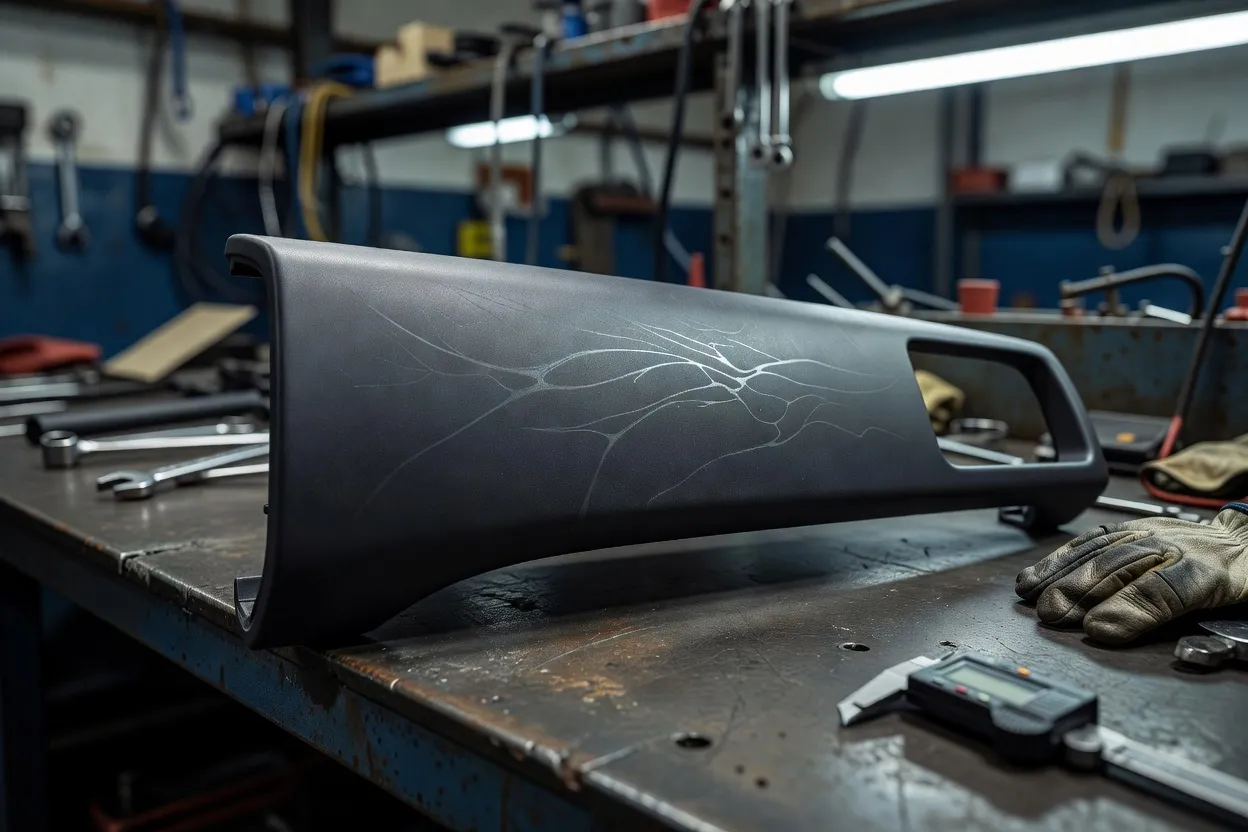
Moisture-related splay starts before the shot: water remains in the resin, vaporizes in the barrel, and leaves streaks across the molded surface. The immediate check is the material's drying state, followed by the hopper, dryer circuit, mold water fittings, and purge. A dryer inlet dew point alone does not prove that the resin bed is dry.
NovaTec (NovaTec, a plastics equipment and process-information provider) identifies moisture as a frequent source of splay, brittleness, warpage, dimensional drift, and some contamination in injection molding. Its guidance separates those defects from sink marks, flash, short shots, and burn marks, which are more often associated with tooling, cooling, filling, or process conditions. That distinction matters on the floor: changing injection speed or packing pressure can mask a wet-material problem without removing the cause.
Start with the resin, not the machine setting
The relevant material limit depends on the polymer. Nylon, polycarbonate, ABS, and PET are identified as hygroscopic engineering resins; they take up moisture from ambient air after a bag or bulk container is opened. When wet material reaches the hot barrel, water can flash into vapor. In hygroscopic polymers, moisture can also promote hydrolytic degradation, breaking polymer chains and permanently reducing mechanical performance.
The first inspection should therefore establish what resin was loaded, how long the container was open, and whether the material followed the resin maker's drying instructions. Plastic Today's troubleshooting guidance says drying time and temperature normally come from the material manufacturer's data. It also rejects a common shortcut: pellets that feel hot are not necessarily dry enough for processing. A moisture analyzer is the stronger check when the defect decision matters.
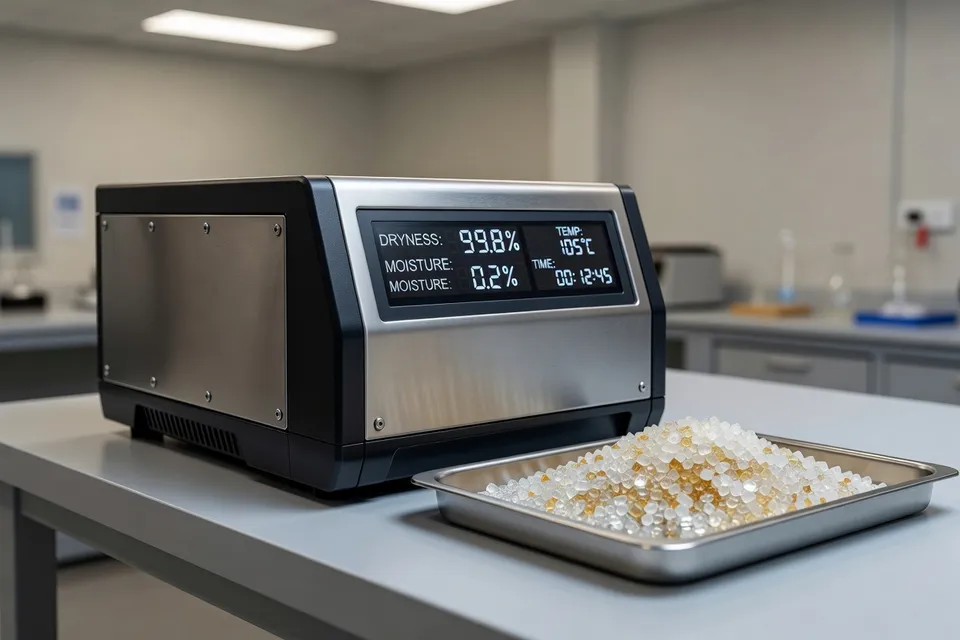
That advice does not transfer automatically to every polymer or process. It applies most directly to moisture-sensitive thermoplastics in injection molding. A nonhygroscopic resin, a rubber compound, or a defect caused by mold leakage needs a different confirmation path. The stop condition is simple: do not approve a drying change as the root-cause fix until measured moisture, the material identity, and the process history point in the same direction.
Check the whole drying path
A satisfactory dew point at the dryer inlet is only an air-condition reading. It does not show whether heat and airflow reach every pellet in the hopper. Hopper geometry, airflow distribution, restricted lines, and a cold upper section can leave part of the resin wet while the dryer display remains normal.
The operator should compare the supply and return conditions at the hopper, inspect hoses for heat transfer, and look for restricted material in satellite-hopper cones. Material trapped in a cone can receive less effective dryer airflow than the main bed. If the return path is not warm or the supply hose does not carry heat as expected, the dryer circuit requires inspection before the molding process is retuned.
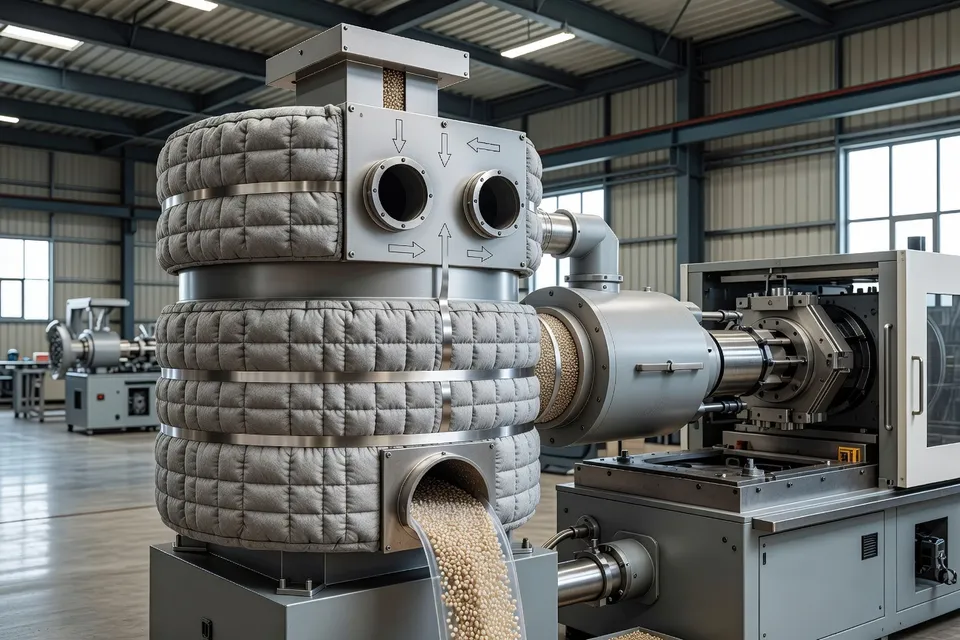
A fixed drying schedule also has a limit. Incoming resin may arrive with different moisture levels, and storage conditions can change with season and humidity. If brittleness or splay appears intermittently, the check should include the unopened container, the time since opening, transfer equipment, and the actual material condition. Applying one standard time and temperature to every lot is not evidence that every lot reached the same moisture state.
Separate wet resin from mold-side water
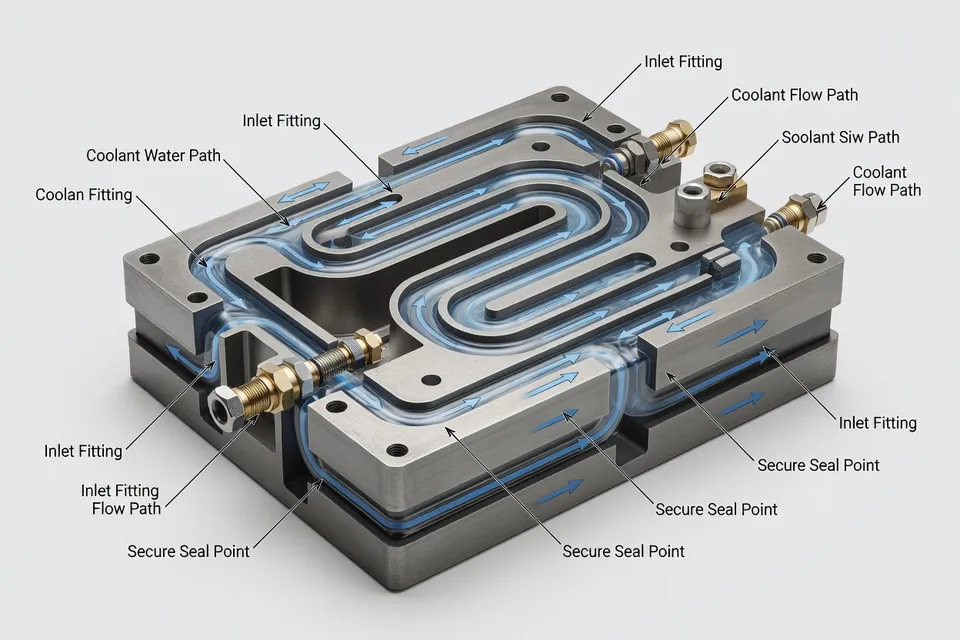
Splay is not exclusively a resin-dryer problem. Plastic Today lists heat, moisture, and shear as the three main causes and directs the troubleshooting sequence toward the mold as well as the material. Water connections on the mold should be checked for leaking fittings, including fittings mounted above the cavity. Moving slides and stripper plates should be inspected while operating, because a leak may appear only in the component's active position.
A cold mold can introduce a second moisture path. The source guidance identifies mold sweating as a risk when chiller temperatures of 50 to 65°F are used in humid conditions. If condensation is present, the water circuit and cycle condition must be corrected before the operator blames the pellets. This is a refusal condition: do not classify the event as resin splay while the mold is visibly sweating or a fitting is leaking.
The purge provides a fast shop-floor screen. Plastic Today's guidance calls for a clean purge puddle without foam or bubbles. That observation does not replace a moisture analysis, but foam or bubbles tell the setter to stop treating the surface streak as a cosmetic-only issue. A purge that looks clean does not prove the resin meets the processor's moisture limit; it only removes one warning sign.
Protect the startup and shutdown checks
Material handling after drying can undo the dryer's work. The troubleshooting guidance says material that sits for an hour or longer can take on moisture and recommends draining 15 to 20 pounds through the lines at startup. It also gives a practical hand check: material at 170°F and higher should be hot enough to be difficult to hold. That temperature is a cited operating check for the described injection-molding troubleshooting method, not a universal drying specification for every resin.
Long idle periods create another failure mode. When a press is shut down for four or more hours, the guidance recommends banking heat to 100°F to keep material in a dried state without over-baking it. The setter should not apply that instruction to a different polymer or process without checking the resin supplier's requirements. Overdrying can be a problem when material remains motionless in a hopper for an extended period.
Desiccant condition belongs on the same checklist. Dryer performance can deteriorate even when the operator follows the nominal schedule, and the source guidance recommends yearly replacement of desiccant beds. That is a maintenance recommendation from the troubleshooting source, not a measured defect reduction or a transferable production saving. The practical question is whether the dryer is removing moisture from the resin being processed now.
| Check point | What the cited guidance checks | Stop condition |
|---|---|---|
| Startup material | Drain 15–20 lb through the lines | Do not release parts if the purge foams or bubbles |
| Material temperature | At least 170°F for the described hand check | Confirm with a moisture analyzer when doubt remains |
| Press shutdown | Bank heat to 100°F after 4 or more hours | Verify the polymer's own limit before applying |
| Mold cooling | Chiller range of 50–65°F can promote sweating in humid conditions | Correct condensation before assigning blame to resin |
The figures above belong to the injection-molding troubleshooting guidance and are operating checks, not a production benchmark. The unresolved variable is the resin-specific moisture limit, which must come from the material data for the polymer and grade actually loaded.
Make the next shot a controlled check
The most useful response to splay is a short, documented sequence: identify the resin and lot, record container exposure, verify the drying instructions, inspect supply and return hoses, examine the hopper for restricted flow, check mold fittings and condensation, and inspect the purge. If the defect remains, measure moisture rather than increasing barrel temperature or changing fill conditions by trial and error.
The same sequence helps with brittleness and dimensional drift, but the interpretation changes. Moisture may affect melt viscosity and packing behavior, while hydrolytic degradation can permanently damage polymer performance. A part that looks acceptable after processing is not proof that the material retained its required properties.
This method also has a clear boundary. The cited material addresses thermoplastic injection molding and moisture-related defects; it does not establish a universal rule for rubber manufacturing, extrusion, recycled feedstocks, or every nonhygroscopic polymer. Recycled resin requires added attention to storage history and mixed-material variation, but the processor still needs a measured limit tied to the actual grade and application before releasing the lot.
On the next shift, take the moisture reading before changing the molding recipe, then record the hopper condition, purge appearance, mold temperature, and dryer supply and return temperatures against the defective shot. If those checks do not identify a wet-material path, withhold the resin diagnosis and move the investigation to heat, shear, tooling, cooling, or contamination.
Editorial Insights
- Can a low dryer-inlet dew point release a batch for molding?
- No. Ask for the resin moisture reading at or near the feed throat, then compare it with the material maker’s limit. Record the hopper supply and return conditions, airflow path, residence time, and any restricted cone or hose. A low inlet dew point describes the air, not the moisture state of every pellet; releasing parts on the display alone is how a cold upper hopper or blocked return path gets missed.
- What should be checked before changing barrel temperature or injection speed for splay?
- Identify the loaded resin and lot, check container exposure, and measure moisture before retuning the recipe. Inspect the dryer circuit, hopper flow, purge, mold fittings, and condensation at the mold. Increasing heat or changing fill conditions can hide streaking temporarily while wet resin continues to flash in the barrel, and it can add shear or degradation to an already damaged material.
- When does a purge help distinguish wet resin from another source of surface streaking?
- Run and inspect a clean purge before classifying the defect. Foam or bubbles are a stop signal for a moisture investigation, but a clean purge is only the removal of one warning sign; it does not prove that the pellets meet the grade’s moisture limit. If the mold is sweating or a fitting leaks only when a slide or stripper moves, correct that water path before blaming the resin.
- How should startup and shutdown handling be controlled after resin has been dried?
- Drain the prescribed startup quantity through the lines, inspect the purge, and record the material temperature and press idle time. Keep the transfer path closed and verify any heat-banking instruction against the exact polymer and grade. Dried resin can reabsorb moisture during a long hold or in exposed conveying equipment, while leaving material hot and motionless too long can create an overdrying or residence-time problem.
- What evidence is needed before linking brittleness or dimensional drift to moisture?
- File the resin identity, lot, container-open time, supplier drying instruction, measured moisture, dryer supply and return temperatures, hopper condition, purge appearance, and mold temperature against the defective shot. Then separate reversible processing effects from hydrolytic damage: wet resin can alter viscosity and packing, but degradation can permanently reduce polymer performance. Acceptable-looking parts do not clear a lot when the moisture history is unknown.
References
- 1.Novatec. (2026, October 6). Injection molding defects. Novatec Plastic Knowledge Center.
- 2.Garrett MacKenzie. (2025, July 24). The troubleshooter: The role of moisture in injection molding splay defects. PlasticsToday.
- 3.New Equipment Digest. Inline moisture monitoring reduces plastics resin defects. New Equipment Digest.
- 4.MoistTech. Moisture control in plastics processing. MoistTech.
- 5.Meadoworks. Plastic resin dryer guide. Meadoworks.
- 6.Kitech Recycling. Drying and moisture control in plastic recycling. Kitech Recycling.
- 7.Alpha Technologies. Rubber manufacturing troubleshooting. Alpha Technologies.
- 8.Paulson Training Programs. From the plastics point of view: Splay. Paulson Training Programs.
- 9.M. Holland. Solving 10 injection molding defects. M. Holland.
- 10.IMS Company. The most common injection molding defects. IMS Company.