

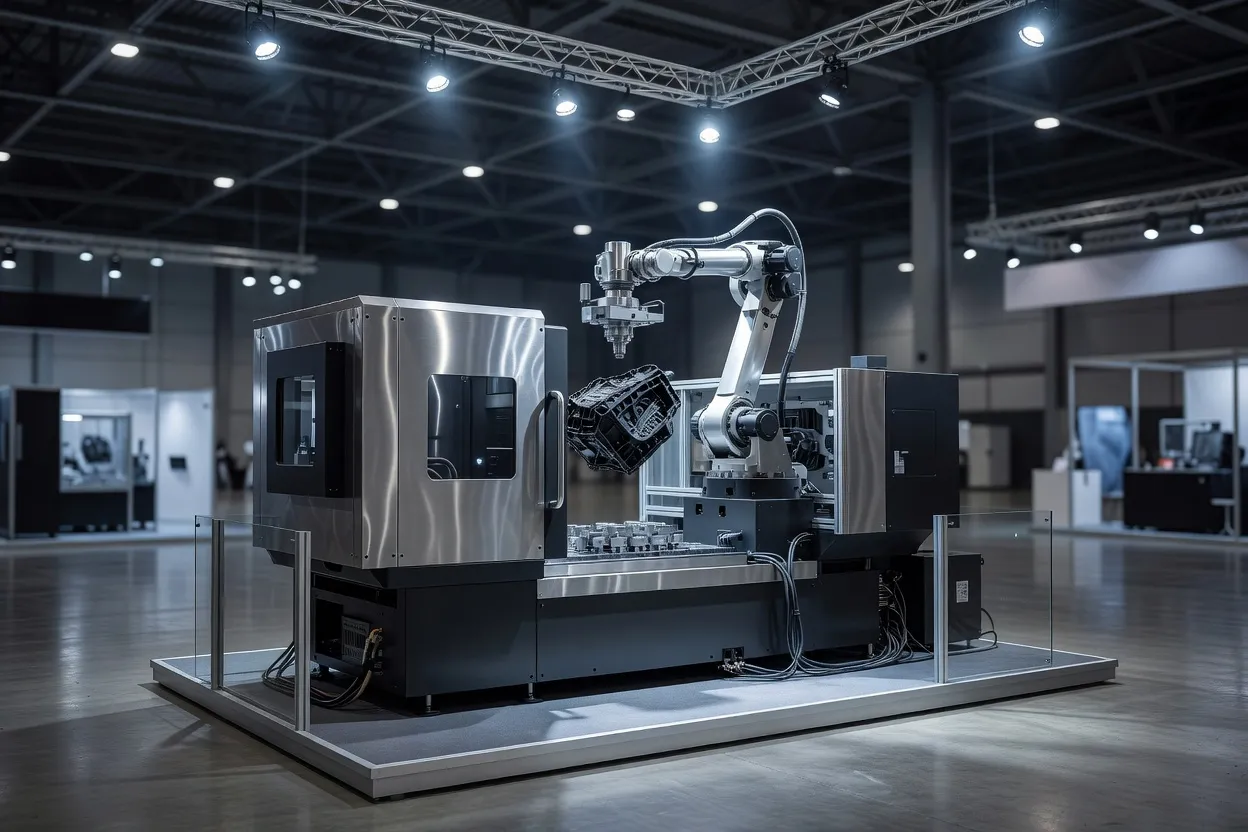
Plastpol 2026 put production equipment, automation and recycling systems into operation in Kielce, Poland, while the advance programme for Fakuma 2026 framed process intelligence around measurable machine behaviour. The two trade fairs point to the same follow-up question for processors: which smart-processing features produce a verified quality or output result, and which remain demonstrations until a production trial closes the gap.
Plastpol turns exhibition space into a production test
The 30th International Fair of Plastics and Rubber Processing ran from 19 to 22 May 2026 at Targi Kielce. The organiser reported 660 exhibitors from 36 countries and 15,000 visitors from Europe, Asia and Africa. Its programme included hundreds of live-running machines, injection moulding equipment, extrusion systems, industrial robots, automated lines and recycling technologies.
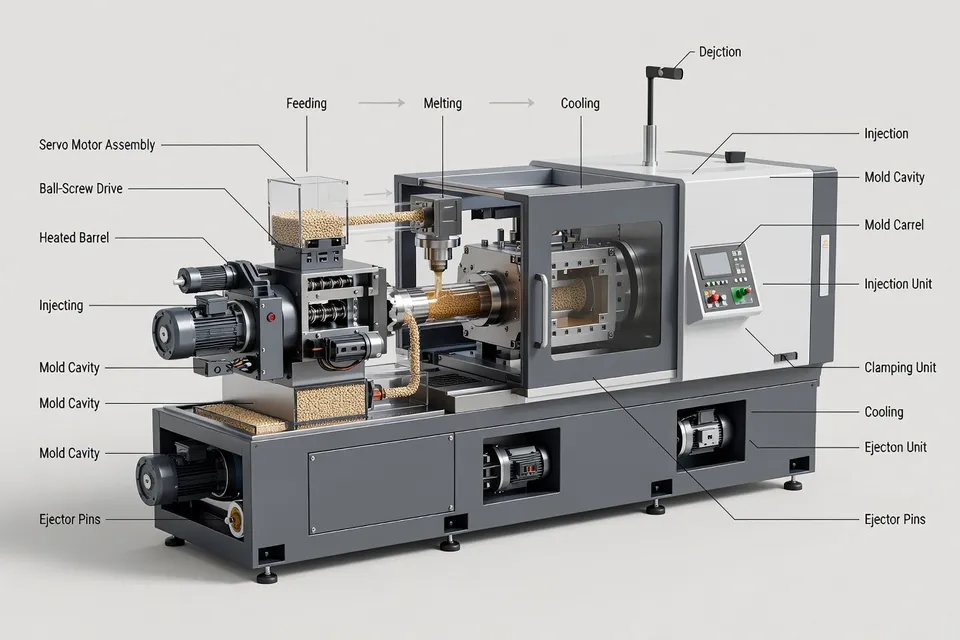
Plastpol therefore supplied a broad equipment setting rather than a single process comparison. The exhibition organiser also reported multi-million contracts and contract signing during the event. Those actions show commercial engagement, but the supplied event material does not identify the individual machines, contract values, production volumes or post-show plant results. A processor considering a purchase still needs the machine configuration, material, cycle data and acceptance criteria behind each demonstration.
The organiser associated visitor demand with predictable production management, lower defect rates and reduced energy and resource consumption. Adam Marciniak from ENGEL said customers were seeking those capabilities. That statement describes a purchasing requirement, not a measured result from one identified line. The distinction matters when a live machine is used to support a broader smart-factory message.
Plastpol's evidence is strongest on event scale and activity. It documents who attended, where the fair took place and what classes of equipment operated. It does not establish a common baseline across exhibitors or show that one automation or recycling installation delivered the same result in a production plant. Follow-up should therefore start with the machine log, the material grade and the quality-release data for the application shown.
Fakuma links machine intelligence to specific parts
Fakuma 2026 is scheduled for 12 to 16 October in Friedrichshafen, Germany, with around 1,600 exhibitors from 40 countries across 12 exhibition halls. The event preview places productivity, precision and recycled-material processing together. It identifies a practical constraint: variation in recycled-material quality can make consistent processing more difficult.
Several planned demonstrations attach the control function to a named product. Sumitomo (SHI) Demag is set to run beverage-closure production on an all-electric IntElect S 280 with a 48-cavity mould from HTW Molds. The proposed cell combines the injection machine, mould, temperature control, cooling and material supply. The demonstration is designed to show an integrated production system; the supplied preview does not provide a plant acceptance result or a comparison with a conventional cell.
KraussMaffei is scheduled to use an all-electric PX 160 with a 96-cavity Männer mould to produce protective caps for insulin pens. The application places high-volume output beside the precision requirements of a medical component. Its AQCplus system measures part weight after every injection cycle and feeds the result into machine control. The preview says changes in material density, including changes associated with recycled materials, additives or fillers, can trigger an automatic adjustment to the holding-pressure profile.
The mechanism is more specific than a general claim about artificial intelligence: the system measures part weight, identifies a process signal and adjusts a defined machine parameter. The missing evidence is equally specific. The sources do not give the measured weight deviation, the correction time, the scrap rate before and after intervention or the material composition used in the demonstration. Those are the figures a medical-component processor would need before treating the feature as a production-control result.
The supplied Fakuma preview also names ENGEL's planned E-mac 200 demonstration, which will produce PP components for medical auto-injectors in a 32-cavity mould. It presents high-cavity tooling as the output lever and automation and machine intelligence as the quality-control response. Again, the preview describes the planned setup rather than a completed plant trial.
ENGEL places the measurement at the machine
ENGEL's own Fakuma announcement adds a second layer to the event story through six Expert Corners and four running machines. The company says visitors will be able to inspect exhibits, operate the viper 6 robot and discuss applications with specialists. The announcement also says running machines elsewhere on the stand will demonstrate the technologies in day-to-day production.
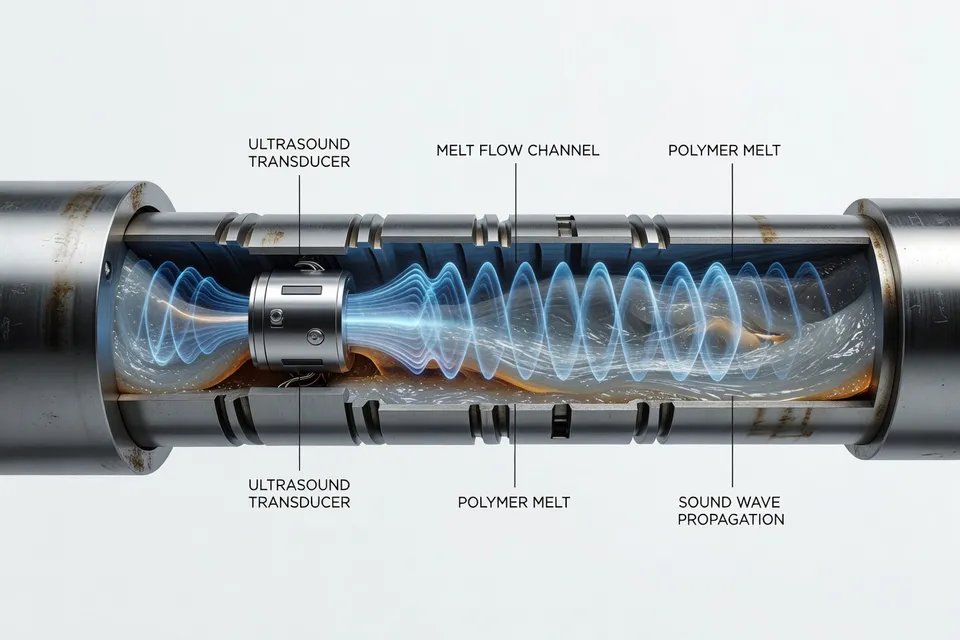
One named system, ENGEL's melt-homogeneity measurement system, uses ultrasound in the nozzle area to detect unmelted particles and assess melt homogeneity in each cycle. Moldsonics sensors are integrated into ENGEL's machine-control system, making the quality data available while the process runs. This gives a processor a clear verification route: identify the melt condition, record the cycle data and connect the signal to the finished part.
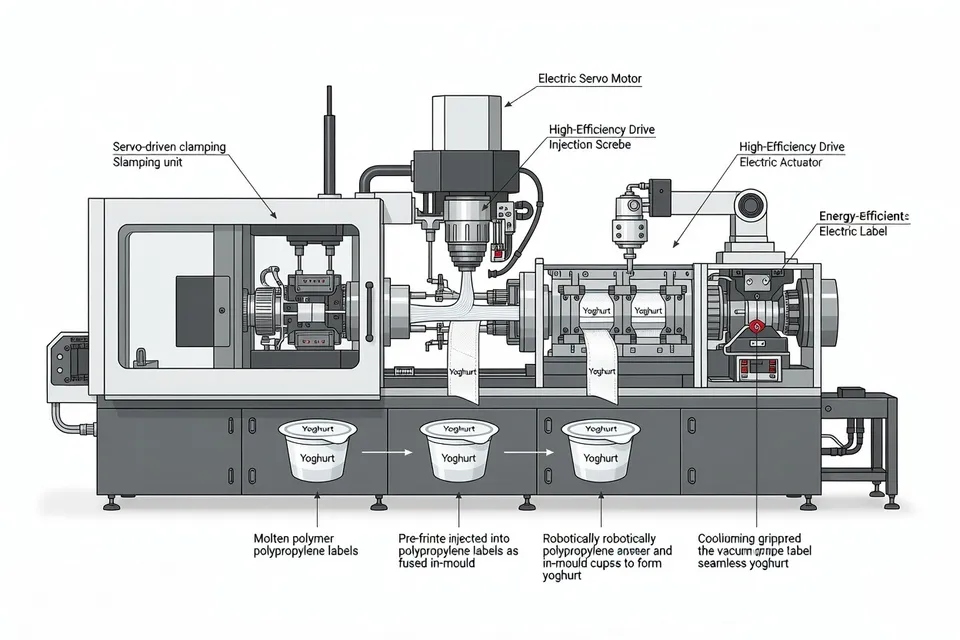
The company also plans to run an all-electric e-motion 380 producing yoghurt cups with in-mould labelling. ENGEL states that the dry cycle time can be as low as 1.2 seconds, alongside high availability and low energy consumption. That is an exhibitor claim tied to a named machine and application, not a measured result independently confirmed in the supplied material. A buyer would need the mould layout, material, cycle definition and availability calculation before comparing it with an existing cup line.
A second running application uses the electric WINTEC e-win 1800 to produce automotive connectors in a 128-cavity mould, with the viper 6 removing the sprue. A third uses the ENGEL victory electric 1565/220 to produce a precision inverter seal from liquid silicone, described as flash-free directly from the machine. These demonstrations cover different materials and products, so their results cannot be combined into one performance benchmark.
The shared lesson is narrower and more useful: smart processing becomes testable when the supplier identifies the sensor, the control variable, the product and the operating condition. The evidence remains application-specific. A processor cannot transfer the melt-homogeneity method to the PP medical application, or the part-weight correction to liquid silicone, unless the relevant source documents establish that transfer.
The next check is the production record
The trade-fair packet supports a shift from general automation language toward live, named process steps. Plastpol demonstrated the breadth of investment and commercial activity; Fakuma's planned cells attach intelligence to cavities, part weight, melt condition, robot handling and cycle time. Neither event source, however, closes the plant-performance question for the reader.
For processors, the follow-up file should separate booth output from an accepted production result. It should record the resin or compound, cavity count, cycle definition, baseline scrap or variation, corrective action and the period over which availability or energy performance was measured. Without that record, the figures remain demonstrations or supplier claims rather than a shared benchmark.
Fakuma opens at Messe Friedrichshafen on 12 October 2026, with ENGEL listing its Expert Corners in Hall A5. The next checkable event is whether the running demonstrations produce application data that visitors can take from the stand into a trial lot, quality release or machine-order decision.
Editorial Insights
- What must be captured before a live-machine demonstration becomes a valid production trial?
- Request the resin or compound grade, mould and cavity count, cycle definition, machine settings, baseline scrap or variation, and the acceptance criteria before comparing the demonstration with an existing line. File the machine log beside the quality-release record, not just the supplier presentation. The usual failure is a fast cycle or attractive part being treated as proof of plant performance when the material, tooling, availability window, or inspection method has changed.
- Can part-weight control compensate for recycled-material variation without further process checks?
- No. First measure the part weight and define the permitted deviation, then verify that the correction acts on the specified holding-pressure profile without creating dimensional, cosmetic, or cavity-balance problems. Density changes from recycled material, additives, or fillers can produce a useful control signal, but the response time and scrap reduction still have to be demonstrated on the actual formulation. A second source of trouble is accepting stable weight while another critical property drifts.
- How should a processor evaluate an in-machine melt-homogeneity measurement?
- Ask for the ultrasound signal, the definition of an unacceptable melt condition, and the finished-part characteristic that the signal is expected to protect. Run the measurement over a defined material and temperature window, then correlate unmelted-particle detection with part inspection and release records. The benefit is not established merely because data appears in the machine control. A common failure is logging the signal without assigning anyone authority to stop, segregate, or adjust the process.
- What should be verified before using a short dry-cycle claim to justify a new packaging cell?
- Recalculate output from the complete mould layout, actual cycle definition, material, robot motion, label insertion, cooling, inspection, and planned availability. A dry cycle is not the same as a sustained production cycle, and a supplier’s energy figure cannot be compared with a current line until the measurement boundary is identical. The demonstration can show that the machine and automation work together; it does not by itself establish saleable output or unit cost.
- Who owns the setpoints when machine intelligence changes a production parameter automatically?
- Name the process owner and approval route before enabling automatic correction, and lock the allowable adjustment range in the recipe or change-control record. The owner must review the sensor validation, alarm response, rejected-part handling, and the evidence needed to return to a known setting. Without that governance, an automatic adjustment can reduce one signal while moving the process outside the approved window, especially when material variation is mistaken for a correctable machine problem.
References
- 1.Portal Plastech.pl. (2026, May 26). Plastpol 2026 strengthens its position as a key industry fair. Portal Plastech.pl.
- 2.Targi Kielce. (2026, October 8). PLASTPOL 2026: The plastics industry once again convened in the heart of Europe. Targi Kielce.
- 3.Duncan MacRae. (2026, October 5). Fakuma 2026: Productivity, precision and smarter plastics processing. ECO Plastics in Packaging.
- 4.ENGEL. Fakuma 2026: Technology gets practical in the ENGEL expert corners. ENGEL.
- 5.ARBURG. Fakuma 2026: NextGen medical solution. ARBURG.
- 6.Portal Plastech.pl. Plast 2026. Portal Plastech.pl.
- 7.CENS. Plast 2026. CENS.
- 8.CHINAPLAS. CHINAPLAS 2026 Innovation of the Year: A demonstration of strength in driving industry transformation. CHINAPLAS.
- 9.Plastics Machinery & Manufacturing. All-electric, AI and PCR-ready: What's new in blow molding. Plastics Machinery & Manufacturing.
- 10.Portal Plastech.pl. Machines. Portal Plastech.pl.