

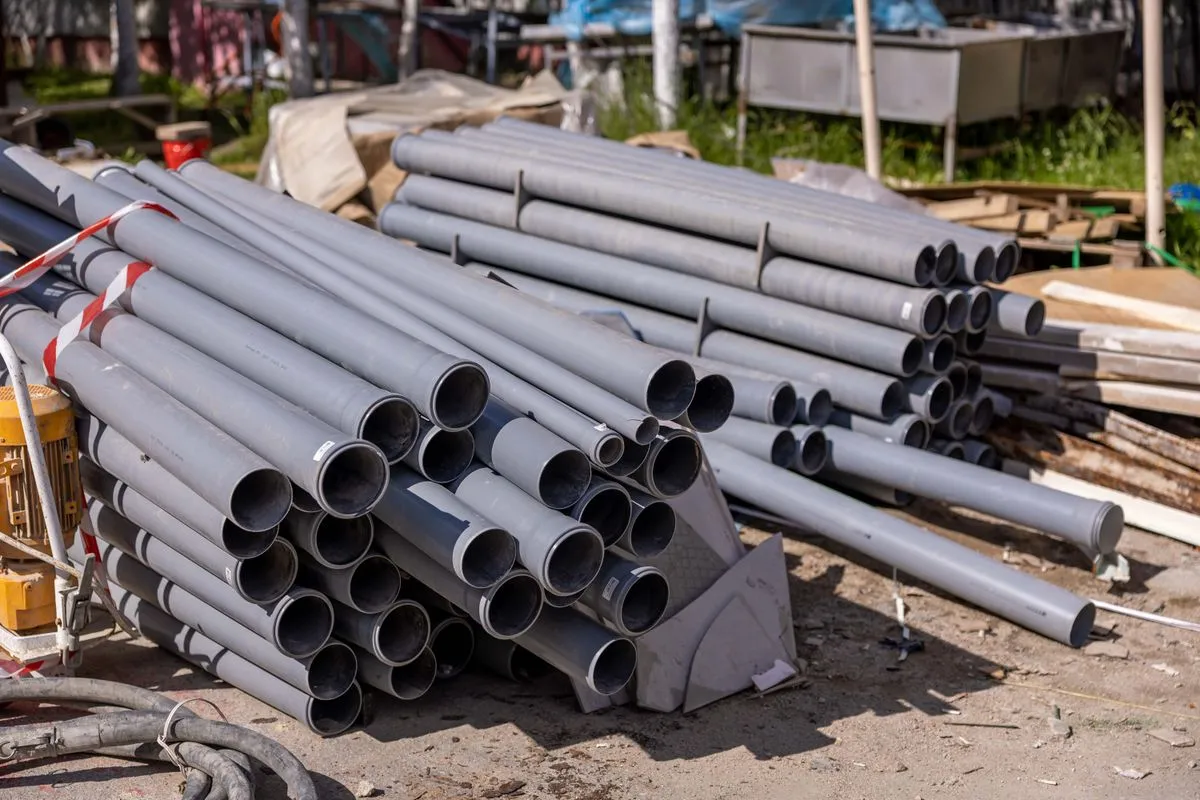
Westlake Corporation (Westlake, a chlorovinyls producer) will cease operations at its Cologne, Germany, PVC plant in the first quarter of 2027, removing approximately 165,000 metric tons per year of named European capacity from the operating network. The September 29 decision is being presented as a profitability measure, but it narrows the regional supply map before the next European contracting cycle. Westlake said it will continue serving customers from its remaining German facilities, including Wilhelmshaven.
The closure is a capacity retrenchment, not a declared customer force majeure. Westlake has named an alternative production route inside Germany, but the company has not disclosed customer-by-customer allocation volumes, replacement lead times, or the amount of Cologne output that will be transferred to each remaining site. Buyers therefore have a named source, but not yet a published timetable for the transition.
Cologne closure removes a defined European source
Westlake said the Cologne site is smaller and carries a higher logistical burden than its other European PVC operations. The company cited weak demand, elevated energy costs and increased import pressure from Asia as the conditions behind the decision. Operations are expected to stop in the first quarter of 2027, so the announced change is forward-looking rather than an immediate production interruption.
The company expects approximately $205 million in total pre-tax charges connected with the closure. About $100 million is expected to be cash charges and approximately $105 million non-cash charges; around $110 million of the total is expected in 2026, with the balance in 2027. Those accounting figures establish the scale of the restructuring, but they do not quantify customer shortages or indicate that European PVC buyers have already lost contracted supply.
For processors, the operational question is whether Wilhelmshaven and Westlake's other German facilities can absorb Cologne-linked demand without changing grade availability, delivery windows or freight patterns. The public announcement confirms continued supply from those facilities, but it does not provide a replacement capacity figure. Until Westlake gives customers a transfer schedule, planners cannot treat the 165,000-tonne capacity as fully replaced on a one-for-one basis.
China shows a separate supply restriction
The European closure is not evidence of a Chinese shortage, and the Chinese reports describe a different mechanism. Polymerupdate reported on October 8 that Tianjin Bohai Chemical would keep its PVC plant offline. The report identifies the producer and the offline status, but the available source material does not establish the plant's capacity, restart date, affected grades or customer allocation.

That missing information matters. An offline plant can tighten prompt availability for its own customers, but without a capacity figure or restart window it cannot be added to Westlake's 165,000-tonne European reduction. The two events belong in the same supply-retention story only as separate regional actions: a scheduled European closure and an unpriced, undated Chinese outage.
A separate October 9 analysis of China's PVC sector reported overall capacity utilization of 69.23% at the end of September. It also said that both carbide-based and ethylene-based producers were reducing rates or stopping units under margin pressure. The same report placed September-end gross margins at 19.13% for carbide-route PVC and 14.48% for ethylene-route PVC, while describing both routes as under severe pressure. These figures are China-specific and cannot be used as a European operating-rate benchmark.
| China PVC operating measure | September 2026 value |
|---|---|
| Overall capacity utilization | 69.23% |
| Carbide-route gross margin | 19.13% |
| Ethylene-route gross margin | 14.48% |
The Chinese figures point to supply restraint driven by economics, but they do not prove that every producer is allocating material or that the market has entered a shortage. The same analysis said inventories had begun to decline in September after reaching more than 1.4 million tonnes in the first half of 2026, while absolute inventory remained high compared with the same period in 2024 and 2025. That combination limits the immediate case for a broad, price-led supply squeeze.
Availability questions remain grade and route specific
Westlake's alternative is concrete but limited: remaining German PVC facilities, including Wilhelmshaven. No source supplied for this article states that Asian imports will replace Cologne volumes, identifies a compatible grade substitution, or gives a European sailing schedule. Import pressure was part of Westlake's rationale for closing the plant; it is not a named replacement program for affected customers.
The Chinese reports likewise do not establish a substitute for Tianjin Bohai Chemical. They describe lower utilization, unit stoppages and production reductions, but the available information does not state which customers were refused, which grades were delayed, or when the offline plant will restart. Buyers should therefore separate confirmed operating changes from assumptions about regional availability.
A March 2026 US plastics-market report described PVC prices as up alongside several other commodity resins. That price movement is outside the September-October regional supply evidence and does not demonstrate a European or Chinese shortage. It is not used here as a benchmark for either region. The available ICIS page also provides market coverage rather than a dated, plant-specific restart or allocation action, so it does not add a measurable supply change to the article's spine.
The next check is Westlake's transfer plan
Westlake's closure plan has a clear date box: Cologne is expected to cease operations in the first quarter of 2027. The company has also identified Wilhelmshaven and other German facilities as the continuing supply base. What remains unreported is the customer-facing execution layer—volume reassignment, grade qualification, delivery lead time and any temporary allocation during the transfer.
For European processors, those details will determine whether the closure is absorbed as a network optimization or becomes a local availability problem. For Chinese buyers, Tianjin Bohai Chemical's restart date and the duration of the offline period are the next checkable items. China's 69.23% utilization figure shows a low operating base, but the still-elevated inventory position argues against converting that statistic directly into a regional shortage call.
The immediate supply map is therefore narrower, but not uniformly short: Cologne has a scheduled first-quarter 2027 exit with Westlake's German network named as the alternative, while Tianjin remains offline without a published restart window. The next decisive event is Westlake's customer allocation and volume-transfer review before the Cologne shutdown.
Editorial Insights
- What should a European PVC buyer request before treating the German network as a full replacement for the closing site?
- Request a written transfer plan showing the affected grade codes, reassigned monthly volumes, qualification status, production site, and delivery lead time. Do not count the stated German alternative as one-for-one replacement until those fields are confirmed; the announcement names continuing facilities but does not publish customer allocations or replacement capacity. The usual failure is booking against nominal network capacity while the required grade remains constrained during the transfer.
- Does the scheduled European closure justify an immediate PVC shortage call?
- No. Operations are expected to continue until the first quarter of 2027, and supply from other German facilities has been identified. The immediate risk is narrower availability by grade, allocation, or delivery lane—not a proven regional shortage. Refuse a broad shortage assumption unless the supplier provides a temporary allocation notice, missed delivery window, or confirmed reduction against the contract.
- Which documents should procurement add to the next PVC contract review?
- File the supplier’s transfer timetable, site-of-production statement, grade equivalency or approval record, allocation terms, lead-time commitment, and any revised freight basis. Keep the closure announcement separate from the customer execution documents: the former establishes a capacity exit, while the latter determines whether a processor can actually receive qualified material. A common buying error is to use the producer’s total German capacity as coverage evidence without documenting the specific grade and delivery point.
- How should buyers interpret the offline Chinese PVC unit alongside the European closure?
- Track them as separate events. The Chinese report identifies an offline plant but does not establish its capacity, affected grades, customer allocations, or restart date, so it cannot be added to the European capacity reduction as a quantified shortage. China’s reported utilization of 69.23% indicates operating restraint, but inventories remained elevated, which weakens the case for an immediate broad squeeze. The failure mode is combining two incomplete signals into one regional supply forecast.
- What should a processor verify before qualifying material from another German PVC site?
- Run the normal grade-approval sequence: compare the CoA limits and formulation, confirm MFR and other application-critical properties, produce trial parts, and complete dimensional and performance checks before releasing the substitute to routine production. A matching trade description is not proof of interchangeability, especially where fusion behavior, residuals, color response, or processing window affects scrap. The alternative site is a supply route, not an automatic grade substitution.
References
- 1.Westlake Corporation. (2026, September 29). Westlake to optimize European chlorovinyls footprint with closure of Cologne PVC plant. GlobeNewswire.
- 2.Polymerupdate. (2026, October 5). Tianjin Bohai Chemical to keep PVC plant offline. Polymerupdate.
- 3.Sina Finance. (2026, October 9). 乙烯法PVC成本倒挂 镇洋发展30万吨产能停产检修. Sina Finance.
- 4.Sina Finance. (2026, October 8). 【四季报】PVC:供需双弱,延续去库,低估值预期向上. Sina Finance.
- 5.Sina Finance. 2026-10-09. Sina Finance.
- 6.SunSirs. SunSirs.
- 7.Plastics Technology. March 2026 prices up for PE, PP, PS, PVC; PET flat. Plastics Technology.
- 8.ICIS. Polyvinyl chloride. ICIS.