


Paul Gramann (consultant at Madison Group) will use Plastics Technology's September 2026 PT Tech Days session to address a problem processors usually discover too late: a replacement resin that looks acceptable on paper can still fail in the press, the tool, or the finished part.
His subject is “Planning for Material Disruptions: Developing and Qualifying Drop-In Alternatives.” The proposed method is sensible—identify backup materials before a supply-chain interruption, regulatory change, or discontinuation forces the decision—but the announcement is not a plant result. It establishes a qualification agenda, not proof that any substitute has already matched the incumbent in production.
That distinction matters. A processor facing a threatened grade change does not need a second datasheet with similar tensile strength or melt flow. It needs evidence that the candidate will run through the same equipment, hold the same dimensions, survive the same service conditions, and pass the customer's approval process. Gramann's session specifically separates nominally similar material properties from interchangeability and points to material, processing, and performance characteristics that must be evaluated.
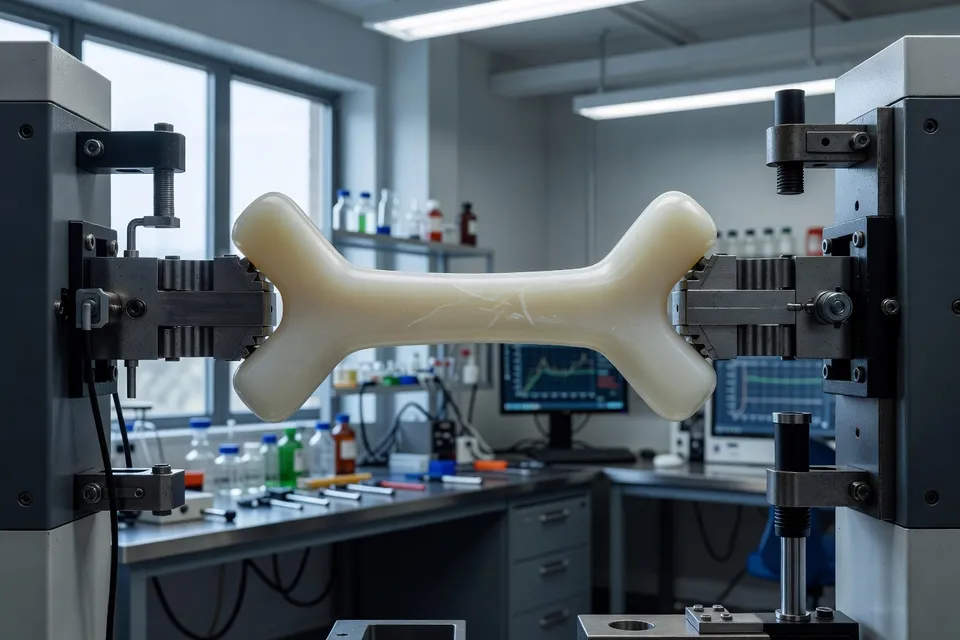
The replacement grade
The PT Tech Days programme also puts the difficulty into a narrower application: Ned Burnett (senior technical professional at Saint-Gobain) is scheduled to discuss replacing PTFE in medical devices. The case is harder than a routine resin switch because PTFE's value is distributed across several properties rather than one headline number.
Burnett's focus includes chemical compatibility, temperature, exposure time, stress, sterilisation, and fluid composition. That list is more useful than a broad claim that a fluoropolymer alternative is “equivalent.” Chemical compatibility is not a fixed label attached to a polymer. It depends on the finished device, the fluid, the stress state, and the duration of exposure.
For a medical-device processor, that leaves a clear approval burden. The candidate must be tested against the actual use environment, not merely compared with PTFE in a catalogue. Sterilisation is part of the qualification question, not an afterthought. So is dimensional stability after processing and exposure. A substitute that survives a short laboratory contact test may still be unsuitable for the device's service life.
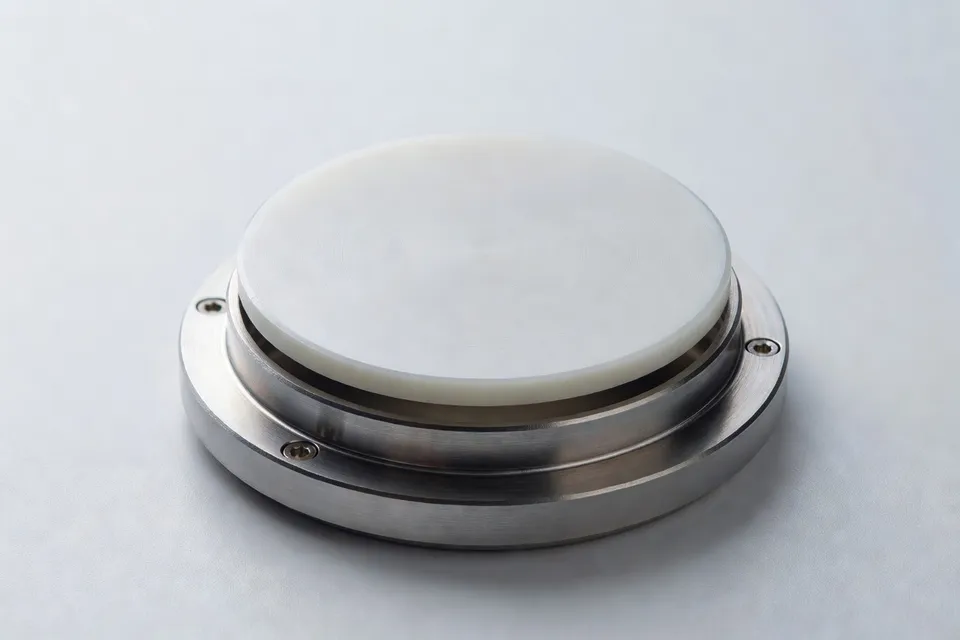
I would not take a similar datasheet as evidence of a drop-in replacement. It is a screening tool. The approval decision belongs to the application test.
The processing window
The same caution appears in the broader material-selection training announced by Madison Group for September 9–11, 2026, in Brooklyn Park, Minnesota. The course is designed around systematic material selection, resin-property effects, limitations of datasheets and selection tools, manufacturability, and production optimisation. It also includes case studies and hands-on exercises.
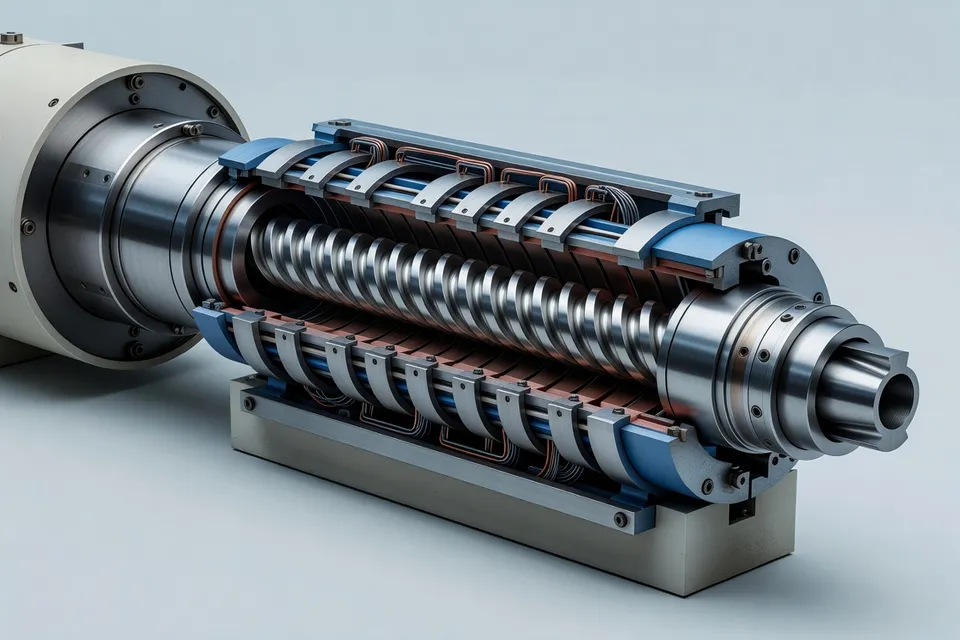
That emphasis identifies the weak point in many substitution programmes. Engineering teams often begin with a property table and only later ask whether the new grade can be dried, fed, melted, filled, cooled, ejected, and inspected under the existing process conditions. By then, tooling, cycle time, scrap, and customer timing have already become part of the risk.
A qualification file should therefore separate at least three questions: whether the polymer can meet the part specification, whether the machine can process it consistently, and whether the buyer will accept the revised material and documentation. Passing one question does not close the others.
Teknor Apex's NPE 2024 programme makes a similar commercial case from the supplier side. The compounder presented sessions on sustainable materials, recyclable thermoplastic elastomers, recycled materials, and materials for electrification. Its topics included UBQ-based material replacement, sustainable vinyl compounds, and nylon, polypropylene, TPV, and PVC solutions for electric-vehicle charging systems and battery modules.
Those are valid development directions, but they remain supplier-led claims unless the application data are available. A material described as recyclable, climate-positive, or suitable for an electrification application still needs a defined grade, process, test method, baseline, and acceptance threshold. A converter cannot approve a family of materials.
The buyer's evidence file
Packaging is moving toward the same evidence standard. A June 2026 preview of Packaging Insights' “Top Packaging Trends 2026” webinar describes pressure from extended producer responsibility, single-use-plastics rules, chemicals-of-concern restrictions, and European packaging requirements. It also identifies monomaterial structures and material substitution as established industry priorities.
The useful phrase is “substantiated sustainability.” Packaging claims increasingly have to be supported by measurable recyclability, life-cycle information, recycled-content data, and performance against the infrastructure that will actually handle the pack. The preview says that, from August 2026, packaging placed on the European Union market will require a signed Declaration of Conformity under the cited interpretation of the Packaging and Packaging Waste Regulation.
That raises the cost of casual substitution. Replacing a multilayer structure with a nominally recyclable monomaterial may change barrier performance, seal behaviour, shelf life, line speed, or waste rates. The buyer's file must connect the replacement to the same pack, geography, use case, and compliance obligation. European requirements cannot simply be treated as a benchmark for an ASEAN launch.
The policy discussion scheduled by Beveridge & Diamond for October 6, 2026, covers microplastics, extended producer responsibility, and other emerging plastics-policy issues. Its existence is a reminder that the disruption may not begin with a resin shortage. It may begin with a restriction, reporting duty, customer specification, or chemical review that makes the existing grade commercially unusable.
The check before the change
The practical sequence is straightforward, though not easy: identify exposed materials, define the incumbent's function, screen candidates, run process trials, test the finished part or package, document failures, and obtain customer approval before the old supply becomes unavailable.
The table below separates the dated activities in the supplied programme from the decision they support.
| Activity or source event | Date or period | Decision relevance |
|---|---|---|
| PT Tech Days material-substitution session | September 23, 2026 | Qualify drop-in alternatives before disruption |
| Madison Group material-selection course | September 9–11, 2026 | Test resin selection and manufacturability |
| Packaging Trends 2026 webinar preview | June 4, 2026 | Substantiate circularity and compliance claims |
| Plastics-policy webinar | October 6, 2026 | Track microplastics and EPR exposure |
The dates show a busy calendar of advice, training, and policy discussion. They do not show that a substitute has passed production, medical-device validation, packaging-line trials, or buyer approval. That is the evidence gap.
For processors, the next check is not another presentation title. It is a controlled comparison on the same part, machine, tooling, geography, and acceptance criteria. Until that record exists, a polymer substitute is a contingency candidate—not a qualified replacement.
Editorial Insights
- Is a similar datasheet enough to approve a replacement resin?
- No. Use the datasheet to screen candidates, not to release them. Compare the incumbent and candidate against the same part specification, processing route, dimensions, service conditions, and customer requirements, then run a controlled trial on the production machine and tool. The usual failure is approving a grade because melt flow and tensile strength look close while shrinkage, warpage, drying behavior, or cycle stability changes in the press.
- What must be tested when replacing PTFE in a demanding application?
- Test the finished device in its actual service environment. Define the fluid composition, temperature, exposure time, stress state, sterilisation method, and required service life, then measure chemical compatibility and dimensional stability after processing and exposure. A short contact test can pass while the part fails after sustained load or sterilisation, so a catalogue statement that an alternative is chemically resistant is not an application approval.
- How should a processor structure a substitute-resin qualification file?
- File the incumbent baseline, candidate identity, material documents, process settings, trial conditions, finished-part results, failures, and approval status together. Separate three gates: whether the polymer meets the part specification, whether the machine can process it consistently, and whether the customer accepts the material and documentation. Record the actual drying, feeding, melting, filling, cooling, ejection, inspection, cycle, and scrap results; otherwise a successful sample can conceal a narrow window that production cannot hold.
- What makes a material-substitution sustainability claim usable in packaging procurement?
- Ask for a defined grade, structure, test method, baseline, geography, and acceptance threshold—not a family-level claim such as recyclable or climate-positive. Verify barrier performance, seal behavior, shelf life, line speed, waste rate, recycled-content information, and the compliance documents required for the target market. The common mistake is treating a monomaterial conversion that works in one region as automatically suitable for another pack, recycling system, or regulatory obligation.
- When should the alternate resin be approved and released?
- Approve it while the incumbent is still available, not during an emergency shortage. Screen candidates first, run the same part on the same machine and tooling, test the finished part or package, document failed conditions, and obtain written customer approval before production volume is committed. Do not let procurement activate the grade from a supplier promise alone; unresolved process changes, traceability requirements, or buyer conditions remain open risks.
References
- 1.Plastics Technology. (2026, October 7). Material substitution options and strategies for supply and regulatory disruptions. Plastics Technology.
- 2.Plastics Technology. (2026, October 9). Teknor Apex presents daily hourly sessions on broad range of materials for sustainability and electrification. Plastics Technology.
- 3.Plastics Technology. (2026, October 7). In-person training course tackles plastics material selection. Plastics Technology.
- 4.Packaging Insights. Top packaging trends 2026. Packaging Insights.
- 5.Plastics News. S.P. material idea: Robust extrusion window. Plastics News.
- 6.Beveridge & Diamond PC. Plastics and policy: Microplastics, EPR, and other emerging trends. Beveridge & Diamond PC.
- 7.PR Newswire. BC presents plastics and policy: Microplastics, EPR, and other emerging trends webinar. PR Newswire.
- 8.Plastics Information Europe. PIE industry talk. Plastics Information Europe.