

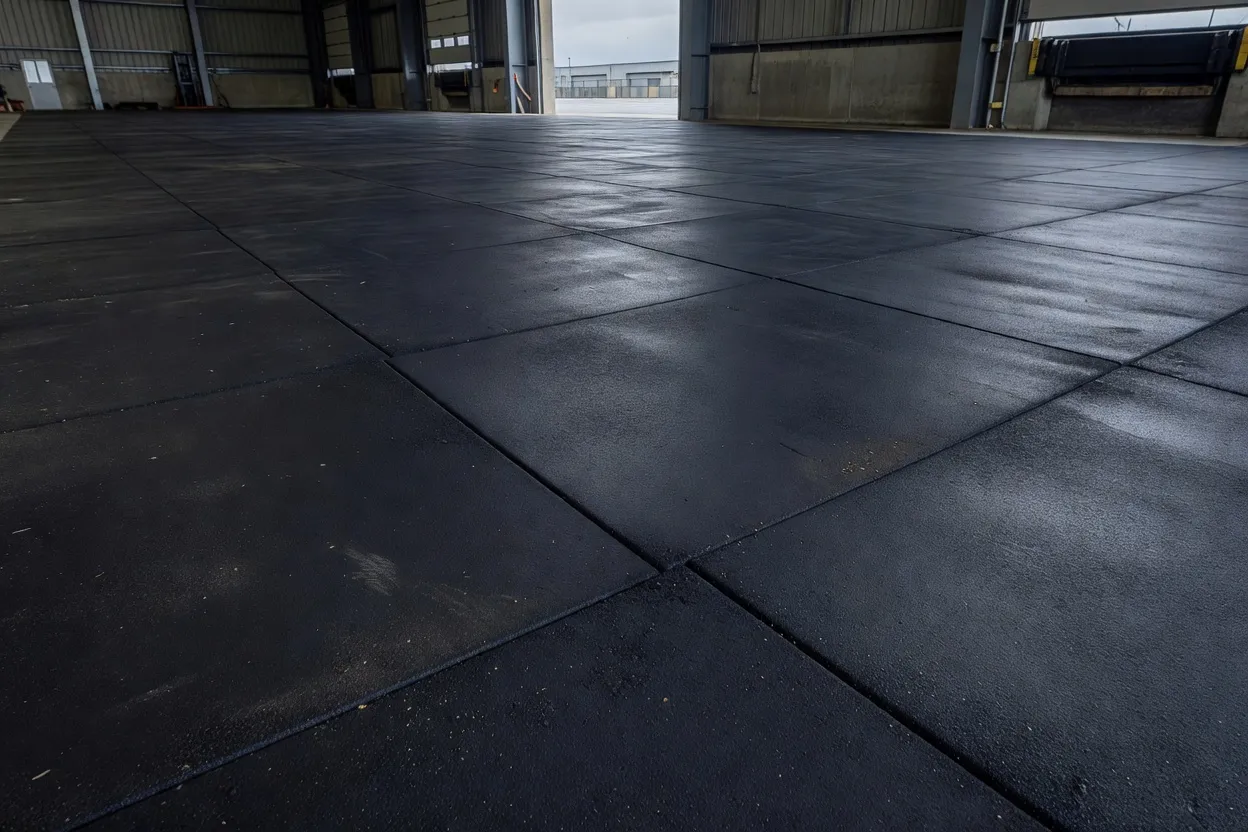
Omya has launched Omyaprene 50 C, a functional filler for selected rubber formulations, with the stated aim of reducing virgin and recovered carbon-black consumption without forcing compounders to abandon established curing and processing conditions. The product is intended for EPDM, NBR/SBR flooring and natural-rubber compounds. Omya says evaluations conducted in laboratory and industrial settings maintained key mechanical properties at substitution levels of up to 50 wt. % in validated formulations.
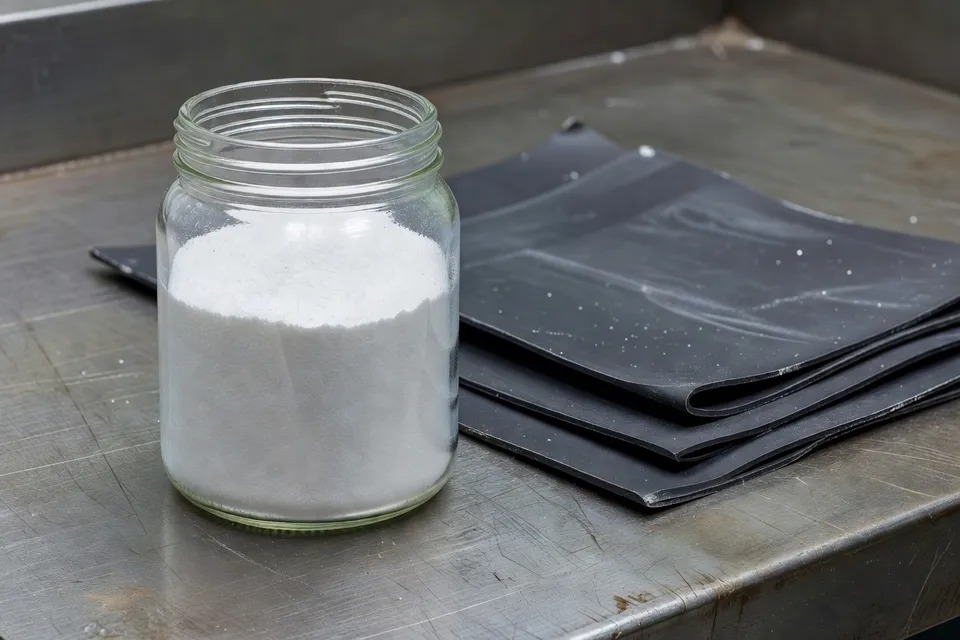
That is the useful part of the announcement—and also its limit. A formulation claim is not an OEM approval, a plant-wide conversion or proof that every black rubber compound can accept the same loading. The buyer still has to qualify the filler against the precise polymer, carbon-black grade, cure package, mixing sequence and finished-part requirement.
The replacement target
Omyaprene 50 C is positioned as a partial substitute for virgin and recovered N550, N660 and N770 carbon-black grades. Those grades are not interchangeable labels in a recipe. They influence reinforcement, hardness, tear behaviour, processing and final-part consistency, so the relevant question for a compounder is not whether the filler has a lower footprint in isolation. It is whether the replacement holds the required property window in the same formulation and production route.
Omya identifies three application groups: EPDM compounds, NBR/SBR flooring compounds and natural-rubber formulations. The company reports retention of tensile strength, compression set, elongation at break and tear resistance within the application areas it evaluated. The wording matters. It supports customer trials in named compound families; it does not establish a universal drop-in replacement across seals, hoses, flooring, tires or other rubber goods.
The product is manufactured at Omya's site in Omey, France. Omya estimates the product carbon footprint at less than 0.18 kg CO2-e per kilogram, compared with approximately 2.77 kg CO2-e per kilogram for conventional carbon black. Those figures describe the raw-material comparison presented by the supplier. They do not, by themselves, prove a lower footprint for a finished part if transport, energy, altered dosage, scrap or additional processing changes the calculation.
The reported footprint values are presented on the same mass basis for the product comparison.
| Material | Product carbon footprint |
|---|---|
| Omyaprene 50 C | <0.18 kg CO2-e/kg |
| Conventional carbon black | approximately 2.77 kg CO2-e/kg |
The gap is large enough to justify a technical evaluation. It is not large enough to waive one. A compounder cannot approve a lower-carbon input from the footprint number alone while hardness, compression set or extrusion stability remains unverified.
The process constraint
Omya reports that Omyaprene 50 C can reduce mixing torque and improve flow in validated formulations. It also says the filler can work with sulfur- and peroxide-curing systems while preserving established extrusion and curing conditions. For a processor, that is more consequential than a sustainability claim because it addresses the production assets already installed.
A material that requires a new extruder, a different cure schedule or a major change to mixing energy carries a qualification burden beyond the resin or filler price. Retaining established processing conditions could shorten that burden, but the statement remains tied to the formulations Omya evaluated. It does not show that every mixer, die, cure line or compound viscosity target will respond identically.
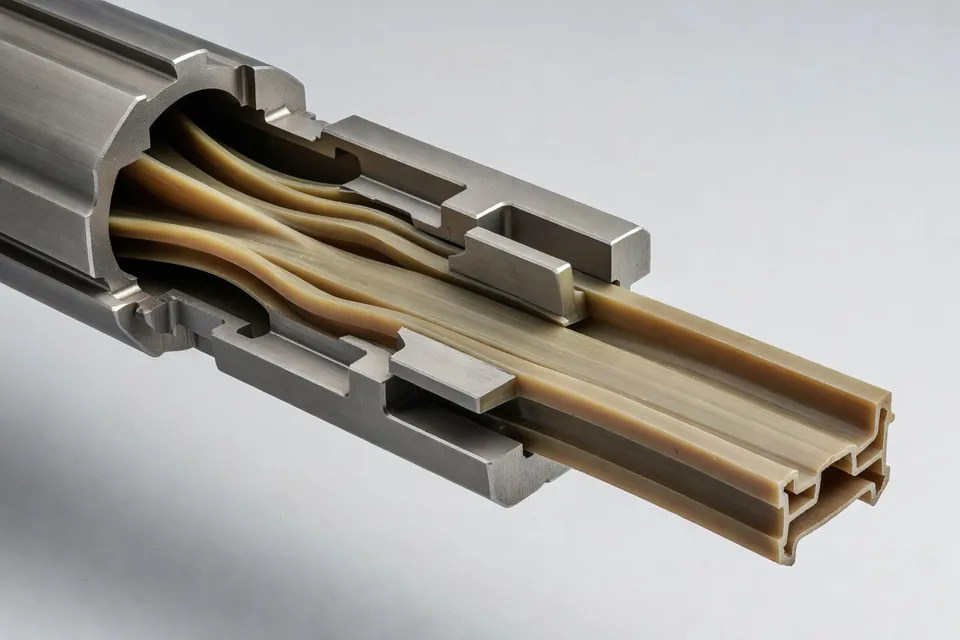
The practical test is therefore a controlled substitution trial. QA would need to compare the incumbent carbon-black formulation with the revised recipe using the same part geometry, cure system and test methods. Tensile strength, elongation, tear resistance and compression set are the minimum properties named for the validated applications. Mixing torque, flow, extrusion surface, cure behaviour and dimensional stability would determine whether the formulation can move beyond the laboratory.
The commercial handoff
Omyaprene 50 C is commercially available for customer evaluation, and Omya is offering samples and application information. That places the product at the right stage for compounders: technically specific enough to test, but not yet evidence of an industry-wide switch.
The incumbent remains carbon black because it already carries established recipes, supplier histories, processing windows and customer approvals. Replacing part of that input requires more than matching a single mechanical result. The new formulation must run consistently, meet the finished-part specification and remain repeatable when production moves from a controlled evaluation to normal plant variation.
The named substitution ceiling—up to 50 wt. %—should therefore be read as a validated application claim, not as a default recipe. It may be meaningful in the EPDM, flooring and natural-rubber systems evaluated by Omya. It does not state that a compounder can remove half the carbon black from any rubber formulation without reformulation or approval.
That distinction also separates this product from broader sustainability announcements elsewhere in the rubber chain. Lower-carbon polymers, biobased feedstocks, circular elastomer pilots and renewable-energy measures can reduce upstream impact, but they do not answer the same shop-floor question. Omyaprene 50 C addresses a specific filler substitution while attempting to preserve processing and performance. The qualification file must remain specific to that object.
What the trial must prove
The next decision belongs to the processor and, where the rubber part is safety- or performance-critical, to the customer that owns the specification. A successful trial would show the replacement level, compound batch consistency, cure response and finished-part results against the incumbent formulation. It would also define where the claimed substitution stops.
No disclosed result establishes long-term ageing, field durability, regulatory acceptance or customer approval for a particular component. Those gaps are not minor editorial omissions; they are the controls that decide whether a formulation can ship. Compression set data may support an EPDM seal trial, for example, but it does not replace ageing, fluid exposure or dimensional checks where those requirements apply.
Omya has supplied a credible reason to put the filler into a compounder's evaluation queue: a stated replacement target, named carbon-black grades, reported mechanical retention, processing compatibility and a quantified product-footprint comparison. The company has not supplied grounds to treat the claim as a completed market conversion.
For now, the incumbent is displaced only inside the validated recipe and only after the processor reproduces the result. That is the correct threshold. The carbon saving is promising; the specification still owns the decision.
Editorial Insights
- Can a compounder treat the 50 wt. % carbon-black substitution as a standard starting recipe?
- No. Start with the exact polymer, carbon-black grade, cure package and existing phr balance used in the validated formulation, then build a stepped substitution trial. N550, N660 and N770 affect reinforcement, hardness, tear and processing differently, so matching the headline replacement percentage does not preserve the compound automatically. The common failure is removing half the carbon black before checking viscosity, cure response and finished-part properties; the claimed ceiling applies to selected formulations, not to every black rubber recipe.
- Which measurements decide whether the filler can move from a lab batch to the production line?
- Run the incumbent and revised recipes through the same mixer, extrusion route and cure cycle, and file torque, flow, scorch or cure response, extrusion surface and dimensional results alongside tensile strength, elongation, tear resistance and compression set. Use the finished-part test method already tied to the specification rather than relying on a compound-property match. A lab result can look acceptable while die swell, surface defects or batch-to-batch viscosity variation creates scrap at production scale.
- Does retaining the existing extrusion and curing conditions remove the approval burden?
- It reduces implementation risk but does not remove qualification. Confirm that the actual mixer, die, cure system and viscosity target reproduce the supplier’s result, then obtain approval against the finished-part specification. Sulfur and peroxide compatibility is useful only after scorch safety, cure time, dimensional stability and required performance are verified in the plant’s process window. The usual mistake is treating unchanged setpoints as proof of unchanged output.
- How should the reported carbon-footprint difference be used in a purchasing decision?
- Use the footprint figures to prioritize a trial, not to approve the finished compound. Compare the supplier’s product-carbon-footprint basis with the incumbent’s basis, then account for dosage, transport, mixing energy, scrap and any extra processing in the part-level calculation. The friction is that a lower-impact filler can lose part of its benefit if the recipe needs more material or generates unstable extrusion and higher rejection.
- What evidence is still missing before a critical rubber part can ship with the substitution?
- Refuse shipment approval on the announced mechanical data alone. The qualification file still needs the application-specific ageing, fluid-exposure, dimensional, regulatory and customer-approval evidence required by the part specification, in addition to repeat batches and normal plant variation. Compression set may support an EPDM seal evaluation, but it does not establish long-term sealing performance; the failure mode is approving a compound that passes fresh testing and drifts after service exposure.
- Who owns the substitution level and the final process setpoints during implementation?
- Assign the formulation owner to define the replacement level and QA to lock the test methods, while production engineering owns any mixer, extrusion or cure-setpoint changes under change control. Procurement can secure samples and supply documentation, but it should not approve a recipe from price or footprint data alone. Without one named owner, operators often preserve an old setpoint after a viscosity shift, leaving the trial result impossible to reproduce.
References
- 1.Industrieanzeiger. EPDMs mit reduziertem CO2-Fußabdruck. Industrieanzeiger.
- 2.Plastech.pl. (2026, October 11). Omya launches filler for lower-carbon rubber compounds. Plastech.pl.
- 3.European Rubber Journal. (2026, October 11). ERJ Sustainability Tracker - 2026. European Rubber Journal.
- 4.Renewable Carbon News. Toward circular elastomers: Covestro opens pilot plant in Leverkusen. Renewable Carbon News.
- 5.Rubber News. RN Struktol FM 126 processing additive for compounding. Rubber News.
- 6.Advanced Engineering Materials. 10.1002/adem.202401316. Advanced Engineering Materials.
- 7.The Manufacturer. 3D printing of rubber gloves set to revolutionise an entire industry. The Manufacturer.
- 8.Dunlop. Sustainability. Dunlop.