

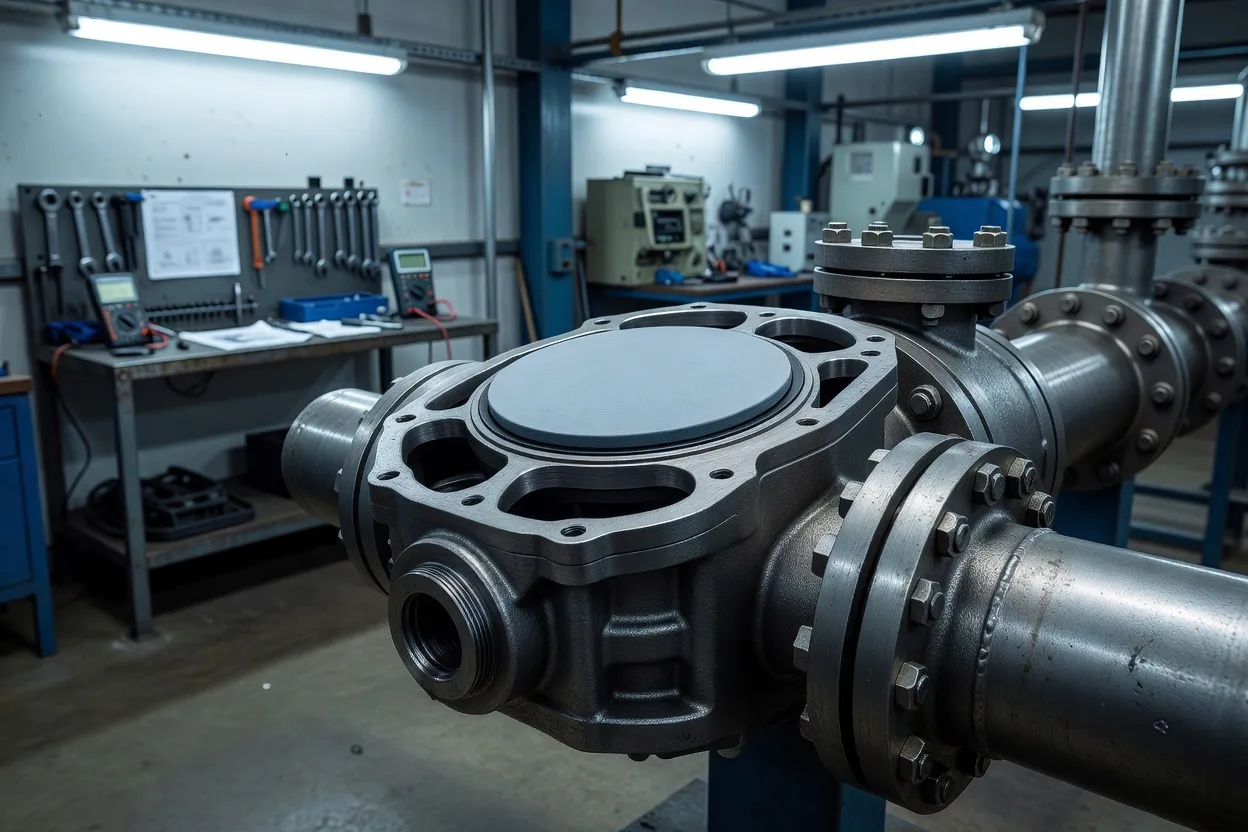
Hutchinson has introduced Lubritape-E, a PFAS-free coating for sealing pads used in multi-way rotary valves. The change is aimed at a narrow part with a hard requirement: preserve sealing performance while removing fluorinated chemistry from the coating package.
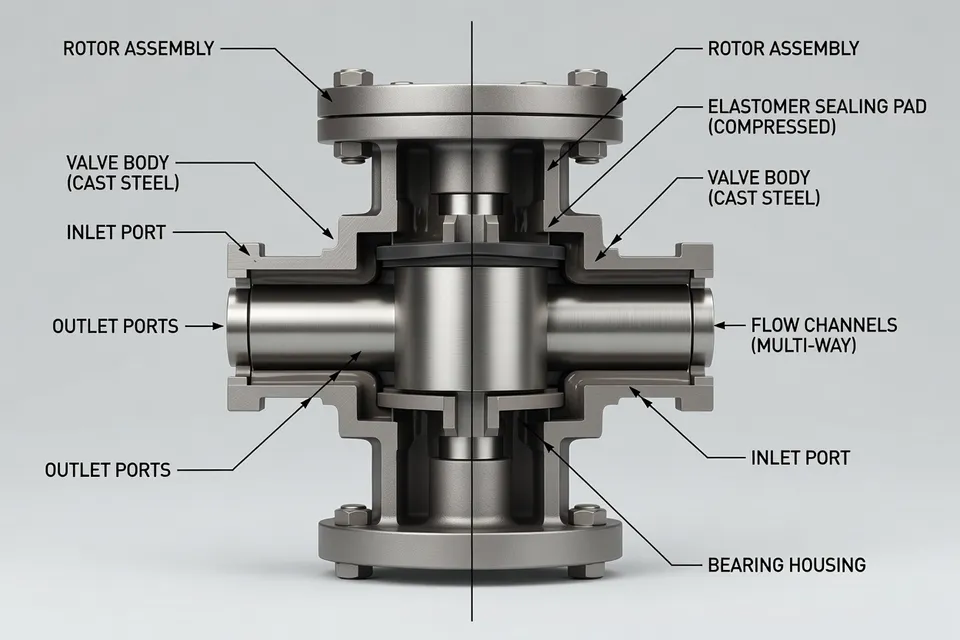
That is the useful fact here. This is not a broad conversion of rubber components, and it is not evidence that rotary-valve users have already approved a replacement across fleets. Hutchinson has identified the pad, the coating and the regulatory pressure. The buyer still has to qualify the finished seal in the valve, under its actual pressure, temperature, chemical and cycling limits.
The sealing pad
Lubritape-E comes from Hutchinson's precision sealing systems unit. The company reported the product on 19 September 2026 and described it as a response to tightening environmental regulations covering fluorinated chemicals. The object is specific: sealing pads used in multi-way rotary valves.
That specificity matters to a processor or valve maker. A coating selected for a pad cannot be judged by the name “PFAS-free” alone. The coating must allow the pad to move, seat and release without damaging the sealing interface. It must also remain attached to the elastomer through the valve's service cycle. The available announcement identifies the chemical change and the component, but it does not establish a production-life result, a validated service interval or an OEM award.
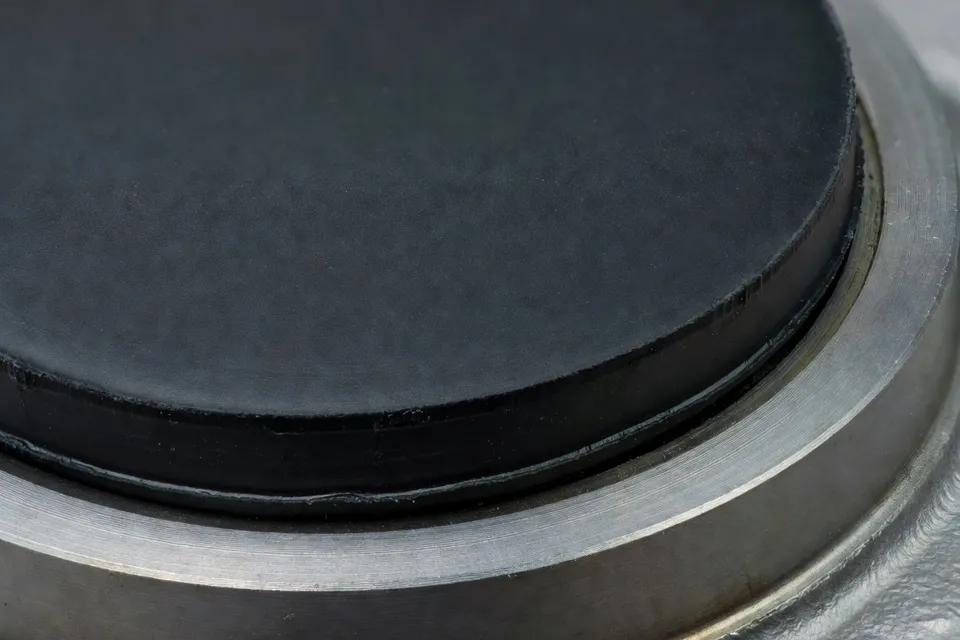
QA would therefore treat Lubritape-E as a qualification candidate, not as a closed specification. The missing evidence is not cosmetic. A rotary valve can fail through leakage, excessive actuation force, accelerated wear or contamination at the interface. None of those outcomes can be cleared by a coating description alone.
The regulatory constraint
Hutchinson's timing places the product inside a wider plastics-sector shift from PFAS discussion to substitution and verification. SPE's Chemical Safety in Plastics: PFAS & Beyond conference is scheduled for 20–21 October 2026 in Baltimore. Its published program centers on substitution technologies, alternative materials, testing, traceability, regulatory developments and performance validation.
That agenda matches the problem facing the rotary-valve pad. Removing a fluorinated component is only the first gate. The replacement has to carry a traceable formulation, a defined test method and a qualification record that links the coating to the pad and the valve design. A supplier statement can open the review; it cannot close it.
SPE's September 18 news notice also identifies FDA and NIST participation in the event, including presentations on PFAS and other chemicals of concern. That gives processors and equipment builders a clear signal about the direction of qualification work: chemical identity, regulatory interpretation and performance measurement will be reviewed together rather than as separate paperwork exercises.
The current evidence supports that reading, but not a larger one. No supplied material establishes that regulators have prohibited the previous coating in this valve use, and no supplied material gives a replacement deadline for a named OEM program. The defensible point is narrower: Hutchinson is positioning a PFAS-free coating against regulatory pressure before the application has been shown to be an industry-wide switch.
What the valve maker must measure
For the first reader, the practical question is whether Lubritape-E changes the pad's acceptance test. The qualification should compare the coated pad with the incumbent pad in the same rotary-valve design and under the same test conditions. The comparison needs to expose the failure modes that a PFAS declaration leaves untouched.
A useful release package would identify the coating grade, elastomer substrate, application method and cure or drying conditions. It would then connect those inputs to leakage, torque, wear, dimensional stability and chemical compatibility. If the valve handles a regulated fluid or a product-contact stream, extractables and contamination controls would also need a defined method. The public announcement does not provide those results, so they remain the buyer's work.
The evidence currently supports one product action and one qualification gap:
| Item | Current position |
|---|---|
| Coating | Lubritape-E |
| Application | Sealing pads for multi-way rotary valves |
| Fluorinated-chemical position | PFAS-free claim |
| Reported date | 19 September 2026 |
The table identifies the movement, not a performance ranking. Hutchinson has changed the chemistry offered for the pad, but the published information does not supply a matched baseline for leakage, wear or actuation force. Without that baseline, a buyer cannot calculate whether the new coating preserves the valve's operating margin.
The qualification boundary
This is where materials reporting should resist the easy headline. “PFAS-free” is a procurement and regulatory attribute. It is not a concept-grade result. The part still has to seal, survive movement and remain compatible with the surrounding hardware.
For Hutchinson, the strongest next proof would be a dated test result on the named sealing pad in the named multi-way rotary-valve application. A production trial, service-life comparison or customer qualification would move the product beyond a supplier introduction. Until then, the claim has a clear target and a credible reason to exist, but its application case remains incomplete.
SPE's event language reinforces that distinction by pairing substitution with testing, traceability and transition planning. Those are the controls a valve maker will need before changing an approved coating. A processor may accept the chemical direction immediately; a converter or OEM will still ask whether the pad holds its seal after the same number of cycles, in the same fluid and at the same operating limits.
Hutchinson has supplied the first answer—remove PFAS from the coating intended for the rotary-valve pad. The deciding answer, the one that permits a drawing change or production release, is still the measured comparison against the incumbent.
Editorial Insights
- Before approving a PFAS-free coating for a rotary-valve sealing pad, what does the valve maker need to match?
- Run coated and current pads side by side in the same valve, fluid, pressure, temperature and cycle profile. Track leakage, actuation torque, wear and dimensional stability, then log the elastomer, coating grade, application method and cure or drying conditions. Lower friction by itself does not confirm interchangeability; a pad can still lose seal or shed coating in service.
- Does a PFAS-free supplier declaration alone allow a change to the approved coating spec?
- No. Keep the declaration as the first file, not the approval. The change still requires a traceable formulation, a defined test method and evidence that ties the coating to the pad and valve. Treating chemical identity as full qualification is the usual error; the replacement clears paperwork but lacks matched data on leakage, torque, wear or life.
- When the rotary valve handles regulated or product-contact fluids, what extra tests are required?
- Set extractables, contamination and fluid-compatibility methods before trials and link results directly to the coating-elastomer pair. A general PFAS-free claim does not prove suitability for every fluid or contact condition. Without the test method the qualification package remains incomplete even if torque and leakage look acceptable.
- What production controls must be fixed before scaling coated sealing pads?
- Lock coating thickness or coverage, substrate preparation, application conditions and cure or drying window, with a named owner for each parameter. Make sure inspection can catch incomplete coverage, adhesion loss and surface damage before pads reach the valve. Scaling often reveals the gap between a good sample and a repeatable process; changed drying or uneven application can raise torque even when the nominal grade stays the same.
- How should procurement assess the replacement before claiming cost or operating savings?
- Do not book savings from the PFAS-free label alone. First build the matched baseline for valve torque, leakage, wear and replacement interval, then fold qualification work, inspection and any process changes into the comparison. Lower actuation force may cut motor demand, but the benefit is easy to overstate if the coating shortens pad life or triggers unplanned maintenance.
References
- 1.European Rubber Journal. (2026, October 10). Essentially Rubber – Innovation. European Rubber Journal.
- 2.SPE. (2026, October 6). Chemical safety in plastics: PFAS & beyond – For sponsors. SPE.
- 3.SPE. (2026, October 2). SPE News - September 18, 2026. SPE.
- 4.Bergeson & Campbell, P.C. (2026, October 8). Plastics and policy: Microplastics, EPR, and other emerging trends, October 6, 2026, 11:00 a.m. – 12:00 p.m. (EDT), via webinar. Bergeson & Campbell, P.C.
- 5.PR Newswire. Plastics and policy: Microplastics, EPR, and other emerging trends webinar. PR Newswire.
- 6.Bergeson & Campbell, P.C. (2026, October 8). Webinars on demand archives. Bergeson & Campbell, P.C.
- 7.FedCenter. Item browser. FedCenter.
- 8.Bergeson & Campbell, P.C. (2026, October 9). Product stewardship blog archives. Bergeson & Campbell, P.C.
- 9.Verdant Law. Microplastics. Verdant Law.
- 10.PlasticsToday. California takes bold step on microplastics regulation. PlasticsToday.