


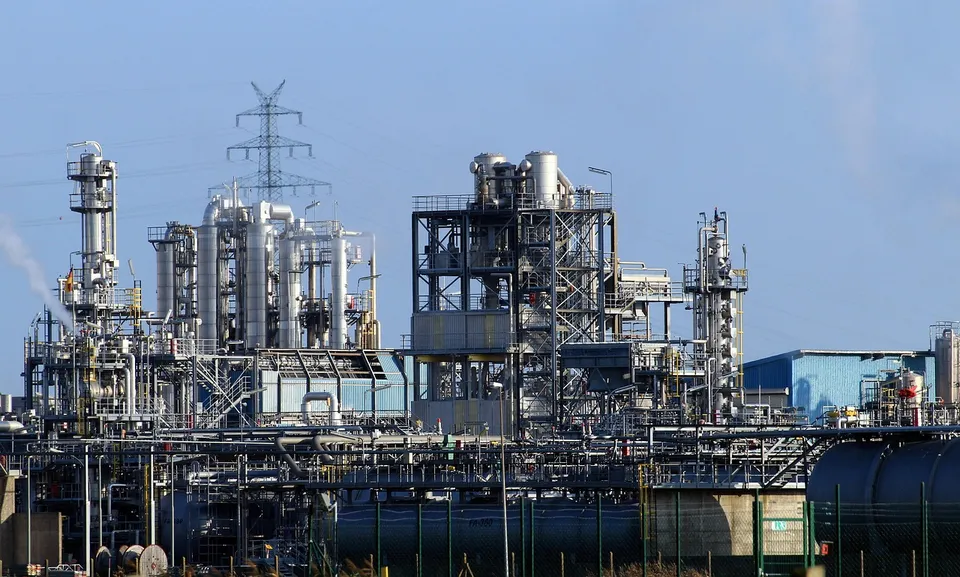
Pampa Energía has ended synthetic-rubber production at its Puerto General San Martín complex in Santa Fe, closing Argentina's only active plant for the material after the local market decline made the line commercially unviable. The decision was announced in July 2026; the final closure followed weeks of labor negotiations and the expiration of a voluntary conciliation process at the end of August.
The immediate supply fact is clear: Argentina no longer has domestic synthetic-rubber production. The operating fact is narrower. Pampa shut the rubber line, not the entire petrochemical complex, and the company has said its other units at Puerto General San Martín will continue operating normally.
The Puerto General San Martín line
Pampa Energía (the Argentine energy and industrial group operating the Puerto General San Martín petrochemical complex) attributed the shutdown to a sharp contraction in the domestic market, particularly weaker tire-industry activity. The closure of Fate, identified as the plant's principal local customer, removed the largest named outlet for the line's production.
At the initial announcement, the company's action put about 130 direct positions at risk. Union estimates also included roughly 70 workers outside the collective bargaining structure, while other reports described a wider effect on contractors and linked small businesses. Those figures describe employment exposure, not rubber capacity, and no production tonnage or restart capacity was disclosed in the notices.
The plant had already been stopped for more than a week when the closure was communicated, with the union citing delayed butadiene deliveries from Brazil. That stoppage explains the immediate interruption of output; it does not establish that the feedstock delay caused the permanent decision. Pampa's stated reason was the lack of a viable local market, while the company's later position described changes in the domestic synthetic-rubber market as making continued operation unviable.
The distinction matters to buyers. A feedstock interruption can be repaired with a new shipment or route. A commercial closure removes the domestic source unless the owner reverses the decision or another producer takes over the line. No restart window has been given.
The customer base that disappeared
Early reporting put the plant's output at an even split between domestic sales and exports, with Fate the principal local buyer. That split is useful as a description of the former sales structure, but it is not a forward allocation plan. The notices do not name replacement importers, substitute grades, available inventories, or confirmed delivery lead times for Argentine converters.
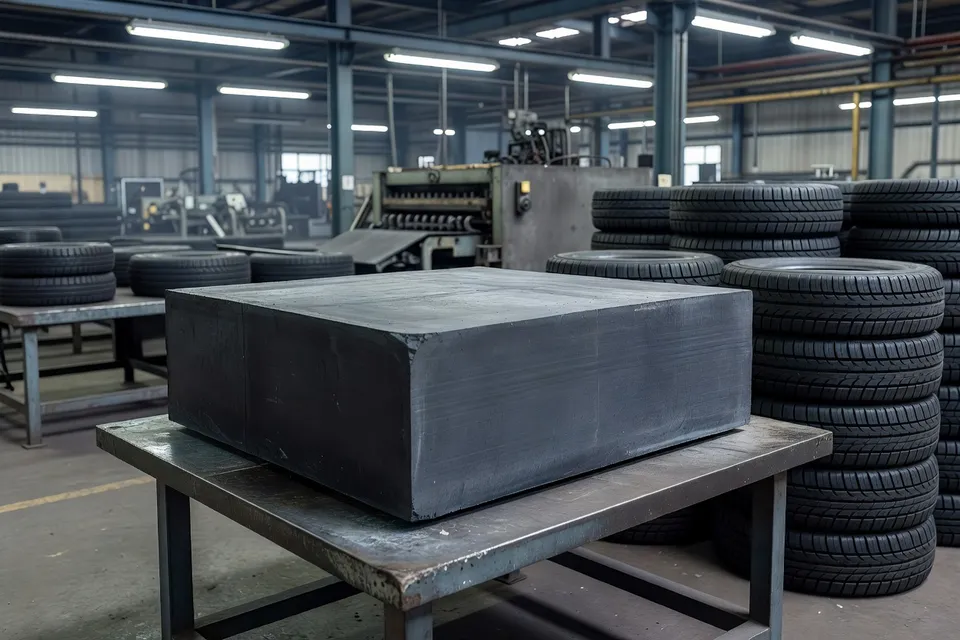
For tire and rubber processors, the purchasing consequence is therefore exposure to imported synthetic rubber rather than a declared shortage of a specified grade. The closure changes the origin of supply. It does not, by itself, prove that every customer will face a shortfall, a price increase, or a longer lead time.
The labor settlement also closed the question of whether the line would remain operating during negotiations. About 100 workers accepted voluntary-retirement agreements, according to the later account, while approximately 25 were to be transferred to other companies within Pampa's group. A small number remained connected with maintenance work. The plant's machinery and operating status were not described as available for sale or restart.
The employment figures reported during the process should not be merged into one invented total. They refer to different groups and stages of the closure.
| Stage or group | Reported figure | What it describes |
|---|---|---|
| Direct rubber-line staff initially at risk | about 130 | Employees connected with the production operation |
| Workers outside the union agreement | about 70 | Additional personnel identified in union reporting |
| Voluntary-retirement agreements | 100 | Workers who later agreed to leave |
| Internal or group-company transfers | about 25 | Workers assigned elsewhere in Pampa's group |
The movement is from a threatened workforce to a completed production shutdown, not from one published capacity number to another. No source figure establishes how many tonnes Argentina must now replace through imports.
Import dependence without a lead-time claim
Argentina's buyers will have to source synthetic rubber from foreign producers or distributors, but the closure notices do not identify an approved alternative supplier, grade-for-grade replacement, vessel route, or delivery schedule. Procurement teams should not treat the reported employment count as a supply-volume estimate.
The global producer ranking gives scale to the alternative supply base, but it does not solve the Argentine specification problem. Sinopec remained the largest synthetic-rubber producer in the 2026 ranking with 1,920 kilotonnes per year of active capacity, while PetroChina reached 1,710 kilotonnes per year after a 3% year-on-year increase. Arlanxeo ranked third at 1,518 kilotonnes per year after a 20% decline, and Sibur/NKNH remained fourth at 1,297 kilotonnes per year.
Global synthetic-rubber producer capacity, 2026
| Producer | Capacity (kt/year) |
|---|---|
| Sinopec | 1920 kt/year |
| PetroChina | 1710 kt/year |
| Arlanxeo | 1518 kt/year |
| Sibur/NKNH | 1297 kt/year |
Those figures are global producer capacity, not Argentine availability. They cannot establish which polymer grades are open for sale into Argentina, whether distributors hold stock, or how long a replacement shipment would take. They also cannot prove that the former Puerto General San Martín output can be replaced without qualification work.
For a processor, the missing items are practical: the polymer grade, approved producer list, port or inland route, minimum order, lot availability, and qualification timing. None is named in the closure notices. QA should therefore treat imported replacement material as a new source requiring confirmation, not as an automatic one-for-one substitute.
What remains closed
Pampa's closure is final for the production line as reported, but the notices do not state whether the equipment will be dismantled, mothballed, sold, or converted. They also do not give a restart date, a restart condition, or a successor operator. The company's other Puerto General San Martín activities are continuing, which limits the event to synthetic rubber rather than the whole complex.
That is the boundary of the evidence. Argentina has lost its only active synthetic-rubber plant, and buyers must plan for imported supply. The notices support neither a national shortage forecast nor a specific import lead time. No restart window is on the notice.
Editorial Insights
- What should procurement verify before treating an imported synthetic-rubber grade as a replacement?
- Ask for the exact polymer grade, producer, available lot, CoA history, approved-source status, minimum order, and delivery route before releasing a purchase order. Matching the headline grade or melt-flow range is not enough: cure behavior, filler interaction, contamination profile, and finished-part performance may still differ. The usual failure is a second source that passes the paper specification but creates scrap or forces a customer requalification.
- Does the plant closure prove that Argentine processors will face a rubber shortage?
- No. It proves the loss of a domestic production source, not a quantified national deficit. First reconcile current usage, on-hand inventory, open orders, approved imported grades, and realistic replenishment routes; global producer capacity does not show what is available for the Argentine market. A buyer who converts the former plant’s employment figures into tonnes will be planning from the wrong number.
- How should a processor structure qualification of a new imported rubber source?
- Run the candidate material through the existing lab and production approval sequence: identity and CoA review, compound trials, cure and physical-property checks, dimensional or process validation, then customer approval where required. Keep the original source as the control and define the lot-release criteria before scaling. Do not let freight urgency bypass change control; a shipment can arrive on time and still remain unusable until the specification and approval records are complete.
- Which inventory decision changes when domestic synthetic-rubber production disappears?
- Calculate coverage days from actual consumption and confirmed replenishment, then add only the buffer justified by route, minimum order, qualification status, and shelf-life limits. Extra stock is not automatically protection: it can outlast the additive package, tie up cash, or hide that no approved second source exists. Recheck the plan when the import route, grade allocation, or customer demand changes rather than treating one large receipt as a permanent solution.
- What can buyers conclude about a restart or sale of the closed rubber line?
- Nothing operational should be assumed. The available account establishes that production ended but does not establish equipment sale, mothballing, conversion, restart conditions, or a successor operator. File the line as unavailable until a formal notice confirms ownership, inspection status, feedstock access, staffing, and a qualified production date. Planning around a possible restart is how a buyer ends up short after consuming the last domestic inventory.
References
- 1.Somos Pymes. Pampa Energía anunció el cierre de su línea de producción de caucho sintético. Somos Pymes.
- 2.Urgente24. (2026, October 11). Argentina ya no producirá caucho sintético: Cierran la única planta del país. Urgente24.
- 3.Ground News. Pampa Energía announced the closure of the only rubber plant in the country; estimate more than 130 workers fired in Puerto San Martín. Ground News.
- 4.European Rubber Journal. Chinese producers top synthetic rubber rankings. European Rubber Journal.
- 5.ICIS. Synthetic rubbers. ICIS.
- 6.Trading Economics. Rubber. Trading Economics.
- 7.Rubber World. Natural rubber prices mixed in August as supply concerns, demand shape global market. Rubber World.
- 8.AGBI. Red Sea disruption threatens Saudi petchems recovery. AGBI.