

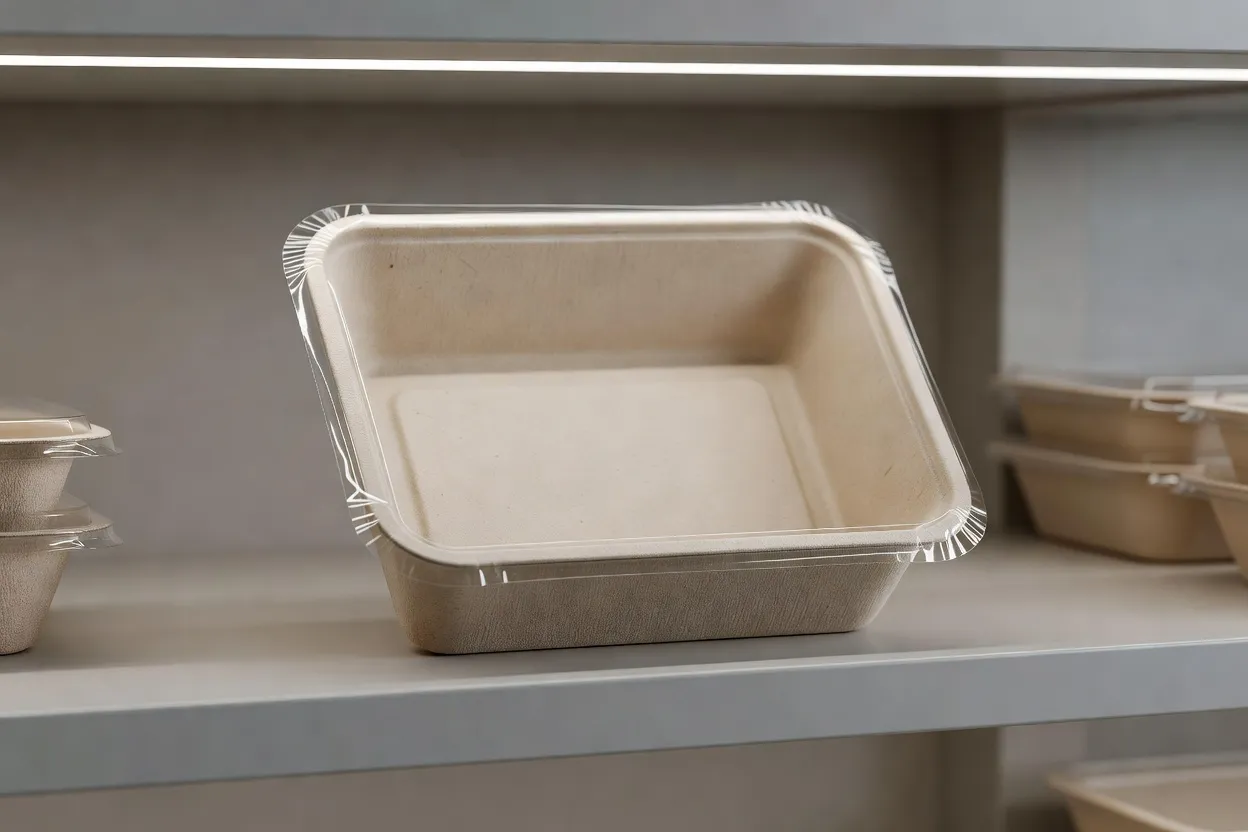
A packaging change is only real when the finished pack still protects food or produce and can pass the recovery route after use. Fiber, biopolymers and recyclable plastic films are now being developed against that test. The material label comes second.
The strongest move in the current group is not a blanket exit from plastic. It is a redesign of the barrier layer, sealing step or feedstock so the package retains its job with fewer incompatible materials. Fraunhofer's xPBS work, for example, targets a bio-based foam that can run on existing extrusion lines and reach densities comparable with established LDPE materials. That is a processor-friendly proposition. It is not yet proof that a food pack has cleared every safety, sensory and end-of-life requirement.
The barrier pack
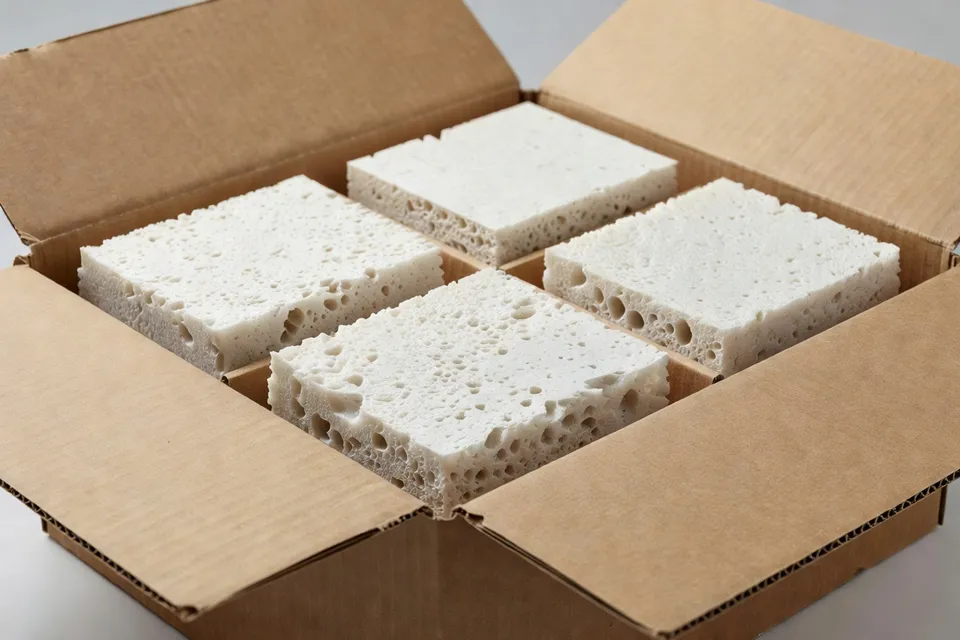
Pregis has presented a high-barrier food-packaging structure designed to improve recyclability. The useful question for a converter is what happens to oxygen, moisture, seal integrity and line speed after the structure is simplified. A recyclable claim does not answer those questions. A high-barrier film that loses protection on the filling line will be refused regardless of its recovery profile.
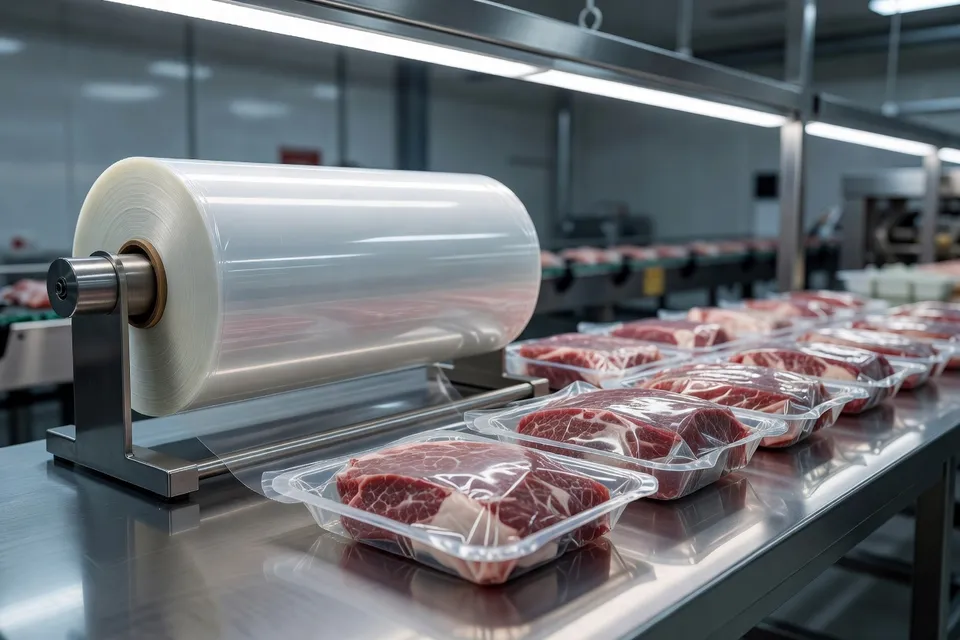
Fresh-produce film developments point to the same constraint from another direction. Produce packaging must manage moisture and atmosphere while maintaining visibility, sealability and mechanical handling. Replacing a conventional film with a thinner, bio-based or fiber-containing construction therefore requires a matched comparison on the same produce item and pack format. Without that baseline, "innovative film" describes a product position, not a qualification result.
For food converters, the incumbent remains the multilayer plastic structure that already controls the process window. The replacement has to prove a narrower claim: equivalent protection in the specified pack, with a recovery route that accepts the actual construction. That is where many sustainability pitches stop short.
The PBS trial line
Fraunhofer CCPE's polybutylene succinate work gives processors a more concrete reason to test a biopolymer. The xPBS foam is described as a drop-in material for existing extrusion equipment, with pilot-scale process development behind the formulation and foaming work. The material is bio-based, biodegradable and thermoplastic, and its density is reported as comparable with LDPE foam.
Those properties address the first barrier to adoption: equipment. A converter does not want a new resin to require a new plant before it knows whether customers will accept the pack. Existing-line processing lowers that risk. It does not settle food contact, seal performance, sensory transfer, shelf life or commercial supply.
The follow-on xPBS-food project, launched in January 2026, is aimed at a food-safe monomaterial foam packaging solution that meets functional and sensory requirements while remaining recyclable or biodegradable. That wording sets the boundary of the evidence. The food version is a development target, not a completed qualification. A buyer can authorize a trial; QA cannot approve the material on the basis of density alone.
The two available density comparisons belong to the same material-development claim and period. They show parity with the incumbent foam rather than a measured environmental result.
| Material or construction | Reported density position | Processing position |
|---|---|---|
| xPBS foam | On par with established LDPE materials | Existing extrusion lines |
| Conventional LDPE foam | Reference incumbent | Existing extrusion lines |
The table shows why xPBS deserves a line trial and why it does not yet justify a broad substitution order. Density and equipment compatibility remove two objections; they do not demonstrate the complete food-pack specification.
Waste as feedstock
Apple waste and agricultural plant residues offer a different route into packaging. Instead of changing only the polymer chemistry, these projects seek to turn a difficult waste stream into a film or bioplastic input. That can improve the raw-material story, but the pack still has to survive converting and use.
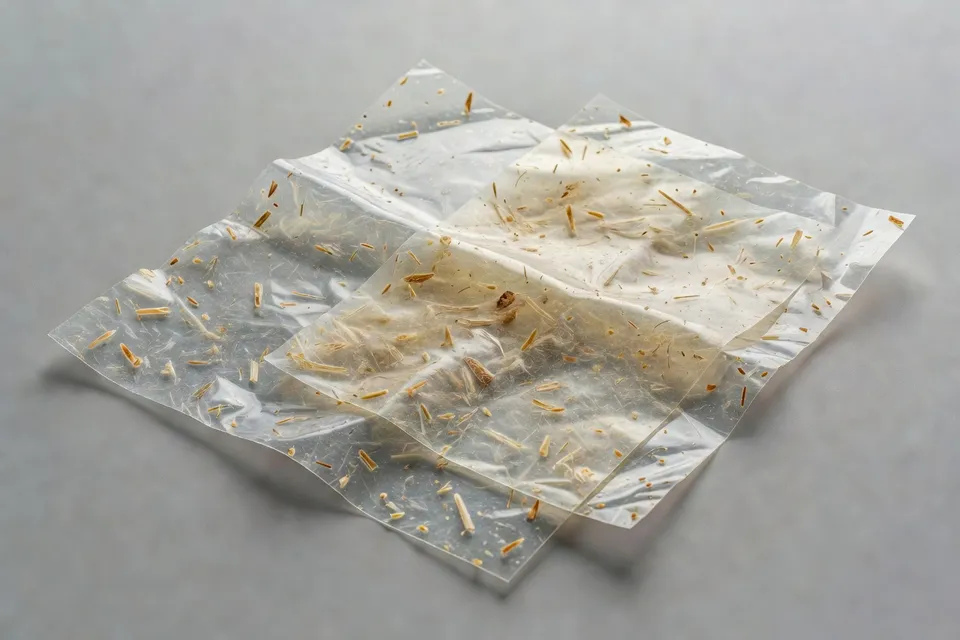
A residue-derived material must be checked for composition variability, odour, colour, moisture sensitivity and contaminant control before a brand owner can treat it as a dependable packaging grade. Agricultural feedstock also carries a supply question: a laboratory formulation can use a controlled fraction, while a commercial resin must accept seasonal and regional variation without moving outside specification.
The buyer's incumbent is therefore not simply petroleum-based plastic. It is a controlled resin supply with known processing behaviour. A bio-based substitute wins only if it supplies the same control or if the application accepts a different performance window. The cited development work supports the first step—turning waste into polymeric or film material—but does not establish a production-scale packaging qualification.
Fiber's sealing problem
Fiber packaging has a clear recovery advantage when it avoids plastic layers and incompatible adhesives. It also has a clear manufacturing problem: paper does not automatically provide the barrier and seal needed for food packaging. Fraunhofer's PAPURE project is addressing that point with a laser-based process intended to seal paper without adhesives or added plastic layers.
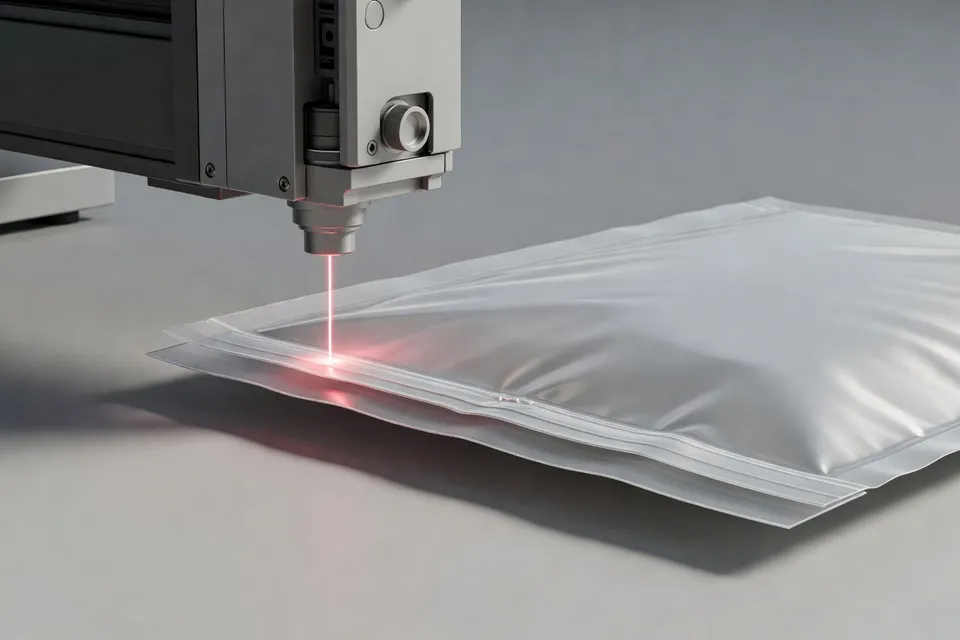
That is the right object of development. Removing the adhesive from a paper pack can simplify recycling, but the seal must still hold through filling, distribution and use. The process therefore has to be judged at the package joint, not at the sheet level. A converter will need seal strength, leak testing, line compatibility and performance after exposure to the product.
The fiber option should not be treated as a universal replacement for plastic film. It is better understood as a construction change that moves the constraint from polymer recovery to barrier formation and sealing. If the laser process supplies a repeatable seal without an added layer, it addresses the specific feature that has kept paper formats dependent on hybrid structures. The project description supports that mechanism; it does not by itself establish a commercial food-pack award.
What the specification still withholds
Fraunhofer's circular-design guidance makes the same point in broader material terms: monomaterials can simplify recycling, but they are not sufficient if the finished product fails its technical requirements. That is the practical filter for every item in this packaging shift.
A converter should ask four questions before changing the incumbent. Does the new structure meet the barrier requirement on the named product? Does it run on the intended equipment at an acceptable rate? Does the seal or closure survive distribution? Will the actual post-use package enter the claimed recycling, composting or disposal route?
The current evidence supports development programs, pilot processing and targeted material substitution. It does not support calling the market converted. xPBS has an equipment advantage; fiber has a sealing challenge; residue-derived bioplastics have a consistency challenge; recyclable high-barrier films have to prove that the barrier survives the simplified structure.
That is enough to justify controlled trials. It is not enough to retire the incumbent by slogan. The next approval belongs to the package that records the failed condition as carefully as the successful one.
Editorial Insights
- What must a converter document before replacing a multilayer film with a simpler recyclable structure?
- Run the new structure against the incumbent on the named product and pack format, recording oxygen and moisture barrier, seal integrity, filling-line speed, handling damage and post-use recovery acceptance. Refuse a material decision based only on resin composition or a recyclability label; the usual failure is a simplified film that passes a laboratory barrier test but loses protection or sealing margin during production.
- Does existing extrusion equipment make a biopolymer ready for production use?
- No. Existing-line compatibility only earns the material a controlled trial. Confirm the processing window, throughput, foam density, die stability, cooling behaviour and downstream dimensions, then route the resulting pack through food-contact, sensory, shelf-life and end-of-life approval. The common mistake is treating comparable density and familiar equipment as proof that the finished food package meets specification.
- What purchasing evidence is needed before residue-derived packaging material can replace a controlled resin supply?
- Ask for a raw-material specification, contaminant controls, moisture and odour limits, colour range, lot-to-lot data and a plan for seasonal and regional feedstock variation. Approve more than a laboratory formulation: qualify production lots through converting and pack testing. A residue stream may look stable in a development sample and still move outside the resin window when its composition changes.
- How should a fiber pack with adhesive-free laser sealing be qualified?
- Measure the joint, not just the paper sheet: seal strength, leak rate, repeatability, line speed and performance after contact with the packed product must be recorded. Include filling, distribution and use conditions in the trial, with clear failure limits. Removing an adhesive can simplify recovery, but a seal that opens after exposure or handling has only shifted the problem.
- Who should own the setpoints and approval sequence when a new packaging material runs on incumbent equipment?
- Assign process engineering to the machine setpoints, QA to release criteria, and packaging development to the matched pack comparison; procurement should not convert a successful trial into a substitution order without those records. Lock the approved temperature, speed, sealing and inspection ranges under change control. Otherwise operators may compensate for unstable material behaviour locally, while the next lot is judged against undocumented settings.
- What does a claimed recycling, composting or disposal route still need to prove?
- File evidence that the actual finished construction—not merely its polymer or fiber ingredient—is accepted by the named post-use route. Check layers, coatings, adhesives, closures and contamination assumptions against that route, then record the failed condition as well as the pass result. A package can be technically recyclable in isolation and still miss the available collection or sorting path because its full construction is not recognized.
References
- 1.FreshPlaza. (2026, October 13). Two innovative films for fresh produce packaging. FreshPlaza.
- 2.Packaging Strategies. (2026, October 13). Pregis brings recyclability to high-barrier food packaging at PACK EXPO. Packaging Strategies.
- 3.FreshPlaza. (2022, February 23). Oregon State researchers makes key advance in turning apple waste into packaging material. FreshPlaza.
- 4.FreshPlaza. The European Agro2Circular project turns agricultural plant waste into bioplastics. FreshPlaza.
- 5.HortiDaily. Protecting plants without having to use crop protection agents. HortiDaily.
- 6.FloralDaily. Wageningen University research proves circular plastics in horticulture works. FloralDaily.
- 7.Ecofold Packaging. Sustainable materials replacing plastic packaging. Ecofold Packaging.
- 8.Fraunhofer. Material solutions for a circular plastics industry. Fraunhofer.
- 9.Perstorp. PPWR. Perstorp.