


"Braskem (Braskem, a Brazilian petrochemicals producer with polypropylene operations in Germany) declared force majeure on European polypropylene supply effective 13 October after low Rhine water disrupted deliveries of olefins and cracker feedstocks to its German operations. The notice is a supply allocation event, not proof that every European PP buyer has lost material. It does establish that Braskem expects feedstock shortages to affect production planning and inventory replenishment.
The company said it intends to fulfil confirmed purchase orders, but warned that deliveries may be delayed and contracted volumes may not be supplied in full during the force majeure period. No end date or restart window is on the notice. That leaves buyers with a defined exposure—timing and volume against confirmed orders—but without a date on which normal service can be promised.
The German PP plants
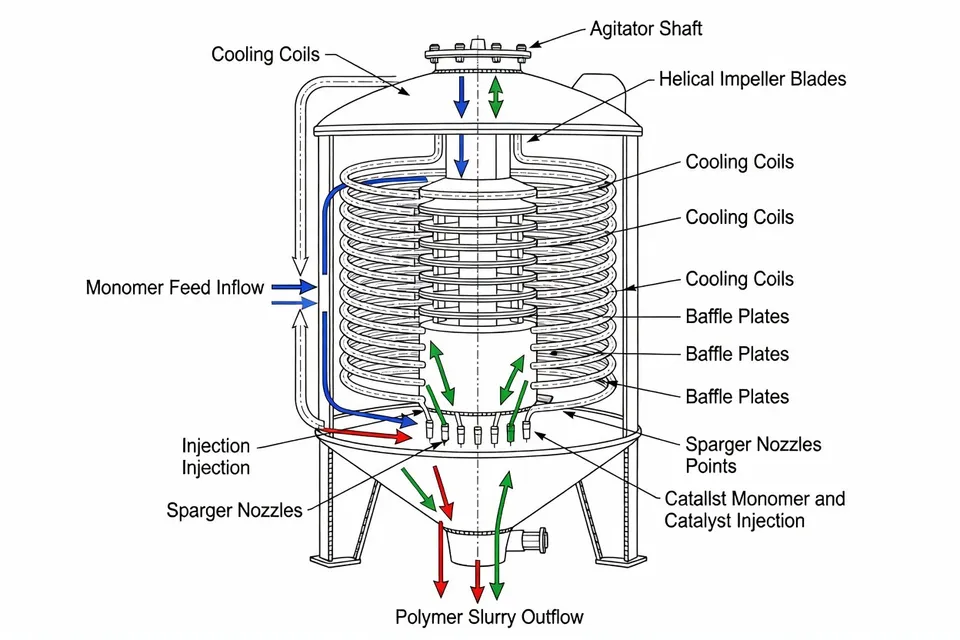
Braskem operates two German PP sites. The Cologne plant has capacity of 255,000 tonnes/year, while Schkopau has capacity of 365,000 tonnes/year. Together, the named assets represent 620,000 tonnes/year of PP capacity, but that capacity figure is not a forecast of lost output. The disruption sits upstream: Braskem does not make the required olefins in Europe and depends on third-party feedstock suppliers.
That distinction matters for procurement. A force majeure tied to feedstock logistics does not identify a failed reactor, a damaged polymerisation line, or a permanent capacity reduction. It does identify a route constraint that can reach production through replenishment. If barges cannot deliver feedstock reliably, a plant can remain mechanically available while its production schedule becomes harder to defend.
| German Braskem PP site | Named capacity |
|---|---|
| Cologne | 255,000 tonnes/year |
| Schkopau | 365,000 tonnes/year |
Braskem German PP plant capacities, October 2026
| Plant | Capacity (tonnes/year) |
|---|---|
| Cologne | 255000 tonnes/year |
| Schkopau | 365000 tonnes/year |
Schkopau is the larger of the two named sites, with 110,000 tonnes/year more capacity than Cologne. Neither figure establishes how much material is currently unavailable, which grades are affected, or whether all customer allocations will be reduced equally.
The Rhine route
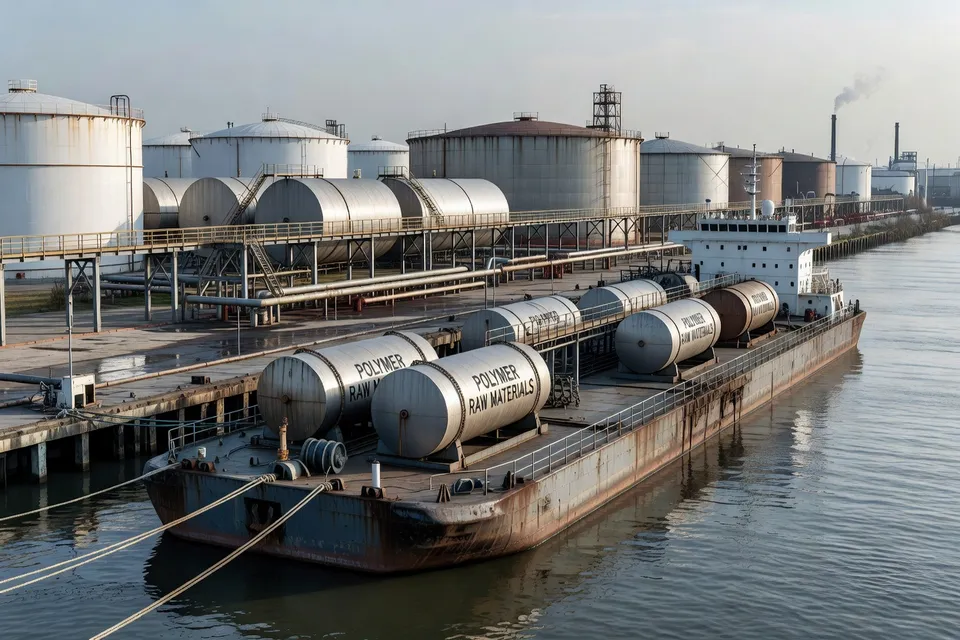
Low water has disrupted deliveries to several inland German petrochemical sites, affecting olefins and polyolefins production. The route problem is therefore broader than a single Braskem order book, but the evidence supports only a logistics-linked feedstock disruption. It does not support a Europe-wide PP shortage or a claim that every producer using inland transport faces the same constraint.
For a processor, the operational question is not whether Braskem has issued a legal notice. It is whether the confirmed order remains scheduled, whether the contracted quantity will ship, and whether the seller will assign a replacement grade or delivery date. Braskem's wording answers only part of that sequence: confirmed orders remain intended for fulfilment, but delay and under-delivery are possible.
Buyers should keep the affected German supply separate from imports arriving through other routes. Reduced imports from the Middle East and Asia-Pacific were reported alongside the Rhine disruption, but that does not convert the Braskem notice into a regional import shortfall. Nor does it prove that alternative cargoes can arrive within the same lead time or meet the same grade qualification.
What the price signal does not prove
The force majeure had little immediate impact on PP prices because weak demand continued to outweigh supply concerns. That observation limits the claim. A producer can declare force majeure while the spot market remains soft; the absence of a sharp price response does not cancel the delivery risk, and the delivery risk does not prove a price increase.
The practical reading is narrower: Braskem has shifted uncertainty from routine replenishment to order execution. A buyer with a confirmed purchase order may still receive material, but cannot assume the original delivery date or full contracted volume. A buyer seeking replacement material must verify grade, allocation, origin, and transport route rather than treating any European PP offer as interchangeable.
No alternative producer, substitute grade, replacement route, or emergency import volume is named in the notice. That gap should remain visible in purchasing decisions. The available facts support a request for written allocation and shipment confirmation; they do not support a claim that a named substitute is already available.
The next checkpoint
The force majeure began on 13 October, but its duration was not specified. Braskem has not given a restart window, a date for Rhine logistics to normalise, or a date for reviewing allocations. Until one of those dates is issued, the defensible forward line is limited: confirmed orders are intended for fulfilment, deliveries may slip or fall short, and German PP availability remains tied to third-party feedstock movements along the Rhine.
That is enough for processors to protect production schedules, but not enough to price a general European shortage. The next meaningful signal will be Braskem's allocation review or a confirmed feedstock and shipment update—not the force majeure label alone."
Editorial Insights
- What should procurement request before treating a confirmed PP order as secure?
- Ask for a written shipment date, quantity confirmation, allocation status, and transport route against each purchase order. Do not treat the force majeure notice as proof that the order is cancelled, but do not treat the seller’s intention to fulfil it as a delivery commitment either. The common failure is leaving the order at the original schedule in the ERP while the supplier has already moved it into an allocation queue.
- Can the named German PP capacity be used to estimate the volume at risk?
- No. The site capacities describe installed annual capability, not current lost output or the tonnes assigned to a particular grade or customer. Ask instead for grade-level allocation, available stock, and the next confirmed dispatch quantity. Using the combined capacity as an exposure estimate overstates the risk and can trigger unnecessary spot buying.
- What must be checked before approving an alternative PP source or grade?
- Match the replacement against the actual processing specification, not only the MFR or commercial description. Verify polymer family, additive package, impact or stiffness requirement, colour, regulatory status, CoA limits, lot traceability, and the qualification needed for the finished part. Check the origin and transport route as well, because an offer described as European may still carry a different replenishment risk. A second source can match melt flow and still create scrap through mould filling, warpage, odour, or dimensional drift.
- How should a processor protect production without pricing in a general European PP shortage?
- Separate confirmed inventory, scheduled receipts, open exposure, and qualified alternatives by grade and coverage days. Protect the lines with no approved substitute first, then test replacement material through the normal lab and production approval sequence. Do not convert one disrupted supplier into a blanket regional shortage assumption; weak demand can keep prices soft while delivery reliability worsens. The practical risk is buying extra resin that arrives after the schedule has changed or remains unused because the substitute was never technically released.
- Which update should trigger a change in the purchasing plan?
- Use an allocation review or written feedstock and shipment update as the checkpoint, with the affected grade, quantity, and dispatch date recorded. A force majeure label alone does not establish a restart date, a replacement cargo, or equal reductions across customers. If no review date is provided, keep the exposure open and escalate the orders that threaten production rather than forecasting a price move from the notice.
References
- 1.Argus Media. (2026, October 16). Braskem declares force majeure on PP supply in Europe. Argus Media.
- 2.World Ports Organization. Braskem declares force majeure on PP supply in Europe. World Ports Organization.
- 3.Argus Media. Argus polymers newsletter: Thank you. Argus Media.
- 4.Bermuda Business Corporation. (2026, October 17). Low Rhine levels disrupting German industry. Bermuda Business Corporation.
- 5.ChemOrbis. Free news. ChemOrbis.
- 6.ChemOrbis. Free news. ChemOrbis.
- 7.Plastics Information Europe. Plastics Information Europe article. Plastics Information Europe.
- 8.Polymerupdate. Plant news. Polymerupdate.