

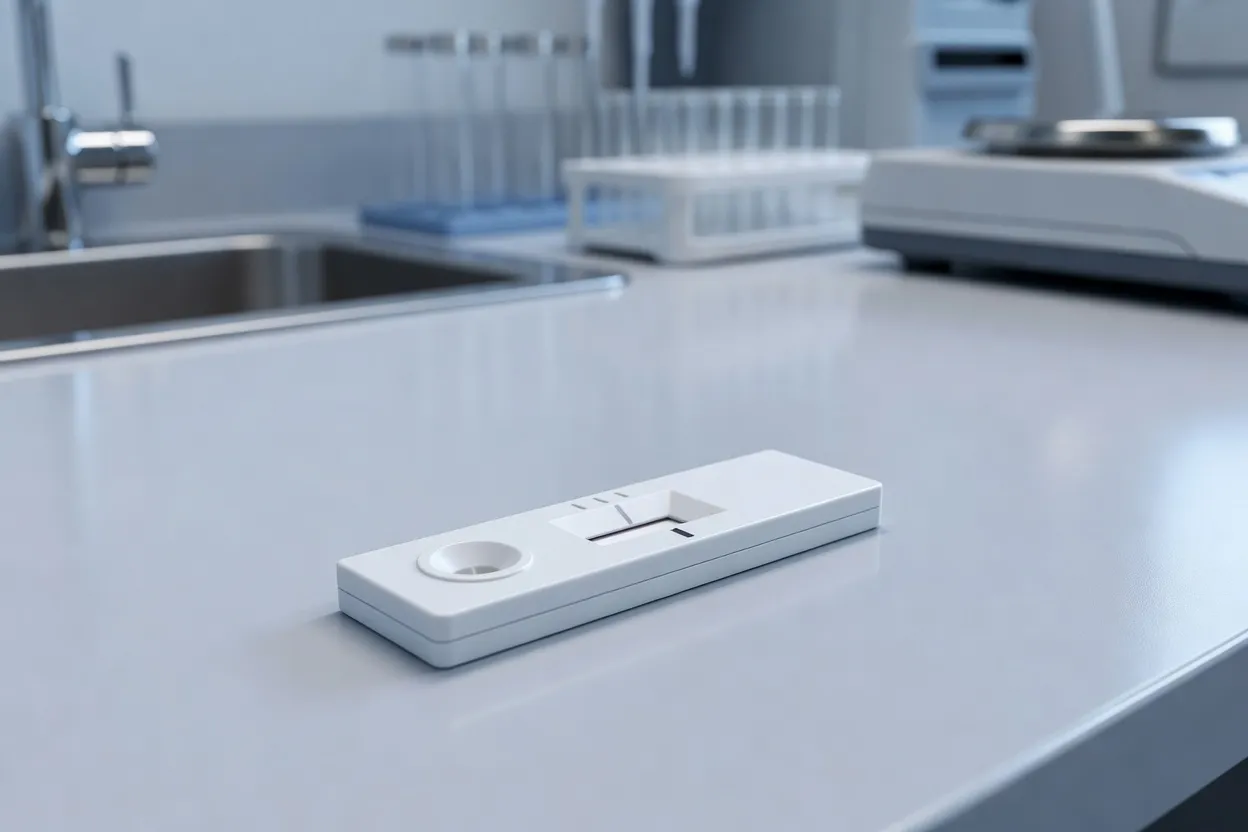
A discontinued additive in a resin used for a high-volume in vitro diagnostic consumable forced Flex to qualify a replacement material without disturbing the customer's existing molds or equipment. The decision was not a resin-swap exercise. It was a process-qualification problem with a one-year clock and production lines at risk of shutdown.
Flex (Flex Ltd., a global manufacturing services provider) has supported the diagnostics customer for more than 30 years across product manufacturing, new-product introduction, pilot lines and multiple production locations. When the material supplier announced that the critical additive would be discontinued, the replacement altered molding behavior enough to unsettle the process window. Mold temperature, melt temperature, injection pressure, back pressure, injection speed and cooling time could no longer be treated as interchangeable settings.
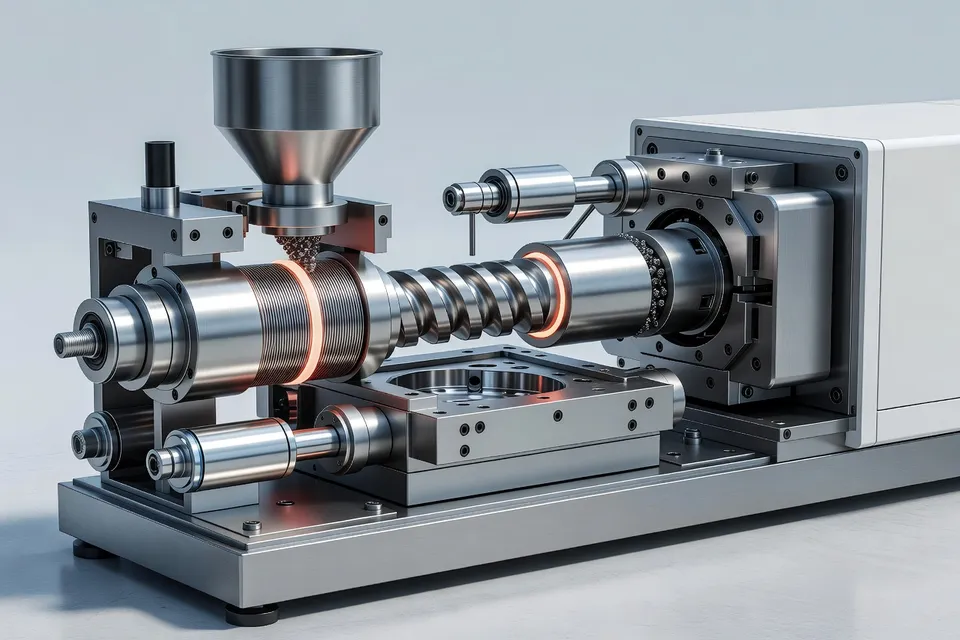
That is the point medical plastics buyers should keep: the incumbent material was not replaced because a datasheet looked close. The replacement had to run through the same tools, meet product specifications and preserve production continuity. A qualified material change belongs to the part and process, not just to the compound name.
The IVD part and the one-year limit
The customer needed the transition implemented within one year. Conventional tooling changes were projected at about $300,000 per production line and could have delayed implementation by as much as 18 months. That option failed the schedule before it solved the molding problem.
Flex instead isolated the material change from other variables. Engineers examined multiple production lines, material lots, manufacturing tools and molding conditions. They developed viscosity curves for the replacement material and used a structured testing method to identify which process variables affected part performance most strongly.
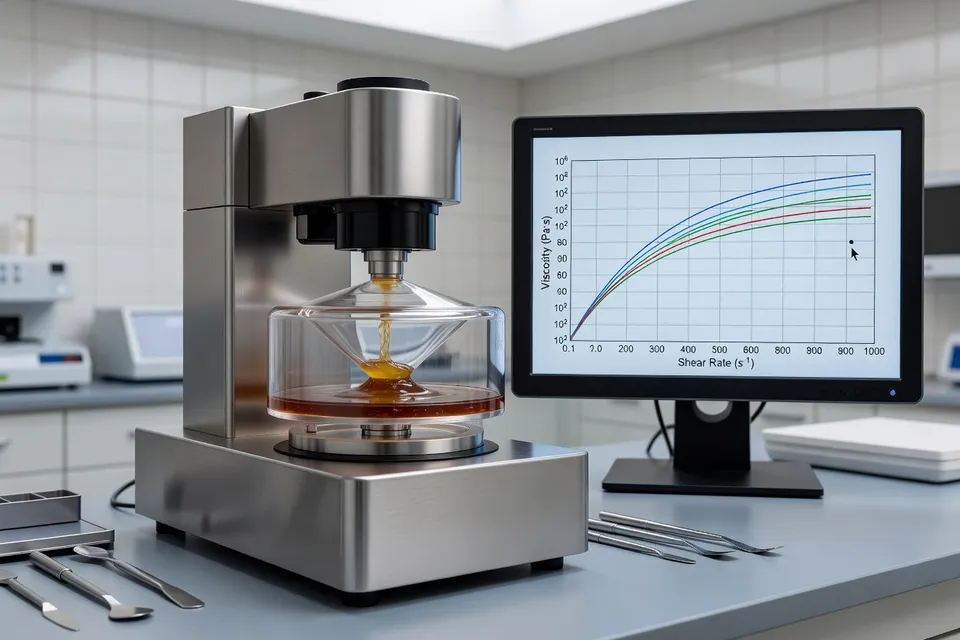
The work was conducted as a statistically designed process study rather than a sequence of informal machine adjustments. More than 30 process iterations and more than 13,000 molded components were evaluated before the final parameter set was validated on a production line and deployed to identical lines operating globally.
The principal evidence is not that the new resin could be molded once. It is that the team tested interactions among process variables, selected a process window and then checked that window on production equipment. That is the level of evidence a medical-device change requires when the material sits inside a documented manufacturing system.
The comparable figures below belong to the same IVD material transition and define the economic and timing constraint around the qualification.
| Measure | Figure |
|---|---|
| Implementation window | 1 year |
| Tooling-change delay projection | Up to 18 months |
| Tooling cost avoided worldwide | $5.4 million |
| Production lines covered by tooling avoidance | 18 |
| Process iterations | More than 30 |
| Molded components measured | More than 13,000 |
The tooling burden was not theoretical in the final decision. Avoiding mold changes across 18 production lines produced reported tooling-cost avoidance of $5.4 million, while the replacement material reduced ongoing material cost by 20%. Those savings matter, but they follow the qualification work; they do not substitute for it.
What the process study proved
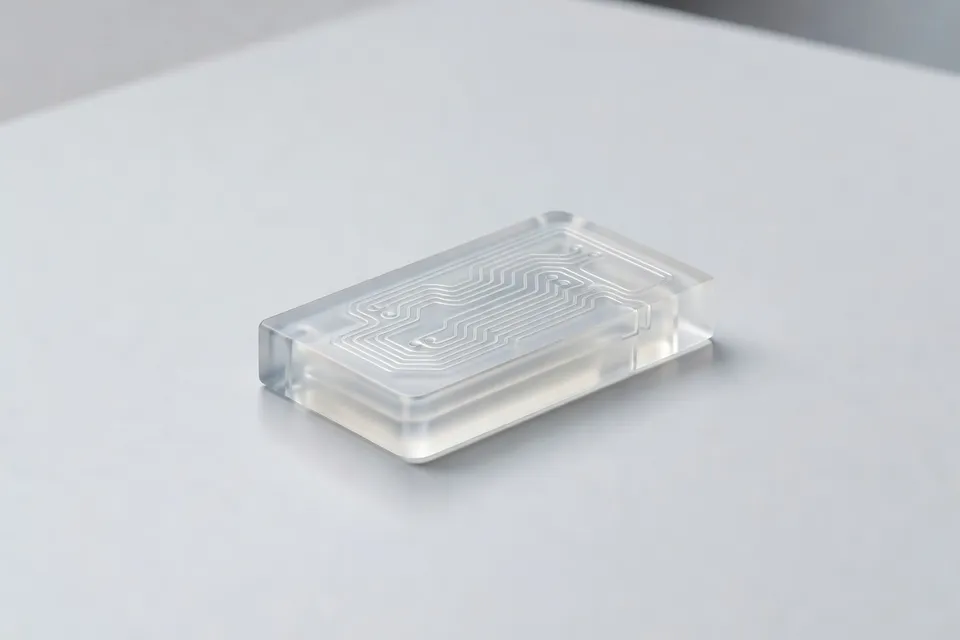
The study showed that the replacement material could meet product specifications without changing existing equipment or molds. It also preserved manufacturing continuity and reduced the downstream documentation burden associated with new tooling. Flex reported that the validated transition prevented production-line shutdowns and helped maintain supply reliability.
That result gives processors a useful boundary. A material change can be absorbed by process control when the manufacturer has enough data to distinguish material effects from tool, lot and machine effects. Without that separation, a successful first shot says very little about the production window.
The work also assigns responsibility clearly. The resin supplier controls the formulation change, but the processor and device manufacturer must establish whether the altered formulation changes part quality, process capability, documentation or regulatory continuity. The buyer cannot approve a replacement solely because the incumbent grade is no longer available.
The qualification file, not the press trial
For an IVD consumable, the relevant record needs to connect material lots, tools, lines, process variables and measured parts. Flex's study included those objects. It also used a Design of Experiments approach to examine variable interactions rather than adjusting one machine setting at a time and assuming the result would transfer.
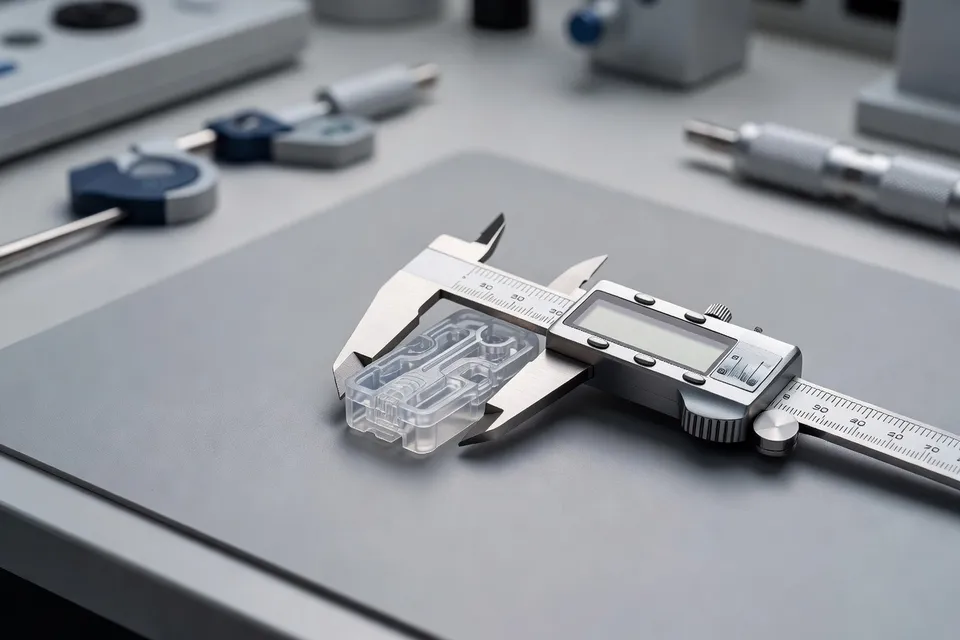
That distinction is where many material-change programs become exposed. A sample run may establish that the replacement fills the cavity. It does not establish that the same material remains within specification across lots, lines and operating conditions. The Flex program went further by validating the selected parameters on a production line and extending them to identical global lines.
The approach also avoided a common false choice between accepting the new material and rebuilding the tool. The replacement resin changed the process, but the process could be redesigned around the material. That only worked because the qualification effort measured the consequences on the actual molded component.
The company's reported 20% material-cost reduction is therefore secondary evidence. The deciding result was the retained process and tooling configuration. A lower resin cost without a validated window would leave the medical-device manufacturer carrying the larger risk: line interruption, documentation changes, supply disruption or a part that passes a short trial but fails under production variation.
The constraint that decides the choice
The incumbent material disappeared from the supply chain because its additive was discontinued. That made substitution unavoidable. The constraint that decided the choice was not a general preference for lower-cost resin or newer materials; it was the need to change material within one year without accepting an 18-month tooling delay or putting production lines at risk.
Flex's result supports a narrow conclusion. In medical injection molding, a material change can be qualified without tooling changes when the manufacturer can identify the process variables that govern part performance, test their interactions at scale and validate the resulting window on production equipment. It does not support a broader claim that any replacement grade can be approved by retuning a press.
QA should refuse the change when the file contains only a supplier equivalence statement or a single successful trial. The defensible approval is the one tied to the molded object, the production line, the material lots and the measured specification. In this case, the material won because the process evidence carried the change—not because the replacement looked interchangeable on paper.
Editorial Insights
- When can a replacement resin be qualified without changing an existing mold?
- Do not start with the datasheet; identify the process variables that control the molded part and test their interactions on the actual tool. Mold temperature, melt temperature, pressure, speed, back pressure and cooling time may shift together when the formulation changes, so a successful first shot proves little. The replacement is defensible only after the selected window meets part specifications and is validated on production equipment. The usual failure is treating a supplier equivalence statement as proof that the old settings will transfer.
- What must the qualification file contain before QA approves a material change?
- File the material lots, tools, production lines, process settings, test conditions and measured part results as one traceable record. Include the study design and the production-line validation, not just laboratory specimens or a press-trial report. The record must show that the process window holds across the intended equipment and that product specifications remain satisfied. A common gap is recording the resin lot and machine settings while losing the link to the individual measurements that supported release.
- How should a processor compare retuning the process with changing the tooling?
- Reject a tooling decision based only on resin price or the number of adjustment trials. Compare the qualification schedule, line coverage, documentation impact, shutdown exposure and demonstrated process capability against the tooling option. Retuning is viable when the replacement’s viscosity behavior can be characterized and the resulting window can be reproduced on production equipment; otherwise the apparent tooling saving may simply move risk into scrap, release delays or supply interruption. The friction is that lower material cost is visible immediately, while the cost of an unstable window appears later.
- Why is a single successful molding trial inadequate for a medical consumable material change?
- Refuse approval from one good run. A single trial shows that the cavity can fill under one combination of lot, tool, machine and settings; it does not show that the part remains within specification when those conditions vary. Use a structured study to expose variable interactions, then validate the chosen settings on the production line and confirm transfer to equivalent lines where required. The failure mode is a part that passes short-term inspection but drifts when material lots or operating conditions change.
- Who owns the decision when the resin supplier discontinues a critical formulation component?
- The supplier owns the formulation change, but the processor and device manufacturer own the evidence that the changed material remains acceptable in the documented process. Assign responsibility for the process study, specification review, production validation, change records and final approval before trials begin. Procurement cannot release the replacement solely because the incumbent grade is unavailable. The recurring breakdown is allowing the supplier’s equivalence claim to become the approval decision without an owner for part performance and regulatory continuity.
References
- 1.Flex. (2026, October 20). IVD manufacturing: How Flex solved a complex material change management challenge. Flex.
- 2.MGS Healthcare Manufacturing. (2026, October 16). Articles. MGS Healthcare Manufacturing.
- 3.KunststoffWeb. (2026, October 22). MGS: US-Medizintechnikunternehmen kauft Knudsen Plast. KunststoffWeb.
- 4.McDermott Will & Emery. US CDMO MGS buys Danish injection moulding specialist Knudsen Plast. McDermott Will & Emery.
- 5.PlasticsToday. Medical recent news. PlasticsToday.
- 6.Pexco. Plastics and elastomers for medical devices and pharmaceutical applications. Pexco.
- 7.Plastics Engineering. PFAS compliance uncertainty grows for medical device makers. Plastics Engineering.
- 8.Mold-Masters. Fakuma 2026 innovation award. Mold-Masters.