


CEAT's Chennai tyre plant has put a measurable number on adaptive rubber mixing: an 18% reduction in cycle time, a 29% reduction in power consumption, and a 32% increase in master-mixer capacity. The model did not replace the mixer recipe with a generic “AI” setting. It compared live temperature and energy data with historical golden batches and adjusted for changing rubber and machine conditions.
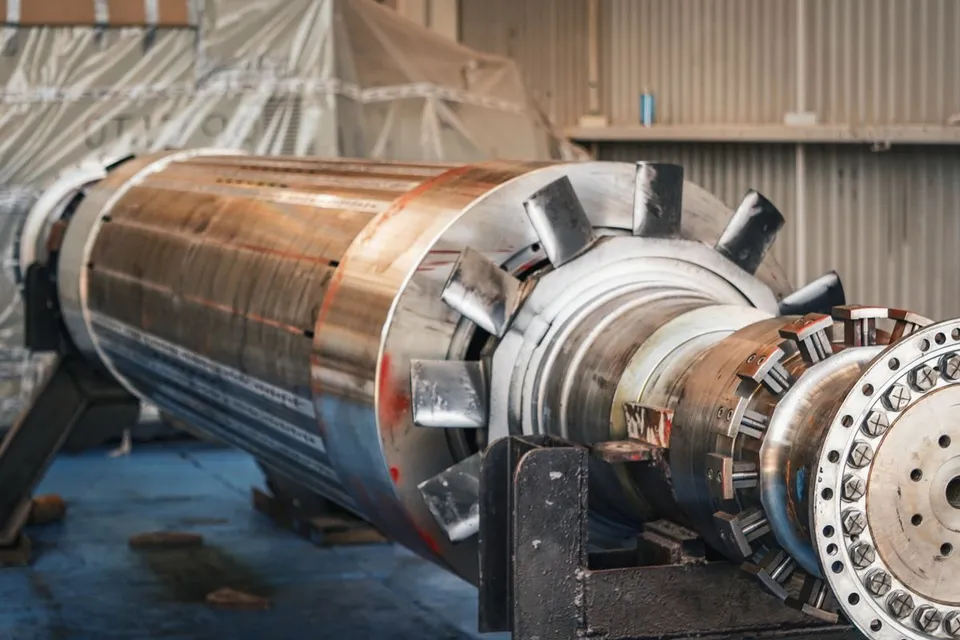
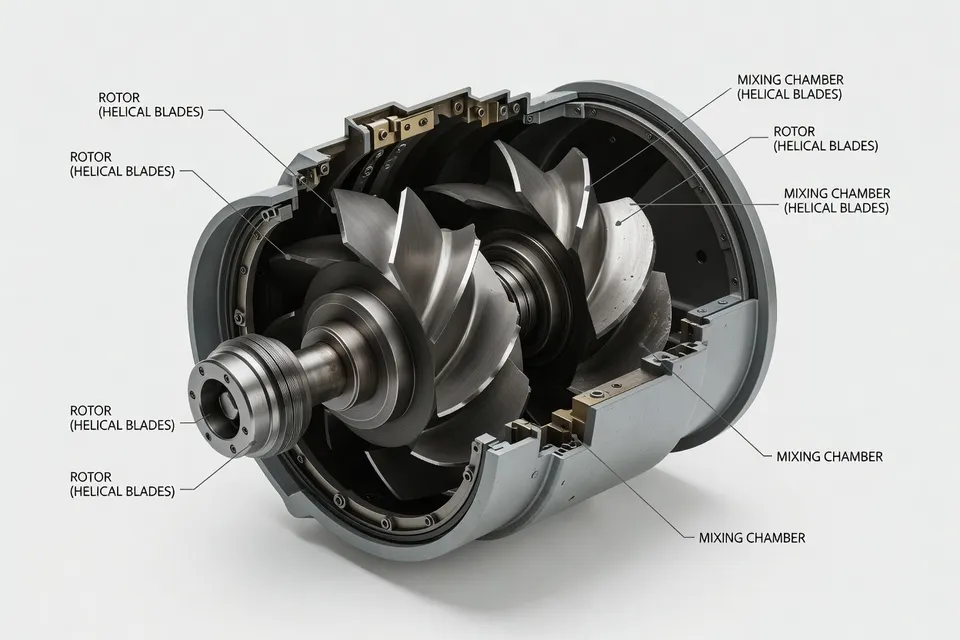
That is the useful part of the result. Natural rubber does not arrive with identical softness from one batch or season to the next, and mixer temperature shifts as equipment runs through the day. A fixed three-minute instruction can therefore be short for one batch and wasteful for another. CEAT's model was built to decide when the material had reached the required condition rather than keeping the rotor running simply because the timer had not expired.
The figures are reported for the Chennai operation, not as a universal tyre-industry benchmark. CEAT also reported that its wider digital program reduced factory conversion costs by 20% to 30%, but that figure combines several initiatives and should not be assigned solely to the mixing model. The mixing result is the number a process engineer can take to a controlled trial.
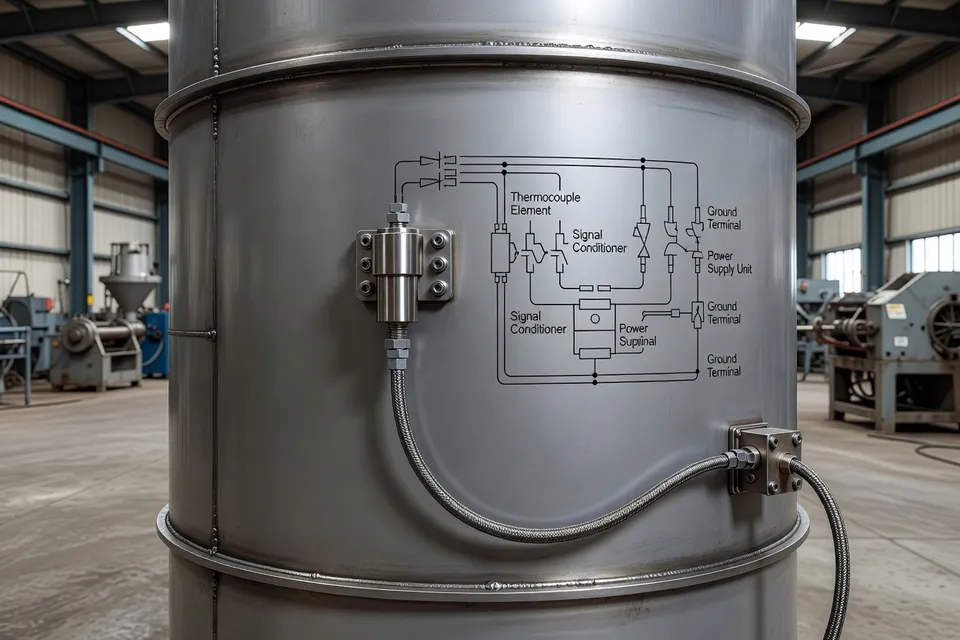
The Chennai mixing loop
CEAT Tyres (an Indian tyre manufacturer operating the Chennai facility) began its digitisation work in 2021 by installing sensors, manufacturing-execution systems, and production dashboards. The plant now uses a gradient-boosting regression model for mixing. The model watches temperature and energy consumption, then compares the current batch with historical batches that met the plant's target conditions.
That gives the control system two signals a conventional timer lacks: the heat state of the equipment and the energy being absorbed by the compound. The reported result was an 18% shorter mixing cycle and 29% lower power consumption. Master-mixer capacity rose 32% at the same time.
CEAT's plant makes about 350 tyre types in an average week, compared with 100 six years earlier. That product range makes the result more demanding than a single-grade demonstration, but the report does not provide the baseline cycle length, mixer size, batch weight, temperature limit, or reject rate. Those omissions matter. A processor cannot transfer the percentage directly without checking whether the same compound families, rotor configuration, and end-point test were used.
The result also does not prove that every batch ended earlier without quality risk. The reported mechanism points to live end-point control, but the operating limits and QA release criteria are not stated. A plant trial should therefore pair the model output with rheometer or equivalent compound acceptance data, batch-to-batch variation, and any out-of-spec refusals.
The TBR assessment
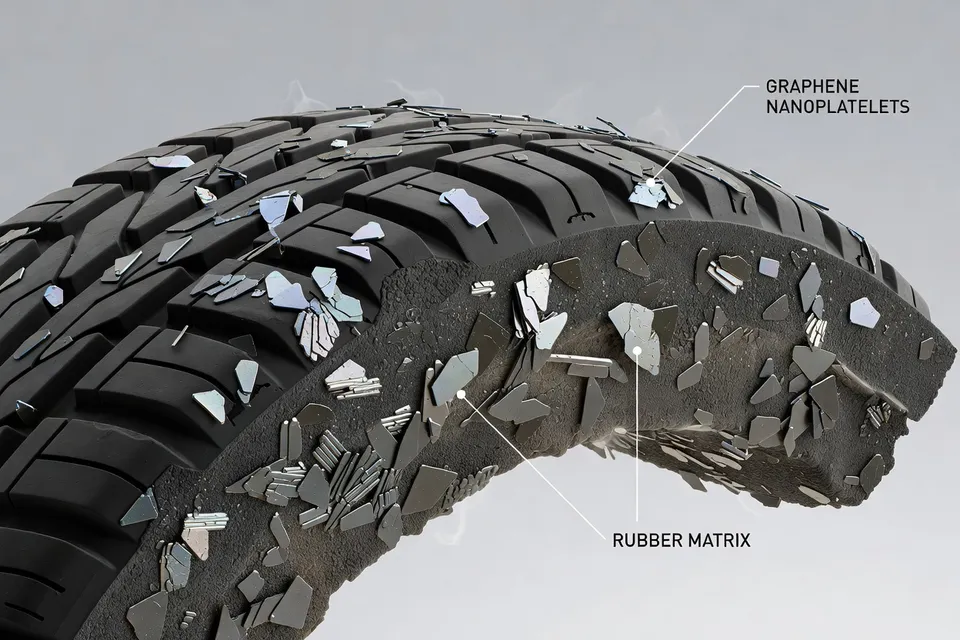
Perpetuus Advanced Materials (a South Wales materials supplier) reported a different route to shorter mixing: change the compound input. In an industrial assessment involving truck and bus radial tyre production, its surface-engineered graphene nanoplatelet masterbatch eliminated two mixing stages, reduced assessed mixing time by approximately 21%, and cut electricity use across the mixing sequence by about 45%.
The assessment reported electricity savings of about 165 kWh per tonne of compound. Perpetuus applied the result to a reference line producing 10,000 tonnes per year and estimated direct annual process savings of approximately US$240,000 before masterbatch cost. That estimate included about US$165,000 in electricity, US$45,000 in reduced carbon-black loss, and US$30,000 in manpower.
Those numbers are comparable within the TBR assessment, but they are not a baseline-versus-new plant table for CEAT. The materials change and the control-model change address different losses. CEAT shortened the operating decision inside the mixer; Perpetuus removed two stages from the sequence. A line manager should not combine the percentages.
The assessment also leaves a transfer question. Perpetuus said the masterbatch supplied approximately 90% to 95% by weight of the relevant compound formulation, including natural rubber, carbon black, and graphene nanoplatelets, depending on the tyre. The reported savings are therefore tied to a specified formulation and assessment, not to an unchanged recipe. QA still has to confirm dispersion, cure behavior, physical properties, and approval of the finished compound before a stage can be removed from routine production.
The factory claim still on trial
ZC Rubber (Zhongce Rubber Group, a Chinese tyre manufacturer) started trial production in September 2026 at the phase II rubber-mixing plant in its Hangzhou 5G smart-factory project. The phase II investment was reported at 1.8 billion yuan, or about €230 million, while the two phases together reached 3.2 billion yuan. Phase I entered production in December 2023 with annual capacity of 10 million tyres.
ZC Rubber said automation and upgraded production technology were designed to raise efficiency and quality while lowering labour and energy consumption. The mixing unit had entered trial production, however, not a closed commercial result with a measured cycle-time or energy figure. No baseline, meter reading, batch comparison, or QA-release result was reported with the start-up notice.
That distinction should stay in the headline judgment. A trial-production plant can demonstrate that equipment is running; it cannot by itself establish that energy per tonne, cycle time, or variation has improved. The next useful document from Hangzhou is a production lot with the mixer recipe, batch weight, kWh per tonne, cycle time, and quality disposition.
What the next trial must measure
The two quantified cases support a narrow conclusion: data-driven end-point control and a reformulated compound can both reduce mixing work, but neither result is interchangeable with the other. CEAT provides the stronger process-control example because it names the live variables, the model type, and three plant outcomes. Perpetuus provides a substantial materials-processing claim with a defined TBR assessment and an energy figure, but the formulation change must remain attached to the result.
For a processor, the acceptance package should be straightforward. Record the same compound, mixer, batch size, start temperature, end-point rule, cycle time, and kWh per tonne before and after the change. Add the number of batches, rejected batches, rework, and final QA disposition. If two stages are removed, release the trial lot only after the compound and cured tyre tests remain inside the approved specification.
Until those records are available, CEAT's 18%, 29%, and 32% figures are a plant result worth testing, Perpetuus' 21%, 45%, and 165 kWh-per-tonne figures remain tied to its industrial assessment, and ZC Rubber's lower-energy claim remains a start-up objective rather than a measured outcome.
Editorial Insights
- What must be proven before an adaptive mixing model can shorten the timer?
- Refuse a shorter cycle until the model is tied to an approved compound end point. Run the same recipe across enough batches to capture rubber softness, mixer heat, rotor loading, and normal equipment drift, then compare model decisions with rheometer or equivalent acceptance data. The usual failure is treating a historical “golden batch” as universal: a model can recognize the temperature and energy signature yet still stop before dispersion or cure behavior is acceptable if the recipe family or end-point test has changed.
- Which measurements belong in the business case for shorter rubber-mixing cycles?
- Ask for cycle time and kWh per tonne on matched batches, not a combined factory conversion-cost percentage. File mixer identity, batch weight, compound family, start and end temperatures, rejected batches, rework, and final QA disposition alongside the energy meter readings. A shorter cycle can look profitable while extra rejects, rework, or underloaded batches erase the saving; capacity gains also depend on whether the downstream process can absorb the additional output.
- Who owns the end-point setpoint when software changes the mixer decision?
- Name a process owner who can approve the end-point rule and a quality owner who can block release. The model may recommend stopping based on live temperature and energy absorption, but recipe limits, alarm thresholds, sensor validation, and change-control records still belong to the plant’s operating system. Do not let the dashboard become the authority by default; a drifting temperature probe or a new compound family can make an apparently stable recommendation unsafe.
- Can a reformulated masterbatch saving be combined with a model-based mixing saving?
- No. Keep the two trials separate because one changes the compound input and the other changes the mixing decision. If stages are removed, verify dispersion, cure behavior, physical properties, and finished-product approval before assigning any labour or electricity saving. Otherwise the same avoided minutes may be counted twice, while the material change introduces a quality or approval burden that the control-model result never addressed.
- What does a smart-factory mixing trial still fail to establish?
- Ask for a lot-level record before accepting an efficiency claim: recipe, batch weight, cycle time, kWh per tonne, batch comparison, and QA disposition. Equipment running in trial production proves commissioning, not lower energy use or tighter variation. The remaining risk is straightforward: start-up conditions may be unusually controlled, and without baseline meters and released product data there is no defensible improvement to scale.
References
- 1.The Times of India. (2026, October 2). Machine learning for machines: This tyre factory’s efficiency soars. The Times of India.
- 2.DIH Luxembourg Digital Innovation Hub. (2026, October 24). How energy-based maintenance cut downtime and costs in tyre manufacturing. DIH Luxembourg Digital Innovation Hub.
- 3.Sohu. (2026, September 27). 密炼机技术升级:2026年橡胶混炼效率提升的关键路径. Sohu.
- 4.EIN Presswire. Perpetuus GNP masterbatch cuts truck tyre mixing time by 21% and mixing energy by 45%. EIN Presswire.
- 5.European Rubber Journal. ZC Rubber advances 5G factory with mixing plant start-up. European Rubber Journal.
- 6.The Asia Business Daily. The Asia Business Daily. The Asia Business Daily.
- 7.Bridgestone Corporation. Bridgestone Corporation. Bridgestone Corporation.
- 8.Futubull News. Held the 16th Bridgestone Group Global TQM Conference. Futubull News.