

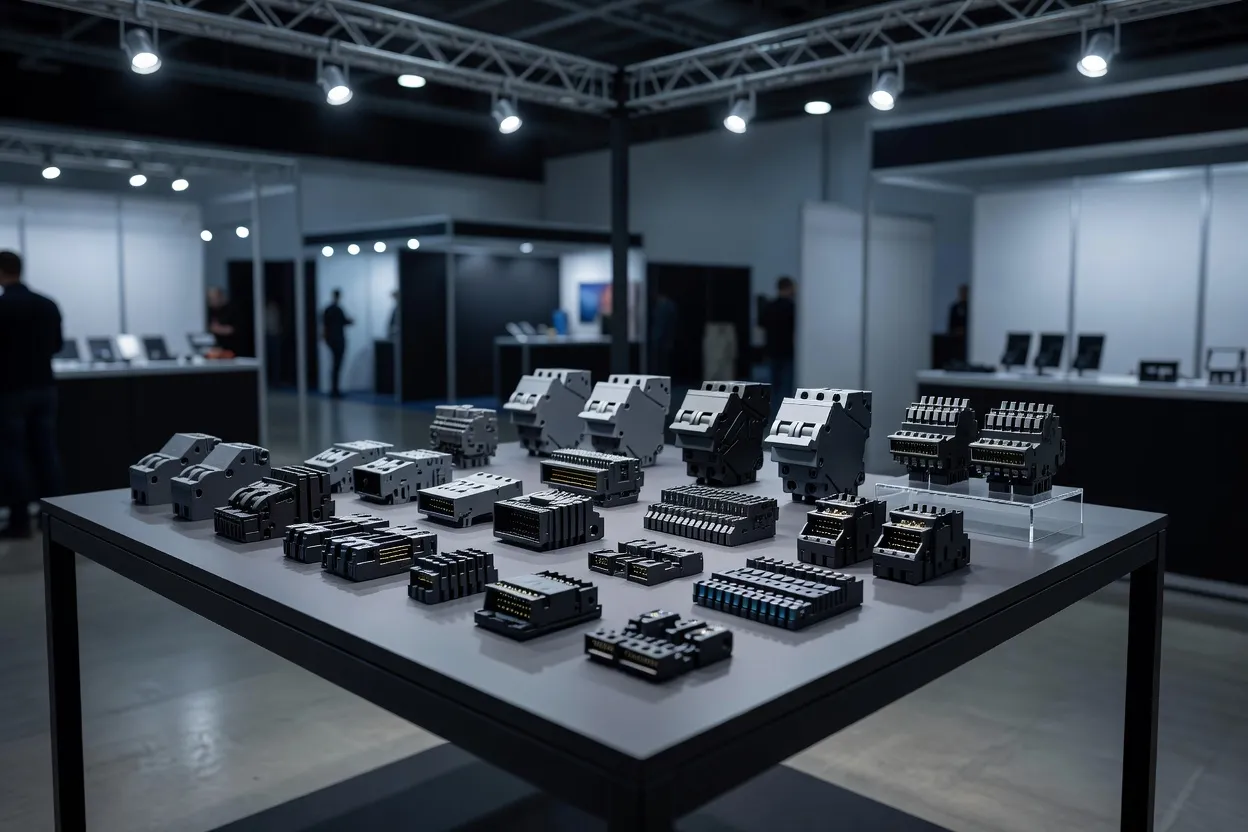
<compid-1046003>Avient Corporation</compid-1046003> is taking Nymax FR REC to Fakuma 2026 for manufacturers of switchgear, busway, connectors, appliances, battery energy storage systems and EV charging equipment. The material change is straightforward: replace prime flame-retardant polyamide with PA6 or PA66 containing 42% to 77% post-industrial recycled content, while holding the electrical-part requirement at UL 94 V-0 at 0.8 mm.
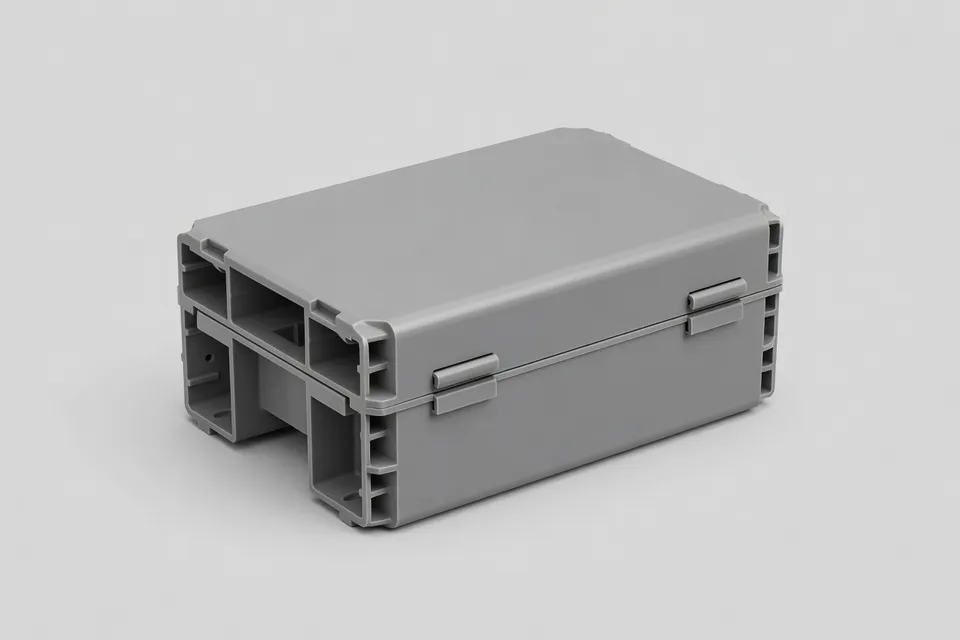
That is the useful part of the launch. The recycled feedstock is not being offered as a general-purpose sustainability story; it is attached to a narrow electrical specification. Avient also reports a 960°C glow-wire flammability index and comparative tracking index values up to 600 V. Those figures give a converter something to screen against. They do not, by themselves, qualify a finished connector, breaker housing or busway component.
The electrical grade
Nymax FR REC (Avient's recycled flame-retardant polyamide range for electrical and electronics parts) covers PA6 and PA66 formulations, with glass-fibre reinforcement from 15% to 40% and unfilled options. The range uses non-halogenated flame-retardant chemistry and is described as non-PFAS. That combination targets two constraints at once: the part must resist ignition and glowing-wire exposure, and the formulation must fit restricted-substance and emerging PFAS requirements.
The comparable figures Avient gives for the portfolio are these:
| Portfolio measure | Reported value |
|---|---|
| Post-industrial recycled content | 42%–77% |
| Glass-fibre loading | 15%–40% |
| UL 94 rating | V-0 at 0.8 mm |
| Glow-wire flammability index | 960°C |
| Comparative tracking index | Up to 600 V |
The numbers describe a material envelope, not a blanket approval. A 0.8-mm plaque result is not the same thing as a thin rib, weld line, insert feature or assembled electrical enclosure passing a customer's validation plan. CTI also depends on the geometry, surface condition and operating environment of the actual component. QA would still need the exact grade, colour, mould design and process window on the approval record.
The incumbent constraint
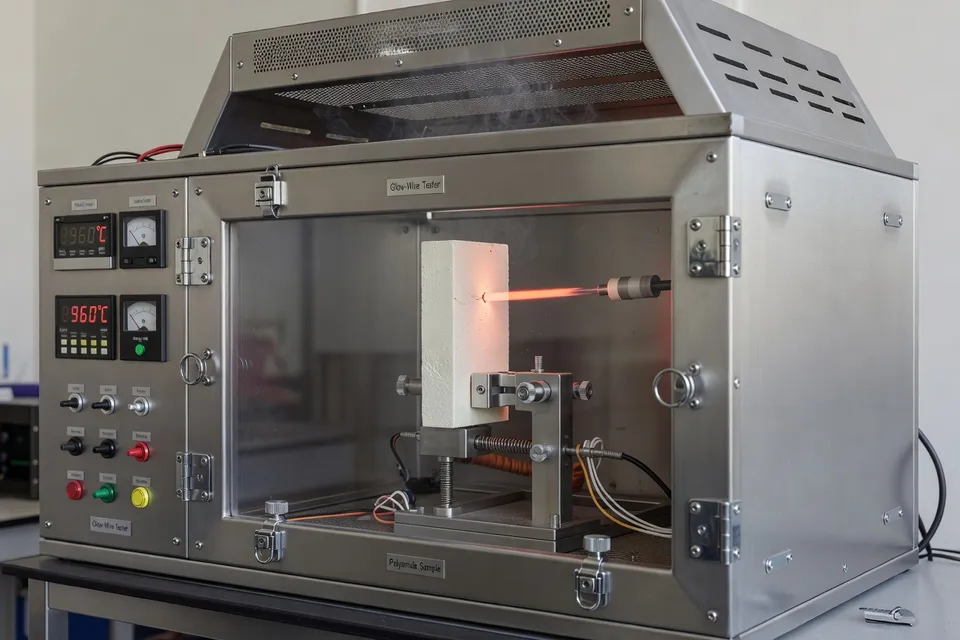
The incumbent is prime flame-retardant polyamide. Avient positions Nymax FR REC against that material on carbon footprint and recycled content, but the buyer's first refusal point remains fire safety. A recycled resin that misses the required wall-thickness rating cannot enter the part simply because its feedstock is preferable.
The company's answer is to keep the flame-retardant requirement visible in the grade description. Non-halogenated chemistry is intended to support restricted-substance lists, while the reported non-PFAS formulation anticipates tighter controls on per- and polyfluoroalkyl substances. That is a specification response, not evidence that a particular OEM has converted a production line.
The application list also needs narrowing. Switchgear, connectors, appliances, BESS hardware and EV chargers do not impose one common duty cycle. A connector may be judged on tracking and dimensional retention; a battery-system part may add thermal exposure and enclosure requirements; a busway component may bring stiffness, creepage and assembly constraints. The shared entry test is fire performance, but the qualification package will be application-specific.
The part still needs validation
Avient announced the launch on September 28, 2026, ahead of Fakuma, which runs from October 12 to 16. The company planned to show the grades in Hall B5, Booth 5104, and make technical specialists available for application discussions and sampling. That places the range at the launch-and-sampling stage described in the announcement. It does not establish a serial-production award, a plant conversion or a measured field result.
The staged colour expansion is another practical limit. Colour can change additive balance, surface appearance and processing behaviour, so a natural or initial-colour test does not automatically clear every commercial shade. Processors should therefore treat the colour schedule as part of qualification rather than a cosmetic afterthought.
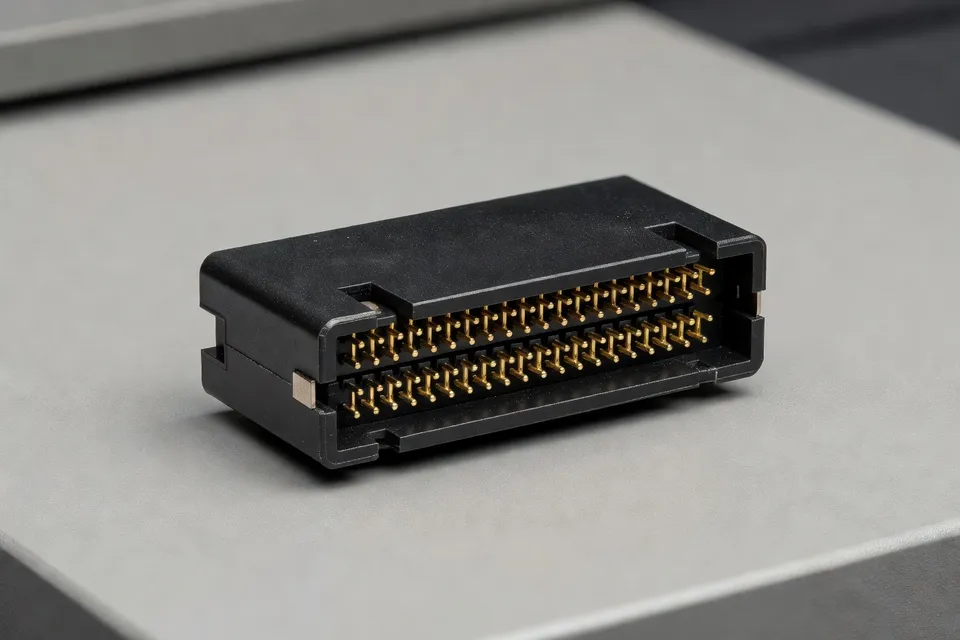
The cleanest first trial is a defined electrical part where the buyer already has a prime FR polyamide baseline, a known wall thickness and a documented UL 94 and glow-wire requirement. The comparison should hold mould, drying, injection settings and test geometry constant. Recycled content then becomes a controlled material variable instead of a marketing label.
BASF's Fakuma programme shows why electrical polymers are being pushed into more demanding hardware. Its portfolio includes flame-retardant polyamides and PPA grades for high-voltage connectors and power electronics, while Ultrason materials are presented for fibre-optical connectors in AI data centres and other electronic applications. Those are relevant incumbent-performance signals, but they are not a recycled Nymax qualification and should not be treated as one.
Avient's case is strongest where the buyer needs a documented path to recycled content without surrendering the first fire-test gate. The case stops there. Until a named electrical part passes its full mechanical, thermal, tracking, colour and assembly validation, Nymax FR REC remains a credible candidate grade—not proof that recycled polyamide has replaced prime resin across electrical hardware.
Editorial Insights
- Does a UL 94 V-0 result at 0.8 mm qualify a finished electrical part?
- No. Ask for the exact grade, colour, wall map and moulded test geometry before treating the result as approval. A plaque rating does not clear a thin rib, weld line, insert feature or assembled enclosure, and the usual failure is assuming the material certificate covers a part whose local thickness or flow pattern was never tested.
- What should be held constant when comparing recycled flame-retardant polyamide with the prime grade?
- Run the same mould, drying practice, injection settings and test geometry, then record the incumbent and candidate results against the same wall thickness. The comparison should change the resin, not several process variables at once. If moisture control or packing pressure drifts during the trial, a scrap or dimensional shift can be blamed on recycled content when the actual cause is processing.
- Which qualification documents are needed before a recycled grade can enter an electrical-part approval record?
- File the exact grade and colour, recycled-content declaration, CoA requirements, flame and glow-wire data, CTI evidence, restricted-substance statements and the defined process window. Add the part drawing, wall map, mould condition and test plan so QA can trace the result to one controlled configuration. A generic portfolio sheet is not enough; the common purchasing mistake is approving the resin family while leaving colour, reinforcement level or supplier-lot controls undefined.
- How much weight should a CTI value of up to 600 V carry in connector or switchgear selection?
- Use it as a screening value, not as a finished-part approval. Confirm the actual creepage geometry, surface condition, contamination exposure, voltage requirement and operating environment before scaling the grade. CTI can look adequate on a material data sheet while the assembled part still fails because ribs, joints or deposits change the tracking path.
- Why must colour be included in the qualification plan rather than added after the natural-grade trial?
- Test the commercial colour intended for production and keep its formulation and lot records with the approval. Colour can alter additive balance, surface condition and processing behaviour, so a natural or initial-colour sample does not automatically clear every shade. Delaying this check is how a technically successful material trial turns into a second validation cycle when the customer colour is finally moulded.
References
- 1.Avient. (2026, September 28). Avient debuts flame retardant polymer technologies at Fakuma 2026 to advance fire safety and sustainability. Avient.
- 2.Portal Plastech.pl. (2026, September 29). Avient to launch flame-retardant polymers at Fakuma 2026. Portal Plastech.pl.
- 3.ICN Bureau. (2026, October 4). Avient launches recycled flame-retardant polyamide grades for electrical applications. Indian Chemical News.
- 4.Yahoo Finance. Avient advances circularity launching Nymax. Yahoo Finance.
- 5.BASF Performance Polymers. News releases. BASF Performance Polymers.
- 6.BASF Performance Polymers. News releases. BASF Performance Polymers.
- 7.PlasticsToday. The new materials challenge inside AI data centers. PlasticsToday.
- 8.Home of Welding. Asahi Kasei showing advanced plastics solutions at Fakuma 2026. Home of Welding.