


Celanese Corporation (Celanese, a specialty materials producer) and Cooper Standard (Cooper Standard, an automotive sealing-system supplier) converted an automotive side-window glass run channel from EPDM thermoset rubber to Santoprene TPV. The program has now received the 2026 SPE Automotive Hall of Fame award, but the useful evidence is older and more specific: the material change survived the move from development into series production and was later reported to represent approximately 55% of the global glass run channel market.
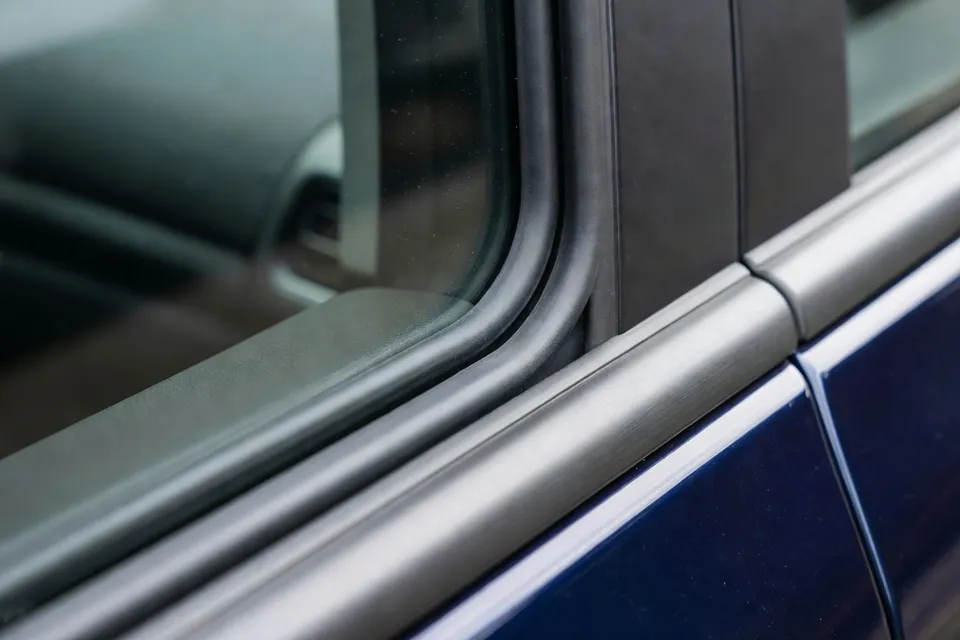
That is the part of the story worth keeping. This was not a TPV sample replacing rubber on a display stand. Cooper Standard, using design and manufacturing capability from Jyco, worked with the Santoprene team to adapt the material and profile for the channel in which a vehicle side window travels. The requirement was not simply lower weight. The channel had to maintain the weather, dust and noise sealing that had made EPDM the incumbent.
The reported program delivered a second requirement as well: a manufacturing route that made the change commercially workable during a mid-cycle vehicle program. TPV extrusion required less capital investment and less production space than rubber processing. That constraint decided the choice because the OEM could convert an existing program without treating the material change as a new vehicle architecture.
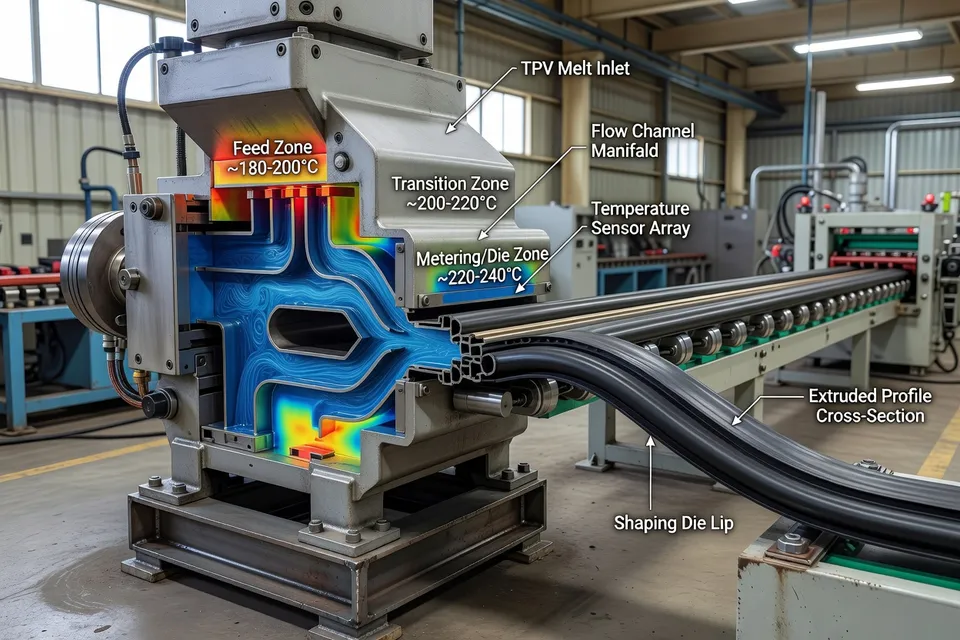
The reported comparison is specific to the glass run channel application and the part design used in the program:
| Measure | Reported TPV result |
|---|---|
| Part-weight reduction versus EPDM | Approximately 30%–50% |
| Global glass run channel share attributed to TPV | Approximately 55% |
The two figures describe different things. The first is a part-level result against the EPDM baseline. The second is a later market-position claim, not a test result from the original vehicle program. It should not be used to imply that every automotive seal has moved from EPDM to TPV.
The glass run channel
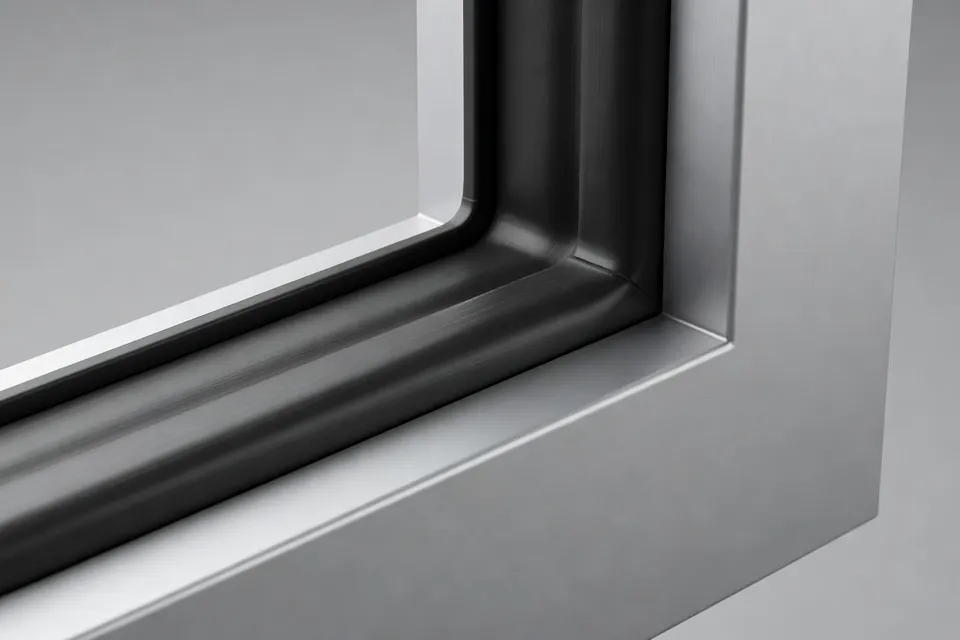
The glass run channel is a demanding place to replace a thermoset elastomer. It guides the moving window while maintaining contact around the glass and resisting exposure to weather. The cited program therefore had to prove sealing performance in an extruded profile, not merely show that TPV could be compounded, moulded or recycled.
The public account says Santoprene TPV matched the rubber-like sealing required against weather, dust and noise. It also identifies the material and component as a joint development rather than a resin substitution made after the profile had already been fixed. That distinction matters to processors. A TPV grade cannot be judged separately from the die design, profile geometry, friction interface, flocking or assembly method used in the channel.
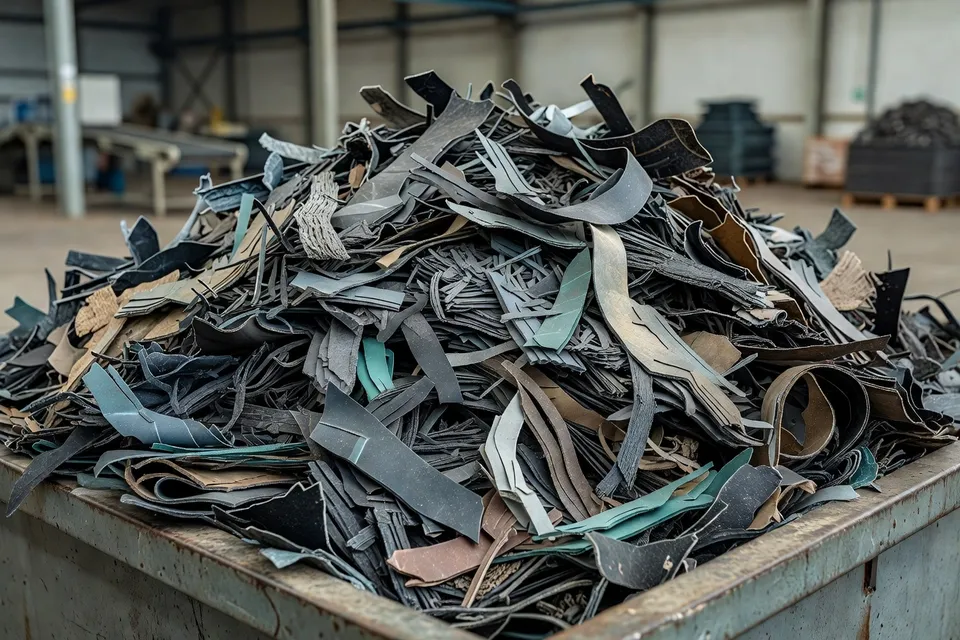
The production decision also rested on scrap handling. Unlike thermoset EPDM, TPV can be reprocessed, allowing production scrap and offcuts to return to the material stream. That is a process advantage for a converter managing start-up waste and profile-trim losses. It is not the same as proof that an installed glass run channel has entered a closed-loop recycling system. The available program description establishes reprocessability, not a measured end-of-life recovery rate.
The incumbent that lost the part
EPDM held the channel because it supplied familiar elastic sealing and established rubber-processing practice. TPV won this application by combining comparable sealing function with a different production equation. Lower density and profile optimisation reduced the reported part weight by approximately 30% to 50% compared with EPDM, while extrusion reduced the capital and floor-space burden described for rubber processing.
That combination gave the OEM a reason to accept a material change during a vehicle program already in motion. A weight claim alone would not have been enough. Nor would recyclability alone. The deciding constraint was whether the sealing profile could meet the vehicle requirement while fitting a manufacturable conversion path.
The later market-share statement should still be handled carefully. Approximately 55% of the global glass run channel market is a company-announcement figure, and the cited material does not provide the denominator, geographic breakdown, vehicle-program list or independent methodology behind it. It supports the conclusion that TPV adoption in this component is substantial. It does not establish a universal replacement of EPDM across automotive window seals.
What the specification still leaves open
The award confirms recognition of the application and the commercial significance claimed for it. It does not disclose the exact window-channel geometry, vehicle platform, production volume, qualification duration, weathering protocol, friction target, compression set, noise measurement or failure limit. Those are the checks a converter or OEM quality group would still demand before transferring the result to another profile.
The same caution applies to recycled-content TPV. Celanese has extended the Santoprene portfolio with ECO-R grades containing post-consumer recycled content, while HEXPOL has described automotive TPE grades with recycled content ranging from 10% to more than 80% in its broader portfolio. Those figures belong to material offerings and other applications; they are not evidence that recycled-content TPV has replaced virgin Santoprene in this glass run channel.
HEXPOL has separately reported circular TPV grades with recycled content of up to 28% and described closed-loop reprocessing as a property of TPV. Again, that supports the processing case, not a qualification result for the Celanese-Cooper Standard profile. A buyer changing the resin in a window seal would still need the grade, source of recyclate, lot control, odour and emissions data where applicable, and a complete durability file for the actual part.
The defensible conclusion is narrower than the headline. TPV replaced EPDM in a named automotive glass run channel because the part retained the required sealing function while reducing weight and simplifying the production economics. The award shows that the conversion became a durable program solution. It does not turn every automotive window seal into a TPV opportunity without profile-specific validation.
Editorial Insights
- What must be matched before a TPV grade can replace EPDM in another glass run profile?
- Refuse a resin-only comparison. Match the actual profile geometry, die design, glass-contact friction, flocking or surface treatment, assembly method, and sealing targets before approving the grade. Then run weather, dust, noise, compression-set, dimensional, and window-travel checks on the finished channel. A TPV that matches hardness or melt flow can still fail when the profile changes, especially if friction rises or contact pressure relaxes after exposure.
- When does the lower capital and floor-space burden make a TPV conversion commercially credible?
- Ask whether the existing vehicle program can accept an extrusion-based route without redesigning the surrounding assembly. The business case is strongest when the converter can use a compact line, reduce rubber-processing investment, and manage the profile change within current approval controls. Do not let the weight reduction carry the case by itself: if the die, downstream handling, or assembly equipment must be rebuilt, the expected mid-cycle advantage can disappear.
- How should production scrap be controlled when moving from EPDM to TPV?
- File a defined regrind procedure before the first production run: identify acceptable scrap, segregation rules, regrind percentage, drying or conditioning needs, and lot traceability. TPV reprocessability can reduce start-up and trim losses, but it does not justify returning every contaminated or degraded piece to the hopper. Mixed materials, flocking, dust, or excessive residence time can shift surface quality and sealing behaviour, creating a scrap problem that the recycling claim was meant to solve.
- What evidence is still missing when a supplier claims that TPV has taken major share from EPDM?
- Ask for the denominator, geography, vehicle-program coverage, time period, and independent measurement method behind the share figure. A market-position claim can show that adoption is substantial, but it is not a qualification result for a particular seal. Treat it as commercial context, not as permission to bypass profile-specific durability and friction testing.
- Can recycled-content TPV be introduced into a qualified glass run channel without reopening the full material approval?
- No. Obtain the exact grade and recyclate specification, then reopen the relevant approval work for odour, emissions, appearance, friction, weathering, dimensional stability, and long-term sealing. Recycled content may be suitable, but portfolio-level content claims do not prove performance in this profile. The common failure is treating post-consumer content as a simple substitution while overlooking lot variation or a durability file that covers only the virgin formulation.
References
- 1.PlasticsToday. (2026, October 25). Jeep Liberty's 2002 breakthrough earns SPE Automotive recognition. PlasticsToday.
- 2.Business Wire. (2026, October 22). Celanese and Cooper Standard honored for industry-first TPV window sealing system with SPE Automotive Hall of Fame Award. MarketScreener.
- 3.Yahoo Finance. Celanese and Cooper Standard honored for industry-first TPV window sealing system with SPE Automotive Hall of Fame Award. Yahoo Finance.
- 4.Stock Titan. Celanese and Cooper Standard honored for industry-first TPV window sealing system with SPE Automotive Hall of Fame Award. Stock Titan.
- 5.Santop Seal. Custom profile extrusion. Santop Seal.
- 6.ResinBridge. Compare TPV vs. other elastomers. ResinBridge.
- 7.Rubber World. (2026, October 14). Hexpol presents new developments in automotive thermoplastics and TPE with PCR recyclate. Rubber World.
- 8.Plastics Engineering. Automotive and transportation. Plastics Engineering.
