

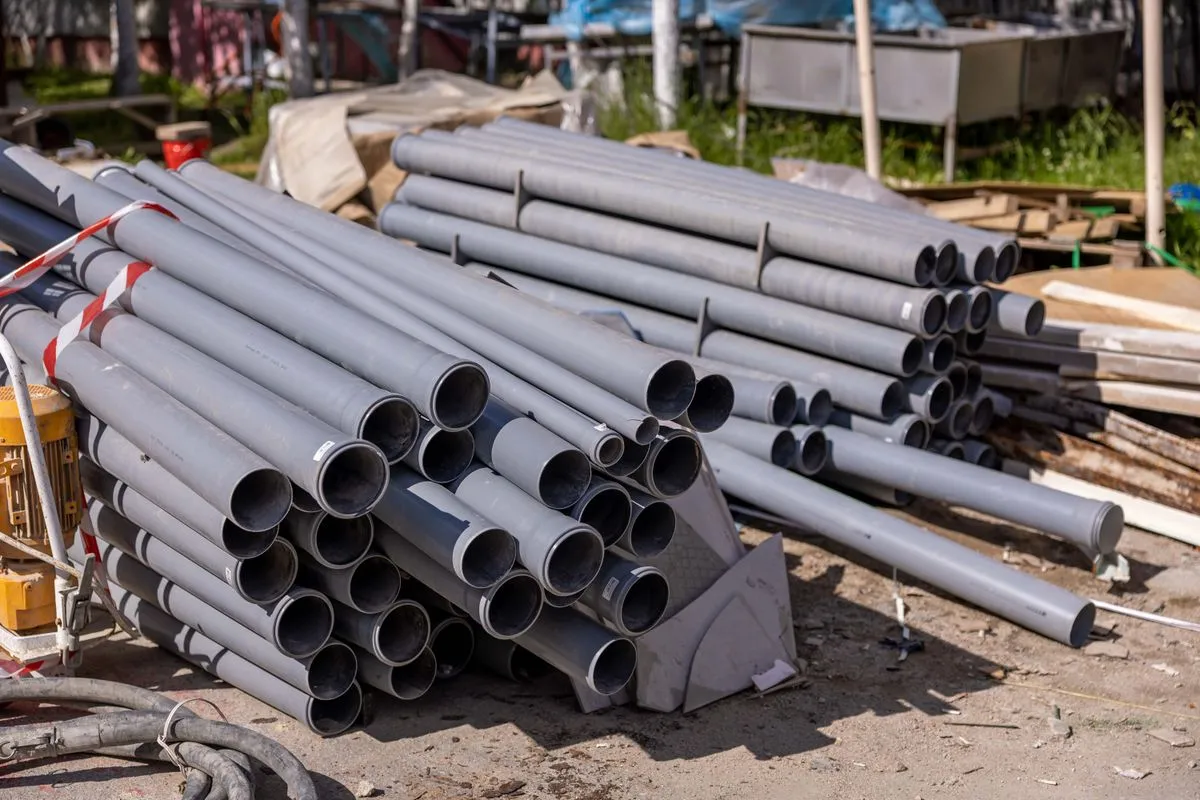
The European Commission's Implementing Regulation (EU) 2026/2345, adopted on 23 October 2026, is an import-registration measure, not a definitive anti-dumping duty. It covers certain PVC polymerised through suspension or bulk polymerisation, in pure form and unmixed with other substances, originating in China, South Korea, Mexico and Taiwan. The registration allows duties to be collected retroactively if the investigation later establishes the legal conditions for doing so.
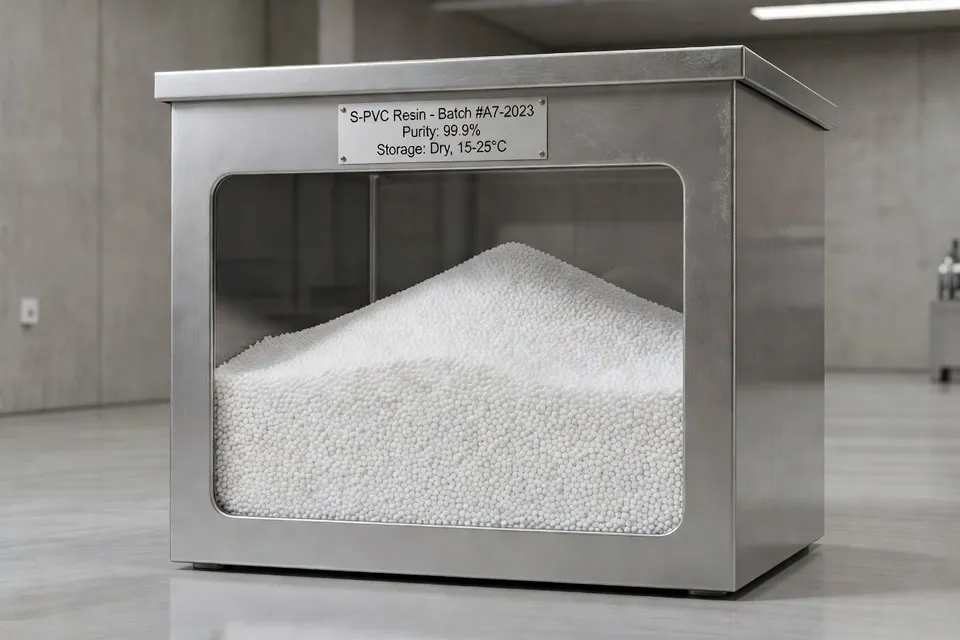
That distinction governs the compliance response. A registered shipment is not yet subject to a published duty rate, and the regulation does not establish that dumping occurred. It records a possible future liability. Importers, customs teams and converters therefore need to preserve shipment-level evidence now rather than treat the measure as a settled tariff.
The Commission opened the anti-dumping proceeding in September 2026. The investigation period for dumping and injury runs from 1 April 2025 to 31 March 2026. The Commission indicated that pre-disclosure of provisional measures is likely on 23 April 2027, while definitive measures are expected on 20 November 2027. Those dates are procedural milestones, not guarantees that either measure will be imposed.
The registered PVC
The product definition is narrower than a general restriction on PVC. It identifies S-PVC and M-PVC in pure form, with no other substance mixed into the product. A buyer handling compounds, blends or finished articles cannot simply assume that every PVC-containing import falls within the registration. The customs classification, product composition and origin must be checked against the regulation before the commercial exposure is assessed.

The measure applies to imports originating in four named jurisdictions. It does not create a Europe-wide ban, and it does not impose the same treatment on PVC from every non-EU country. Origin remains a decisive field in the import file. A shipment routed through another country does not, by that fact alone, change its origin or remove the need for an origin determination.
Eurostat data put imports from the four countries under investigation at 593,715 tonnes during the 1 April 2025–31 March 2026 investigation period. That is the trade volume used to define the scale of the proceeding, not a forecast of future duty or proof that every tonne caused injury.
| Investigation-period item | Quantity or date |
|---|---|
| Imports from four investigated origins | 593,715 tonnes |
| Investigation period begins | 1 April 2025 |
| Investigation period ends | 31 March 2026 |
| Registration begins for arriving imports | 23 October 2026 |
The registration date is the operational line for affected arrivals. The trade volume is historical evidence. Neither figure supplies the final duty rate.
The liability that remains open
The regulation states that registration is intended to preserve the possibility of retroactive collection. The conditions for retroactive collection will be assessed in the regulation imposing definitive duties, if definitive duties are imposed. That wording matters: the Commission has not yet converted the registration into a financial assessment owed by each importer.
The Commission has also stated that future liability would normally be set at the lower of the dumping margin or injury-elimination level. That is a method for a possible later calculation, not the rate currently payable. The initial complaint estimated dumping margins of 84–273% for China, 21–61% for South Korea, 65% for Mexico and 13–39% for Taiwan. Those are complaint estimates. They cannot be used as booked duty rates, landed-cost assumptions or customer surcharges.
The corresponding injury-elimination levels cited for the four origins were 68% for China, 53% for South Korea, 55% for Mexico and 56% for Taiwan. These figures also remain part of the proceeding's evidential record rather than a final finding. Procurement should not select the lowest number in each pair and call it the liability. The Commission has expressly left the actual amount open until the investigation produces its findings.
| Origin | Complaint dumping estimate | Injury-elimination level |
|---|---|---|
| China | 84–273% | 68% |
| South Korea | 21–61% | 53% |
| Mexico | 65% | 55% |
| Taiwan | 13–39% | 56% |
The range is widest for China, while Mexico has one stated dumping estimate and a separate injury level. That variation is another reason not to apply one provisional internal percentage across all four origins.
What importers should change now
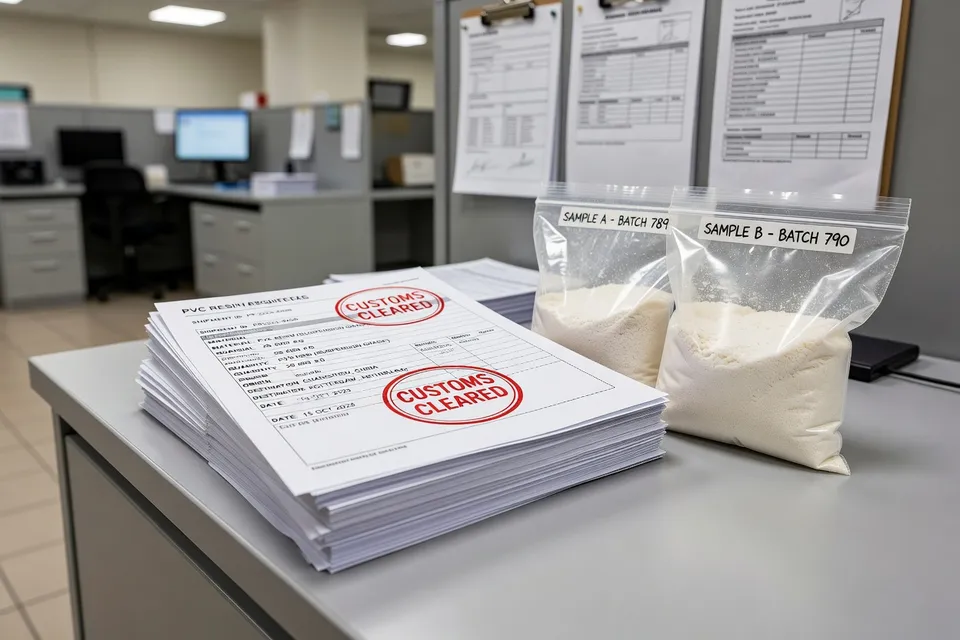
The immediate process change is record control. An importer receiving covered S-PVC or M-PVC from one of the four origins should identify entries arriving from 23 October 2026, retain customs declarations and commercial invoices, and connect each entry to product specification, origin documentation and the relevant supplier. Finance should flag the entries for a contingent cost review rather than post a duty that has not been imposed.
Contracts deserve the same treatment. A buyer agreeing a fixed delivered price while registration is active needs to decide who carries a possible retroactive charge. The answer should be written into the purchase order or supply agreement. “Duty paid” and “duty unpaid” labels do not resolve every dispute unless the contract also addresses a charge assessed after delivery. The regulation creates the exposure; the contract assigns it between the parties.
Converters should separate the registered resin from downstream products in inventory records. A finished pipe, profile or other article is not automatically the product described in the registration merely because it contains PVC. But if the business imports the resin itself, later processing does not erase the original customs and cost records. QA and purchasing should therefore retain the resin grade and composition alongside the finished-product batch history.
The likely reason is to prevent importers from accelerating shipments after the investigation began and before provisional measures could be disclosed. That is a reading of the timing, not a stated finding by the Commission. The legal point is narrower: the Commission has created a route through which eligible future duties may reach registered imports arriving before provisional measures, subject to the final legal conditions.
The next hard document will be the provisional or definitive-duty regulation. Until then, the correct position is neither “no duty” nor “duty imposed.” It is registered import with unresolved retrospective exposure. Any company that prices the complaint estimates as settled law is moving faster than the regulation allows.
Editorial Insights
- How should an importer decide whether a PVC shipment is actually within the registration scope?
- Refuse the shortcut of treating every PVC-containing product as covered. Check the customs classification, whether the material is S-PVC or M-PVC, whether it is pure and unmixed, and the documented country of origin for each shipment. Compounds, blends and finished articles require a separate scope review. A routing change through another country is not an origin change, so the file should retain the production origin, supplier declaration, invoice and customs entry together.
- What cost figure should finance use for registered PVC imports today?
- Book no anti-dumping duty that has not been imposed. Flag each affected entry as contingent exposure and run origin-specific scenarios without converting complaint estimates into a customer surcharge or landed-cost assumption. The eventual amount, if any, depends on the investigation and the legal conditions for retroactive collection; applying one internal percentage across all origins is the usual mistake.
- Which documents must purchasing and customs preserve before a possible retroactive assessment?
- File the customs declaration, commercial invoice, bill of lading, product specification, supplier identity, origin evidence and entry date against the individual lot. Keep the resin grade and composition traceable into the converter’s inventory and batch records, even after processing. A spreadsheet showing only tonnes by supplier is not enough: it loses the shipment-level link needed to test scope, origin and any later assessment.
- How should a fixed-price PVC contract allocate a charge assessed after delivery?
- Write the allocation into the purchase order or supply agreement before accepting the shipment. Define whether the price is duty paid or duty unpaid, who controls the customs filing, which registered entries are included, and who pays a charge imposed after delivery. The labels alone will not settle the dispute when a later assessment reaches material already consumed or resold.
- Can a converter treat imported PVC as cleared once it has been compounded or made into a finished article?
- No. Processing may change the product sold downstream, but it does not erase the original import entry or the cost record. Separate registered resin from finished-product inventory and preserve the resin lot, composition and customs references in the batch history. The remaining risk is administrative as much as financial: losing that link can make a covered import look untraceable when the final regulation is issued.
References
- 1.European Commission. (2026, October 26). Commission Implementing Regulation (EU) 2026/2345 of 23 October 2026 making imports of certain Polyvinyl chloride (PVC) originating in the People’s Republic of China, Republic of Korea, Mexico and Taiwan subject to registration with a view to allowing the levy of anti-dumping duties on the imports subject to registration. Official Journal of the European Union.
- 2.European Commission. Commission Implementing Regulation (EU) 2026/2345. EUR-Lex.
- 3.Argus Media. EU PVC anti-dumping duties to be applied retroactively. Argus Media.
- 4.Kondapally, A. (2026, October 27). Update: India recommends provisional countervailing duties on China PVC. ICIS.
- 5.BigMint. India DGTR recommends provisional duties on Chinese PVC resin. BigMint.
- 6.ChemOrbis. (2026, October 26). Stats: China’s PVC exports rise in Jan-Sep but momentum fades as Indian buying slows. ChemOrbis.
- 7.Sina Finance. (2026, October 22). PVC market news. Sina Finance.
- 8.Commercial Times. (2026, October 28). PVC market news. Commercial Times.