

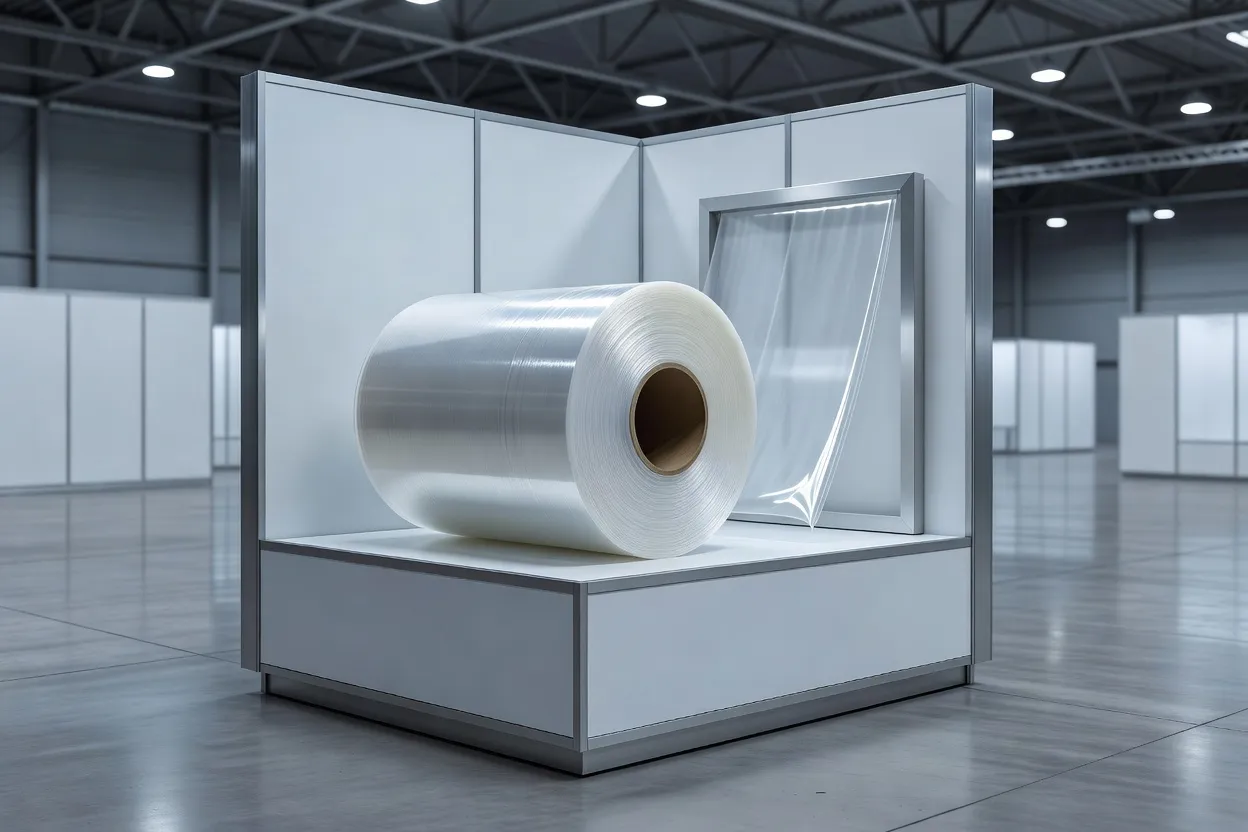
Ready-meal, pet-food, bakery and other demanding packs are the test case for mono-material films in 2026. Suppliers are replacing PET, aluminum foil, PVdC and mixed laminates with PP- or PE-based structures because the EU Packaging and Packaging Waste Regulation sets a 2030 direction for packaging that can be recycled at scale. The buyer requirement is not simply fewer polymers. It is a package that still protects food, seals on existing equipment and survives the relevant thermal process.
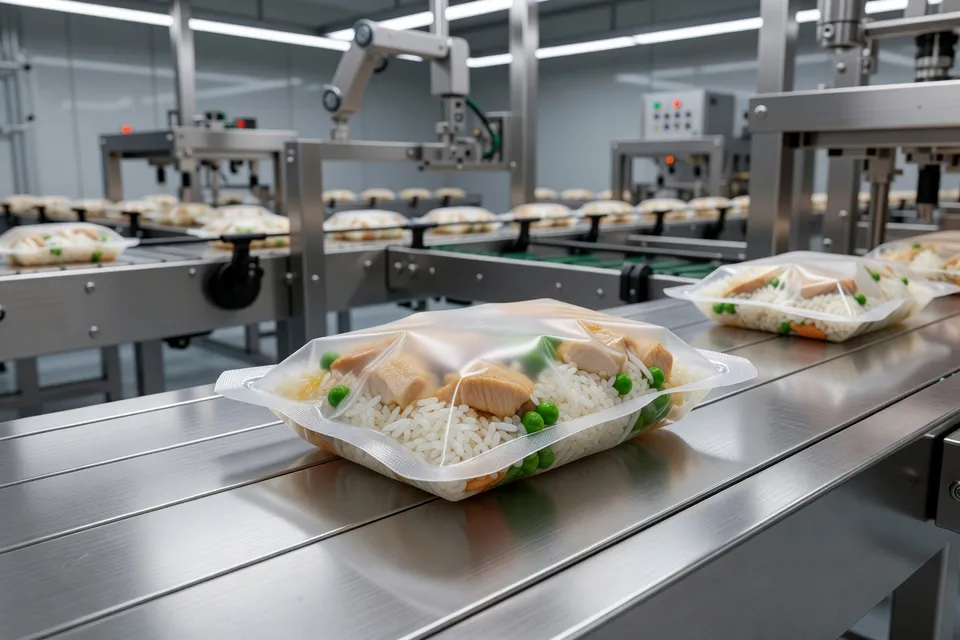
The strongest evidence at Interpack came from Toppan's mono-PP structure for high-retort applications. The company states that its silicon-oxide-coated BOPP structure withstands sterilization at up to 131 degrees Celsius for 30 minutes. That is the kind of limit a ready-meal or wet-pet-food converter can put beside an incumbent foil laminate during qualification. It is still a supplier qualification, not evidence that a brand has converted a commercial pack.
The decision line is therefore clear: mono-PP can replace foil only where the finished structure carries the required barrier and process load without losing its recyclability route. A show-floor demonstration proves direction. It does not prove yield, shelf life, seal integrity after sterilization or acceptance by a recycling system.
The retort limit
Toppan's target is unusually specific. The structure uses SiOx deposition on a BOPP base and is designed for ready meals and wet pet food, applications in which aluminum foil has traditionally supplied high barrier and thermal resistance. Its stated operating window is sterilization to 131 degrees Celsius for 30 minutes.
That figure gives a converter a qualification starting point, but not a release decision. QA would still need the finished pouch or tray-lid combination, the actual food contact configuration, seal-window data, retort cycling, oxygen and moisture transmission after processing, and a shelf-life result. None of those results is established by the temperature-time claim alone.
The PP route also depends on the rest of the package. Profol's design position is that the lidding film, cup, pouch and sealing layer should remain compatible with one polymer family. That matters because a metallized or coated barrier film can solve the oxygen problem while another layer quietly reintroduces PET, paper or a different sealant. A mono-PP label on a mixed laminate is not a mono-PP package.
PP barrier figures
Jindal Films supplied one of the more usable performance markers for less severe formats. Its BICOR 25&30MBH568 transparent BOPP range uses thin water-based coatings and is intended for high-speed horizontal form-fill-seal packs, particularly biscuits and baked products. The company gives a water-vapor transmission rate of 3 and an oxygen transmission rate of 10, while stating that the material can replace PVdC-coated films and some clear-barrier laminates.
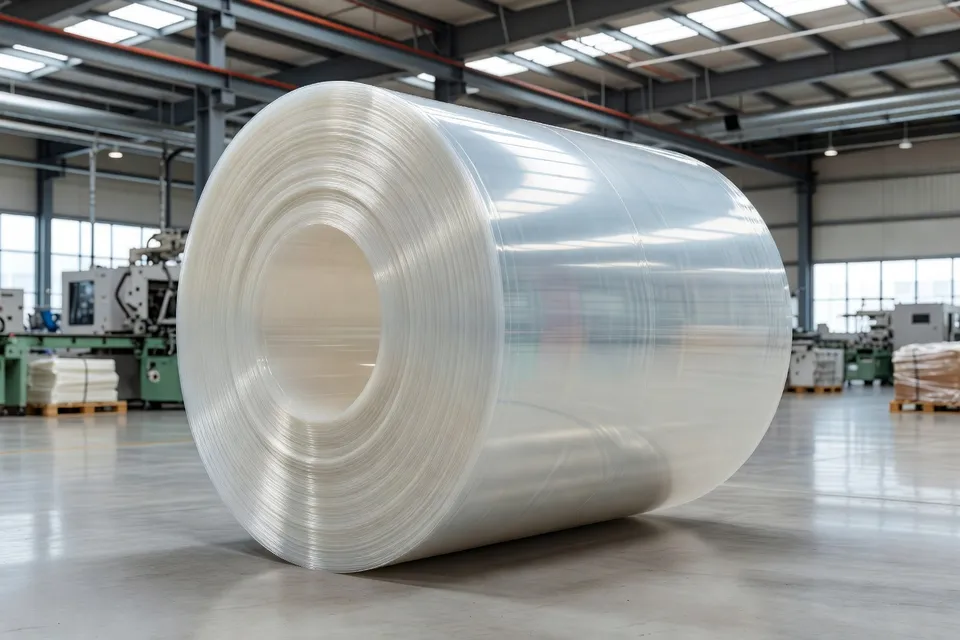
The figures below belong to the product claim and are not interchangeable with the retort specification.
| PP film solution | WVTR | OTR | Stated use or limit |
|---|---|---|---|
| BICOR 25&30MBH568 | 3 | 10 | Biscuits and baked products; medium-range barrier |
| Toppan SiOx mono-PP | Not stated | Not stated | Up to 131°C for 30 minutes; ready meals and wet pet food |
The table shows why one replacement story cannot cover every foil laminate. Jindal gives barrier values for a transparent BOPP film but does not attach those numbers to retort performance. Toppan gives a sterilization window but not the corresponding oxygen or moisture values in the available announcement. A converter cannot substitute one claim for the other.
Jindal also says MBH568 conforms to CEN EN 18120-7, described in the company announcement as a design-for-recycling standard. That supports a packaging-design discussion, but it does not by itself establish collection, sorting and reprocessing performance in every market. The package still has to be tested as a complete structure.
The PE alternative
PE is taking a different route. Brückner Maschinenbau showed biaxially oriented PE films at five microns, a gauge associated previously with technical applications such as capacitors. The company's inline-coated BOPE-HD structure uses a polyvinyl alcohol coating and targets paper lamination, where brand owners want to limit plastic content while preserving a paper-oriented package concept.
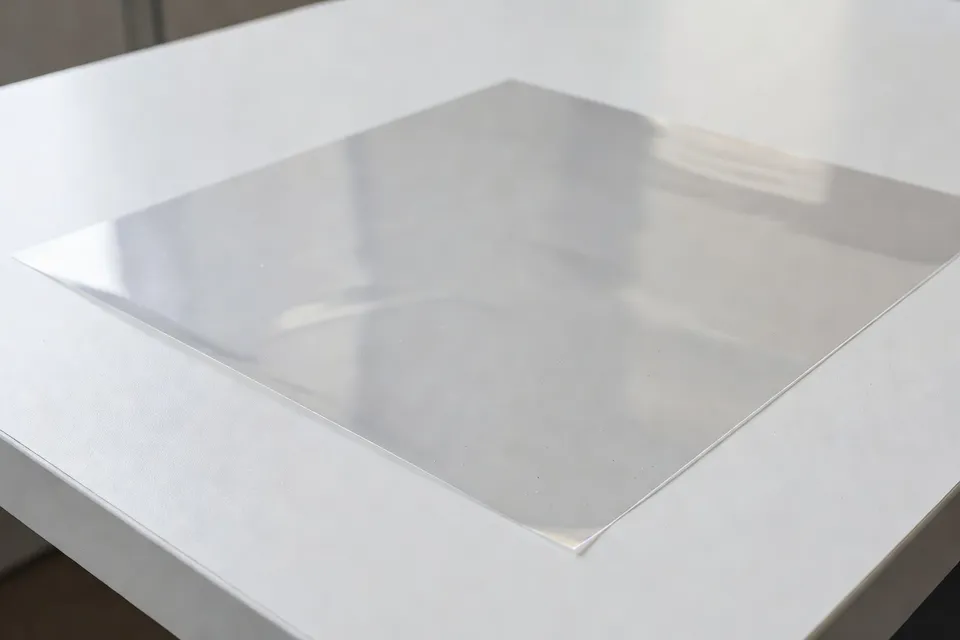
That is a different replacement problem from foil substitution in a retort pouch. The five-micron BOPE figure demonstrates aggressive downgauging and process capability; it does not establish that the film can replace an aluminum barrier layer in a sterilized food package. PE remains relevant where toughness, sealability and compatibility with PE recycling streams control the design, but the application has to carry the claim.
The regulatory constraint also cuts differently across the two polymers. Packaging Insights reported that European brand owners were leaning toward PP, while North American converters showed stronger interest in PE. It also reported that PE flexible recycling had not yet reached the stated PPWR scale threshold, defined in the discussion as access for 70% of the European population. That makes polymer choice partly a recycling-infrastructure decision, not only a film-performance decision.
The metallized replacement
Innovia is positioning ultra-high-barrier metallized BOPP as a replacement for aluminum foil or metallized PET inside recyclable PP laminate structures. The company says the film is intended to provide oxygen and moisture protection while allowing printable outer layers and PP sealant layers to remain within a fully polypropylene package.
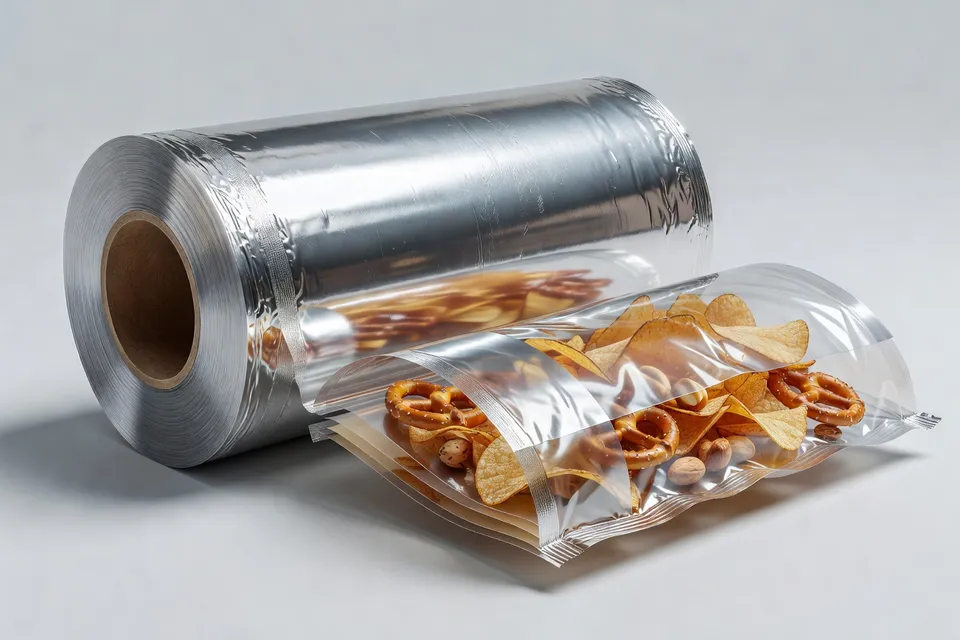
That is technically plausible for applications where metallized BOPP supplies the barrier without the thermal load of high-retort food. It is not a blanket replacement for foil. A converter must separate three questions: whether the film protects the product, whether the laminate remains PP-compatible, and whether the final pack meets the applicable recycling design rule.
Jindal's live demonstrations with machinery partners put the same issue on the line-speed side. A film that runs on HFFS equipment and seals reliably can remove a practical objection that laboratory barrier data cannot address. But a live demonstration remains a machine trial. It is not a commercial award, and it does not establish long-term packaging performance.
What converters can approve
The incumbent is still foil where the specification combines high barrier, retort, long shelf life and a proven converting window. Mono-PP has moved closest to that incumbent in the stated Toppan retort case. Metallized BOPP is more immediately credible in dry foods and other formats where oxygen and moisture control, rather than sterilization, set the load. Mono-PE is advancing through thin BOPE structures and coated designs, but the supplied evidence ties its clearest figure to paper lamination rather than foil replacement.
That distinction should govern purchasing decisions. A supplier claim can justify a trial order. It cannot justify changing the approved bill of materials until the complete pack passes the same thermal, barrier, seal and recycling checks used for the foil incumbent.
The 2026 development is therefore not that foil has disappeared. It is that the replacement films now come with enough defined limits to enter qualification: 131 degrees Celsius for 30 minutes in one mono-PP retort claim, WVTR 3 and OTR 10 for one transparent BOPP barrier range, and five-micron BOPE for a separate paper-lamination route. The constraint that decides the choice remains the finished package. If its weakest layer fails, the polymer label on the front of the datasheet will not rescue it.
Editorial Insights
- Can a stated retort temperature and time release a mono-PP film for production?
- No. Ask the supplier to run the finished pouch or tray-lid combination through the actual sterilization cycle, then measure seal integrity, oxygen and moisture transmission, and shelf life after retort. The temperature-time claim is only a qualification starting point; it does not show that the coating, ink, sealant, adhesive and food-contact configuration will survive repeated processing. The common failure is approving the film from its datasheet while the complete pack loses barrier or develops weak seals after sterilization.
- How should a converter compare transparent BOPP barrier data with a foil replacement claim?
- Keep the claims separate. Use WVTR and OTR data to screen a transparent BOPP film for dry-food applications, but do not treat those figures as proof of retort capability. Confirm the test method, thickness, humidity and temperature, then test the complete laminate after forming, sealing and any thermal process. A film can show acceptable laboratory transmission rates and still fail when its coating is damaged during converting or when the sealant becomes the package’s weakest barrier.
- What must be checked before calling a laminate mono-PP?
- List every layer in the approved bill of materials, including the coating, adhesive, ink, label and sealant. Each layer must fit the intended PP-compatible recycling route; a PP label or outer web does not correct a PET, paper or incompatible sealant layer hidden inside the structure. File the layer construction and supplier declarations before the trial. The usual mistake is to count the headline film while overlooking a small component that makes the finished package mixed-material.
- When is mono-PE a credible alternative rather than just a downgauging demonstration?
- Run mono-PE against the actual package duty, not the five-micron figure. Confirm toughness, seal range, coating adhesion, barrier retention and compatibility with the intended PE recycling stream for the finished structure. A BOPE film demonstrated in paper lamination does not automatically replace aluminum in a sterilized food pouch. The friction is commercial as well as technical: a thinner web may reduce material use while forcing slower equipment settings, extra handling controls or a new approval sequence.
- What does a successful machine demonstration prove before a purchasing change?
- It proves that the film can run under the demonstrated conditions. Ask for speed, tension, seal-window, scrap and downtime records, then repeat the trial with the plant’s equipment, artwork, product and thermal process before changing the bill of materials. A live HFFS run can remove a converting objection, but it cannot establish shelf life, recycling acceptance or long-term seal integrity. Treat the result as permission to qualify, not permission to buy at scale.
- Which approval documents are needed before replacing a foil incumbent?
- Require the complete construction, CoA and specification for each layer, food-contact documentation, barrier results before and after processing, seal-window data, retort or thermal-cycle records where applicable, and evidence supporting the intended recycling-design route. QA should own release of the finished pack, while procurement records the approved grade and supplier change. The residual risk is that a material passes individual tests but fails as a structure, so the existing foil package remains the benchmark until the replacement matches its real operating envelope.
References
- 1.Nichols, B. (2026, May 15). Interpack 2026: EU PPWR drives monomaterial flexibles innovations. Packaging Insights.
- 2.Innovia Films. (2026, March 23). Smarter, simpler, more sustainable packaging鈥擨nnovia unveils what鈥檚 next at Interpack 2026. Innovia Films.
- 3.Jindal Films. PP mono-material solutions. Jindal Films.
- 4.Jindal Films. Mono-PP. Jindal Films.
- 5.Kuraray Europe. Kuraray Europe news. Kuraray Europe.
- 6.Jindal Films. Jindal Films live demos with key partners during Interpack 2026 showcasing PP mono-material solutions on route to PPWR readiness. Jindal Films.
- 7.Dataintelo. Barrier films market. Dataintelo.
- 8.Packaging Strategies. Innovia launches metallized BOPP film designed to replace aluminum foil. Packaging Strategies.
- 9.Packaging Europe. Coveris introduces recyclable high-barrier thermoforming pack for flatbread. Packaging Europe.
- 10.Packaging MEA. Films. Packaging MEA.